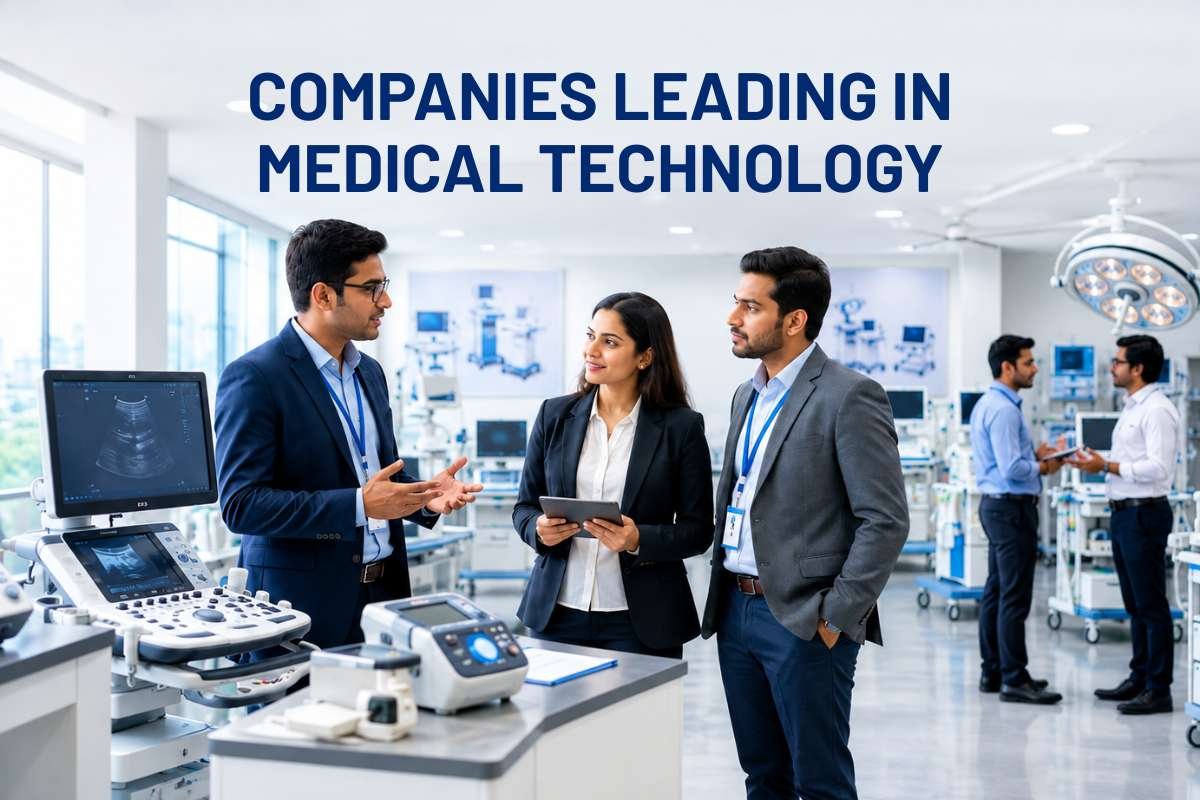
Healthcare is changing faster than ever. Today’s medical devices are no longer simple tools; they use AI, smart sensors, and cloud tech to improve patient care in real time.
Driven by breakthroughs in digital health and surgery, the global medical tech market is set to top $600 billion. At the heart of this surge are the top companies leading in medical technology for hospitals, doctors, and patients.
From smart diabetes tracking to robot-assisted surgery, these innovators are changing how we find and treat illness. Below, we explore ten organizations transforming healthcare, highlighting how they adapt to evolving Types of medical technology and keep up with the latest Medical technology trends.
Real-world examples of 10 organizations driving innovation
1. Medtronic: Pioneering smart pacemakers and AI endoscopy
Medtronic remains a global leader in pure-play medical devices, operating in over 150 countries. Known historically for the cardiac pacemaker, Medtronic has expanded into artificial intelligence and digital health solutions. To see how its corporate strategy stands out from competitors, read our deep dive on Medtronic’s approach to medical technology.
- Breakthrough Innovation: The GI Genius™ AI endoscopy module assists gastroenterologists in detecting colorectal polyps in real time during colonoscopies. Additionally, the Micra™ Transcatheter Pacing System is the world’s smallest leadless pacemaker, implanted directly into the heart via a catheter without open chest surgery.
- Key Stats: Medtronic reports over $36 billion in annual revenue, investing over $2.7 billion each year in research and development.
- Real-World Impact: Clinical trials show that Medtronic’s AI-assisted colonoscopy technology increases adenoma detection rates (ADR) by up to 14%, significantly lowering long-term colorectal cancer risks.
2. Abbott Laboratories: Revolutionizing continuous glucose monitoring
Abbott has transformed diabetes management through its sensor-based continuous glucose monitoring (CGM) systems, removing the need for routine fingersticks for millions of patients worldwide.
- Breakthrough Innovation: The FreeStyle Libre 3 system delivers continuous glucose readings straight to a user’s smartphone. Abbott’s sensor is roughly the size of two stacked coins, making it one of the smallest CGMs available.
- Key Stats: Abbott’s medical device segment generated over $21.39 billion in revenue, with the FreeStyle Libre portfolio serving over 5 million users globally.
“Technology should make healthcare easier, not more complex. Sensor technology gives people with chronic conditions total control over their health daily.” – Abbott Medical Leadership.
3. Intuitive Surgical: The gold standard in robotic-assisted surgery

Intuitive Surgical pioneered robotic-assisted, minimally invasive surgery. Its flagship system allows surgeons to perform complex operations through tiny, millimeter-sized incisions.
- Breakthrough Innovation: The da Vinci 5 Surgical System offers advanced haptic feedback, 3D high-definition visualization, and real-time analytics to measure surgical precision.
- Key Stats: Over 20 million surgical procedures have been performed globally using da Vinci systems, with an installed base exceeding 8,000 systems worldwide.
4. Siemens Healthineers: Advancing AI-driven diagnostic imaging
Siemens Healthineers is a German healthcare company specializing in medical imaging, laboratory diagnostics, and advanced radiation therapy. The integration of artificial intelligence in its diagnostic equipment represents a huge step forward for AI in medical technology.
- Breakthrough Innovation: The NAEOTOM Alpha, the world’s first photon-counting CT scanner. It provides high-resolution images at lower radiation doses, allowing cardiologists to visualize tiny coronary vessels without invasive procedures.
- Key Stats: Siemens Healthineers generates over €23 billion annually, with its diagnostic equipment touching an estimated 5 million patients every day.
5. Stryker Corporation: Smart implants and orthopedic automation
Stryker leads the orthopedics sector, specializing in joint replacement, neurotechnology, and emergency medical equipment.
- Breakthrough Innovation: The Mako SmartRobotics™ system for knee and hip replacements. Mako combines 3D CT-based planning with robotic arm feedback to ensure implants are placed with sub-millimeter precision.
- Key Stats: Stryker records over $20 billion in annual revenue. More than 1 million Mako robotic-assisted joint procedures have been completed worldwide.
- Real-World Impact: Clinical studies show that patients receiving Mako-assisted joint replacements experience less post-operative pain and recover faster than those undergoing manual surgery.
6. GE HealthCare: Intelligent cloud care and point-of-care ultrasound
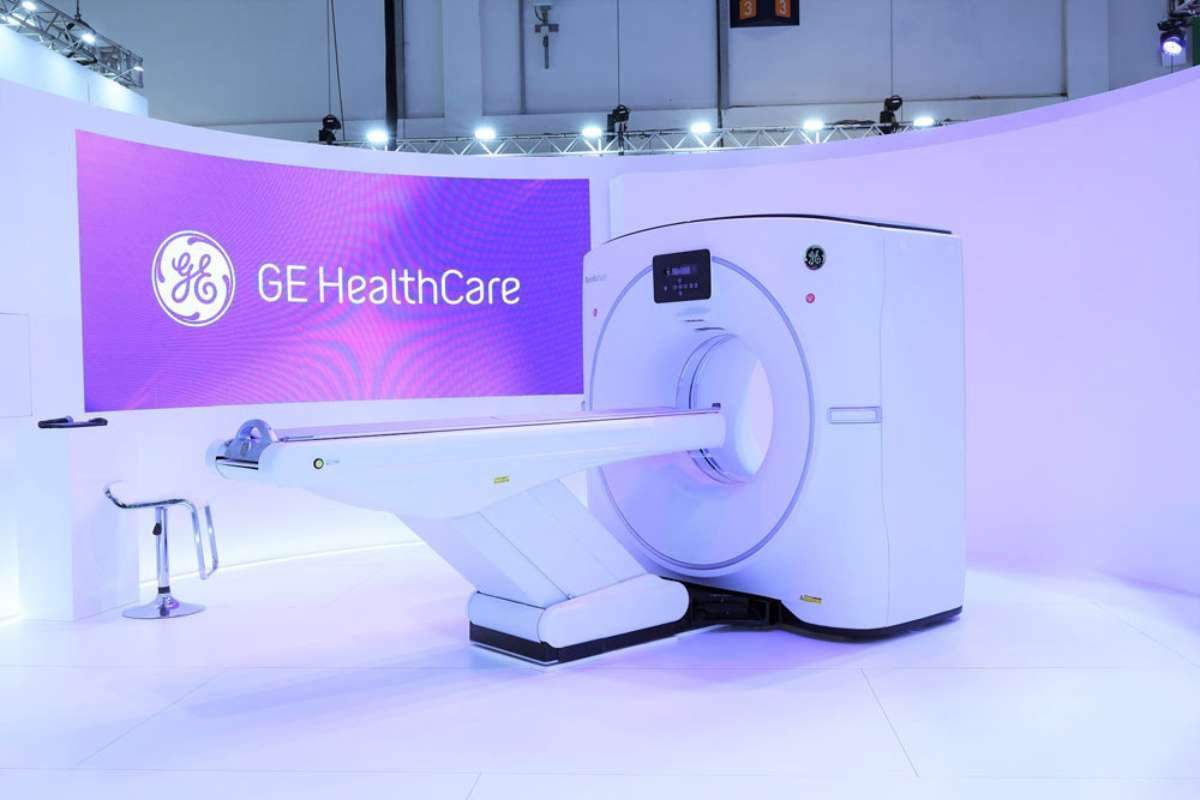
GE HealthCare combines smart hardware with cloud algorithms to streamline hospital workflows and diagnostic decision-making.
- Breakthrough Innovation: Vscan Air™, a pocket-sized, wireless ultrasound system that connects directly to smartphones and tablets. It enables doctors to scan organs at the bedside or in remote field clinics.
- Key Stats: GE HealthCare operates in over 160 countries with an annual revenue of nearly $19.7 billion.
- Real-World Impact: Portable diagnostic tools like Vscan Air reduce triage times in emergency departments by up to 30%, saving crucial minutes during cardiovascular emergencies.
7. Boston Scientific: Cardiovascular intervention and neuromodulation
Boston Scientific designs minimally invasive devices that address complex cardiovascular, urological, and neurological conditions, helping doctors overcome many Challenges in the MedTech space while remaining compliant with strict Medical technology regulations.
- Breakthrough Innovation: The WATCHMAN FLX™ Left Atrial Appendage Closure (LAAC) Device. Designed for patients with non-valvular atrial fibrillation (AFib), it permanently closes off the left atrial appendage to reduce stroke risks without long-term blood thinners.
- Key Stats: Boston Scientific reaches over $16 billion in annual revenue, with WATCHMAN implants successfully placed in over 400,000 patients globally.
- Real-World Impact: The WATCHMAN device reduces stroke risk in AFib patients by over 80%, matching the efficacy of blood thinners while eliminating major bleeding risks.
8. Johnson & Johnson MedTech: Digital surgery and electrophysiology
Johnson & Johnson MedTech operates across surgery, orthopedics, vision care, and electrophysiology.
- Breakthrough Innovation: The VELYS™ Digital Surgery Ecosystem, which integrates real-time operative data and robotic assistance to help orthopedic surgeons during knee joint replacements.
- Key Stats: J&J’s MedTech division generates over $30 billion annually, accounting for a major portion of the parent company’s sales.
- Real-World Impact: VELYS enables surgeons to make accurate cuts without a pre-operative CT scan, reducing patient radiation exposure and upfront imaging costs.
9. Dexcom: Real-time continuous glucose data platforms

Dexcom focuses on continuous glucose monitoring technology, setting industry benchmarks for sensor accuracy and automated insulin delivery integration, a prime example of how Wearable medical technology empowers patients daily.
- Breakthrough Innovation: The Dexcom G7 CGM system. Featuring a fast 30-minute sensor warm-up time, the G7 sends real-time glucose updates directly to smartwatches and connected insulin pumps.
- Key Stats: Dexcom serves over 2 million patients globally, maintaining an industry-leading accuracy rating.
- Real-World Impact: Integrating Dexcom sensors with automated insulin pumps increases a diabetic patient’s “Time in Range” (70-180 mg/dL) by an average of 11 hours per day.
10. Philips Healthcare: Connected care and telehealth monitoring
Royal Philips focuses on personal health, telehealth, and connected diagnostic monitoring in hospitals. When evaluating modern care models, understanding Telemedicine vs. in-person care technology highlights how connected platforms bridge the gap between remote monitoring and hospital visits.
- Breakthrough Innovation: The Philips Capsule Health Platform connects medical devices across intensive care units (ICUs) to consolidate live data feeds into a central AI monitoring hub.
- Key Stats: Philips Healthcare accounts for over €17 billion in revenue, powering ICU surveillance systems across thousands of hospitals worldwide.
- Real-World Impact: Automated patient monitoring reduces “alarm fatigue” among nursing staff by filtering out up to 60% of false alarms, allowing faster response times for true medical emergencies.
Comparison matrix: Top MedTech innovators at a glance
| Company Name | Core Focus | Breakthrough Technology | Primary Clinical Benefits |
|---|---|---|---|
| Medtronic | Cardiac & GI Surgery | Micra™ Pacemaker & GI Genius™ | Leadless heart pacing & AI polyp detection |
| Abbott | Diabetes Care | FreeStyle Libre 3 | Continuous glucose tracking without fingersticks |
| Intuitive Surgical | Robotic Surgery | da Vinci 5 Surgical System | Millimeter precision and faster patient recovery |
| Siemens Healthineers | Diagnostic Imaging | NAEOTOM Alpha Photon CT | Low-radiation, high-resolution internal scans |
| Stryker | Orthopedics | Mako SmartRobotics™ | Robotic-guided joint replacements |
| GE HealthCare | Handheld Ultrasound | Vscan Air™ | Pocket-sized emergency scanning on mobile devices |
| Boston Scientific | Cardiology | WATCHMAN FLX™ | Stroke prevention in AFib without blood thinners |
| J&J MedTech | Digital Surgery | VELYS™ Digital System | CT-free precision knee surgery |
| Dexcom | Diabetes Tracking | Dexcom G7 CGM | Direct-to-watch continuous glucose monitoring |
| Philips | ICU Telehealth | Capsule Connected Platform | Reduces false alarms and centralizes ICU data |
Conclusion:
The companies leading in medical technology and global healthcare systems are building connected digital ecosystems. As cloud computing, artificial intelligence, and sensors evolve, care will move from reactive hospital visits to proactive, continuous monitoring in patients’ homes. To learn more about the broader landscape, explore our primary core resource on Medical Technology.
FAQs on Companies leading in medical technology
1. What defines a company as a leader in medical technology?
A medtech leader is defined by its research investment, market share, FDA approvals, and the measurable impact its hardware and software have on patient survival rates and recovery times.
2. How is artificial intelligence transforming medical devices?
AI helps medical devices analyze diagnostic imaging, filter patient monitoring data, predict cardiac events, and assist surgeons during minimally invasive procedures with high precision.
3. Which company is currently the largest medical technology manufacturer?
By pure-play medical device revenue, Medtronic plc consistently ranks as the largest medtech company globally, generating over $36 billion in annual sales across its cardiovascular, surgical, and neuroscience portfolios.