Enterprise Cloud Computing enables organizations to accelerate transformation, reduce infrastructure costs, improve security and enable growth through AI. In this guide, we’ll look at how enterprise cloud platforms can help address key business challenges; compare public, private, hybrid and multi-cloud architectures. Prescribe a practical framework for migration; and talk about security, compliance, FinOps and AI trends. Readers will understand clearly how cloud investments provide measurable business value and long-term digital transformation.
Enterprise Cloud computing has evolved from an IT upgrade to a business growth strategy. Today, organizations are using cloud platforms to boost agility, power AI initiatives, enhance resilience, and lower infrastructure costs. Understanding the measurable business value of enterprise cloud computing allows leaders to make better technology investment decisions.
Table of Contents
Enterprise cloud computing and why it matters?
Enterprise Cloud Computing provides a secure, scalable cloud platform that enables large organizations to modernize IT, run mission-critical applications, and meet strict compliance requirements.
1. Definition & key difference
- Cloud computing: A general Internet service providing on-demand computing resources (storage, servers) to any user, typically multi-tenant with pay-as-you-go pricing.
- Enterprise Cloud Computing: A tailored framework combining public, private, and distributed clouds into one unified environment with centralized control, enhanced security, and support for complex, large-scale operations.
2. Business-first explanation
Businesses invest because it transforms how they operate. It is not just where they host data. Cloud is no longer an infrastructure decision; it is increasingly a business operating model. It enables APIs, digital products, partner ecosystems, and new revenue streams rather than merely reducing IT costs.
3. Why adoption accelerated
The pandemic forced rapid remote-work transitions, proving that the cloud enables continuous operations and faster recovery during disruptions. Modern enterprise modernization trends now embed AI at every level, making cloud the foundation for innovation.
4. Real outcomes
| Outcome | Business Impact |
| Agility | Resources scale instantly with demand; no lengthy hardware procurement |
| Scalability | Handle millions of users and vast volumes of data horizontally. |
| Faster Innovation | Deploy new services swiftly using serverless computing and AI tools. |
| Lower Infrastructure Overhead | Pay-only-for-what-you-consume eliminates overprovisioning and reduces TCO. |
This Cloud Computing delivers the public cloud experience with private data center control, optimizing both speed and cost.
The business problems enterprise cloud computing solves

Enterprise Cloud Computing solves critical business problems by transforming how organizations operate, not just where they host data.
Business Challenge → Cloud Solution
| Business Challenge | Cloud Solution |
| Slow software deployment | On-demand infrastructure |
| Rising IT costs | Usage-based scaling |
| Data silos | Unified platforms |
| Disaster recovery gaps | Distributed resilience |
| AI readiness issues | Elastic computing resources |
The cloud value framework
To help companies build a robust business case, AWS developed the Cloud Value Framework to measure progress on key dimensions. It offers six core outcomes:
- Cost Efficiency: Eliminates waste through scaling systems that match performance requirements, using pay-as-you-go pricing instead of upfront capital expenditures
- Operational Agility: Developers instantly provision resources and begin coding, improving time-to-market
- Business Continuity: Protects against hardware failures, natural disasters, and power outages with operational resilience
- Innovation Capacity: Quick access to computing capabilities enables faster deployment of innovative applications
- Staff Productivity: Frees IT teams from routine maintenance tasks to focus on strategic, differentiating work
- AI Readiness: Elastic resources support the massive compute demands of generative AI and machine learning workloads
The framework addresses the high costs of IT disruption. This is averaging $1.25–$2.5 billion annually for Fortune 1000 companies.
Choosing the right enterprise cloud architecture
This cloud computing offers four architecture models, each serving distinct business needs.
1. Cloud architecture models:
| Model | Description |
| Public Cloud | Services hosted by providers (AWS, Azure, GCP) over the internet; low cost, automated deployments, maximum scalability |
| Private Cloud | Infrastructure exclusively for one organization, on-premises or third-party; greatest control, security, and configurability |
| Hybrid Cloud | Combines private + public clouds, enabling workloads to move between environments; balances security with scalability. |
| Multi-Cloud | Uses multiple public clouds from different providers; avoids vendor lock-in, accesses specialized services, and adds redundancy. |
2. Which architecture fits which business goal?
| Goal | Best Model |
| Maximum scalability | Public |
| Regulatory compliance | Private |
| Balanced flexibility | Hybrid |
| Vendor risk reduction | Multi-cloud |
3. Why hybrid and multi-cloud are becoming the default enterprise strategy
Today, more and more enterprises are balancing performance, governance, and resilience, rather than having a single environment. The hybrid cloud blends public and private clouds to achieve a balance of security, flexibility, and compliance. Multi-cloud is the optimization of performance, cost, and redundancy between providers without vendor lock-in.
Statista reports that in Q4 2023, enterprises spent $73.7 billion on cloud infrastructure (20% year-over-year growth). Hybrid and multi-cloud are a default operating model, even for hyperscalers.
Building a successful enterprise cloud migration strategy
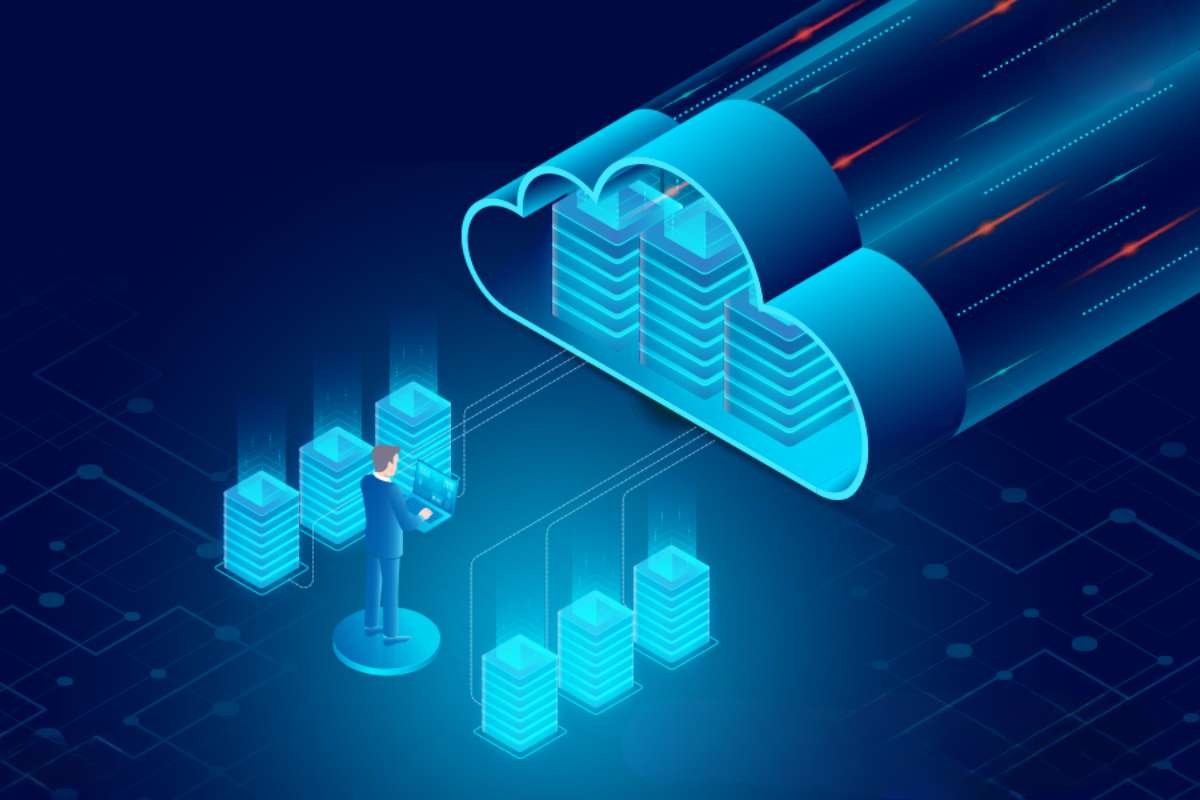
Building a successful Enterprise Cloud Computing migration requires a strategic framework that prioritizes business value over technical execution alone.
- 5-Step Migration Framework:
Step 1: assess workloads
Evaluate your current IT landscape by inventorying all applications, infrastructure, and data. Analyze workload performance requirements, dependencies, security needs, and compatibility with cloud environments. Assess organizational readiness and identify gaps in skills, processes, or technology.
Step 2: prioritize business-critical applications
Identify which applications drive core business value and should be migrated first. Consider factors like business impact, technical complexity, risk profile, and potential ROI. Not all workloads are equal. Some may be better suited for retirement or retention on-premises.
Step 3: choose migration approach
Select the right strategy for each workload using the “3 R’s” framework:
| Approach | Description | Best For |
| Rehost (Lift-and-Shift) | Move applications to the cloud without code changes | Quick wins, legacy systems |
| Refactor (Re-architect) | Redesign applications for cloud-native features | Modernization, AI readiness |
| Replatform | Make minimal optimizations for cloud benefits | Balance of speed and optimization |
This aligns with the broader “7 R’s” migration strategy used in large-scale programs.
Step 4: implement governance
Establish a Cloud Center of Excellence (CCoE) to define security policies, compliance requirements, cost management practices, and operational procedures. Create a multicloud governance framework that evaluates cost, performance, security, and compliance across providers. Governance should enable teams, not block progress. Maintain two-way communication with DevOps to ensure security measures don’t slow development.
Step 5: measure outcomes
Track both program-level and business-level metrics:
- Program metrics: Migration velocity, cutover delays, rollback rates
- Business metrics: Total Cost of Ownership (TCO) reduction, operational improvement, application release frequency
Migration success is measured by business outcomes, not by the percentage of workloads moved. Focus on TCO reduction, time-to-market improvements, and enhanced operational resilience rather than counting migrated servers.
Why this matters
Your migration service should include timelines, roles, milestones, potential risks, rollback procedures, and measurable success criteria. A phased approach with checkpoints ensures you balance business value, technological feasibility, product velocity, and cost.
Managing security, compliance, and cloud costs
Managing security, compliance, and costs is critical for Enterprise Cloud Computing success. These three areas address the top executive concerns in cloud adoption.
1. Security
Shared Responsibility Model: The cloud provider secures the infrastructure, while the customer manages everything built on top of it. In IaaS, you protect applications and data; in SaaS, the provider handles most security.
Identity Management: Implement strong access controls, multi-factor authentication, and role-based permissions to ensure only authorized users access resources.
Zero-Trust Architecture: Assume no implicit trust; verify every request, device, and user continuously, regardless of location.
2. Compliance
Data Residency: Ensure personal data is stored and processed within specific geographic boundaries, as required by regulations like GDPR.
Sovereign Cloud Requirements: Modern enterprises increasingly need data to remain within national borders, with local providers or dedicated regions.
Industry Regulations: Create a responsibilities matrix for each cloud project, aligning with compliance standards like HIPAA, PCI-DSS, or SOC 2.
3. Cost management: FinOps
FinOps is an evolving cloud financial management discipline enabling cloud computing engineering, finance, and business teams to collaborate on data-driven spending decisions.
| Pillar | Purpose |
| Cloud Spending Visibility | Granular reporting by department, project, or application |
| Resource Optimization | Right-size resources, eliminate idle instances, and use reserved discounts. |
| Budget Accountability | Chargeback/show back models, automated alerts for cost anomalies. |
FinOps is not about just cutting costs. It’s about maximizing business value through cross-functional collaboration. Cost governance and data sovereignty are becoming more important in the enterprise space, but are rarely discussed by competitors.
How AI is reshaping enterprise cloud computing?
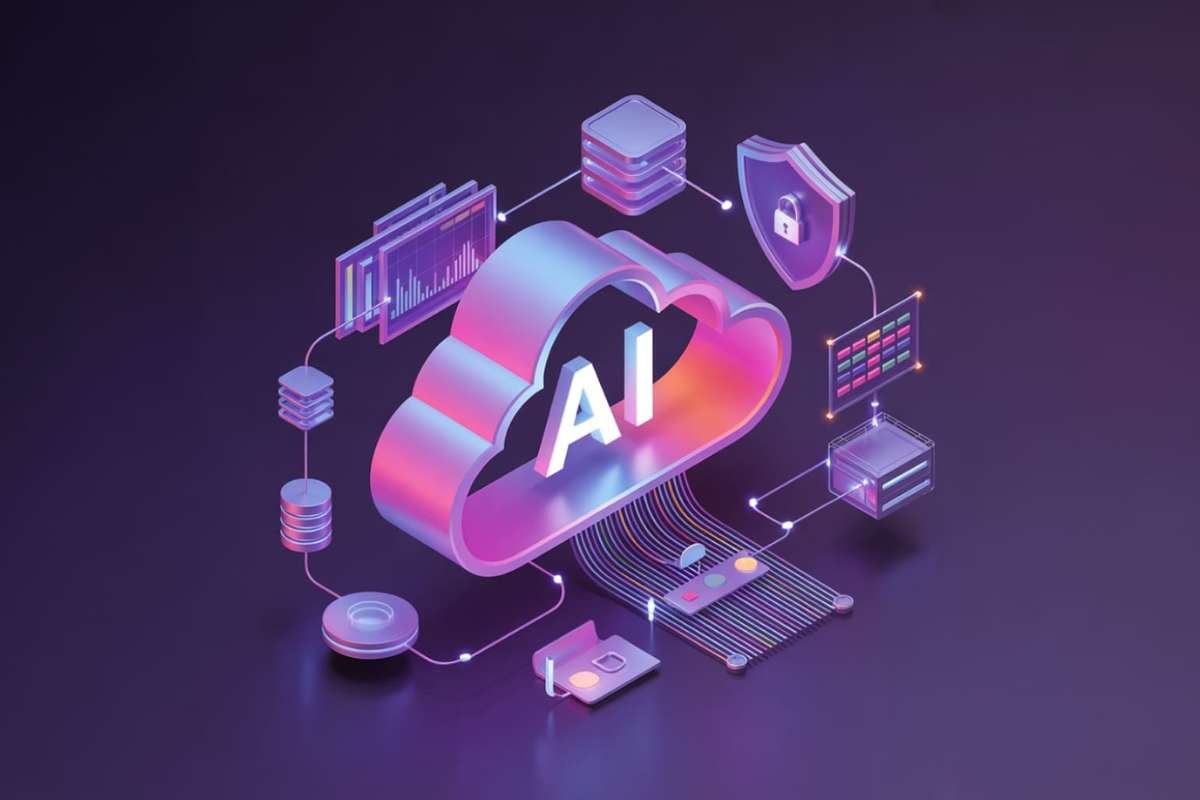
AI is fundamentally reshaping Enterprise Cloud Computing by transforming infrastructure requirements, service models, and operational capabilities.
1. AI infrastructure requirements
AI workloads demand infrastructure built for unstructured data at scale, requiring high-throughput access to large datasets and real-time processing that traditional cloud-native systems can’t handle. Organizations need GPU and compute scalability with specialized hardware like NVIDIA H200 Tensor Core GPUs for parallel processing.
2. Cloud-native AI services
Modern cloud providers offer cloud-native machine learning services using containers, microservices, and auto-scaling infrastructure. Enterprise data platforms must track data provenance. It ensures every dataset’s journey is auditable to maintain model integrity.
3. Why AI adoption is accelerating cloud modernization
Organizations deploying AI increasingly require modern cloud architectures capable of handling data-intensive workloads. Unlike traditional automation, Agentic AI can make decisions, execute workflows, and adapt dynamically without constant human oversight, enabling self-healing, self-optimizing infrastructure.
Agentic AI transforms cloud operations through:
- Autonomous Kubernetes controllers scaling before demand spikes
- AI-driven network forensics detecting anomalies
- Real-time cost optimization adjusts instances automatically
The result: zero-touch, self-managing environments where AI agents handle failures, optimize costs, and secure systems in real time.
Conclusion:
Enterprise cloud computing has gone from an IT refresh to a strategic enabler of business growth, agility, and innovation. Whether it is IT cost escalation or AI readiness, cost efficiency, operational agility, and business continuity, organizations are realizing measurable value by solving critical challenges. Whether the choice is public, private, hybrid, or multi-cloud architecture, it’s not just about moving workloads, but aligning technology with business goals to be successful. AI is changing the way cloud works, and FinOps is making sure the costs are accountable. The future is being built on resilient, scalable foundations by today’s enterprises.
Ready to cloud your business? Begin by evaluating your current workloads and ranking the applications that provide the highest business value.
FAQ:
1. What is an enterprise in cloud computing?
In cloud computing, “enterprise” refers to the IT infrastructure, software, and services specifically designed to meet the rigorous demands of large businesses.
2. What are the 4 types of cloud computing?
The four main types of cloud computing are categorized as deployment models. They are Public, Private, Hybrid, and Multicloud.
3. Is cloud computing a high-paying job?
Yes, cloud computing is one of the highest-paying fields in the tech industry. Because nearly all modern businesses rely on cloud infrastructure to operate and scale, professionals who can build, secure, and optimize these environments are in high demand.
4. What is the Big 3 of cloud computing?
The “Big Three” of cloud computing refer to the dominant global cloud infrastructure providers: Amazon Web Services (AWS), Microsoft Azure, and Google Cloud Platform (GCP).
5. Will AI replace cloud computing?
No, AI will not replace cloud computing. Instead, they share a symbiotic relationship: AI acts as the “brain” for intelligent automation and data processing.