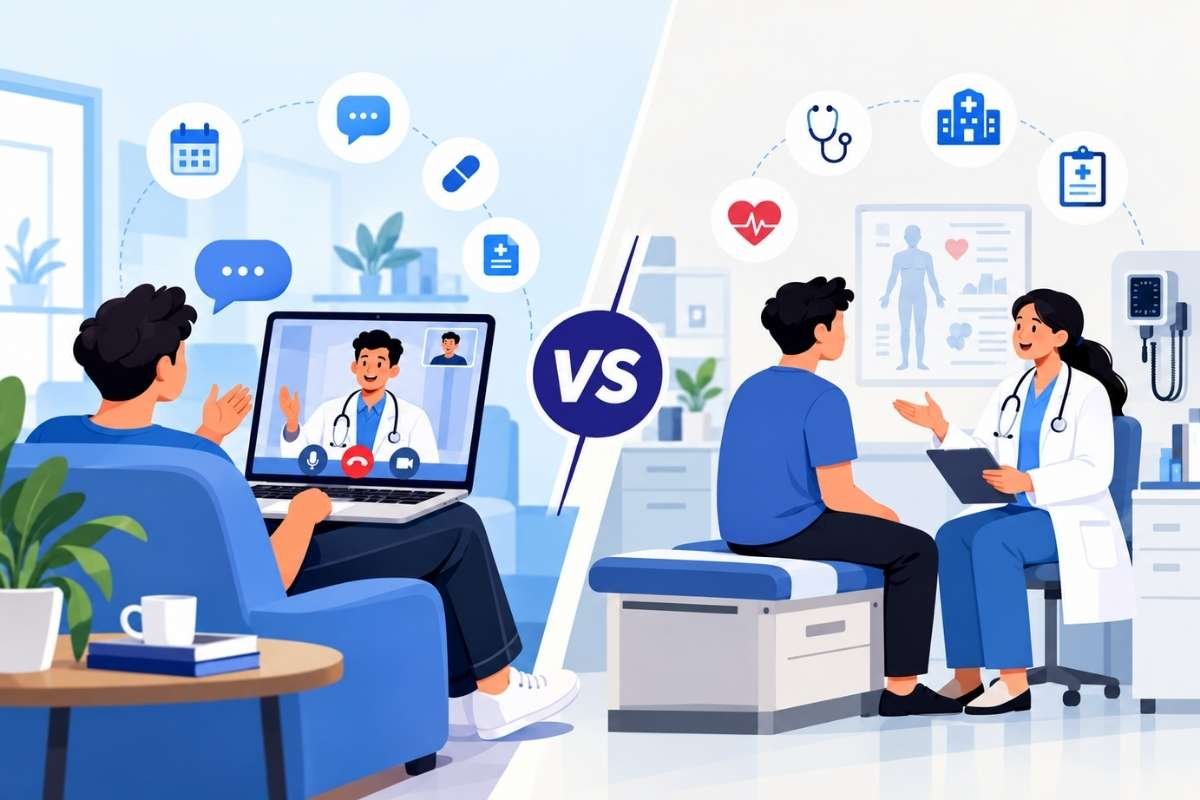
Telemedicine uses digital technologies such as video consultations, mobile apps, cloud platforms, and remote monitoring sensors to deliver care without an in-person visit. In-person care technology uses physical diagnostic devices, EHR systems, imaging equipment, laboratory tools, and surgical technologies during face-to-face care. This is the core difference when comparing telemedicine vs. in-person care technology.
Both models use connected healthcare technologies, but they serve patients differently. Telemedicine supports remote consultations, routine follow-ups, mental health services, and chronic care management. In-person technology enables physical examinations, procedures, imaging, laboratory testing, and hands-on treatment.
Understanding these technological differences helps healthcare organizations design effective hybrid care models that combine virtual access with physical clinical services.
Telemedicine vs. in-person care technology: Core platform differences
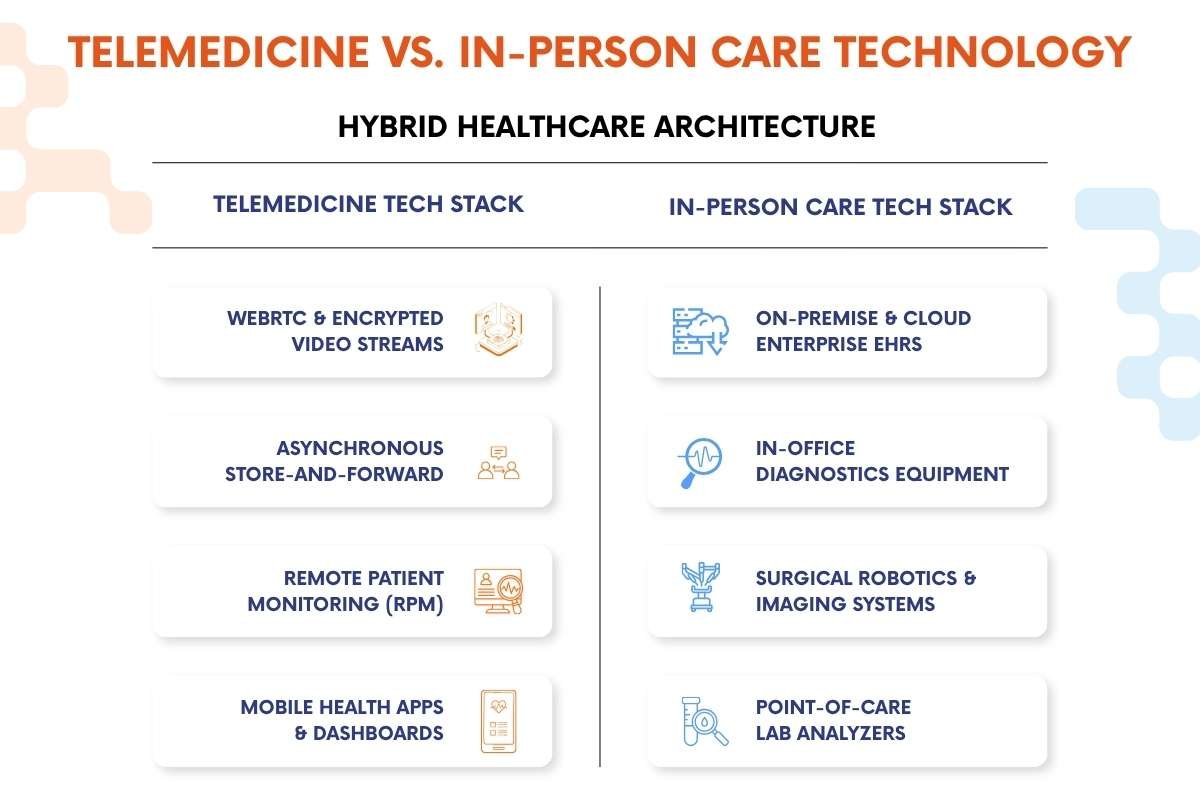
While both care models share foundational infrastructure, such as cloud-based EHRs and secure data pipelines, their technology stacks serve distinct operational purposes.
Hybrid healthcare architecture
| Telemedicine Tech Stack | In-Person Care Tech Stack |
|---|---|
| • WebRTC & Encrypted Video Streams • Asynchronous Store-and-Forward • Remote Patient Monitoring (RPM) • Mobile Health Apps & Dashboards | • On-Premise & Cloud Enterprise EHRs • In-Office Diagnostics Equipment • Surgical Robotics & Imaging Systems • Point-of-Care Lab Analyzers |
The primary technological distinction between virtual and brick-and-mortar care lies in data collection and interaction design, and broader Medical technology trends:
- Telemedicine Platforms: Depend on real-time video streaming (WebRTC), asynchronous messaging, and Wearable medical technology like IoT remote patient monitoring (RPM) sensors. Data moves continuously from the patient’s home to the clinician’s dashboard.
- In-Person Care Technology: Relies on physical diagnostic machinery (X-rays, MRIs, ultrasound), bedside monitors, surgical robotics, and high-throughput point-of-care laboratory devices.
| Feature / Metric | Telemedicine Technology Stack | In-Person Care Technology Stack |
|---|---|---|
| Primary Interaction Medium | WebRTC Video, Audio, Secure Chat | Face-to-Face Physical Examination |
| Data Acquisition | Wearables, Bluetooth Sensors, Patient Input | Imaging Systems, Lab Analyzers, Diagnostic Hardware |
| EHR Integration | Cloud APIs, FHIR/HL7 Integrations | Direct Local / Enterprise EHR Access |
| Ideal Use Cases | Follow-ups, Triage, Therapy, Chronic Monitoring | Acute Care, Surgeries, Complex Diagnostics |
| Patient Access Barrier | Requires Internet & Digital Literacy | Requires Physical Travel & Infrastructure |
Where each model fits and how technology supports both
Neither virtual care nor traditional clinical care can stand completely alone. Instead, technology forms the bridge that connects virtual triage with physical treatment while addressing common challenges in the MedTech industry.
Patient journey flow
↓
1. Virtual Triage & Initial Consultation
(Telemedicine Tech Stack)
↓
2. In-Person Diagnostic & Procedure
(Physical Clinic Tech Stack)
↓
3. Remote Monitoring & Continuous Care
(RPM / Hybrid Platform)
1. Virtual-first primary care & chronic disease management
Telemedicine platforms excel when continuous communication matters more than physical touch. Digital platforms combine asynchronous store-and-forward tools with live video sessions. Enhanced by AI in medical technology for preliminary triage and predictive analysis.
- Real-World Example: Organizations like Teladoc Health use integrated telehealth software to manage hypertension and diabetes. Combined with cellular-connected blood pressure cuffs and glucose meters, clinical engines collect patient vitals remotely.
- Impact & Data: Clinical meta-analyses indicate that virtual interventions for chronic care match or exceed traditional in-person visits in controlling blood pressure and lowering HbA1c levels, driven by higher compliance with regular check-ins.
2. High-precision physical diagnostics & acute interventions
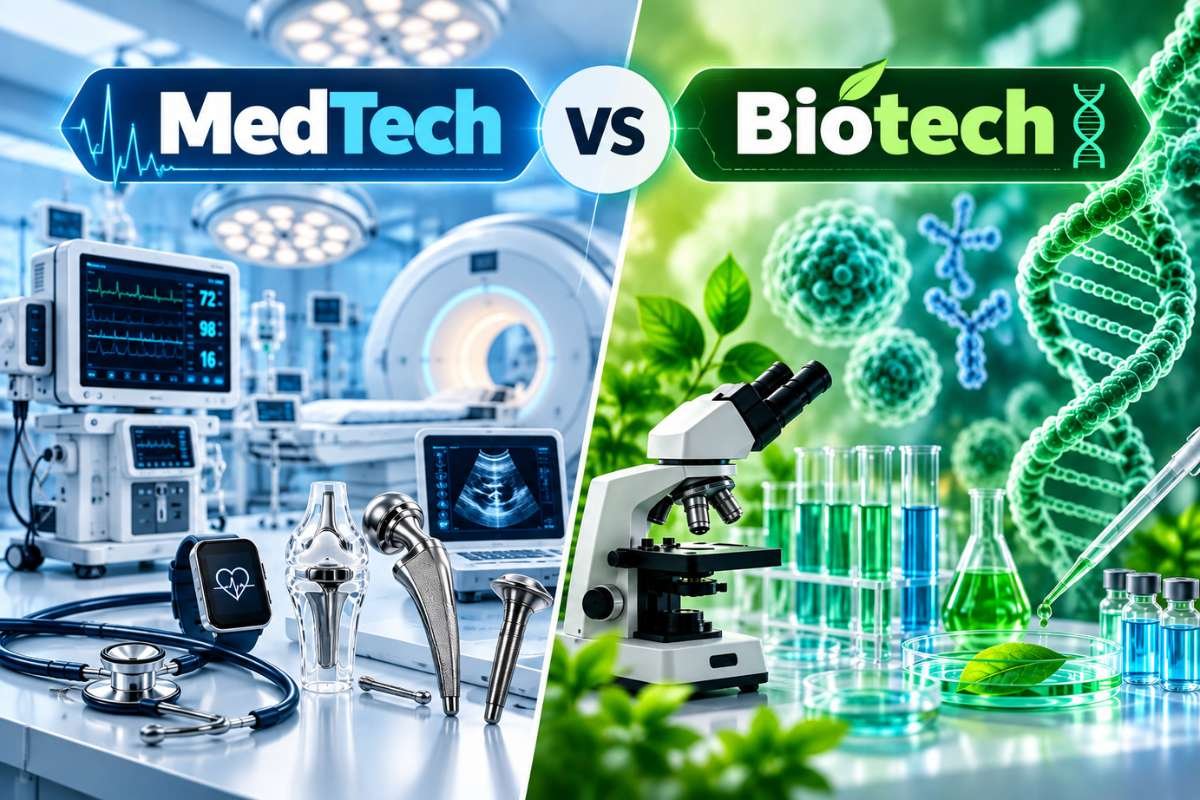
In-person care remains indispensable when care demands physical palpation, emergency stabilization, or advanced imaging. Understanding MedTech vs biotech helps clarify how hardware engineering differs from biological treatments in physical clinics.
- Real-World Example: Hospital networks like Mayo Clinic deploy advanced point-of-care ultrasound (POCUS), digital CT scanners, and robotic surgical suites (such as the da Vinci Surgical System).
- Impact & Data: Physical clinic platforms capture multi-dimensional diagnostic data in real time, allowing surgical teams to perform high-complexity procedures that cannot be digitized.
3. The unified hybrid model
Leading health systems combine both stacks using Fast Healthcare Interoperability Resources (FHIR) APIs while adhering to strict Medical technology regulations to safeguard patient data privacy.
Real-World Example: Integrated delivery networks like Kaiser Permanente use unified health record systems where a virtual urgent care visit flows directly into a scheduled clinic appointment without missing diagnostic data.
Key advantages and trade-offs
Comparing these care delivery technologies reveals distinct operational trade-offs:
Telemedicine technology
- Pros: Highly scalable, eliminates patient travel, lowers missed appointment rates, and provides continuous data streams via RPM.
- Cons: Limited by digital literacy barriers, internet connectivity constraints, and an inability to perform hands-on physical exams.
In-person care technology
- Pros: Offers complete hands-on physical assessments, immediate emergency lab testing, and access to surgical equipment.
- Cons: High overhead costs, physical capacity limits, and travel friction for patients.
Conclusion
When evaluating telemedicine vs. in-person care technology, the goal is not to declare a single winner. Instead, modern healthcare in medical technology relies on a blended, hybrid infrastructure. Telemedicine platforms handle virtual intake, routine follow-ups, and long-term remote monitoring, while clinic-based technology powers acute treatments, hands-on diagnostics, and complex surgical care. By connecting both systems through secure, interoperable data standards, health providers deliver flexible, efficient, and high-quality care to every patient.
FAQs on telemedicine vs. in-person care technology
1. Is telemedicine technology as accurate as in-person diagnostic technology?
It is equally accurate for routine and chronic conditions using remote monitoring, but acute issues still require in-person imaging and exams.
2. How do electronic health records (EHRs) connect telemedicine and in-person visits?
EHRs use standardized APIs (like FHIR) to sync patient notes, labs, and remote vitals seamlessly between virtual and physical clinics.
3. What hardware is essential for a telemedicine platform?
Key hardware includes secure audio/video gear, cloud servers, mobile devices, and connected diagnostic tools like smart blood pressure cuffs.