Healthcare is changing quickly as new technologies move from research labs into hospitals, clinics, and homes.
Artificial intelligence can support medical devices. Wearables can track health data outside hospitals. Robotic systems can assist surgeons. Genomic data can help doctors personalize care.
The World Health Organization (WHO) says digital health can help make healthcare more effective, accessible, and people-centered. In 2025, WHO reported that 129 countries had national digital health strategies.
Here are the key medical technology trends shaping healthcare today.
Medical technology trends with emerging innovations shaping healthcare delivery
The most important developments are not limited to one technology. Instead, several technologies are beginning to work together.
1. AI is making medical care smarter
Artificial intelligence is one of the biggest medical technology trends and a major part of AI in medical technology.
AI can help analyze medical images, identify patterns, support diagnosis, and assist clinical workflows.
The U.S. Food and Drug Administration (FDA) maintains a list of AI-enabled medical devices authorized for marketing in the United States. These devices must meet applicable FDA premarket requirements for safety and effectiveness.
AI is not a replacement for doctors. It is increasingly being used as a tool to support healthcare professionals.
2. Wearable devices are taking healthcare home
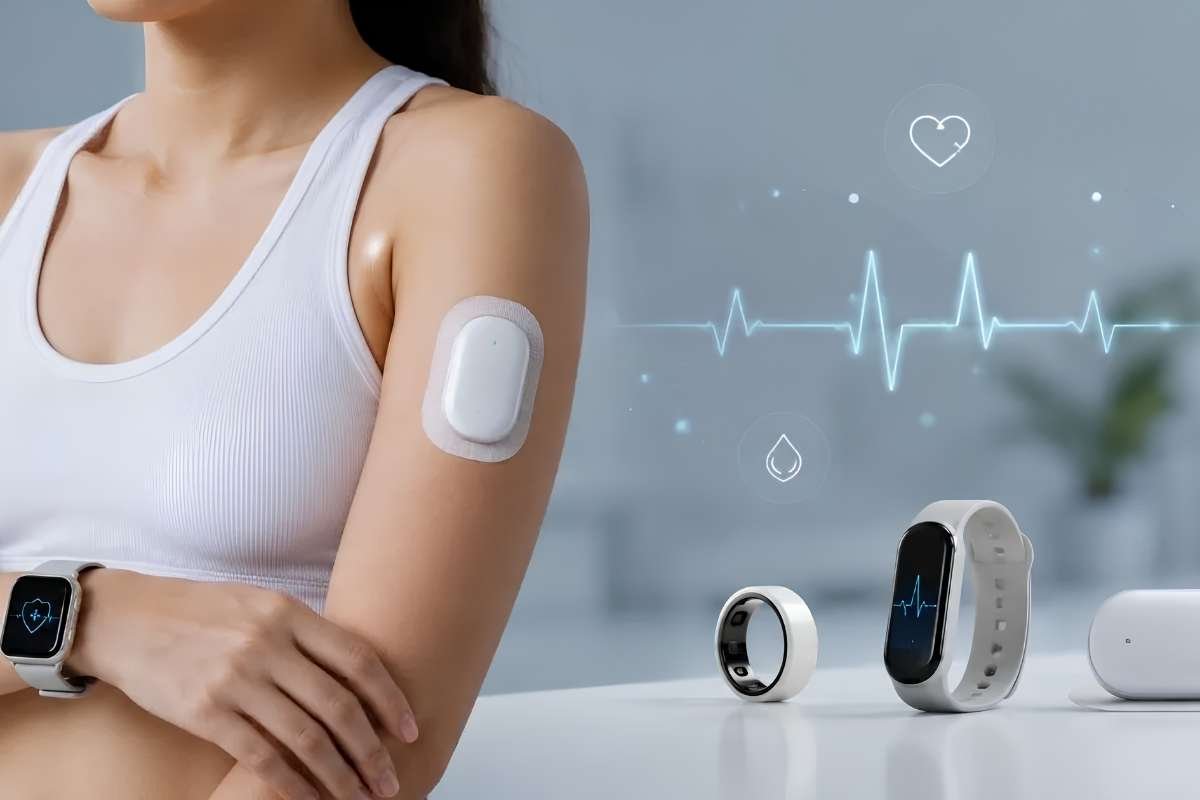
Smartwatches, rings, patches, and other sensors are making health monitoring easier outside hospitals.
Wearable medical technology/Wearable Technology in Healthcare is becoming an important part of modern healthcare because these devices can collect health information during everyday activities.
The FDA’s sensor-based digital health device list includes wearable technologies designed to monitor health continuously or through spot checks.
Recent examples include the Dexcom Stelo Glucose Biosensor System and an Apple Watch-based system for monitoring Parkinson’s disease tremor and dyskinesia. Both appear on the FDA’s 2026 sensor-based device list.
This means healthcare data can increasingly be collected during everyday life instead of only during a clinic visit.
3. Robotic surgery is expanding
Robotic-assisted surgery is another major healthcare technology trend. These systems allow trained surgeons to control specialized instruments during minimally invasive procedures.
Intuitive reported about 3.15 million procedures using da Vinci systems in 2025, up from about 2.68 million in 2024.
Another example is Medtronic’s Hugo Robotic-Assisted Surgery System, which received FDA clearance in 2025 for specified urologic procedures.
Robotic systems assist surgeons; they do not independently replace them.
4. Precision medicine is personalizing treatment
Precision medicine uses information about a person’s genetics, environment, lifestyle, and other health data to guide medical decisions.
The National Human Genome Research Institute explains that precision medicine aims to make prevention, diagnosis, and treatment more specific to each person.
For example, genomic information can help doctors understand certain diseases and, in some cases, select more suitable treatments.
This approach moves healthcare away from a simple “one treatment for everyone” model.
It also highlights the difference between MedTech vs biotech, as medical technology can include devices, digital systems, and clinical tools, while biotechnology focuses more broadly on biological processes and applications.
5. 3D printing is creating patient-specific solutions
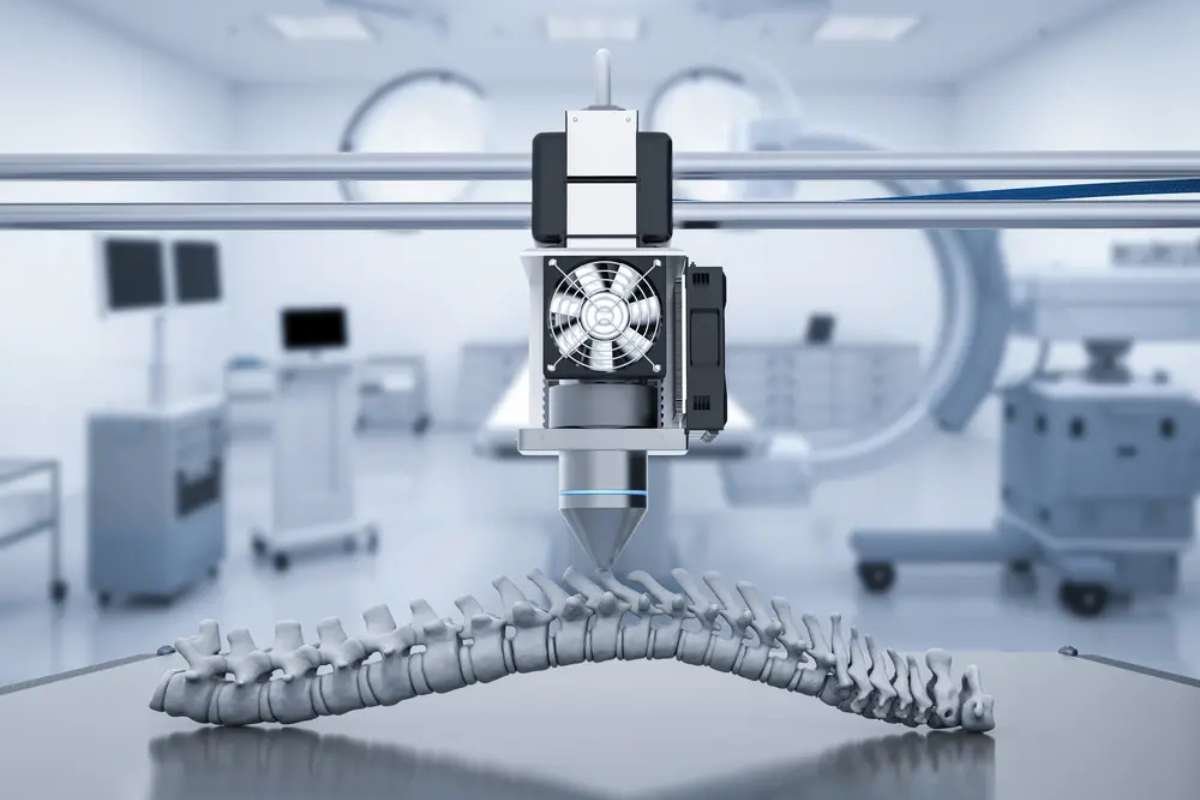
3D printing is also changing medical technology.
The FDA says 3D printing can be used to make orthopedic and cranial implants, surgical instruments, dental products, and prosthetics. Some products can also be designed around a patient’s anatomy.
Doctors can also use 3D-printed models to better understand complex anatomy and plan procedures.
The key advantage is flexibility: digital designs can be adapted to specific medical needs.
6. Remote monitoring is changing patient care
Patients do not always need to visit a hospital for regular monitoring.
Remote patient monitoring uses connected devices to collect health information while people stay at home.
Blood pressure monitors, glucose sensors, wearable devices, and other connected tools can send health data to healthcare teams. This can support long-term care and follow-up, especially for patients who need regular monitoring.
WHO identifies digital health and connected systems as important parts of modern healthcare transformation.
7. Healthcare systems are becoming more connected
New medical devices create large amounts of data. But that data is most useful when healthcare systems can share it safely.
Interoperability allows different healthcare technologies to exchange information. This matters for electronic health records, AI systems, medical imaging, wearables, and remote monitoring.
WHO highlights interoperability and data sharing as important parts of digital health development.
Connected systems can help healthcare professionals access relevant information when they need it.
As more systems become connected, challenges in MedTech such as cybersecurity, interoperability, privacy, and data quality become increasingly important.
8. Digital health is becoming a global priority
Digital healthcare is no longer limited to individual hospitals or technology companies.
WHO reported in 2025 that 129 countries had established national digital health strategies. It also said more than 1,600 government officials from over 100 countries had received training in digital health and AI.
This shows that digital transformation is becoming part of national healthcare planning.
The next step is not simply adopting more technology. Healthcare systems also need strict rules, skilled professionals, secure data, and equal access. This is where companies leading in medical technology can play an important role by developing devices, platforms, and solutions for changing healthcare needs.
What comes next for medical technology?
The next generation of medical technology trends will likely focus on connecting technologies rather than using them separately.
For example:
Wearable → collects health data
AI → analyzes relevant patterns
Connected systems → share authorized information
Doctor → reviews the findings
Remote monitoring → follows the patient after care
This connected model could make healthcare more continuous and personalized. But technology must still meet important requirements: clinical evidence, safety, privacy, interoperability, affordability, and human oversight.
WHO’s current digital health strategy emphasizes people-centered, equitable, and sustainable digital transformation.
Conclusion
The major medical technology trends are changing how healthcare is delivered.
AI is supporting medical devices and clinical work. Wearables are bringing monitoring into homes. Robotic surgery is supporting minimally invasive procedures. Precision medicine is helping personalize care, while 3D printing is enabling more customized medical products.
The biggest opportunity is not simply having newer technology. It is using the right technology safely, effectively, and for the right patient.
As healthcare becomes more connected, the combination of medical technology (PILLAR) and human expertise will remain central to better patient care.
FAQs
1. What are the latest medical technology trends?
The key trends include AI, wearable devices, robotic surgery, precision medicine, remote monitoring, and 3D printing.
2. How is AI changing healthcare?
AI helps analyze medical data, support diagnosis, improve medical imaging, and assist clinical workflows.
3. How are wearables used in healthcare?
Wearable devices can track health data such as glucose levels, heart activity, movement, and other vital signals.
4. What is precision medicine?
Precision medicine uses a person’s genetic, lifestyle, and health data to help guide more personalized treatment.