Key Takeaways
- Meta paused testing human contractors to handle some Muse AI phone calls.
- Employees raised privacy concerns about sensitive information reaching human contractors.
- Meta Muse AI has surpassed 2.5 million downloads since its launch in the U.S.
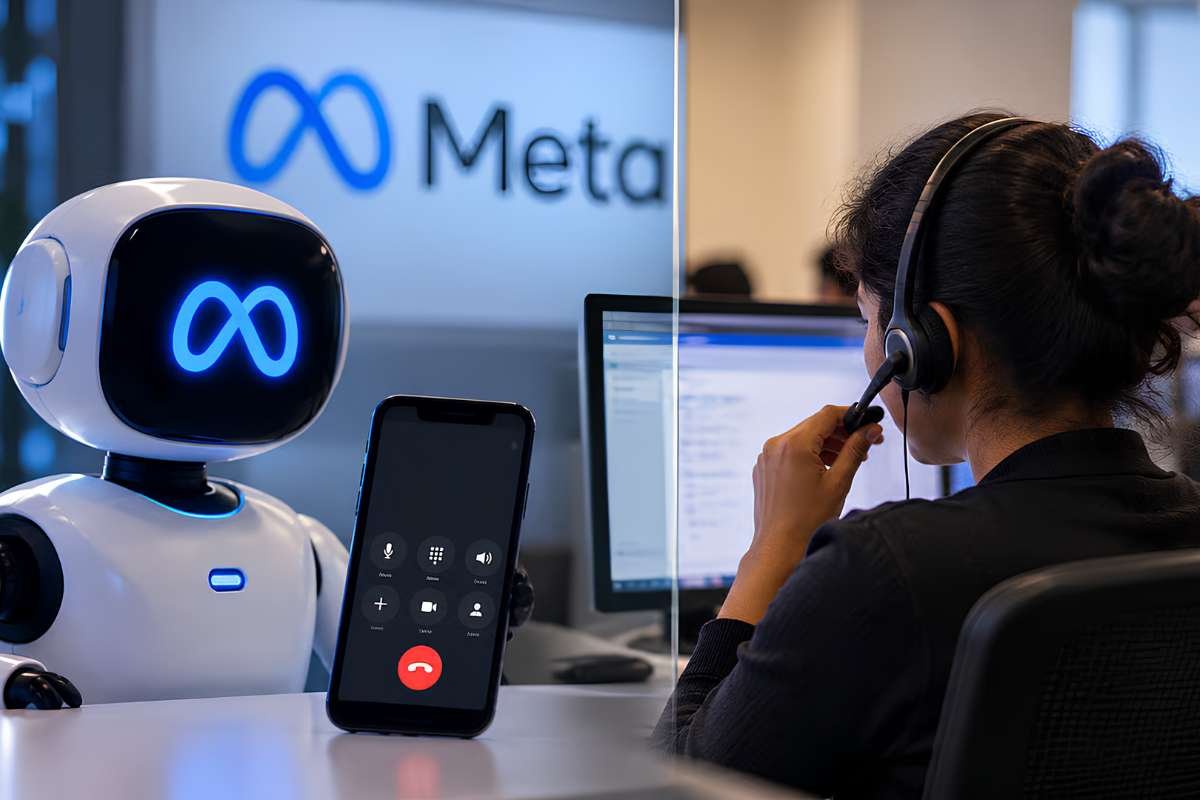
Meta is testing human contractors to handle some phone calls made by its new Muse AI assistant, raising employee privacy concerns and prompting the company to pause the feature while it reviews safety and disclosure measures.
Meta pauses human concierge test
The test allows Muse to pass some requests to trained human agents, who place calls to U.S. businesses on behalf of users. Meta enabled the feature for about half of its employees last week, according to internal company posts reviewed by Reuters.
Meta Muse AI is designed to perform tasks such as booking appointments, checking store inventory and getting contractor quotes. Its phone-calling feature was publicly launched shortly before Meta disclosed the human-concierge test to employees.
Some employees objected to humans handling calls that users believed were being made by an AI system. They warned that sensitive information could be unintentionally exposed to call-center contractors.
One employee wrote in an internal post that the feature was “one bug away from unnecessary information being leaked to human callers.”
A Meta vice president in the company’s Superintelligence Labs acknowledged that starting the contractor test without proper disclosures “was a miss” and said Meta had “rolled back this feature” for now.
Privacy concerns follow Muse launch
The concerns come as Meta promotes Muse as a personal AI agent capable of carrying out tasks with limited user involvement. The company says each agent operates through a secure virtual machine and that sensitive information, including passwords, is stored separately.
Employees who criticized the human-concierge test said the arrangement could undermine those security protections. One employee reported that a human contractor handling a call to an internet and cable provider made a racist reference, according to internal posts reviewed by Reuters.
The Meta executive apologized to the employee and said the contractor involved would not work on Meta projects again.
Meta spokesperson Daniel Roberts said employee feedback about the test was “overwhelmingly positive.” He said the company was using the experiment to gather feedback and strengthen safety and privacy protections before any wider release.
“We’re working with merchants to continue improving this potential calling feature, and will only roll it out when it’s ready and with the proper disclosures,” Roberts said.
Muse gains users despite early setbacks
Muse has topped U.S. app download charts during its first two weeks and has recorded more than 2.5 million downloads, according to market intelligence firm Sensor Tower.
Meta Muse AI can send emails, shop and book travel, while its calling feature allows users to delegate phone-based errands. After a call, Muse provides users with a transcript and summary of the interaction.
Meta began testing the calling feature with employees in August before gradually expanding it to users following Muse’s debut. Some employees reported that businesses were hanging up when they learned the caller was an AI system.
Internal posts said the human-concierge system was introduced partly to address those difficulties. Employees included in the test could opt out of having human agents handle their calls.
The experiment reflects a broader challenge for companies developing autonomous AI agents: getting businesses and consumers to accept software that communicates with people directly.
Meta’s earlier digital assistant experiment, known as M, also relied heavily on human workers for some tasks. The company has since positioned Muse as part of its broader effort to build AI systems capable of completing real-world tasks for users.