Do successful entrepreneurs need a business degree?
Not always. A business degree can provide useful knowledge, but many founders develop their skills by solving real problems, talking to customers, testing products, learning from mistakes, and working with experienced people.
The best Business education lessons from successful founders come from seeing how entrepreneurs turn simple ideas into real businesses.
Their journeys teach practical lessons about business strategy, finance, marketing, sales, leadership, innovation, and customer needs.
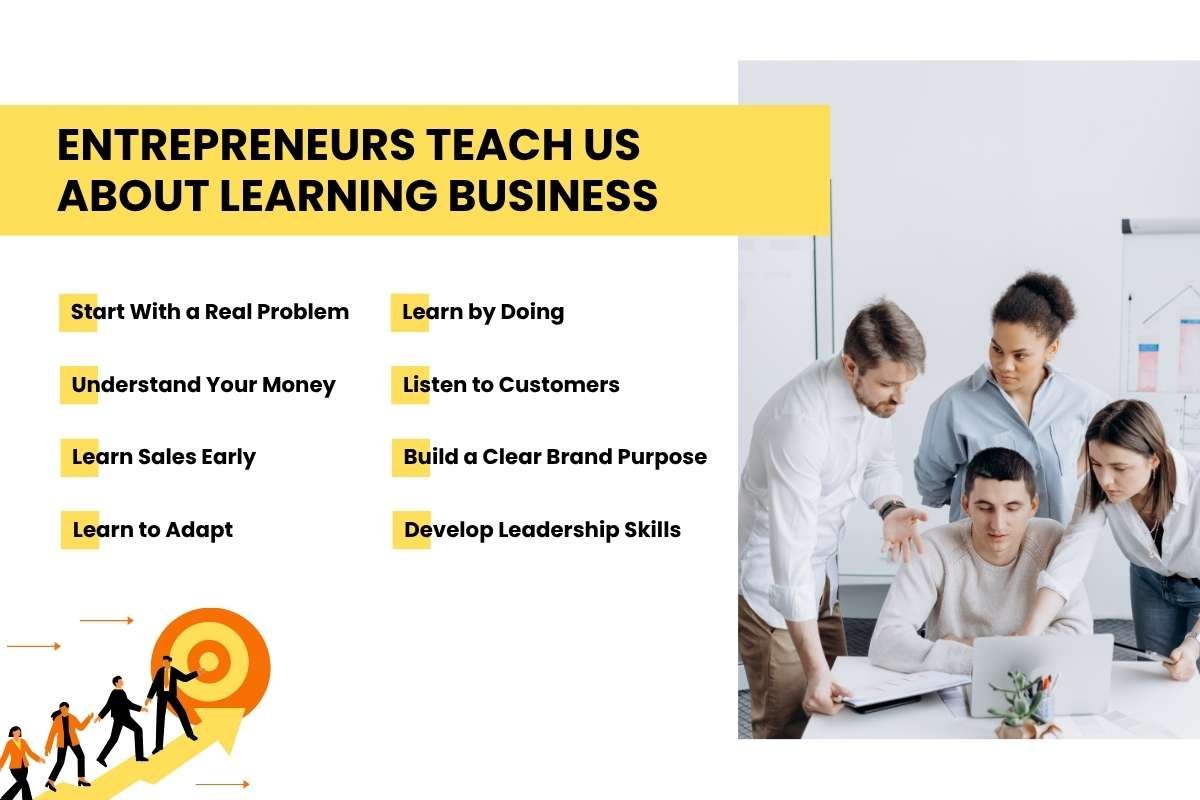
What entrepreneurs teach us about learning business
1. Start with a real problem
Great businesses often begin with a simple problem.
Sara Blakely created SPANX after cutting the feet from control-top pantyhose because she wanted a better solution under white pants. She later built the company after starting with $5,000 in savings and no business degree.
- Business lesson: Find a problem people actually want solved before building a product.
- Learn: Customer research and problem-solving.
- Apply: Talk to potential customers before investing heavily.
2. Learn by doing
Founders rarely have all the answers when they start. They learn by testing products, speaking with customers, studying competitors, and fixing mistakes.
Sara Blakely is a strong example. Before creating SPANX, she spent seven years selling fax machines. She used that sales experience when she started her own company.
Business lesson: Experience can teach lessons that textbooks cannot.
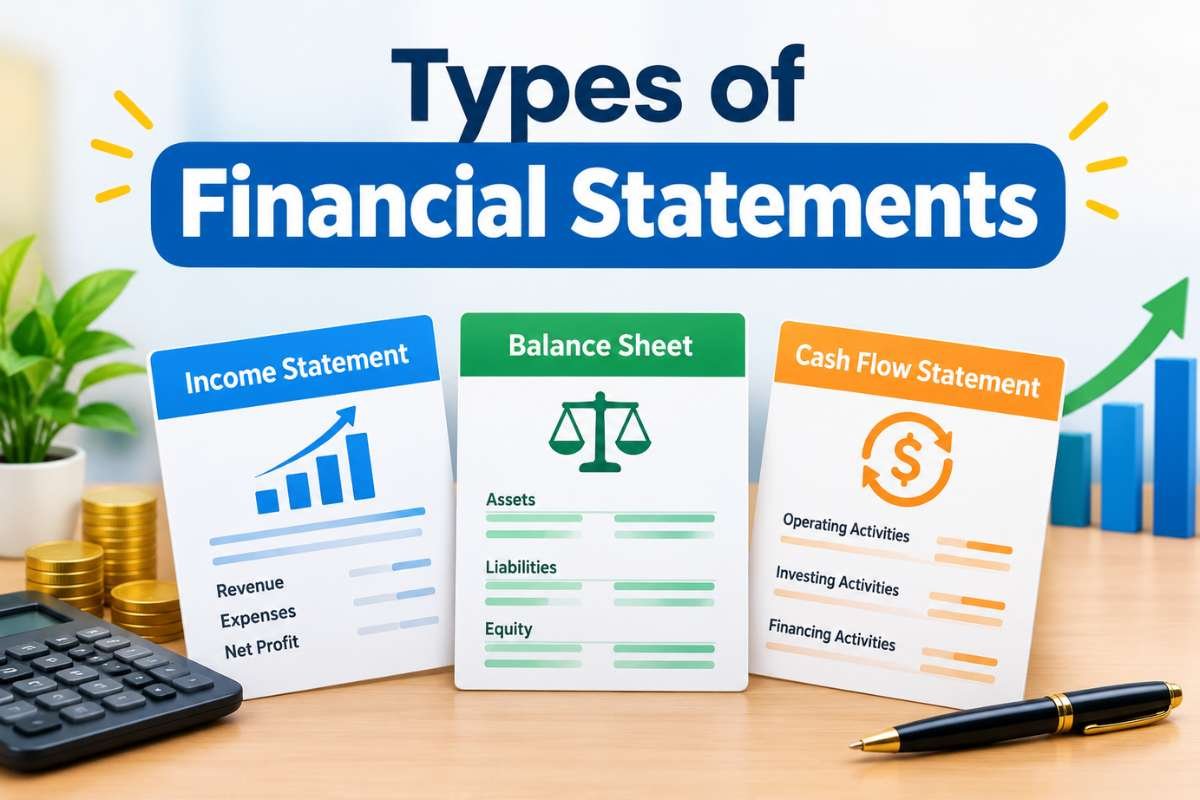
3. Understand your money
Entrepreneurs need to understand more than sales.
They should know:
- Revenue
- Costs
- Profit
- Cash flow
- Pricing
- Customer acquisition costs
- Break-even point
A founder does not need to become an accountant. But they should understand the numbers well enough to make better decisions.
Business lesson: Growth is useful only when the business can support it financially.
4. Listen to customers
Customers can become a powerful source of business education. Their questions, complaints, reviews, and buying decisions show what is working and what needs to change. Successful founders do not simply defend their ideas. They look for patterns in customer feedback.
Business lesson: Customer feedback is free market research.
5. Learn sales early
A great product does not automatically become a successful business.
Founders need to explain:
- What the product does
- Who needs it
- Why it is different
- Why customers should pay for it
Sales also helps founders understand customer needs.
Business lesson: Selling is not only about closing deals. It is also about learning what customers value.
6. Build a clear brand purpose
A strong purpose can help a business stand out.
Bombas is a useful example. Its model connects every purchase with a donation of essential clothing through its giving network. Bombas says it works with more than 4,000 giving partners.
Business lesson: A clear purpose can connect a product with a larger customer need.
7. Learn to adapt
Markets change. Customer preferences change. Businesses must change too.
Poppi started as a small beverage idea and grew into a major prebiotic soda brand. PepsiCo completed its acquisition of Poppi in 2025 for $1.95 billion, including anticipated tax benefits.
Business lesson: Your first business idea does not have to be your final one.
Founders should be willing to improve their product, branding, marketing, and strategy when market evidence supports a change.
8. Develop leadership skills
As a business grows, the founder cannot do everything alone. Leadership becomes essential.
Founders need to learn how to:
- Hire people
- Delegate work
- Give feedback
- Set priorities
- Solve conflicts
- Build trust
Business lesson: Building a company means eventually building a team.
Real-world founder lessons from Enterprise Wired
Enterprise Wired’s founder-focused stories also show how practical business education works.
Get-A-Whey: Solve a personal problem
Get-A-Whey began with a search for healthier dessert options. The founders experimented with protein-rich ice cream before turning the idea into a business.
Business Lesson: A personal problem can become a strong business opportunity when it solves a wider customer need.
Xero Shoes: Know your business vision
Xero Shoes’ founder story shows how entrepreneurs can make funding and growth decisions based on their long-term vision.
Lesson: Funding should support your business strategy rather than become the strategy itself.
Poppi: Test, improve, grow
Poppi’s journey shows how a small product idea can evolve through customer response, branding, distribution, and growth. PepsiCo’s official announcement confirms its $1.95 billion acquisition of the brand.
Lesson: Keep improving when the market gives you new information.
Formal business education vs learning from experience
Do founders need formal business education?
It depends on the founder and the business.
Formal education can help entrepreneurs understand:
- Accounting
- Finance
- Marketing
- Strategy
- Economics
- Leadership
Practical experience teaches:
- How customers really behave
- How to sell
- How to handle rejection
- How to manage uncertainty
- How to make decisions with limited information
The strongest approach can combine both. Study the theory. Apply it in the real world. Measure the result. Improve it.
That creates a continuous learning cycle: Learn → Apply → Measure → Improve → Repeat
Why founder stories matter for business education

Founder stories make business concepts easier to understand.
Instead of only reading about customer research, you can see how a founder solved a real customer problem. Instead of only studying marketing, you can see how a brand built awareness. Instead of reading about finance, you can see how founders used limited capital to build a company.
That is why Business education lessons from successful founders can be valuable for students, new entrepreneurs, professionals, and business leaders.
Conclusion
Successful founders prove that business education does not happen in only one place.
It can happen in a classroom, during a customer meeting, through a failed product, while managing a team, or while solving a difficult business problem.
Sara Blakely shows the value of starting small. Bombas shows how purpose can support a brand. Poppi shows why businesses must adapt. Enterprise Wired founder stories provide similar lessons from entrepreneurs across industries.
The biggest lesson is simple: Keep learning. Keep testing. Listen to customers. Understand your numbers. And improve with every decision.
That is what turns business knowledge into business experience.
FAQs
1. What are the main business lessons from successful founders?
The main lessons are to solve real problems, understand customers, learn sales and finance, build strong teams, test ideas, and adapt.
2. Do successful founders need a business degree?
No. A degree can provide structured knowledge, but founders can also learn through experience, mentors, courses, customers, and practical work.
3. What is the most important lesson entrepreneurs can learn?
Start with a real customer problem and keep improving the solution based on evidence.
4. How can entrepreneurs learn business without an MBA?
They can learn through books, online courses, mentors, customer research, business case studies, internships, networking, and hands-on projects.