Medical Technology uses devices, software, AI, robotics, and digital tools to prevent, diagnose, monitor, and treat health conditions. In 2026, these technologies are becoming more connected and easier to use in hospitals, clinics, and homes.
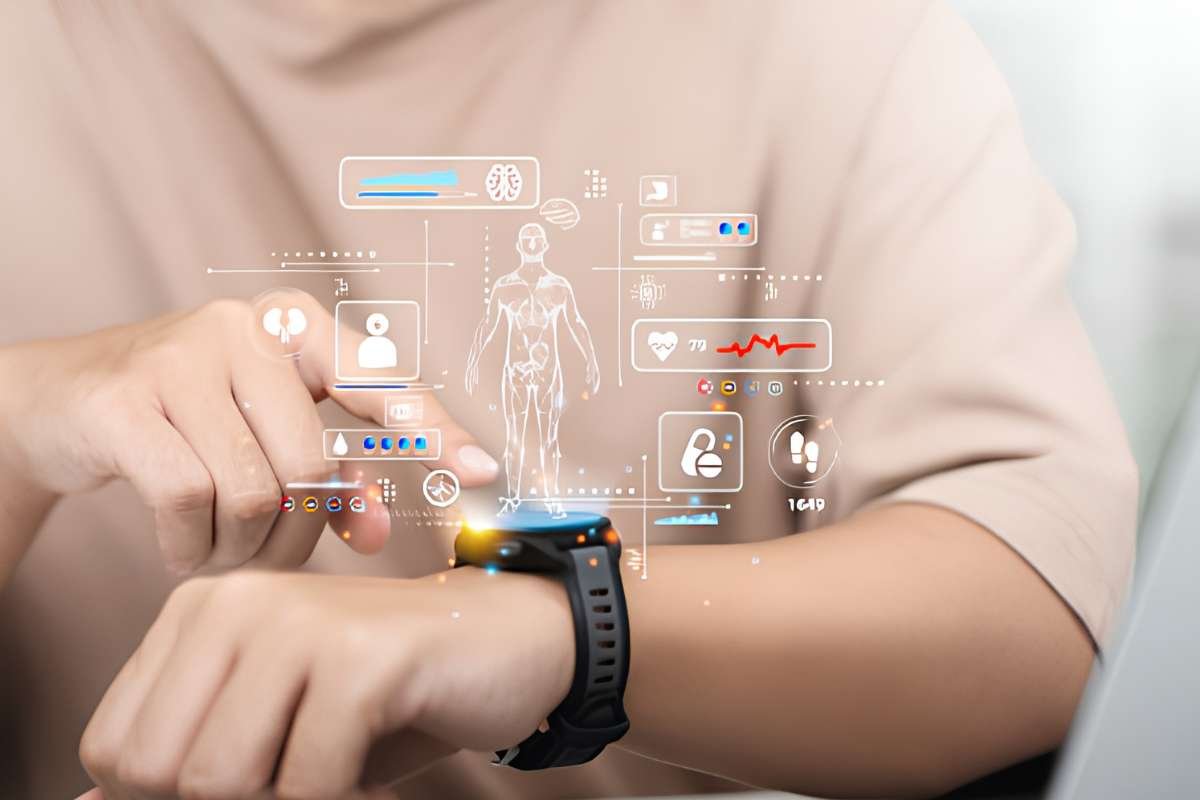
AI can support medical image analysis, wearables can track health data, and remote-monitoring devices can help doctors follow patients outside the hospital. Robotic systems and digital health platforms are also becoming part of modern care.
The U.S. Food and Drug Administration (FDA) includes areas such as digital health, wearable devices, telehealth, medical software, and connected health technologies within the wider digital health field.
The key shift is connected care. Medical devices, patient data, software, and healthcare professionals can work together to support faster decisions and more continuous patient care.
Why medical technology is becoming central to healthcare in 2026
Medical Technology is becoming central to healthcare because it can help providers detect problems earlier, monitor patients more closely, and deliver care beyond traditional hospital settings.
A simple way to understand it is:
Diagnose → Monitor → Treat → Operate → Connect → Track → Support decisions
An MRI helps identify health problems, a glucose monitor tracks changes, a pacemaker supports heart function, and robotic systems assist with procedures. These tools show how technology is supporting care at different stages.
The FDA’s AI-enabled medical device database includes devices used in radiology, cardiovascular care, neurology, gastroenterology, and other fields. The FDA updates the list periodically and notes that it does not cover every AI-enabled device.
Real-world example: In August 2026, the FDA authorized Aletta, a robotic blood-draw device for adults in outpatient settings. It shows that robotics is moving into routine healthcare tasks, not just complex surgery.
This reflects a wider shift toward practical, connected, and patient-focused Medical Technology.
Types of medical technology you need to know
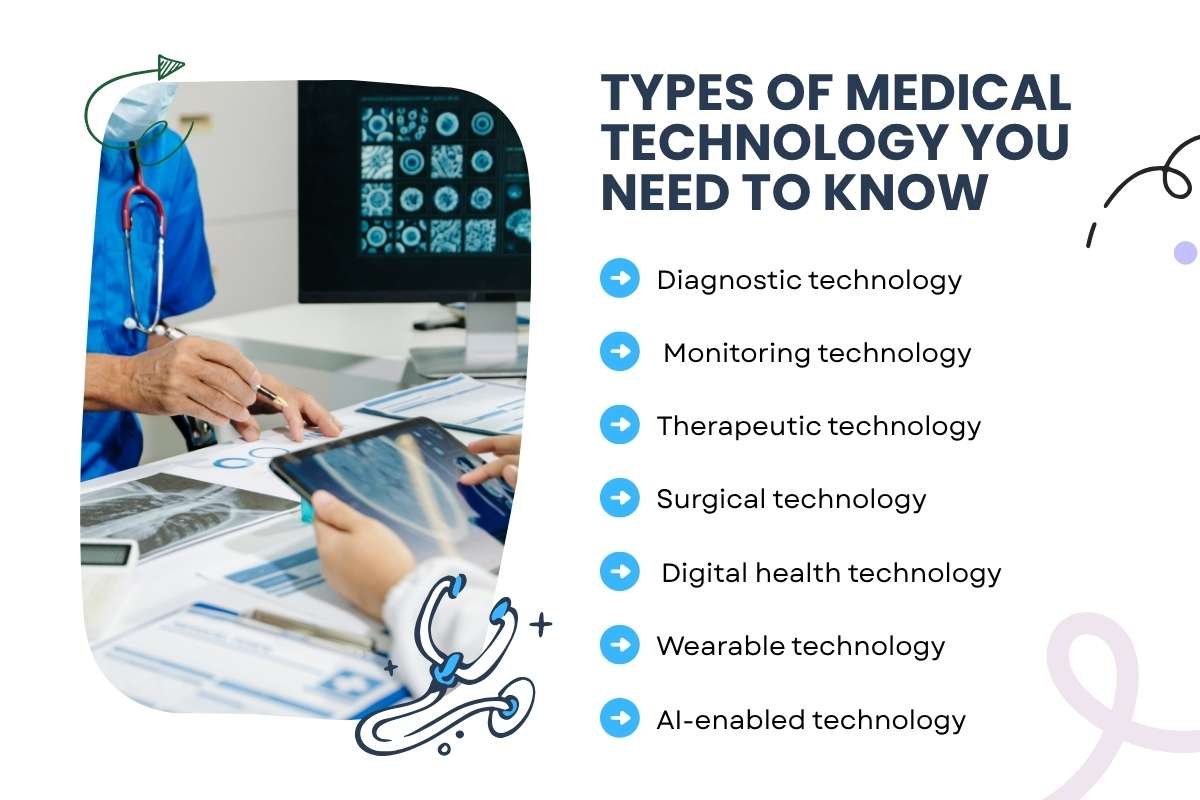
The main types of medical technology include medical imaging, diagnostic devices, surgical systems, wearables, digital health platforms, and AI-powered tools. These categories can overlap, as one technology may support diagnosis, monitoring, and treatment at the same time.
- Diagnostic technology: Diagnostic technology helps doctors find and identify diseases or health problems. It includes MRI, CT scans, X-rays, ultrasound, laboratory tests, and pathology tools.
- Monitoring technology: Monitoring technology helps track a patient’s health over time. Examples include heart monitors, glucose monitors, blood pressure devices, and connected patient sensors.
- Therapeutic technology: Therapeutic technology is used to treat or manage medical conditions. Common examples include pacemakers, insulin delivery systems, infusion pumps, implants, and other treatment devices.
- Surgical technology: Surgical technology helps doctors perform procedures with greater precision and control. It includes robotic surgical systems, surgical imaging, navigation tools, and minimally invasive devices.
- Digital health technology: Digital health technology uses software and connected systems to improve healthcare delivery. Examples include electronic health records, telehealth platforms, health apps, and clinical software.
- Wearable technology: Wearable technology allows patients and healthcare professionals to track health information outside traditional healthcare settings. Depending on the device, it may monitor heart rate, activity, sleep, glucose, or other health signals.
- AI-enabled technology: AI-enabled technology uses artificial intelligence to support healthcare tasks. It can assist with medical imaging, patient monitoring, clinical decision support, data analysis, and workflow automation.
Medical Technology can be grouped into seven broad areas:
Diagnose → Monitor → Treat → Operate → Connect → Track → Predict
These categories can overlap. For example, one modern medical device may combine sensors, software, connectivity, and AI to monitor a patient and support clinical decisions.
What medical technology trends are changing healthcare right now?
The latest Medical technology trends are moving healthcare toward more connected, automated, and data-driven care. AI, remote monitoring, robotics, and connected devices are becoming part of everyday healthcare.
- AI Is Moving Into Real Medical Devices: AI is moving from research and testing into medical products used in real healthcare settings. The FDA maintains a list of AI-enabled medical devices, showing how this technology is becoming part of modern care.
- Connected Healthcare is Taking Care Beyond the Hospital: Connected devices can collect health data and share it with healthcare professionals. This supports remote monitoring, follow-up care, and chronic disease management.
- Medical Robotics is Reaching More Clinical Tasks: Robotics is moving beyond traditional surgery. In August 2026, the FDA authorized Aletta, a robotic blood-draw device for adults in outpatient settings. It shows how robotics is entering routine clinical tasks.
- Healthcare is Becoming More Data-Driven: Medical images, records, sensors, lab results, and connected devices generate large amounts of data. Healthcare providers increasingly need tools that can organize this information and support better decisions.
AI in medical technology: where does it fit?
AI in Medical Technology uses algorithms and data to support tasks that traditionally required significant human analysis.
Common applications include:
- Medical image analysis
- Disease detection support
- Patient monitoring
- Clinical decision support
- Surgical planning
- Documentation and workflow support
- Predictive analytics
- Personalized treatment planning
The FDA maintains a list of AI-enabled medical devices that have met applicable premarket requirements. These devices are reviewed for safety and effectiveness based on their intended use.
Real-world example: Siemens Healthineers has AI-enabled technologies across medical imaging and other healthcare areas. Its FDA-listed products include AI-enabled imaging technologies.
AI can support clinical decisions, but its value depends on its intended use, evidence, data quality, safety, and clinical setting. Healthcare professionals remain responsible for applying the technology appropriately and interpreting its results.
For patients, the key point is simple: AI can support healthcare decisions, but it is not a replacement for clinical judgment.
Can wearable medical technology make healthcare more continuous?
Wearable technology can help collect health information between medical appointments. Some devices are designed for general wellness, while others have specific medical purposes. That distinction matters because regulatory requirements depend on the device’s intended use.
Wearables can potentially help with:
- Continuous or repeated monitoring
- Chronic disease management
- Remote patient monitoring
- Activity tracking
- Heart-related measurements
- Glucose monitoring
- Early identification of changes
The FDA recognizes wireless medical technologies as tools that can allow healthcare professionals to access and monitor patient data remotely.
Important: A wearable reading is not automatically a medical diagnosis. The device’s accuracy, intended use, validation, and clinical context matter.
Why do medical technology regulations matter so much?
The Medical Technology regulations landscape covers more than product approval. It also includes safety, clinical evidence, cybersecurity, data privacy, quality standards, and monitoring after a product reaches the market.
In the United States, the FDA uses different regulatory pathways depending on the device. These include pathways such as 510(k), De Novo, and Premarket Approval.
Digital health regulation is also evolving. The FDA’s current digital-health guidance list includes guidance on clinical decision support software and other digital health technologies.
Cybersecurity has become another major regulatory issue.
In February 2026, the FDA updated its final guidance on cybersecurity in medical devices, covering cybersecurity in device design, labeling, and premarket submissions.
This matters because connected medical devices can improve care but can also create cybersecurity risks that may affect device safety and performance
A modern MedTech company therefore needs to think about:
- Safety
- Clinical evidence
- Cybersecurity
- Data privacy
- Software performance
- Quality management
- Device labeling
- Post-market monitoring
The FDA examples discussed above reflect the U.S. regulatory framework and should not be treated as universal Medical Technology regulations.
Rules vary across countries, so companies entering global markets must follow the requirements of each relevant regulator.
What are the biggest challenges facing MedTech?

The main challenges include data privacy, cybersecurity, clinical validation, high costs, system compatibility, unequal digital access, and the need for human oversight.
- Data privacy: Healthcare data is highly sensitive. Companies must protect information throughout collection, storage, processing, and sharing.
- Cybersecurity: Connected devices can introduce cybersecurity risks. The FDA’s 2026 cybersecurity guidance shows how important security has become during medical-device development.
- Clinical validation: A technology may look promising in a laboratory but still needs evidence showing that it performs safely and effectively for its intended use.
- High Cost: Advanced devices can be expensive to develop, purchase, maintain, update, and train staff to use.
- Interoperability: Hospitals often use systems from different vendors. If these systems cannot communicate properly, valuable information can remain isolated.
- Digital inequality: Not every patient has equal access to smartphones, reliable internet, wearable devices, or digital healthcare services.
- Human oversight: Healthcare is a high-stakes environment. Technology should support qualified professionals and clear accountability.
Addressing these MedTech challenges requires a balance between innovation and safety, privacy, affordability, accessibility, and human decision-making.
MedTech vs biotech: which field does what?
MedTech mainly creates tools, devices, software, and systems used in healthcare, while biotech works with biological systems, cells, organisms, or biological components to develop products.
| MedTech | Biotech |
|---|---|
| MRI Systems | Biologic Medicine |
| Pacemakers | Cell-based products |
| Surgical robots | Genetic Technologies |
| Patient monitors | Biological Research |
| Medical Software | Biopharmaceuticals |
The two fields can overlap. Diagnostics, personalized medicine, biomaterials, and advanced therapies can involve both technology and biology.
A simple way to remember the difference is: MedTech builds healthcare tools. Biotech works with biology to create healthcare products and solutions.
Telemedicine or in-person care: where does technology fit?
Telemedicine delivers healthcare services over distance, while in-person care provides physical access to clinicians, examinations, procedures, testing, and other hands-on services.
The World Health Organization says telemedicine has the potential to improve clinical management and extend healthcare coverage when properly implemented.
Telemedicine can be useful for:
- Follow-up consultations
- Selected routine appointments
- Remote monitoring
- Medication discussions
- Some chronic-care services
In-person care remains important when a patient needs a physical examination, emergency treatment, imaging, laboratory testing, surgery, or another hands-on service.
Telemedicine and in-person care can complement each other, depending on the patient’s needs, condition, and type of care required.
Which companies are building the next generation of medical technology?
The Medical Technology industry includes companies working across imaging, surgery, diagnostics, monitoring, cardiovascular care, diabetes, and digital health.
- Medtronic: Medtronic works across surgical robotics, cardiovascular technology, diabetes, neuromodulation, and other medical technologies. Its Hugo Robotic-Assisted Surgery system combines robotic instruments, visualization, and the Touch Surgery digital ecosystem. Medtronic says Touch Surgery uses AI-powered tools to analyze surgical data and provide performance insights.
- Siemens Healthineers: Siemens Healthineers works across diagnostic imaging, laboratory diagnostics, molecular medicine, digital health, and therapeutic technologies. The company says an estimated five million patients globally benefit from its technologies and services each day. This is a company-reported figure, not an independent industry estimate.
- GE HealthCare: GE HealthCare has a broad medical-imaging portfolio covering CT, MRI, X-ray, ultrasound, mammography, molecular imaging, and other technologies. It is also incorporating AI and deep-learning technologies into imaging workflows.
- Abbott: Abbott operates across areas including diagnostics, cardiovascular care, diabetes, and medical devices.
These companies show that Medical Technology is a broad ecosystem, bringing together devices, software, AI, robotics, diagnostics, and digital health solutions.
Medical technology lessons from leading innovators
Leading innovators offer several practical lessons.
Start with a real clinical problem. Technology should solve a meaningful healthcare need rather than exist simply because it is technically possible.
Design around patients and clinicians. A powerful device is less useful if patients cannot use it or clinicians cannot fit it into their workflow.
Build safety into development. Regulation, testing, cybersecurity, and clinical evidence should be part of product development from the beginning.
Use data responsibly. More data does not automatically mean better healthcare. Data needs to be accurate, secure, relevant, and clinically useful.
Combine disciplines. Modern MedTech requires engineers, doctors, data scientists, designers, regulatory experts, cybersecurity professionals, and business teams.
Measure real-world value. Innovation should ultimately be assessed through patient outcomes, safety, usability, access, and healthcare impact, not only technical specifications.
Siemens Healthineers, for example, highlights AI, automation, robotics, and sensing as key technology areas and emphasizes interdisciplinary innovation.
Conclusion
Medical Technology is no longer about individual devices alone. Hardware, software, AI, data, and human expertise are increasingly working together to support diagnosis, treatment, monitoring, and patient care.
AI-enabled devices, robotics, wearables, telemedicine, and connected tools are already being used across healthcare. Their value, however, depends on clinical evidence, safety, data quality, cybersecurity, and how well they fit into real healthcare workflows.
For healthcare providers and patients, the key takeaway is simple: effective Medical Technology should solve a real clinical need, support better decisions, and improve patient care without replacing human expertise.
FAQs
What is medical technology?
Medical Technology is the use of devices, software, equipment, AI, robotics, sensors, and other technologies to prevent, diagnose, monitor, or treat health conditions and support healthcare delivery.
What are the main types of medical technology?
The main types include diagnostic technology, monitoring devices, therapeutic devices, surgical technology, medical software, digital health platforms, wearables, and AI-enabled medical devices.
How is AI used in medical technology?
AI can support medical image analysis, monitoring, clinical decision support, surgical planning, workflow automation, and other healthcare tasks. Its use depends on the intended purpose, evidence, safety controls, and regulatory requirements
What is the difference between MedTech and biotech?
MedTech generally focuses on medical devices, equipment, software, and healthcare technologies, while biotech uses biological systems, cells, organisms, or biological components to develop useful healthcare products.
Is wearable technology considered medical technology?
Some wearables are medical devices, while others are general wellness products. Their classification depends on their intended use and applicable regulatory requirements.
Why is medical technology important?
Medical Technology can improve diagnosis, treatment, monitoring, clinical workflows, and access to care while enabling healthcare to become more connected and data-driven.
What are the biggest medical technology challenges?
Major challenges include clinical validation, regulation, cost, cybersecurity, data privacy, interoperability, accessibility, and ensuring that technology remains safe and useful for patients and healthcare professionals.