In today’s crowded marketplace, this quote feels more relevant than ever. Businesses are no longer competing only on price or product; they’re competing on connection. And here’s the reality: acquiring a new customer can cost up to 7 times more than retaining an existing one. Even more compelling, increasing customer retention by just 5% can boost profits by 25% to 95%.
That’s not just marketing theory. That’s measurable business impact.
This is where relationship marketing becomes a true growth driver. Instead of focusing on one-time transactions, relationship promotion prioritizes long-term engagement, trust, and consistent value. It shifts the mindset from “How do we sell today?” to “How do we stay relevant tomorrow?”
Modern customers expect personalization, transparency, and meaningful interaction. They want brands that remember their preferences, respond to their feedback, and evolve with their needs. Businesses that invest in relationships don’t just gain customers, they build loyalty, advocacy, and predictable revenue streams.
In the sections ahead, we’ll explore how interaction marketing works, why it matters in today’s experience-driven economy, and how businesses can use it strategically to create lasting competitive advantage.
What Is Relationship Marketing?
If customers have more choices than ever before, what makes them stay?
Research shows that nearly 65% of a company’s revenue often comes from existing customers, and repeat buyers tend to spend significantly more than first-time purchasers. Yet many businesses still focus the majority of their budgets on acquisition rather than retention. This gap is exactly where relationship promotion creates a measurable impact.
Interaction marketing is a long-term strategy designed to build trust, engagement, and loyalty over time. Instead of prioritizing one-off transactions, it focuses on nurturing customers throughout their entire journey from the first interaction to repeat purchases and advocacy.
Unlike transactional marketing, which emphasizes short-term sales goals, relationship marketing measures success through metrics such as:
- Customer retention rate
- Customer lifetime value (CLV)
- Net Promoter Score (NPS)
- Repeat purchase rate
- Referral growth
For example, personalized engagement can significantly influence buying behavior. Studies indicate that consumers are more likely to purchase from brands that deliver tailored experiences. When customers feel understood through relevant recommendations, proactive support, or loyalty rewards, they are more likely to return.
Interaction marketing also strengthens emotional connection. And emotion drives decisions. When customers trust a brand, they don’t just buy once; they stay longer, spend more, and recommend it to others.
In simple terms, relationship promotion transforms customers from short-term buyers into long-term assets. And in an increasingly competitive market, that shift from transaction to relationship can define whether a business grows steadily or constantly struggles to replace lost customers.
Next, let’s explore the key principles that make interaction marketing successful and sustainable.
Key Principles of Relationship Marketing
If interaction marketing is about long-term loyalty, what actually makes it work?
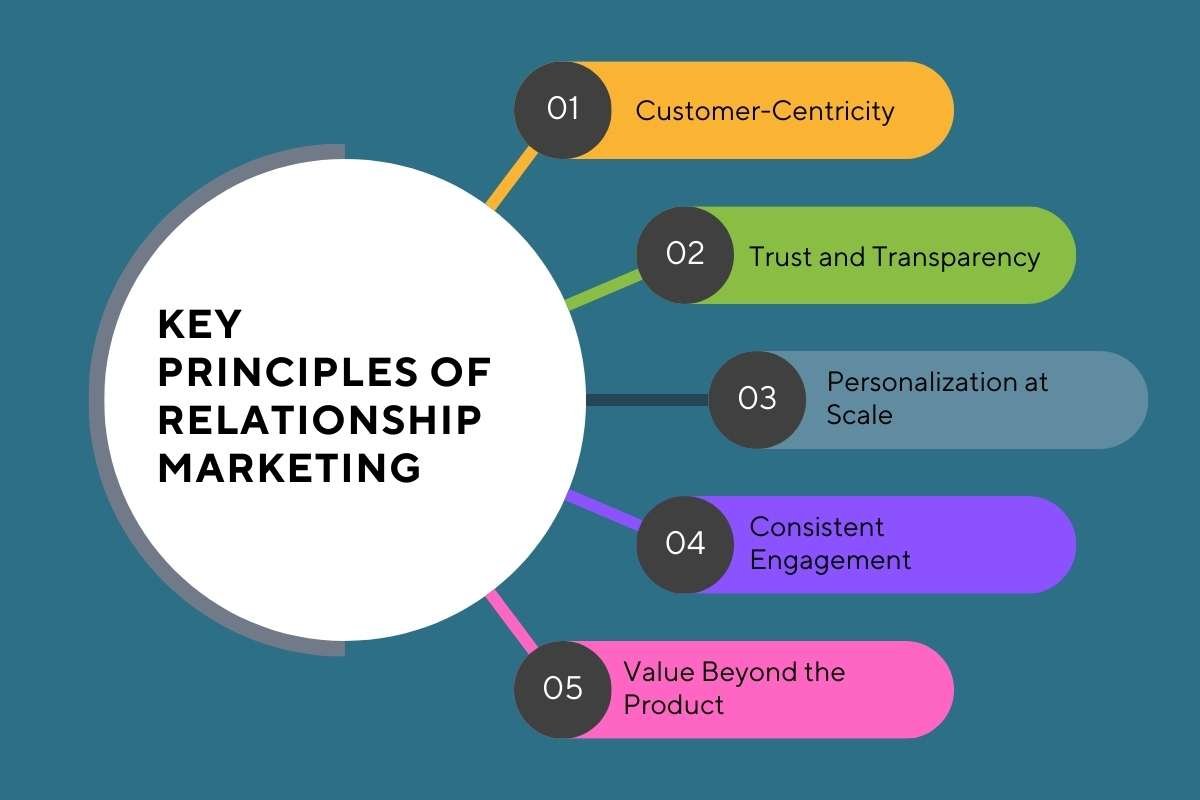
It’s not random engagement or occasional follow-ups. Successful relationship promotion is built on a few core principles that consistently drive retention, trust, and measurable growth.
1. Customer-Centricity
Everything starts with understanding the customer. Businesses that actively study buying behavior, preferences, and feedback can create experiences that feel relevant, not generic. Companies that prioritize customer experience often outperform competitors in revenue growth.
2. Trust and Transparency
Trust is the foundation of any lasting relationship. Clear communication, honest pricing, reliable service, and consistent brand values reduce churn and increase repeat purchases. When customers trust a brand, price becomes less of a deciding factor.
3. Personalization at Scale
Data-driven personalization significantly increases engagement. Whether it’s tailored recommendations, customized offers, or behavior-based email campaigns, personalization makes customers feel understood, not targeted.
4. Consistent Engagement
Relationship marketing isn’t a one-time effort. Regular touchpoints across email, social media, support channels, and loyalty programs keep the brand top-of-mind. Consistency builds familiarity, and familiarity builds loyalty.
5. Value Beyond the Product
Strong brands don’t just sell, they educate, support, and inspire. Providing helpful content, proactive service, and meaningful rewards strengthens emotional connection and increases lifetime value.
When these principles work together, relationship promotion shifts from being a strategy to becoming a growth engine. Next, let’s explore why this approach is increasingly critical for businesses today.
Importance of Relationship Marketing in Business
If customer acquisition is getting more expensive each year, the smarter question becomes: How do we grow without constantly chasing new buyers?
The answer increasingly lies in relationship promotion, and the data strongly support it.
1. Retention Drives Profitability
Research consistently shows that increasing customer retention by just 5% can boost profits by 25% to 95%. Why? Because retained customers require lower marketing spend, convert faster, and are more likely to purchase premium offerings.
2. Existing Customers Generate More Revenue
Studies indicate that repeat customers are significantly more likely to buy again compared to new prospects. In many industries, a large percentage of total revenue comes from existing customers, not first-time buyers. Relationship marketing directly strengthens this revenue base.
3. Higher Customer Lifetime Value (CLV)
Acquiring a new customer can cost 5–7 times more than retaining an existing one. By focusing on long-term engagement, businesses increase customer lifetime value, maximizing revenue from each relationship rather than relying on volume alone.
4. Stronger Word-of-Mouth and Referrals
Consumers trust recommendations from people they know far more than traditional advertising. Loyal customers not only repurchase but also refer others, lowering acquisition costs and increasing conversion rates.
5. Greater Revenue Stability
Businesses with strong retention strategies experience more predictable revenue streams. Repeat purchase behavior reduces dependency on heavy discounting and aggressive acquisition campaigns.
In a market where attention is fragmented and competition is intense, interaction marketing is no longer optional; it’s financially strategic. And to implement it effectively, it’s important to understand the different types of relationship promotion approaches businesses can adopt.
Types of Relationship Marketing
Now that we understand why interaction marketing is financially strategic, the next step is knowing how businesses actually apply it. Not every company builds relationships the same way; the approach often depends on industry, customer expectations, and long-term goals. Here are the primary types of relationship promotion businesses use:
1. Basic Relationship Marketing
| Key Focus | Post-purchase interaction |
| Example in Practice | Order confirmation emails, basic after-sales support |
This is the foundation. The business sells a product and maintains minimal post-purchase contact, such as confirmations or basic support. While simple, even small follow-ups can improve customer satisfaction and reduce churn.
2. Reactive Relationship Marketing
| Key Focus | Responding to customer queries |
| Example in Practice | Customer support helplines, complaint resolution |
In this model, businesses actively respond to customer inquiries, complaints, or feedback. Strong customer support teams play a critical role here. Quick resolution times significantly increase customer trust and retention.
3. Accountable Relationship Marketing
| Key Focus | Follow-up and feedback collection |
| Example in Practice | Post-purchase surveys, review requests |
Here, the business follows up after a purchase to gather feedback and ensure satisfaction. Surveys, review requests, and check-ins help companies identify improvement areas while showing customers they are valued.
4. Proactive Relationship Marketing
| Key Focus | Anticipating customer needs |
| Example in Practice | Personalized recommendations, renewal reminders |
This approach anticipates customer needs. Personalized recommendations, early access to products, renewal reminders, and tailored offers fall under this category. Data-driven insights power this model, increasing engagement and repeat purchases.
5. Partnership Relationship Marketing
| Key Focus | Long-term collaboration |
| Example in Practice | Loyalty tiers, exclusive memberships, and co-creation programs |
The most advanced level. Businesses build long-term partnerships with high-value customers through exclusive memberships, loyalty tiers, co-creation opportunities, or strategic collaborations. This model significantly increases customer lifetime value and brand advocacy.
Each type represents a deeper level of engagement. As businesses move from basic to partnership-based strategies, relationship promotion becomes more personalized, data-driven, and loyalty-focused.
Next, to better understand its strategic value, let’s compare interaction marketing with transactional marketing and see how their outcomes differ.
Relationship Marketing vs Transactional Marketing
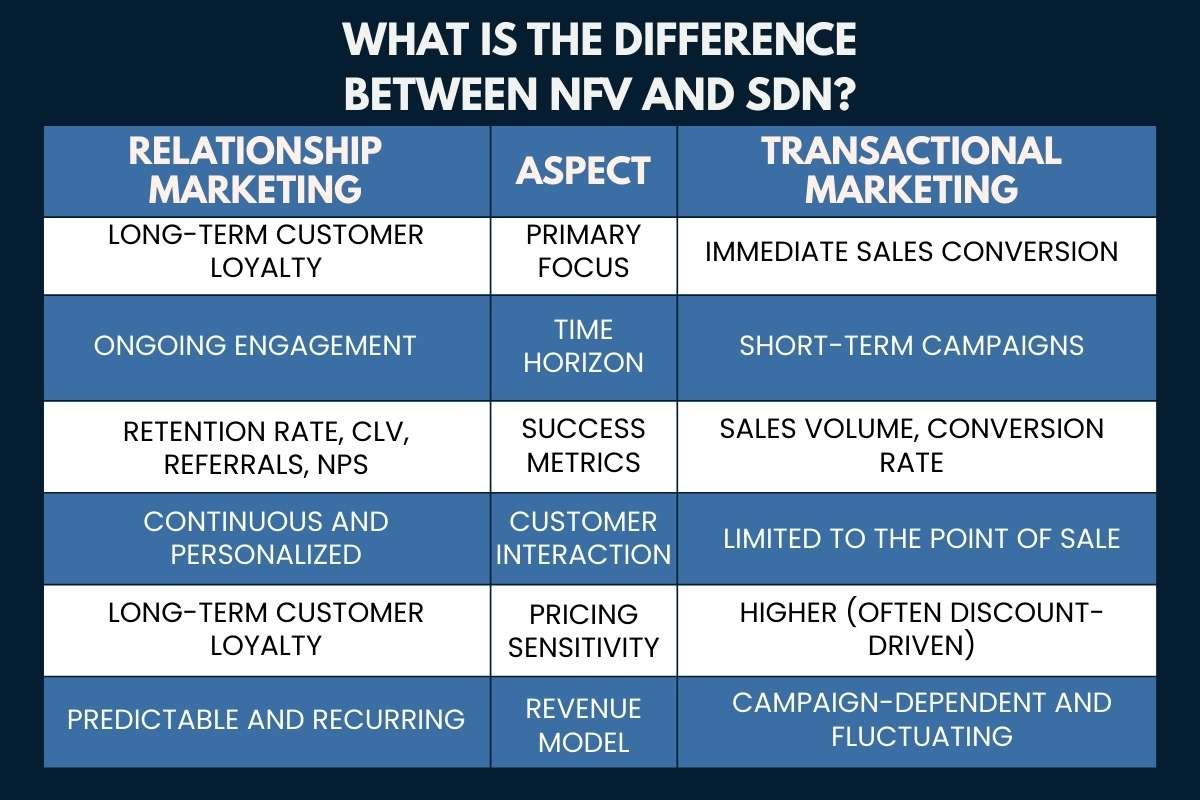
Now that we’ve explored the different types of relationship promotion, it’s important to understand how it differs from traditional transactional marketing. While both aim to drive revenue, their approach, metrics, and long-term impact vary significantly.
Here’s a clear comparison:
| Relationship Marketing | Aspect | Transactional Marketing |
| Long-term customer loyalty | Primary Focus | Immediate sales conversion |
| Ongoing engagement | Time Horizon | Short-term campaigns |
| Retention rate, CLV, referrals, NPS | Success Metrics | Sales volume, conversion rate |
| Continuous and personalized | Customer Interaction | Limited to the point of sale |
| Lower (trust reduces price focus) | Pricing Sensitivity | Higher (often discount-driven) |
| Predictable and recurring | Revenue Model | Campaign-dependent and fluctuating |
Transactional marketing is effective for quick growth, seasonal promotions, or new product launches. However, it often requires constant acquisition efforts and higher advertising spend.
In contrast, relationship promotion builds a loyal customer base that generates repeat purchases, referrals, and long-term revenue stability. When customers trust a brand, they are less price-sensitive and more likely to advocate for it.
The most successful businesses don’t rely on just one approach; they integrate transactional tactics within a broader Marketing strategy to balance immediate revenue with sustainable growth.
Next, let’s explore the practical strategies businesses can use to implement relationship promotion effectively.
Strategies for Effective Relationship Marketing
Understanding the difference between relationship promotion and transactional marketing is one thing; implementing it effectively is another. The real impact comes from consistent, data-driven execution.
Here are proven strategies businesses use to make interaction marketing work in practice:
1. Leverage Customer Data for Personalization
Data is the backbone of modern engagement. Purchase history, browsing behavior, and interaction patterns help businesses deliver tailored recommendations and relevant communication. Personalized experiences significantly increase engagement and repeat purchases.
2. Build Loyalty and Reward Programs
Structured loyalty programs encourage repeat buying behavior. Points systems, exclusive discounts, tier-based benefits, and early access offers make customers feel valued and increase retention rates.
3. Implement Email Nurturing Campaigns
Email remains one of the highest ROI marketing channels. Automated nurturing sequences welcome emails, birthday offers, and renewal reminders, keeping customers engaged beyond the first purchase.
4. Create Community-Driven Engagement
Strong brands build communities, not just customer lists. Social media groups, brand forums, events, and user-generated content initiatives strengthen emotional connection and advocacy.
5. Establish Feedback Loops
Actively collecting and acting on customer feedback improves satisfaction and trust. Surveys, reviews, and Net Promoter Score (NPS) tracking provide measurable insights into loyalty levels.
When executed consistently, these strategies transform relationship promotion from a concept into a measurable growth engine.
However, like any long-term strategy, it comes with both advantages and challenges, which we’ll explore next.
Benefits and Challenges of Relationship Marketing
While the advantages of interaction marketing are compelling, it’s important to evaluate both sides. Like any long-term strategy, it delivers strong returns but only when executed consistently and strategically.
A) Key Benefits of Relationship Marketing
- Higher Customer Retention: Retention directly impacts profitability. Loyal customers are more likely to repurchase, renew subscriptions, and upgrade services, reducing dependency on constant acquisition campaigns.
- Increased Customer Lifetime Value (CLV): By nurturing ongoing engagement, businesses maximize revenue per customer over time. Interaction marketing focuses on long-term value rather than short-term sales spikes.
- Stronger Brand Advocacy: Satisfied customers become promoters. Word-of-mouth referrals often convert at higher rates than paid advertising, lowering acquisition costs and increasing credibility.
B) Key Challenges of Relationship Marketing
- Requires Long-Term Commitment: Results are not immediate. Relationship promotion demands patience, consistent engagement, and ongoing optimization.
- Data Privacy and Personalization Balance: While personalization increases engagement, businesses must manage customer data responsibly and transparently to maintain trust.
- Cross-Channel Consistency: Customers interact across multiple touchpoints, including email, social media, website, and support. Maintaining consistent messaging and experience across channels can be complex.
When businesses proactively address these challenges, the long-term benefits significantly outweigh the initial effort. So, how can companies systematically build an effective interaction marketing framework? Let’s break it down step by step.
How to Build Relationship Marketing?

Understanding the benefits and challenges is important, but execution is what turns strategy into results. Building relationship promotion requires a structured, step-by-step approach rooted in data, consistency, and customer understanding.
Here’s how businesses can implement it effectively:
1. Deeply Understand Your Audience
Start with data, not assumptions. Analyze purchase behavior, customer feedback, churn reasons, and engagement patterns. Segment customers based on value, preferences, and lifecycle stage. The clearer the insight, the stronger the relationship strategy.
2. Define Clear Retention Metrics
Move beyond just sales numbers. Track:
- Customer Retention Rate
- Customer Lifetime Value (CLV)
- Repeat Purchase Rate
- Net Promoter Score (NPS)
- Churn Rate
What gets measured gets improved.
3. Personalize the Customer Journey
Use data to create tailored experiences at every stage: onboarding emails, product recommendations, renewal reminders, loyalty rewards. Personalization strengthens engagement and increases conversion probability.
4. Invest in CRM and Automation Tools
Customer Relationship Management (CRM) systems help centralize customer data and streamline communication. Automation ensures consistent touchpoints without manual overload, making Marketing scalable.
5. Create Continuous Value
Don’t disappear after the sale. Provide educational content, proactive support, exclusive access, and meaningful rewards. Engagement should feel helpful, not sales-driven.
6. Listen, Adapt, Improve
Collect feedback regularly and act on it. Businesses that adapt quickly to customer expectations strengthen trust and long-term loyalty. Building relationship promotion isn’t about a single campaign; it’s about creating a culture focused on customer experience and sustained engagement. When done right, it transforms customers into long-term growth partners. Now, let’s wrap everything together.
Conclusion:
In today’s competitive and customer-driven economy, short-term wins are no longer enough. Sustainable growth belongs to businesses that invest in trust, consistency, and long-term engagement. That’s exactly what relationship marketing delivers.
By shifting the focus from one-time transactions to lifetime value, businesses reduce acquisition costs, increase retention, and build predictable revenue streams. More importantly, they create emotional connections that competitors can’t easily replicate.
The data is clear: loyal customers spend more, refer more, and stay longer. But loyalty doesn’t happen by chance,e it’s built through personalization, transparency, consistent communication, and continuous value creation.
When implemented strategically, relationship promotion moves beyond being a marketing tactic. It becomes a business philosophy centered on customer experience. And in a marketplace where customers have endless options, relationships are the ultimate competitive advantage.
FAQs
1. What is the main goal of relationship marketing?
The primary goal of interaction marketing is to build long-term customer loyalty and increase customer lifetime value by maintaining consistent engagement, trust, and personalized experiences.
2. How is relationship marketing different from CRM?
Relationship promotion is a strategic approach focused on long-term customer engagement and retention. CRM (Customer Relationship Management) is a technology or system used to manage customer data and interactions. In simple terms, CRM is a tool; interaction marketing is the strategy.
3. Why is customer loyalty important?
Customer loyalty drives repeat purchases, reduces acquisition costs, increases lifetime value, and strengthens brand advocacy. Loyal customers are also less price-sensitive and more likely to recommend the brand to others, creating sustainable business growth.
4. What metrics measure relationship marketing success?
Key metrics include Customer Retention Rate, Customer Lifetime Value (CLV), Net Promoter Score (NPS), Repeat Purchase Rate, and Churn Rate. These reflect long-term loyalty and profitability.
5. Can small businesses use relationship promotion effectively?
Yes. With personalized communication, strong service, and consistent follow-ups, small businesses can build deep customer loyalty,y often more authentically than larger brands.