Smart assistants, streaming platforms, and facial recognition use AI in different ways. The seven types of artificial intelligence are Artificial Narrow Intelligence (ANI), Artificial General Intelligence (AGI), Artificial Superintelligence (ASI), Reactive Machines, Limited Memory AI, Theory of Mind AI, and Self-Aware AI.
Understanding these types helps explain how AI works, what it can do, and its limitations. Today, narrow AI powers most real-world applications, while AGI, superintelligence, Theory of Mind AI, and Self-Aware AI remain hypothetical.
What are the types of artificial intelligence, and how are they classified?
Scholars, computer scientists, and industry leaders categorize artificial intelligence through two primary lenses: what machines can achieve (capabilities) and how they process information (functionality). Additionally, modern commercial applications are frequently grouped by specific operational domains such as generative models, natural language processing, and computer vision.
Sorting through these distinctions helps map out the vast architecture of machine learning. Rather than viewing AI as a single monolithic technology, classification reveals a spectrum ranging from basic rule-based calculations to aspirational, human-level cognition.
Types of AI based on capabilities: from narrow tasks to superintelligence
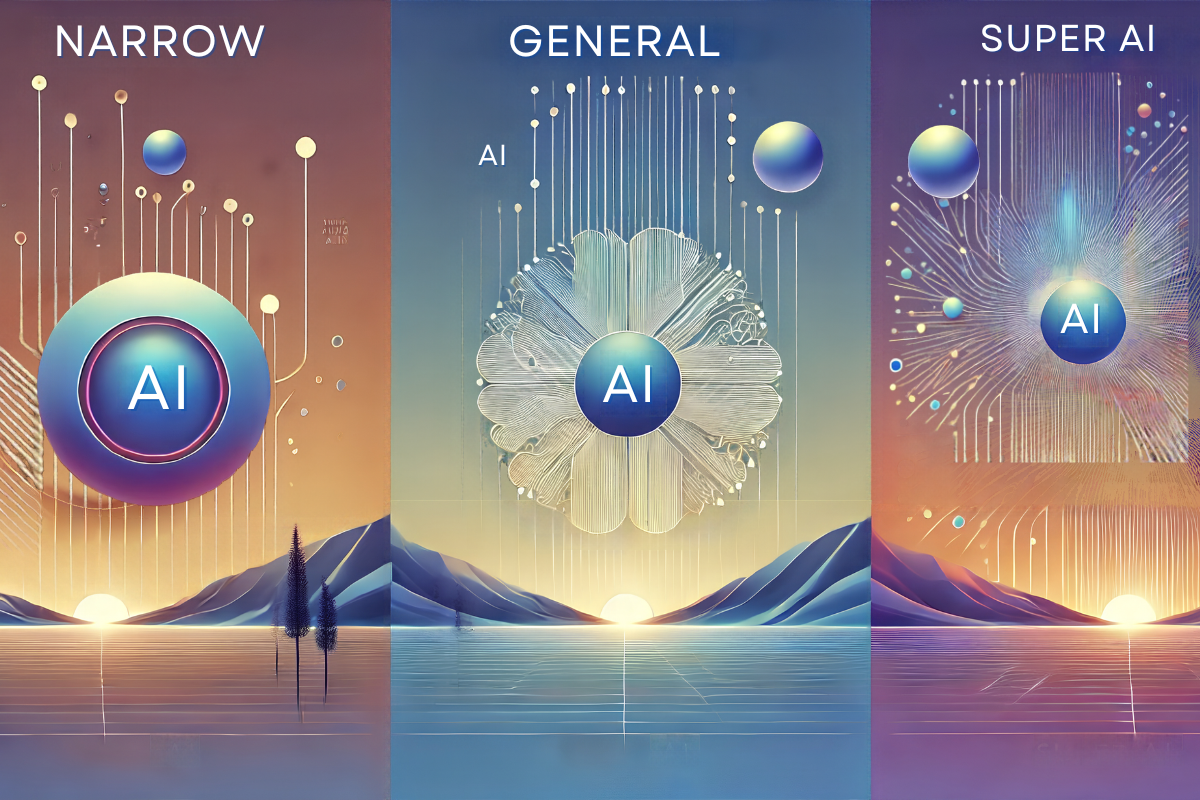
When evaluating the types of artificial intelligence by capability, experts measure how close a system is to mimicking or surpassing human cognitive flexibility across diverse environments.
1. Artificial narrow intelligence (ANI / Weak AI)
Artificial Narrow Intelligence represents the only form of AI that exists in the real world today. ANI is engineered to execute a singular or tightly bound set of tasks. While it can perform specialized functions with extreme precision, frequently outperforming human speed in structured domains, it cannot generalize knowledge outside its initial programming.
Examples: Voice assistants like Siri and Alexa, automated fraud detection algorithms in banking, and recommendation engines on Netflix and Amazon.
2. Artificial general intelligence (AGI / Strong AI)
Artificial General Intelligence remains a theoretical milestone rather than a deployed reality. It describes a hypothetical machine capable of learning, reasoning, and adapting across any intellectual domain just like a human being. An AGI system could write professional code, diagnose rare medical conditions, and compose symphonies without requiring separate, fine-tuned models for each task.
3. Artificial superintelligence (ASI)
Artificial Superintelligence (ASI) is a hypothetical type of AI that would be more intelligent than humans in almost every area. It could potentially outperform humans in scientific research, strategic planning, and problem-solving. ASI remains theoretical and does not exist today.
Types of AI based on functionality: how systems process information
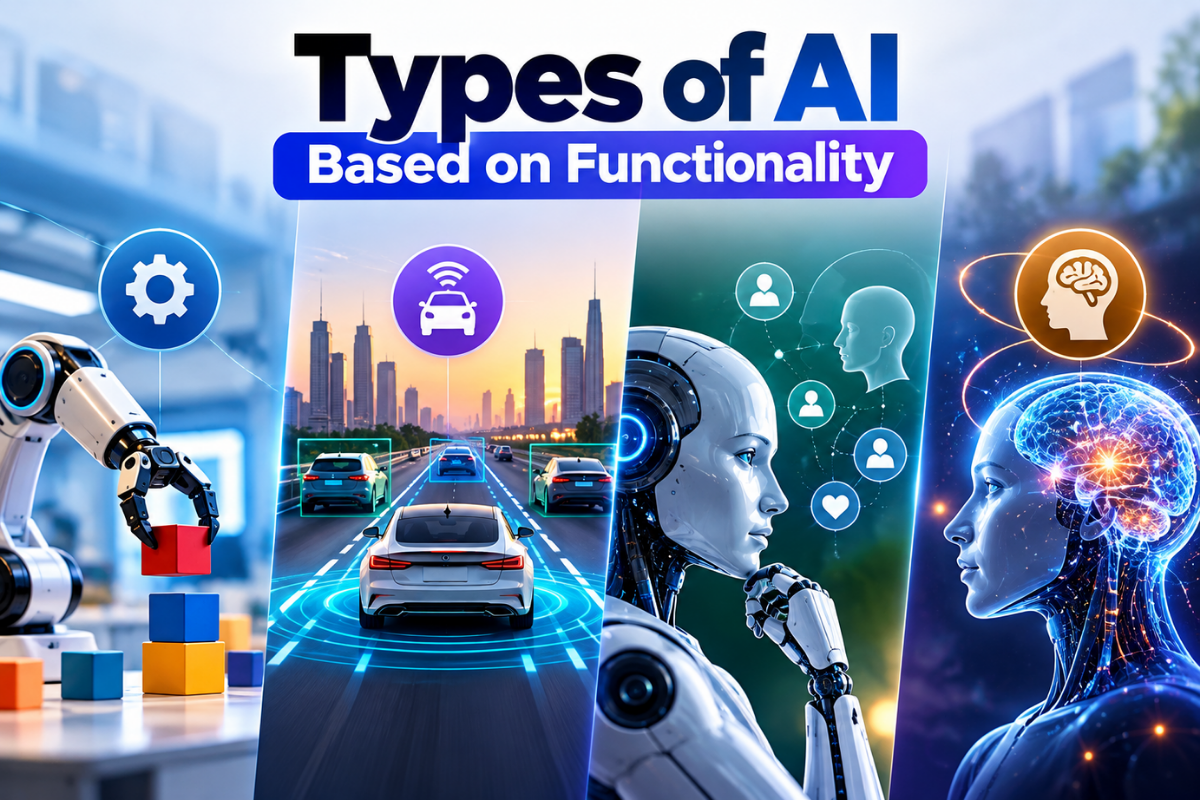
Another foundational method for classifying the types of artificial intelligence looks at how systems handle data, memory, and environmental feedback.
1. Reactive machines
Reactive machines are the simplest form of AI. They possess zero memory capabilities and do not store past experiences or historical interactions. They evaluate current inputs and generate immediate, fixed outputs based strictly on pre-programmed rules.
| Real-World Examples: IBM’s Deep Blue, the famous chess computer that defeated Garry Kasparov by evaluating millions of board positions in real time without learning from prior matches. |
2. Limited memory AI
The vast majority of modern AI applications belong to this functional category. Limited memory models ingest historical data, track specific changes over time, and use that past context alongside present inputs to make informed decisions.
3. Theory of mind AI
This category represents an upcoming psychological benchmark where machines would understand human emotions, beliefs, intents, and social nuances. While experimental emotional computing and advanced social robotics continue to advance in research laboratories, true Theory of Mind AI is not yet a commercial reality.
Example: Researchers at institutions like the MIT Media Lab explore affective computing and social robotics to help machines recognize human facial expressions, vocal inflections, and emotional cues, though true empathetic reasoning remains in experimental R&D.
4. Self-Aware AI
A theoretical pinnacle of machine evolution, a self-aware system would possess actual consciousness, self-awareness, and subjective emotional states. This category exists purely in theoretical discussions and philosophical safety frameworks.
Example: Academic research centers like Stanford HAI study machine consciousness primarily through safety frameworks, ethics guidelines, and guardrails against false attribution of sentience.
Common application-based categories: what we use every day
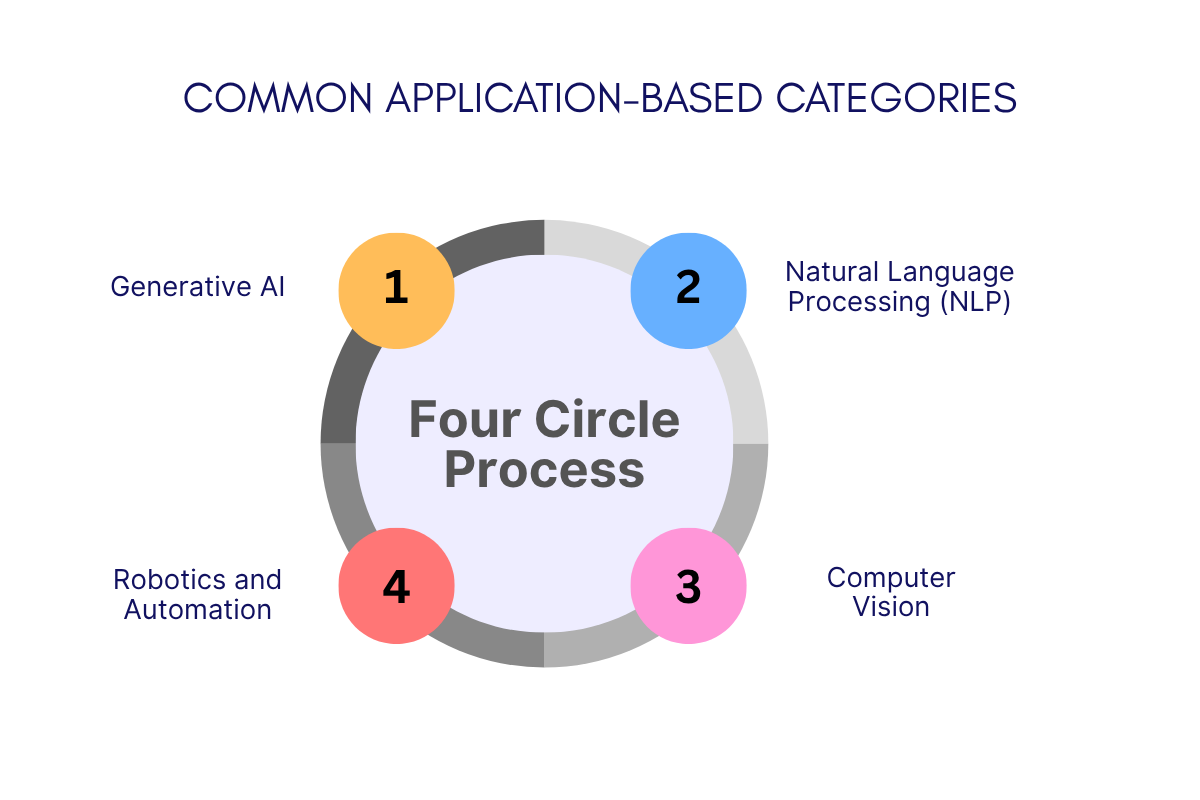
Beyond abstract classifications, practical deployments highlight concrete types of artificial intelligence categorized by their working utility in enterprise and consumer tech:
- Generative AI: Powered by deep learning transformers, generative models create novel text, images, audio, and code by learning statistical patterns from massive datasets. Examples include conversational agents like ChatGPT and automated design assistants.
- Natural Language Processing (NLP): NLP enables computers to parse, interpret, and generate human language, supporting sentiment analysis, translation software, and automated customer support.
- Computer Vision: This field allows machines to extract meaningful visual information from digital images and videos. Facial recognition security gates and medical imaging diagnostics rely heavily on computer vision.
- Robotics and Automation: Combining physical hardware with intelligent control loops, robotic systems automate manufacturing assembly lines, surgical procedures, and logistics fulfillment.
Conclusion
Understanding the types of artificial intelligence helps businesses and individuals assess what AI systems can do, recognize their limitations, and choose the right tools for specific tasks. Distinguishing current AI capabilities from theoretical concepts also supports realistic expectations and responsible use.
FAQs on types of artificial intelligence
1. What is the only type of AI that exists today?
Artificial Narrow Intelligence (ANI) is the only operational type of AI currently used worldwide.
2. What is the difference between reactive machines and limited memory AI?
Reactive machines have zero memory and rely only on current inputs, whereas limited memory AI utilizes historical data to improve future decisions.
3. Has Artificial General Intelligence (AGI) been achieved?
No, AGI remains a theoretical research objective rather than a commercial reality.
4. Where does Generative AI fit in these classifications?
Generative AI belongs to Limited Memory AI under functionality and Artificial Narrow Intelligence under capability.
5. What is Theory of Mind AI?
It is a theoretical classification of AI designed to understand human emotions, intentions, and psychological states.