A Shark Tank appearance can change how a brand is seen, but what happens after the cameras stop often matters more. Snitch is a good example of that journey. What began as a clothing business has grown into a widely recognised menswear brand with a strong presence in India’s fashion market. Behind the company’s rise are founder Siddharth Dungarwal and a series of decisions that shaped its path. Its Shark Tank story is only one part of a much bigger business journey.
Today, this Bengaluru-based fashion brand operates as a prominent D2C fashion company. The company’s growth trajectory after the show turned heads across the startup ecosystem. The Shark Tank appearance served as a launchpad, yet the brand’s fundamentals came from years of groundwork. This article explores that unusual journey.
The early years and pandemic pivot
Siddharth Dungarwal grew up in a jewellery business family. That early exposure taught him the rhythms of trade, but his personal interest pulled him toward apparel. He started with a small clothing outlet dealing in surplus garments. Manufacturing came next, and with it, a working knowledge of production costs, fabric sourcing, and supply chains.
For years, the company operated as a B2B supplier, providing Snitch India clothing to retailers across the country. The wholesale model worked, but it kept the brand invisible to the end customer. Then 2020 changed everything.
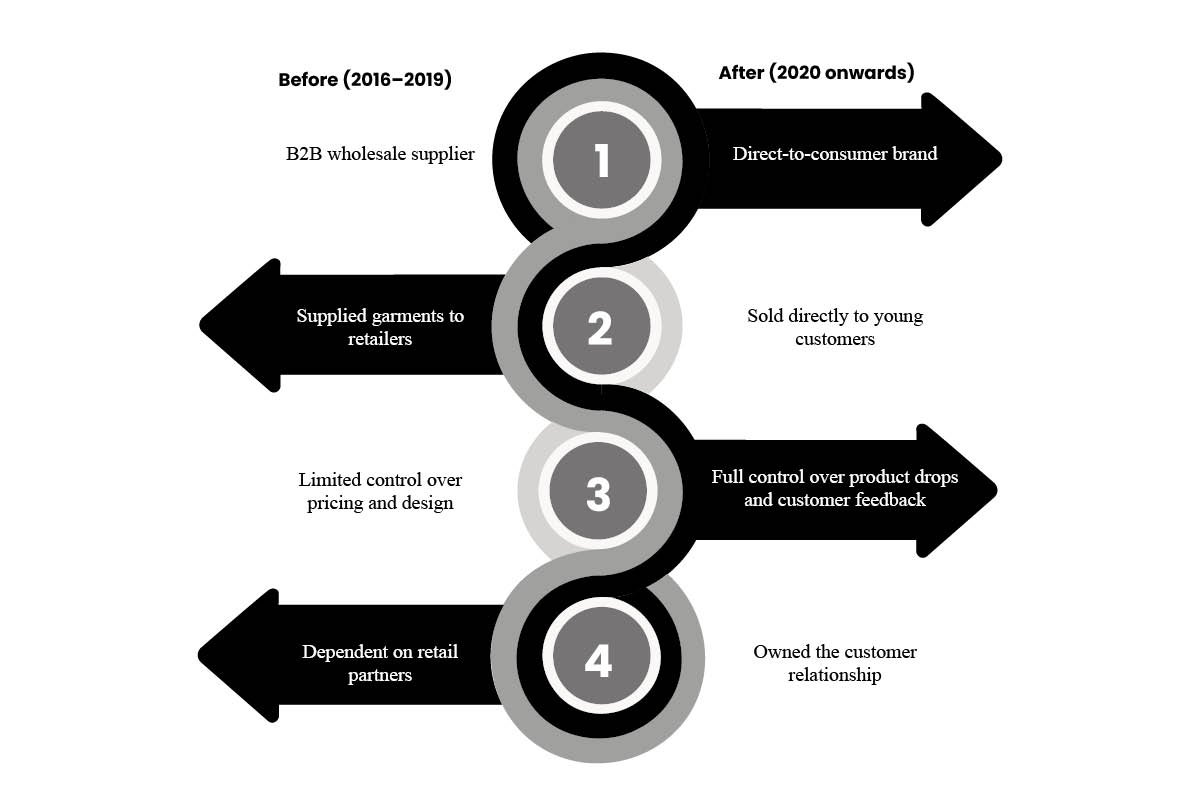
| Before (2016–2019) | After (2020 onwards) |
| B2B wholesale supplier | Direct-to-consumer brand |
| Supplied garments to retailers | Sold directly to young customers |
| Limited control over pricing and design | Full control over product drops and customer feedback |
| Dependent on retail partners | Owned the customer relationship |
When COVID-19 hit, retail orders dried up. Inventory sat unsold. Siddharth launched the Snitch India website that year, not as a side project, but as a survival move. That decision turned into an advantage. The brand could now test designs, launch collections weekly, and adjust based on real-time shopping data. Manufacturing capabilities meant they could produce in small batches and restock what sold fast.
The focus shifted to Gen Z and millennials, consumers who wanted affordable, trendy clothing without waiting for seasonal drops. The pandemic forced the pivot, but the foundation was already there: supply knowledge, production experience, and a clear understanding of what customers wanted.
How the brand made it to shark tank India?
Its appearance on Shark Tank India Season 2 came at a time when the company had already built a sizeable business and established a clear position in the menswear market.
Before the Sharks
- ₹100 Crore Milestone
Before appearing on the show, the Bengaluru-based menswear label had already reached approximately ₹100 crore in business.
- Why Enter the Tank?
The founders saw the show as an opportunity to secure funding while gaining business advice, credibility, marketing exposure, and access to a wider audience.
- What Made the Pitch Stand Out?
Its manufacturing background, D2C business model, strong sales, and clear understanding of its target customers gave the pitch a solid foundation.
The Bigger Picture: The Shark Tank India appearance brought added attention to Snitch India, but the brand’s major growth had taken place well before its television debut.
The all-shark deal: What happened inside the tank?
The Tank took an unexpected turn when Siddharth Dungarwal presented his ask of ₹1.5 crore for 0.5% equity. The pitch soon drew interest from Anupam Mittal, Namita Thapar, Peyush Bansal, Vineeta Singh, and Aman Gupta, who decided to join forces and make a rare all-Shark offer.
The final agreement settled at ₹1.5 crore for 1.5% equity, placing the company at a ₹100 crore valuation. For Dungarwal, the decision went beyond the number attached to his company. He felt the expertise, networks, and guidance the five Sharks could bring were more valuable than simply securing a higher valuation.
After the episode aired, the response was immediate. Snitch India experienced a sharp surge in website traffic, while public interest in the brand climbed quickly. The episode gave the menswear label a major burst of visibility and turned its Shark Tank appearance into a widely discussed business moment.
Why the shark tank deal became a major success?
The numbers tell the story:
At the Shark Tank deal, Snitch India was valued at ₹100 crore. Its valuation later climbed to around ₹2,500 crore, marking roughly a 25x increase. That jump placed the deal among the show’s most notable financial outcomes.
A bigger funding signal:
In June 2025, the company announced a $40 million funding round led by 360 ONE Asset, with IvyCap Ventures and SWC Global continuing their support.
Why it matters:
The sharp rise in valuation gave the Sharks’ investment far greater paper value and highlighted the company’s growing investor appeal. Still, valuation is different from a realised return. The figures do not confirm that the Sharks sold their stakes or received cash profits.
How the company is doing after shark tank?
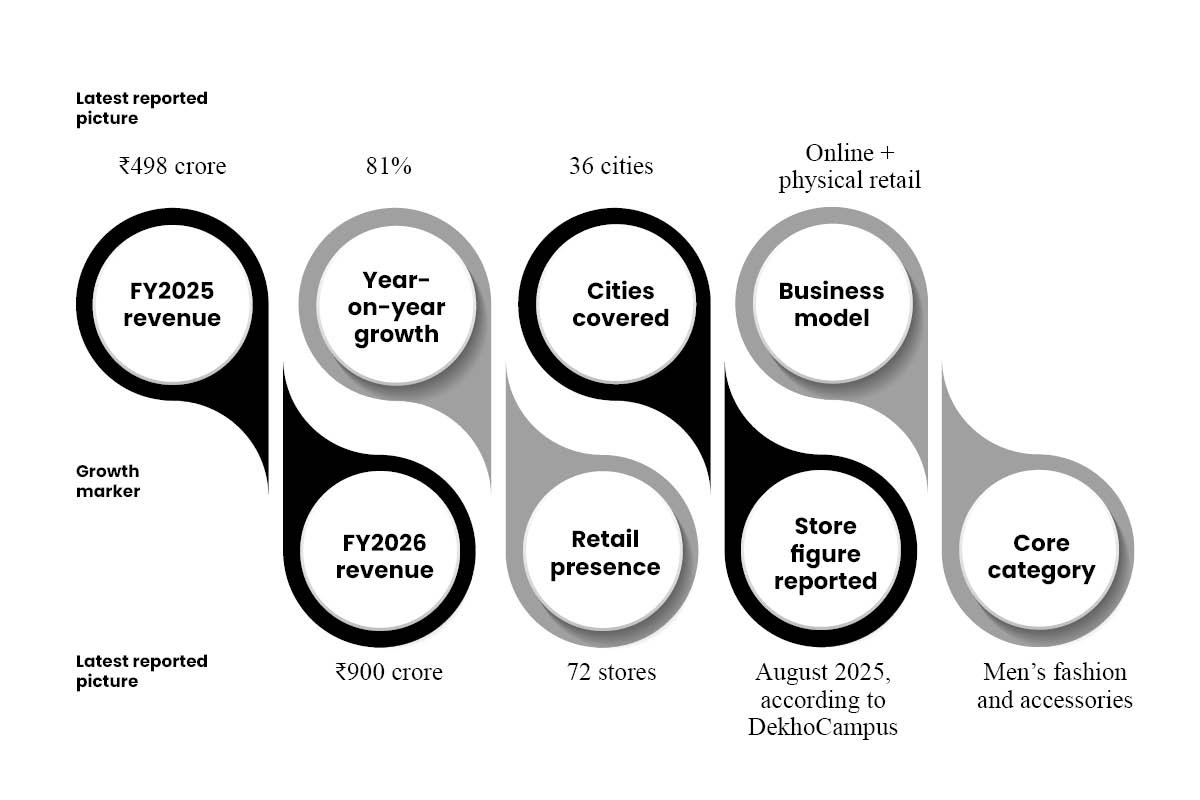
After Shark Tank, the company’s growth can be summed up through a few key numbers that show how quickly the business has expanded.
| Growth marker | Latest reported picture |
| FY2025 revenue | ₹498 crore |
| FY2026 revenue | ₹900 crore |
| Year-on-year growth | 81% |
| Retail presence | 72 stores |
| Cities covered | 36 cities |
| Store figure reported | August 2025, according to DekhoCampus |
| Business model | Online + physical retail |
| Core category | Men’s fashion and accessories |
What the numbers show: The business now has a wider omnichannel presence, with online sales supported by physical stores. The reported ₹900 crore FY2026 revenue was an unaudited figure shared by Dungarwal. The 72-store count was reported by DekhoCampus in August 2025 and should not be treated as a current official figure. Its core focus remains men’s fashion and accessories. The menswear label is a suitable alternative for later references.
The next chapter: Entry into women’s fashion
In August 2026, SNITCH announced its acquisition of women’s apparel brand Berrylush, marking its first major move beyond menswear. Berrylush will retain its existing name while benefiting from support in product development, technology, supply chain, marketing, and retail.
For Snitch India, the deal creates a quicker route into women’s fashion without building a new label. It also gives the company access to an established customer base and brand identity. The move presents a new test: applying its business strengths while keeping Berrylush’s distinct character intact.
The road ahead
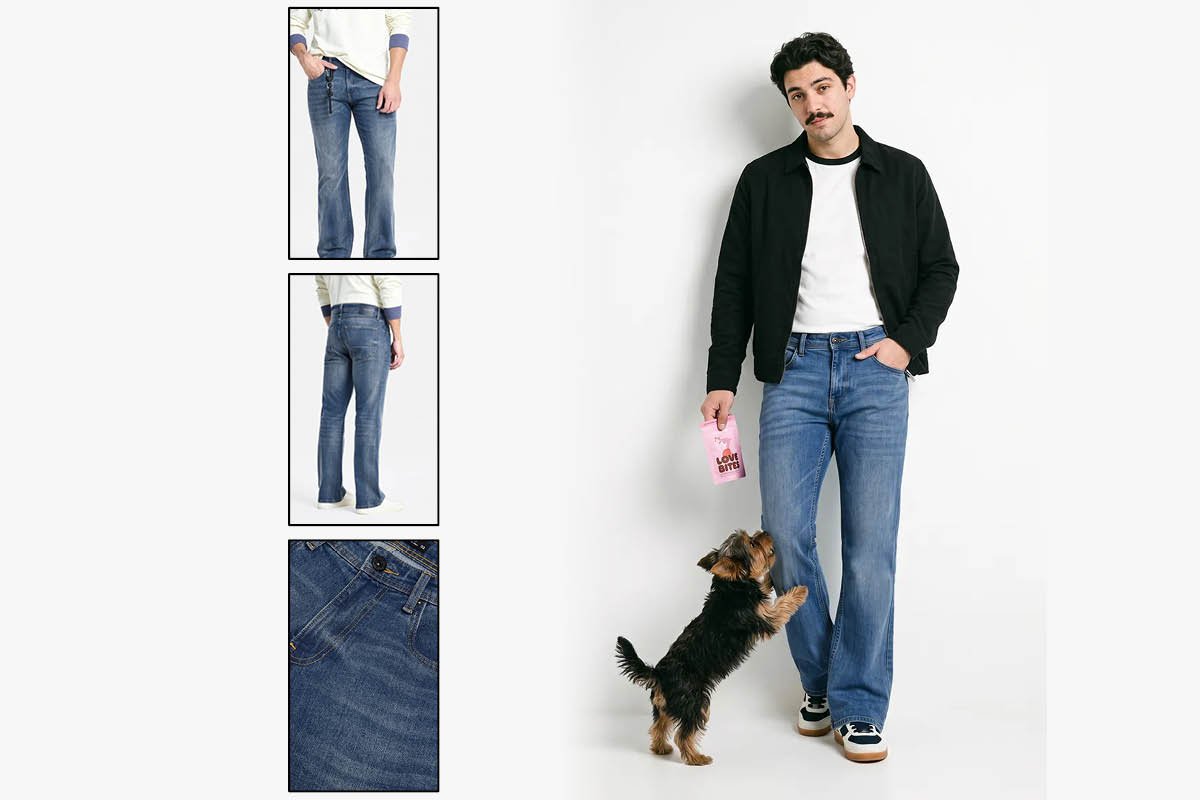
The story of Snitch India shows how a business built on manufacturing knowledge can become a major consumer brand through timely decisions and a strong understanding of its audience. Shark Tank added visibility, but the company’s progress rests on work that began years earlier.
Its expansion into women’s fashion through Berrylush now opens a fresh chapter. The next phase will test how well the company can manage a larger customer base while preserving the identity that helped it grow.
Thanks for reading
see next
“Turning Everyday Hoodies into a Hair-Safe Revolution: The KIN Apparel Story“