Key Takeaways
- South Korea’s Kospi surged on a strong rebound in semiconductor stocks.
- Microsoft’s strong earnings renewed investor confidence in AI-related investments.
- Asian markets rallied while oil prices eased and the yen remained volatile.
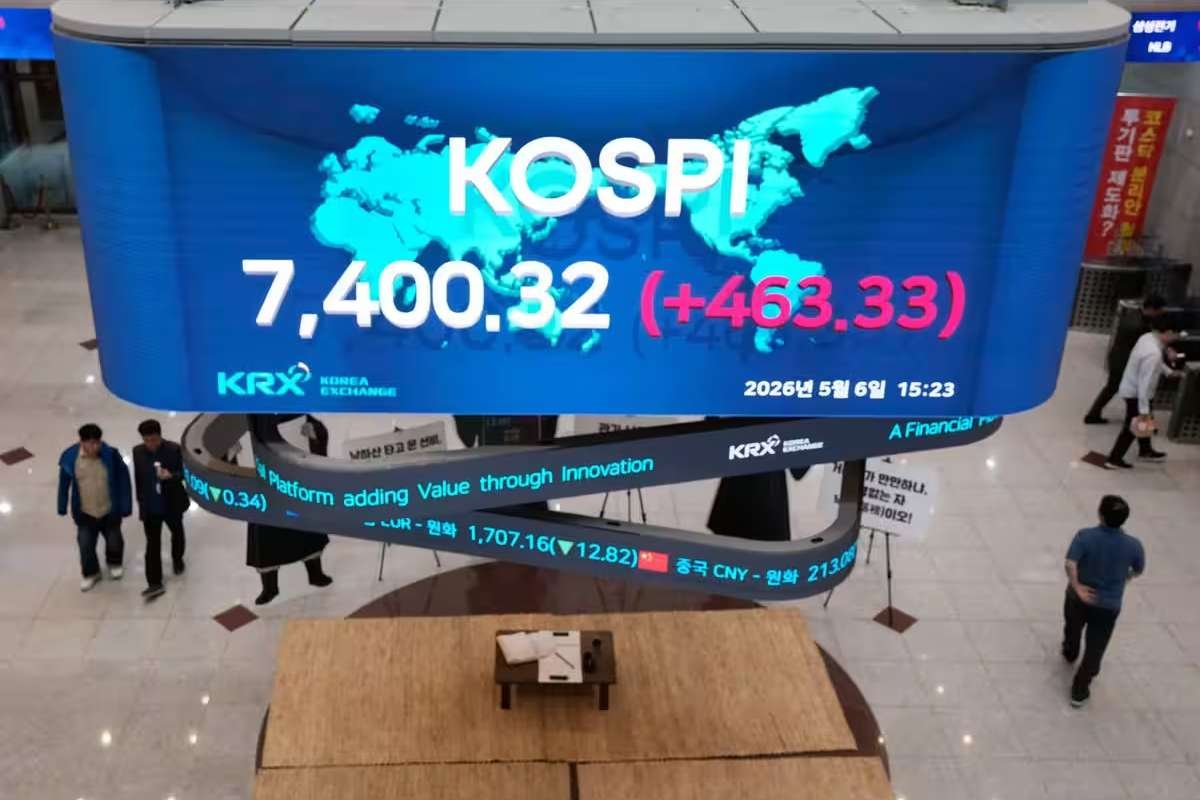
South Korea’s Kospi index surged Friday, driven by sharp gains in semiconductor stocks after stronger-than-expected Microsoft earnings boosted renewed confidence in AI-related investments and sparked a regional technology stock rebound.
South Korea’s benchmark Kospi index climbed as much as 16.5% in early trading before easing to a 14% gain at 6,376.68 by midday. The rally followed a steep three-day decline of more than 17% as investors sold technology shares amid concerns over an artificial intelligence bubble and growing competition from Chinese chipmakers.
Samsung Electronics jumped 21%, while memory chipmaker SK Hynix soared 24.6%, leading the market higher. The gains reflected renewed investor confidence after Microsoft reported quarterly earnings Thursday that exceeded analysts’ expectations, signaling that heavy investment in AI technologies is beginning to generate stronger profits.
Microsoft shares rose 15.5% in U.S. trading, marking the company’s biggest one-day gain in nearly 18 years and helping lift technology stocks globally.
Asian markets follow Wall Street higher
The rebound extended across Asia as investors returned to technology shares after recent losses.
Japan’s Nikkei 225 gained 4.4% to 64,572.25 in early trading. SoftBank Group, a major technology investor, climbed 15%, while chip equipment manufacturer Tokyo Electron advanced nearly 11%.
Taiwan’s Taiex index rose more than 7%. Australia’s S&P/ASX 200 added 0.4% to 8,997.50. Hong Kong’s Hang Seng index edged up 0.1%, while China’s Shanghai Composite gained 0.6%.
“The market went from throwing AI stocks overboard to fighting for the remaining seats before most traders had finished writing the obituary,” Stephen Innes of SPI Asset Management said in a market commentary.
Despite Friday’s rally, South Korea’s Kospi remains well below its June peak above 9,000.
Yen, oil and central banks stay in focus
Currency markets also remained active after the U.S. dollar weakened sharply against the Japanese yen overnight amid speculation that Japanese authorities intervened to support the currency. The dollar later recovered 0.6% to 160.61 yen.
Japan’s Nikkei financial newspaper reported that the intervention appeared coordinated, citing a Federal Reserve Bank of New York “rate check,” a process used to gather exchange-rate quotes from banks before possible market action. The U.S. Treasury Department did not comment, while Japanese Finance Minister Satsuki Katayama declined to discuss the reports.
The Bank of Japan left interest rates unchanged Friday, matching market expectations. Earlier this week, the Federal Reserve also kept its benchmark interest rate unchanged. Analysts said the wide interest-rate gap between Japan and the United States continues to pressure the yen.
“Intervention in support of the yen may not work any better now than it has previously, but the persistence of the Japanese authorities suggests to us that the yen will remain around the 160 level this year before staging a more sustained rebound next year,” Jonas Golterman of Capital Economics said in a commentary.
Oil prices eased as concerns over supply disruptions moderated. Brent crude fell 1.3% to $85.76 per barrel, while U.S. benchmark crude dropped 1.5% to $82.32. ING commodities analysts said tanker traffic through the Strait of Hormuz had increased slightly, helping ease fears of tighter oil supplies despite continued regional tensions.
On Wall Street Thursday, the S&P 500 gained 1.7%, the Dow Jones Industrial Average rose 1.2%, and the Nasdaq composite advanced 2.8%, setting the stage for gains across Asian markets, including a sharp rebound in South Korea’s Kospi.