Key takeways:
- Julie Menin emerges as NYC’s leading voice on AI regulation.
- Mamdani says federal officials should take the lead on AI rules.
- City officials warn of AI risks while supporting targeted safeguards.
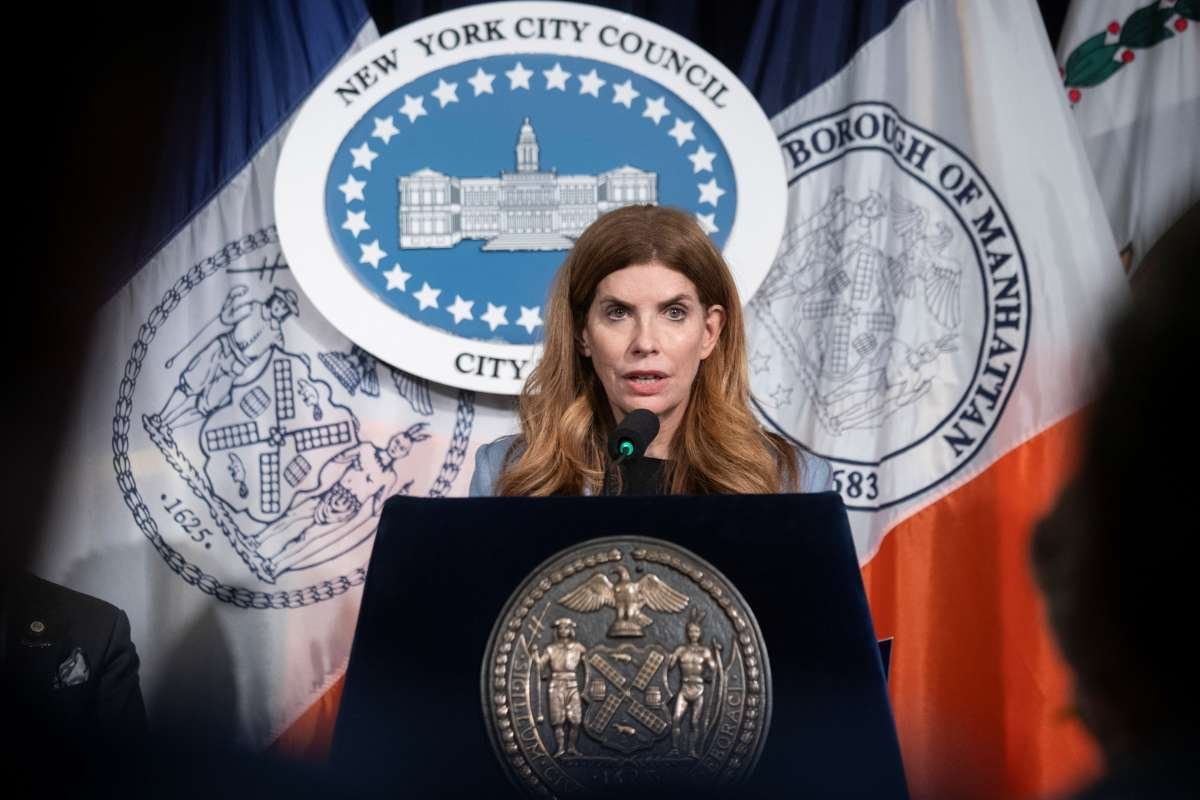
NYC AI regulation takes center stage as New York City Council Speaker Julie Menin presses AI companies on safety risks while Mayor Zohran Mamdani urges federal action.
Nyc AI regulation: menin challenges AI companies over safety
Menin questioned representatives from four major artificial intelligence companies during a lengthy City Council hearing focused on potential risks from advanced AI systems.
“It’s disappointing that they can’t seem to answer some of the most basic, rudimentary questions,” Menin told reporters after the hearing. She said the companies could not explain the risks of a catastrophic event or say whether they would release models that failed internal or third-party safety tests.
Menin also questioned whether AI companies carry insurance for catastrophic harm and whether they should be held liable for deaths, injuries or other damage linked to their technology.
Several AI whistleblowers also warned lawmakers about potential threats from increasingly capable systems. Alex Turner, a former Google DeepMind employee, said advanced AI systems could potentially target infrastructure and government functions.
“The superintelligent swarm can inflict many harms via blackmail, hacking, engineered flags, and AI palatable weapons like drones,” Turner said.
Mamdani calls for federal AI rules
Mamdani, who has made affordability, housing and other issues central to his political agenda, offered a narrower position on AI regulation during Monday’s hearing.
The mayor said artificial intelligence affects the entire country and should primarily be regulated at the federal level.
“There has to be regulation of this technology at every single level,” Mamdani said. “This is not a New York City-specific question.”
The debate over NYC AI regulation reflects a broader divide over whether cities should establish their own AI safeguards or rely primarily on federal rules.
His administration has taken some city-level steps involving AI. It has banned AI use in elementary and middle schools and is proposing rules that would give New Yorkers access to human customer service representatives rather than requiring them to interact with AI chatbots.
The administration also has proposed requiring real estate companies to disclose when AI is used to create or alter images in apartment listings.
Council pushes ahead without federal action
Menin argued that federal inaction leaves cities with a choice between regulating AI themselves or allowing potential risks to go unchecked.
“The federal government has opted at the moment not to regulate AI,” Menin said. “So are we all just supposed to throw up our hands and say, ‘Okay, that’s all right?’”
Tech, a group representing the city’s technology industry, warned that city-specific rules could create a patchwork of regulations across the country. Matt Henning, the organization’s director of government affairs, said broader state or federal rules would be more practical for startups and small businesses.
“If New York City adopts its own validation regime, liability rules, incident-reporting deadlines, and advertising disclosures, other cities will follow with their own versions,” Henning wrote in prepared testimony.
The Council is considering measures that include a private right of action against AI companies. Sam Levine, commissioner of the city Department of Worker and Consumer Protection, said he supports the proposal.
Representatives of the AI companies also expressed support for some Council proposals while highlighting potential benefits in medicine and science.
“We welcome smart regulation,” Anthropic’s Logan Graham said in his opening remarks.