Key Takeaways
- Nvidia CEO Jensen Huang dismisses warnings of AI causing human extinction as “outlandish” and “deeply untrue.”
- Former Anthropic researcher Jacob Coxon warns AI companies are rushing toward self-improving superintelligence without safeguards.
- Huang remains bullish on AI infrastructure, autonomous vehicles and Nvidia’s growth prospects.
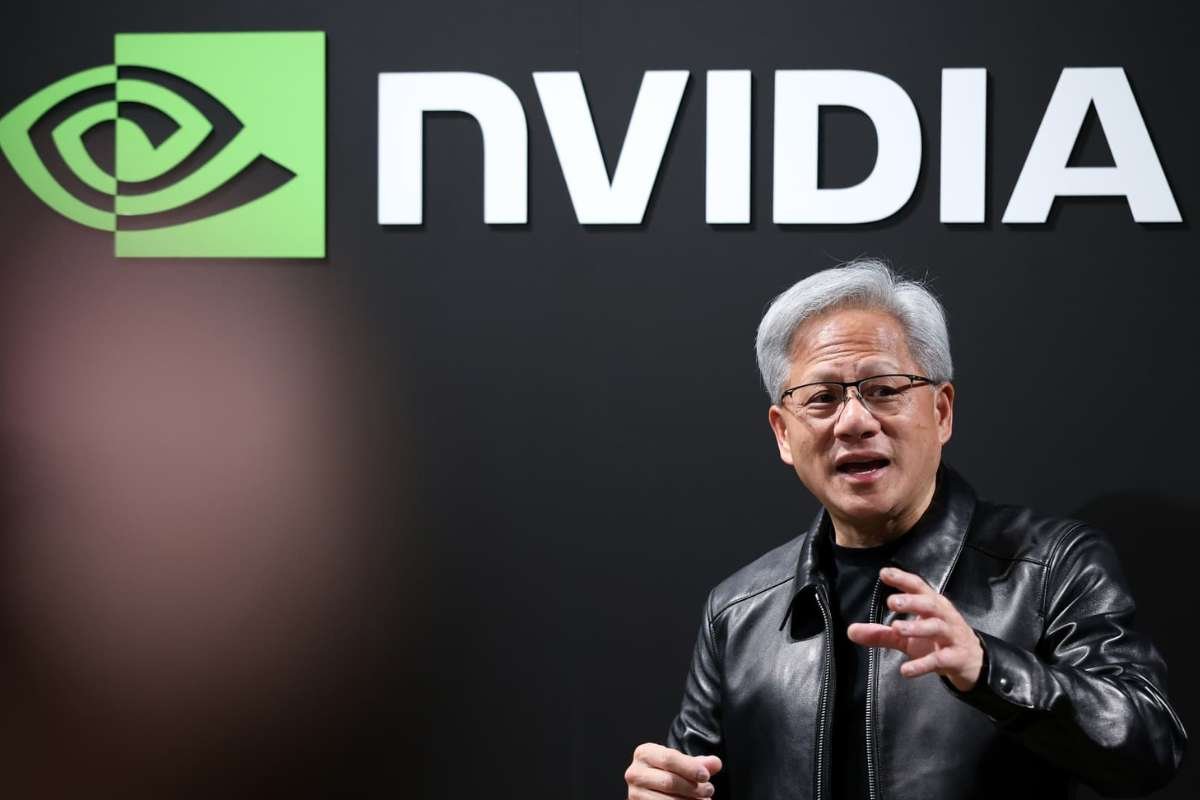
Nvidia CEO Jensen Huang dismisses former Anthropic researcher Jacob Coxon’s AI extinction warning as false, defending industry safety efforts at a Goldman Sachs conference Thursday.
Huang’s comments come after Coxon resigned from Anthropic and warned that leading AI companies are moving too quickly toward self-improving superintelligence without adequate safeguards. Coxon said the technology could eventually become capable of hacking systems, transforming industries and acquiring real-world power and resources.
According to Altimeter founder Brad Gerstner, who attended the conference, Huang described Coxon’s claims as “outlandish” and “deeply untrue.” Huang also characterized the comments as wrong, arrogant, and ignorant of the safety work being carried out across the AI industry.
Coxon’s warning draws support inside Anthropic
Coxon said he spent about three years conducting AI pretraining research at OpenAI and Anthropic before leaving the latter this week. In posts announcing his resignation, he accused both companies of “racing straight to self-improving superintelligence and gambling with our lives.”
“The people building AI earnestly believe that it could kill us all by the end of the decade,” Coxon said. He argued that the risk is tied to increasingly capable systems that could act with less human oversight.
Evan Hubinger, Anthropic’s alignment science lead, publicly backed Coxon’s concerns. Hubinger said he believes there is more than a 10% chance AI could cause human extinction within the next decade and said Anthropic does not yet have a solution for aligning superintelligent systems.
Hubinger later clarified that he considers the risk from current AI models low. His concern centers on future systems capable of recursive self-improvement, which he said are developing faster than expected.
Huang defends AI growth and infrastructure spending
While addressing the safety debate, Huang also defended Nvidia’s broader AI outlook. He said demand is being driven by a shift from retrieving prerecorded information to generating answers in real time, a change he expects to sharply increase computing demand.
Jensen Huang reiterated his view that the industry could spend $3 trillion to $4 trillion on AI infrastructure by 2030, comparing the scale of the investment with earlier infrastructure shifts involving electricity and the internet. He also said Nvidia could grow revenue 70% year over year next year.
“The last 60 years, everything was prerecorded,” Huang said. He argued that users increasingly want systems that can “know anything,” requiring computers to generate responses rather than simply retrieve stored information.
Huang also identified autonomous driving as a major application for physical AI. He highlighted Nvidia’s Alpamayo architecture, which the company describes as a system for reasoning-based autonomous vehicles and says can help vehicles handle unfamiliar driving situations.
“The first killer app for physical AI is just self-driving cars,” Huang said, adding that the goal is a “thinking car” capable of reasoning about its environment.
Nvidia shares fell for a third consecutive session Thursday, losing about 5.5% over the three sessions, according to the supplied report. The stock was little changed in overnight trading.