Wind turbines and solar parks now sit at the heart of IKEA’s long-term climate strategy, not on its margins. The retailer operates through Ingka Group, whose investment arm, Ingka Investments, leads major utility-scale wind and solar projects across many global markets. These IKEA sustainability initiatives explain the company’s broader approach: using large-scale investments to cut emissions, supply clean electricity across the value chain, and build stronger energy resilience.
Central to these IKEA sustainability initiatives is a €7.5 billion commitment to renewable energy by 2030, the benchmark guiding every part of this article.
Net zero and beyond: IKEA’s climate framework
Behind every wind farm and solar park lies a wider plan: Net Zero and Beyond. This climate ambition rests on three pillars. First, cutting absolute value-chain emissions by at least 50% by FY30 against a FY16 baseline, with net zero to follow by FY50. Second, removing and storing carbon through forestry, agriculture, and product design, addressing sources of emissions that reduction alone cannot solve.
Third, extending impact past IKEA’s own operations by supporting broader climate action and advocating for stronger, responsible policy across society. Electricity generation is central to IKEA sustainability initiatives, helping turn its climate targets into measurable progress through cleaner power.
The investment story: how IKEA built its renewable portfolio
IKEA’s renewable-energy strategy took shape through a series of major investments over the past decade.
2010s | Laying the groundwork
IKEA began investing in wind turbines and solar panels, making renewable energy part of its long-term sustainability work.
2010–2020 | €2.5 billion invested
Ingka invested €2.5 billion over the decade, adding 935,000 solar panels, 547 wind turbines, and 10 solar parks.
2021 | A bigger commitment
Ingka announced additional renewable-energy spending, raising planned investment to €6.5 billion.
2030 | The current goal
The target now stands at €7.5 billion by 2030, marking a larger financial commitment to clean power across the portfolio. This steady expansion gives the company a financial path for renewable power over the coming years.
Together, these commitments show how IKEA sustainability initiatives have made renewable energy a larger part of the company’s long-term investment plans.
Where the money goes: wind, solar and energy infrastructure
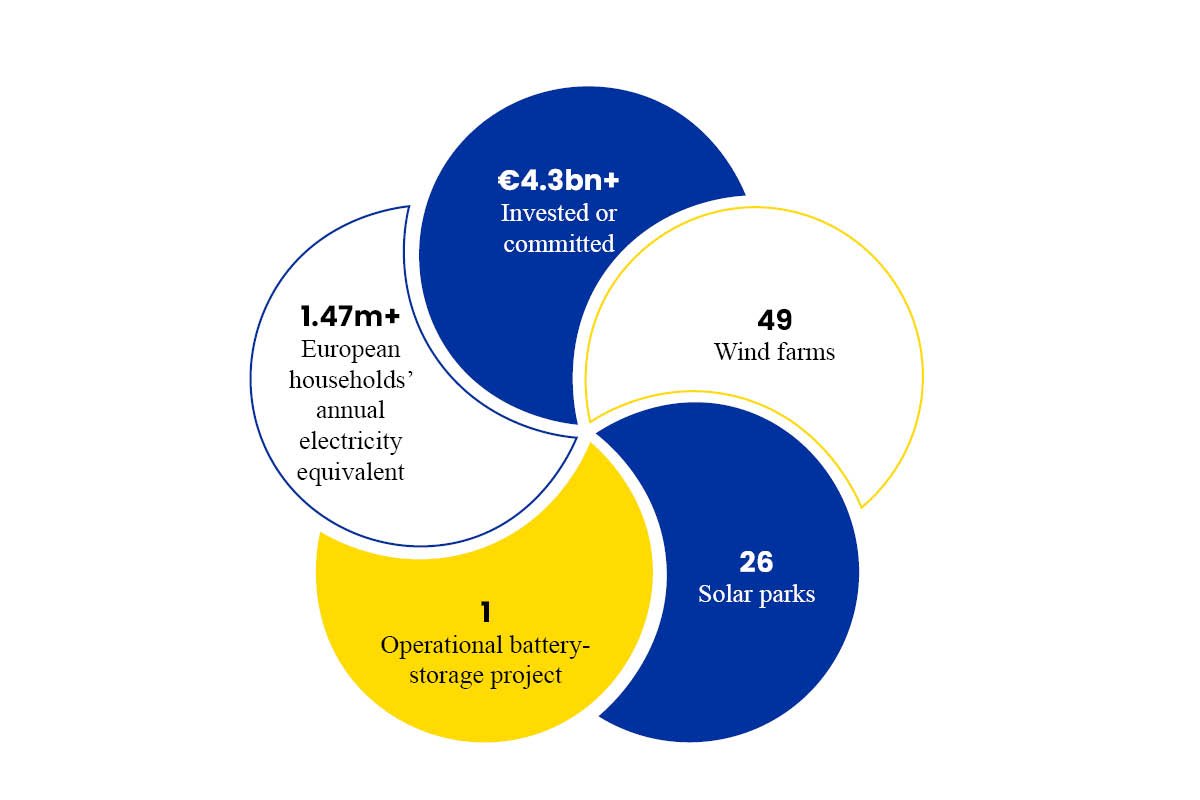
Ingka Group’s renewable energy portfolio shows where capital is being put to work. As of March 2026, more than €4.3 billion has been invested or committed to renewable-energy production assets.
- €4.3bn+ | Invested or committed
- 49 | Wind farms
- 26 | Solar parks
- 1 | Operational battery-storage project
- 1.47m+ | European households’ annual electricity equivalent
IKEA sustainability initiatives include direct investments in renewable-energy production assets, giving the group a stake in clean electricity generation rather than relying solely on renewable power purchases. This gives the group a stake in clean electricity generation, rather than relying solely on renewable power purchases. Storage supports flexibility in its system.
Case study | India
The earlier target
IKEA’s Indian business had set a 2025 goal to power its stores, warehouses and shopping centres with clean power, setting an operational target.
The Bikaner project
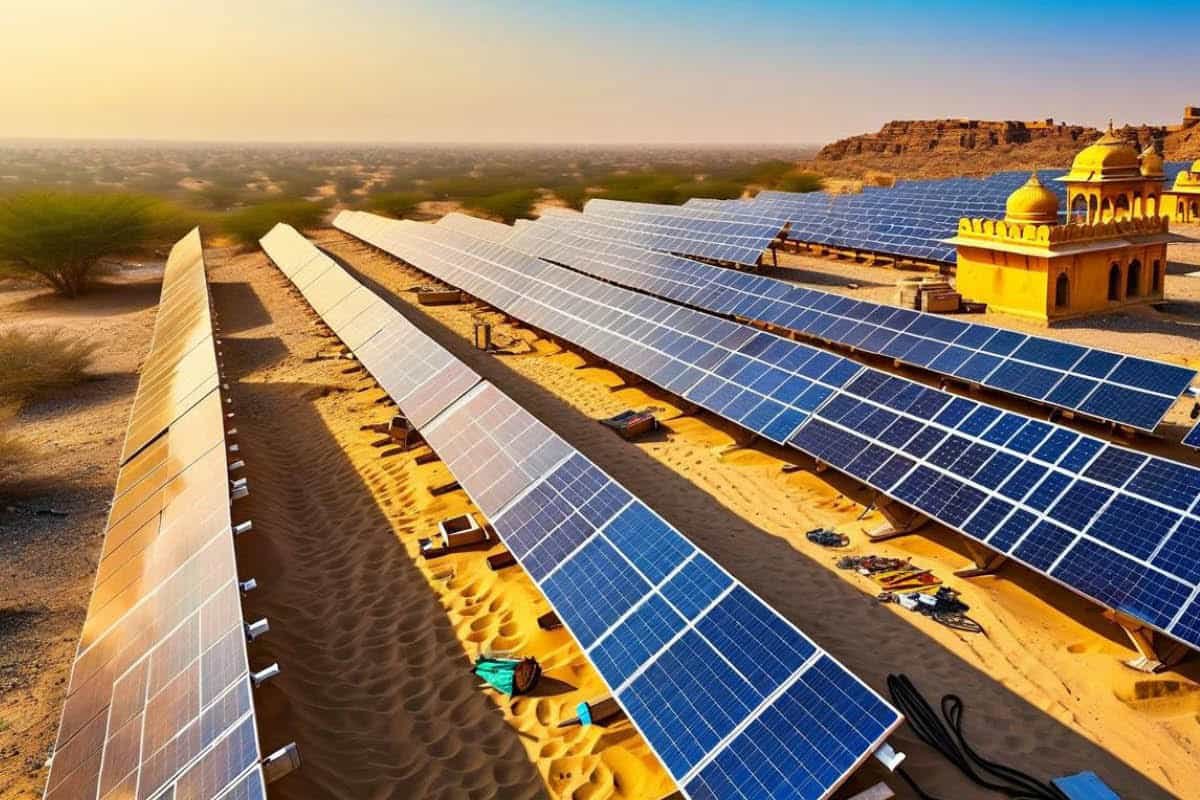
In November 2025, Ingka Investments announced its first investment in India: a 210 MWp solar project in Bikaner, Rajasthan. Expected to generate 380 GWh annually, it is scheduled to begin operations in December 2026.
Why it matters
The Bikaner project expands IKEA sustainability initiatives in India by adding utility-scale solar capacity to the company’s renewable-energy portfolio. It forms part of Ingka’s INR 10 billion commitment to India, marking a significant investment in clean-energy capacity.
Beyond generation: supporting suppliers and IKEA operations
IKEA support → Supplier access → Cleaner production → Responsible supply-chain management
IKEA’s strategy extends beyond its facilities by helping suppliers secure cleaner power. Its programme offers Power Purchase Agreements, grid-based solutions and financing for on-site generation. The initiative began with suppliers in Poland, China and India, then expanded into additional markets. Renewable electricity used in production reached 75% in FY24, compared with 71% in FY23.
These measures strengthen IKEA sustainability initiatives by connecting renewable-energy investments with cleaner supplier operations and responsible supply-chain management. They give suppliers options for reducing emissions while supporting responsible production across the value chain, making supplier energy support part of operations and accountability.
Portugal: A Smarter Use of Wind Power
A Portuguese project shows how renewable assets can deliver more value. Ingka has added solar generation to a 50 MW wind farm, forming a hybrid facility expected to produce about 233 GWh each year. The site keeps its grid connection, while its capacity factor rises from 34% to 50%. This limits the need for new grid infrastructure and improves asset use. This project demonstrates how IKEA sustainability initiatives can prioritise efficient energy infrastructure alongside additional renewable generation.
Energy security and business resilience
Renewable assets → Greater control → Lower exposure → Better resilience
Owning and developing renewable-generation assets can give IKEA more control over some long-term energy needs. That control can reduce reliance on fossil-fuel markets, which can limit exposure to energy-price changes. Better predictability can support investment planning and operating stability.
This connects with IKEA’s interest in energy storage and charging infrastructure, which can help manage energy use across its operations. IKEA sustainability initiatives can therefore support climate targets while strengthening business resilience through more predictable energy planning. Renewable assets cannot remove every supply-chain risk, but they can reduce one important source of uncertainty.
Beyond the numbers: measuring real CSR impact
Measuring the impact of IKEA sustainability initiatives means separating renewable-energy spending and capacity growth from actual emissions reductions. A useful scorecard: Capacity, wind and solar assets spread across many different countries. Investment: €7.5 billion committed by 2030. Electricity share: renewable sources covering most operations. Emissions, FY24 fell 5% against FY23 and 28% below the FY16 baseline.
Suppliers: gradually growing participation across the value chain. Targets: steady movement toward 2030 goals. Investment shows intent; emissions data shows outcome, and readers should carefully weigh both figures before judging real progress.
What comes next for IKEA’s renewable ambitions?

The retailer’s renewable story now spans continents, wind turbines in Europe, solar parks in India, and a supplier programme extending clean energy past its own operations. Together, these projects show how IKEA sustainability initiatives integrate renewable-energy investments, supplier support, and climate goals into long-term business planning.
By 2030, the €7.5 billion commitment aims to produce 15 terawatt-hours of clean power. What comes next is the harder question: can this expanding renewable portfolio truly translate into deeper, more measurable emissions cuts across the company’s full value chain?