This draft examines H&M’s approach to operationalizing sustainability commitments through structured frameworks, accountability mechanisms, and measurable performance indicators within the H&M sustainability strategy. It evaluates how strategic sourcing, supplier engagement, and circular partnerships are integrated into day-to-day operations, and how governance and monitoring processes translate policy intent into actionable outcomes.
The analysis highlights the effectiveness of these mechanisms in achieving progress toward 2030 targets, assessing both the operational efficiency and the transparency of reporting systems. By focusing on the alignment between strategy, execution, and evaluation, the draft provides a comprehensive assessment of H&M’s sustainability performance.
The Policy Framework Guiding Sustainable Transformation
The organization’s sustainability policy is anchored in a commitment to responsible resource use, climate resilience, and long-term value creation. This policy responds to increasing regulatory expectations, stakeholder demands, and global sustainability frameworks such as the Paris Agreement and the UN Sustainable Development Goals. By incorporating sustainability into core decision-making processes, the H&M sustainability strategy ensures environmental responsibility is not treated as an add-on, but as a fundamental operational principle.
Central to this policy is the transition toward sustainable and recycled materials across products, packaging, and supply chains. This shift is designed to reduce environmental impact, support circular economy principles, and strengthen supply chain resilience. Clear timelines and benchmarks guide implementation, enabling measurable progress and accountability.
The policy further integrates sustainability into corporate governance structures. Oversight mechanisms, performance indicators, and executive accountability ensure alignment between strategic objectives and day-to-day operations. Together, these measures establish a coherent framework that supports long-term environmental stewardship while maintaining operational and economic viability under the H&M sustainability strategy.
Policy Snapshot:
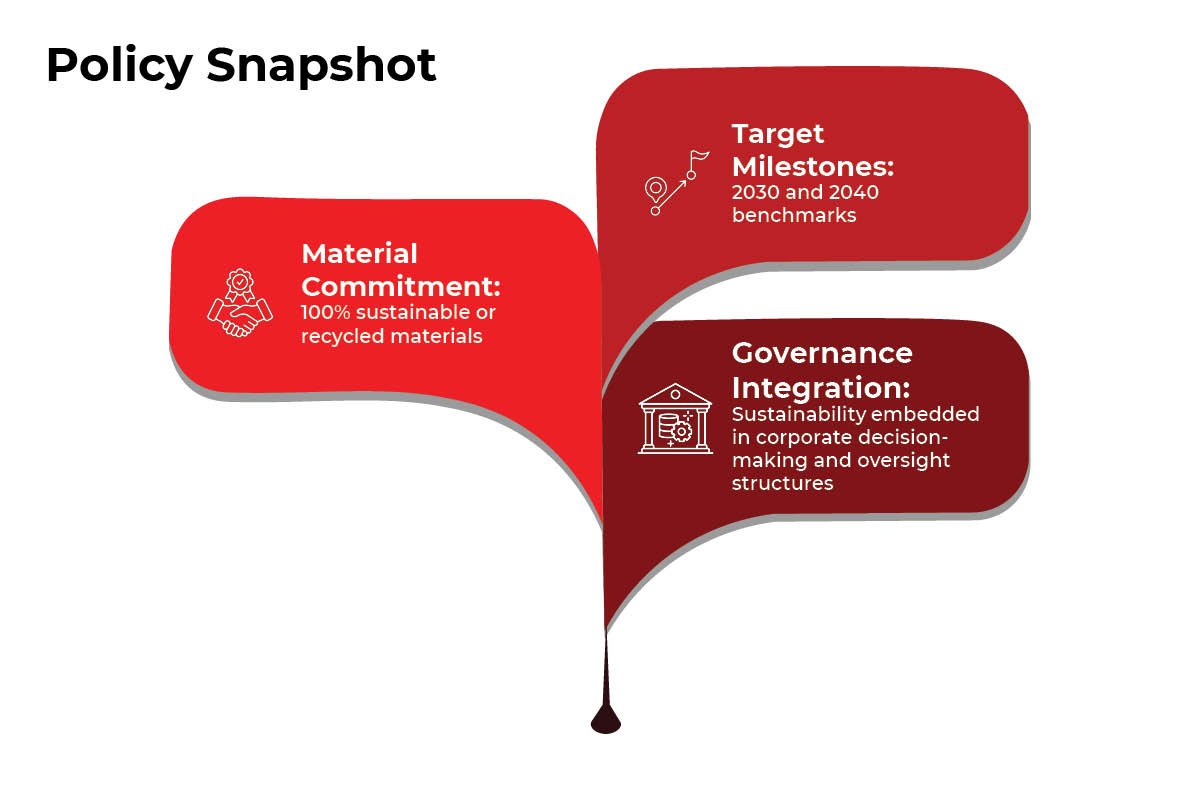
- Material Commitment: 100% sustainable or recycled materials
- Target Milestones: 2030 and 2040 benchmarks
- Governance Integration: Sustainability embedded in corporate decision-making and oversight structures
How H&M Sources Materials Responsibly
The Strategic Sourcing Framework establishes clear material priorities, supplier standards, and collaborative partnerships to ensure sustainable practices across the supply chain. It provides a structured approach to meet H&M’s 2030 targets while maintaining quality, compliance, and circularity in production, forming a core pillar of the H&M sustainability strategy.
Objective Specification and Material Priorities:
- Sustainable Cotton: Sourced through the Better Cotton Initiative (BCI) to reduce environmental impact.
- Recycled Polyester: Focused on post-consumer waste for circular material use.
- Linen and Tencel: Selected for renewable sourcing and low water usage.
- Leather Alternatives: Implementing certified and recycled options to minimize deforestation and chemical use.
Supplier Protocols and Standards:

- Traceability: Full supply chain mapping to ensure material origin verification.
- Compliance Verification: Regular audits to assess adherence to labor, environmental, and chemical standards.
- Contractual Requirements: Sustainability clauses embedded in supplier agreements.
- Capacity Building: Training programs for suppliers on sustainable practices and reporting procedures.
Strategic Partnerships:
- Collaborative Organizations: Partnering with specialized groups to implement circular solutions.
- Circulose Partnership: Reprocesses recycled cotton waste into high-quality fibers for consistent circular material use.
- Operational Benefits: Improves efficiency and supports resource recirculation.
- Sustainability Impact: Contributes directly to the 2030 sustainability targets and serves as a practical model for responsible sourcing.
These sourcing strategies provide the basis for material prioritization and supplier engagement, while operational processes, monitoring protocols, and performance metrics ensure these frameworks translate into measurable sustainability outcomes across H&M’s supply chain.
Mechanisms for Accountability and Performance
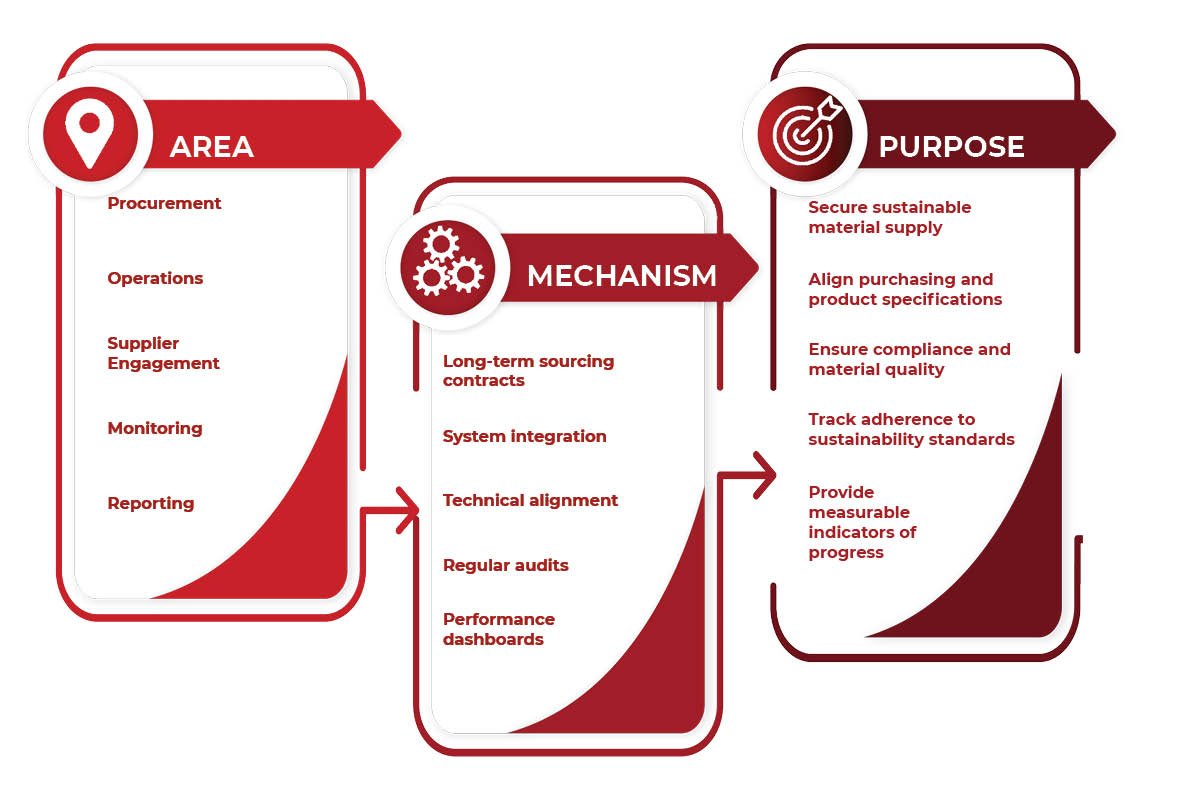
These mechanisms translate strategic sourcing frameworks into operational processes that ensure material priorities and supplier compliance are systematically managed. They provide structured oversight, enable alignment between internal functions, and link sourcing strategies to measurable sustainability outcomes within the H&M sustainability strategy.
| Area | Mechanism | Purpose |
| Procurement | Long-term sourcing contracts | Secure sustainable material supply |
| Operations | System integration | Align purchasing and product specifications |
| Supplier Engagement | Technical alignment | Ensure compliance and material quality |
| Monitoring | Regular audits | Track adherence to sustainability standards |
| Reporting | Performance dashboards | Provide measurable indicators of progress |
Long-term contracts formalize supplier commitments and reduce supply variability, ensuring consistent access to sustainable materials. System integration embeds material priorities into product specifications and purchasing decisions, maintaining operational alignment. Technical alignment verifies supplier compliance with quality and sustainability standards, reducing risks in sourcing.
Monitoring and auditing provide structured verification of adherence, while dashboards consolidate performance data for executive review. Combined, these mechanisms establish a closed-loop system that links policy objectives to measurable outcomes, enabling H&M to track progress toward sustainability targets efficiently and systematically.
Measuring Progress Against Sustainability Goals
H&M’s strategies are assessed through key indicators and compliance metrics, providing insights that guide governance and track progress toward 2030 sustainability targets.
Analytical Overview: H&M’s sustainability performance demonstrates clear alignment between policy objectives and operational execution. Measurable outcomes indicate progress toward circular sourcing targets, supplier compliance, and systematic monitoring. Structured evaluation mechanisms provide transparency, detect deviations, and allow evidence-based adjustments, ensuring that sustainability goals remain actionable and accountable within the H&M sustainability strategy.
Key Performance Indicators
- Sustainable Material Usage: 89 % of total materials sustainably sourced as of 2024; target 100 % by 2030.
- Recycled Material Share: 29.5 % of all materials sourced are recycled; 2025 target of 30 % nearly achieved.
- Supplier Compliance Rate: 95 % of suppliers verified for adherence to sustainability standards.
- Audit Frequency: Biannual audits are conducted for all critical suppliers.
- Reporting Cadence: Quarterly performance dashboards submitted to governance committees.
Interpretation and Implications: These figures indicate that sourcing policies and operational mechanisms are producing tangible results. High sustainable material usage, near-target recycled content, and strong supplier compliance reflect effective integration of policy into practice. Continuous monitoring and reporting reinforce governance oversight, provide actionable insights, and support adaptive management, ensuring sustained progress toward H&M’s 2030 sustainability objectives.
Concluding Assessment
H&M’s sustainability framework aligns policy objectives with strategic sourcing, operational processes, and performance evaluation. The H&M sustainability strategy supports structured procurement, monitoring, and reporting that reinforce material priorities, supplier standards, and partnerships, producing measurable outcomes.
Key indicators, including sustainable material usage, recycled content, and supplier compliance, confirm progress toward 2030 targets. Governance oversight and evaluation mechanisms provide transparency, accountability, and actionable insights, demonstrating a systematic translation of policy into verifiable sustainability results.