Water scarcity is no longer a distant concern across the world. It is a daily reality for communities, farmers, and industries alike. According to UN-Water, 2.2 billion people still lack access to safely managed drinking water, while climate change and population growth continue to stress already stressed freshwater systems.
For companies that rely on agriculture and large-scale manufacturing, water scarcity is an environmental issue as well as a social and economic issue. For PepsiCo, water stewardship represents a clear responsibility: to protect a shared resource while supporting the communities and ecosystems that depend on it. PepsiCo’s Stewardship Programs focus on balancing environmental responsibility with long-term community support.
Rather than viewing water as an operational input alone, PepsiCo treats it as a collective asset that must be preserved for long-term well-being.
Water as a Foundation for Communities and Food Systems
Water sits at the center of life. It sustains crops, supports livelihoods, and protects public health. Agriculture alone takes 70% of the world’s fresh water, highlighting the importance of using water responsibly to ensure food security.
In many parts of the world, especially in water-stressed areas, communities are dealing with falling groundwater levels, irregular rainfall, and poor water quality. Small farmers and low-income families are affected the most. When water is scarce, children miss school, health problems increase, and local livelihoods suffer.
This is the reality that shapes PepsiCo’s approach to water stewardship. The company focuses on using less water, restoring local water sources, and supporting communities so they can better cope with water challenges where PepsiCo operates. Through PepsiCo’s Stewardship Programs, the company aims to improve long-term water resilience in vulnerable regions.
PepsiCo’s Commitment to Responsible Water Use

PepsiCo has publicly committed to becoming Net Water Positive by 2030, meaning it aims to replenish more water than it uses in high water-risk locations. This goal reflects a broader shift in how the company measures success, placing long-term sustainability alongside business performance.
According to PepsiCo’s ESG disclosures, water stewardship efforts focus on three areas:
- Improving water-use efficiency in operations
- Replenishing local watersheds
- Expanding access to safe water in communities
These priorities are designed to align environmental responsibility with ethical and social accountability, which remains central to PepsiCo’s Stewardship Programs.
Improving Water Efficiency Where It Matters Most
Environmental responsibility begins at the operational level. Over the past decade, PepsiCo has invested in technologies and practices that reduce water use across its manufacturing sites.
As reported in its sustainability updates:
- PepsiCo has improved water-use efficiency by more than 25 percent in its high water-risk facilities since 2015.
- Many plants now use advanced wastewater treatment systems that allow water to be reused safely within production processes.
These steps help protect local water sources and allow operations to continue even during droughts or water shortages. Many of these improvements have been introduced through PepsiCo’s Stewardship Programs focused on operational sustainability.
Responsible Water Use Across the Agricultural Supply Chain
Water stewardship extends beyond factory walls. PepsiCo works closely with farmers through its Sustainable Farming Program, helping growers adopt practices that protect soil health and improve water retention.
This includes:
- Promoting efficient irrigation methods
- Supporting crop practices that reduce water loss
- Training farmers to assess water risks and usage
By improving water practices at the farm level, PepsiCo helps stabilize yields while protecting shared water resources. For farmers, this support translates into greater resilience in the face of changing weather patterns and rising climate uncertainty. Agriculture remains one of the key focus areas within PepsiCo’s Stewardship Programs.
Restoring Watersheds and Supporting Local Communities
Philanthropic responsibility plays a central role in PepsiCo’s water programs. In many regions, especially across parts of Asia, Africa, and Latin America, access to safe water remains limited.
PepsiCo partners with local governments, NGOs, and community groups to:
- Restore watersheds and recharge groundwater
- Build rainwater harvesting structures
- Improve access to clean drinking water
In India, watershed development initiatives supported by PepsiCo have helped improve groundwater levels while benefiting agriculture and household water access. These programs are part of PepsiCo’s Stewardship Programs designed to strengthen both environmental and community resilience.
PepsiCo’s water initiatives have contributed to providing access to safe water for millions of people worldwide over the years.
Creating Shared Economic Value Through Water Stewardship
Responsible water management benefits communities and businesses. Water shortages can interrupt supply chains, increase costs, and put farmers’ livelihoods at risk.
By investing in water conservation and replenishment, PepsiCo helps reduce long-term risks while supporting local economies. Using water more efficiently lowers costs, protects crops, and allows communities and businesses to grow together instead of competing for limited water.
This reflects true economic responsibility, where long-term value is created for everyone through PepsiCo’s Stewardship Programs.
Collaboration as a Core Principle
Water challenges are complex and deeply local. PepsiCo works alongside:
- Non-profit organizations
- Local water authorities
- Research institutions
- Community leaders
These partnerships ensure programs are grounded in local realities and informed by scientific data. Collaboration also strengthens transparency and accountability, which are essential for trust in CSR efforts. Collaboration continues to shape the effectiveness of PepsiCo’s Stewardship Programs across different regions.
Learning From Challenges on the Ground

Water stewardship is rarely straightforward. Climate variability, infrastructure gaps, and rising demand continue to pose challenges. PepsiCo has acknowledged that progress varies by region and that solutions must be adapted to local conditions.
By learning from on-ground experience and refining its approach, the company continues to improve how it measures impact and engages communities.
Measuring Impact Beyond Numbers
While metrics remain important, PepsiCo also looks beyond volumes saved or replenished. Community well-being, farmer resilience, and long-term ecosystem health are equally important indicators of success.
By combining data with local feedback, the company works to ensure its water programs remain relevant, effective, and meaningful.
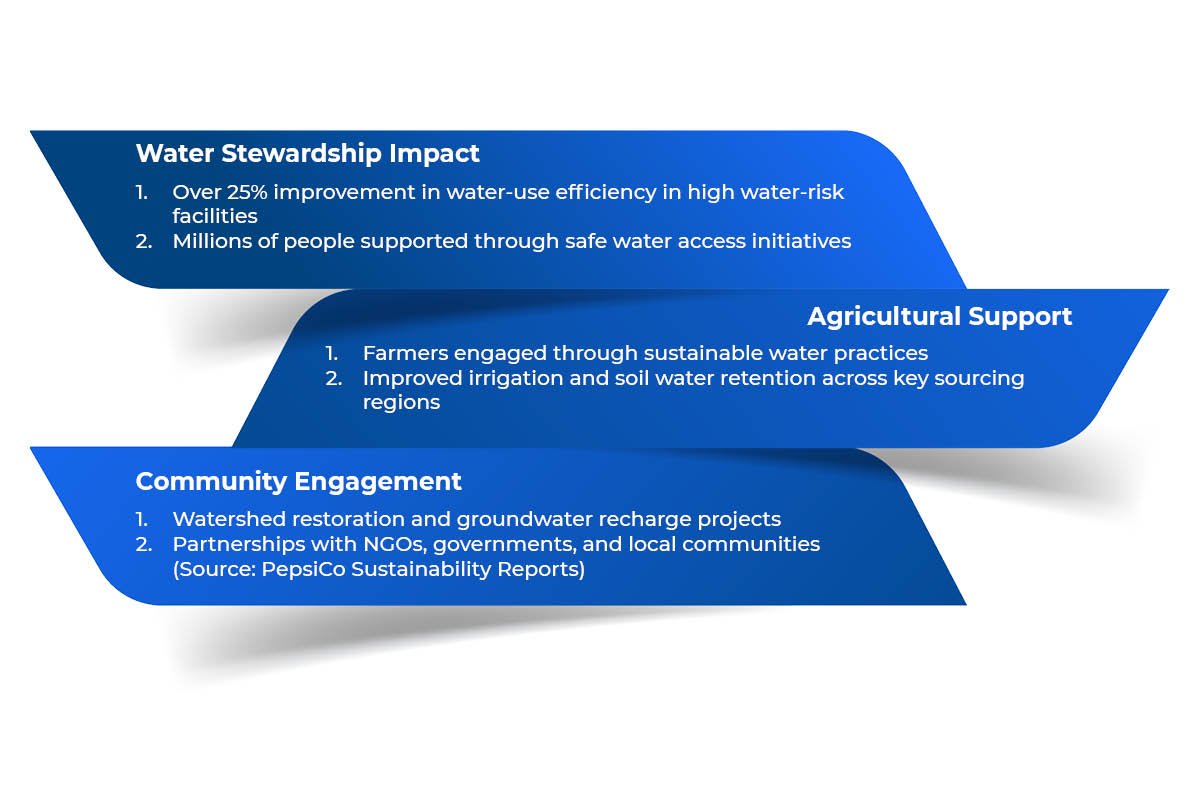
Water Stewardship Impact
- Over 25% improvement in water-use efficiency in high water-risk facilities
- Millions of people supported through safe water access initiatives
Agricultural Support
- Farmers engaged through sustainable water practices
- Improved irrigation and soil water retention across key sourcing regions
Community Engagement
- Watershed restoration and groundwater recharge projects
- Partnerships with NGOs, governments, and local communities
(Source: PepsiCo Sustainability Reports)
The Future of CSR Through Water Responsibility
PepsiCo’s water stewardship work shows how CSR can turn good intentions into real action. The company shows that long-term business success depends on healthy water sources and strong communities.
As water shortages become more common around the world, companies have an important role to play in protecting this vital resource. PepsiCo’s Stewardship Programs continue to demonstrate how businesses can act responsibly, support communities, and help build a more water-secure future for everyone.