Leadership development has reached an inflection point.
Artificial intelligence is accelerating how quickly information is generated, decisions are made, and work gets done. Hybrid and distributed teams have changed how people connect. People at every level of an organization are operating under unprecedented cognitive load while navigating uncertainty, technological disruption, changing workforce expectations, and an increasingly complex human landscape.
Yet much of professional and leadership development still relies on models created for more predictable environments—training people periodically and expecting knowledge acquired in a classroom to translate automatically into behavior when pressure rises.
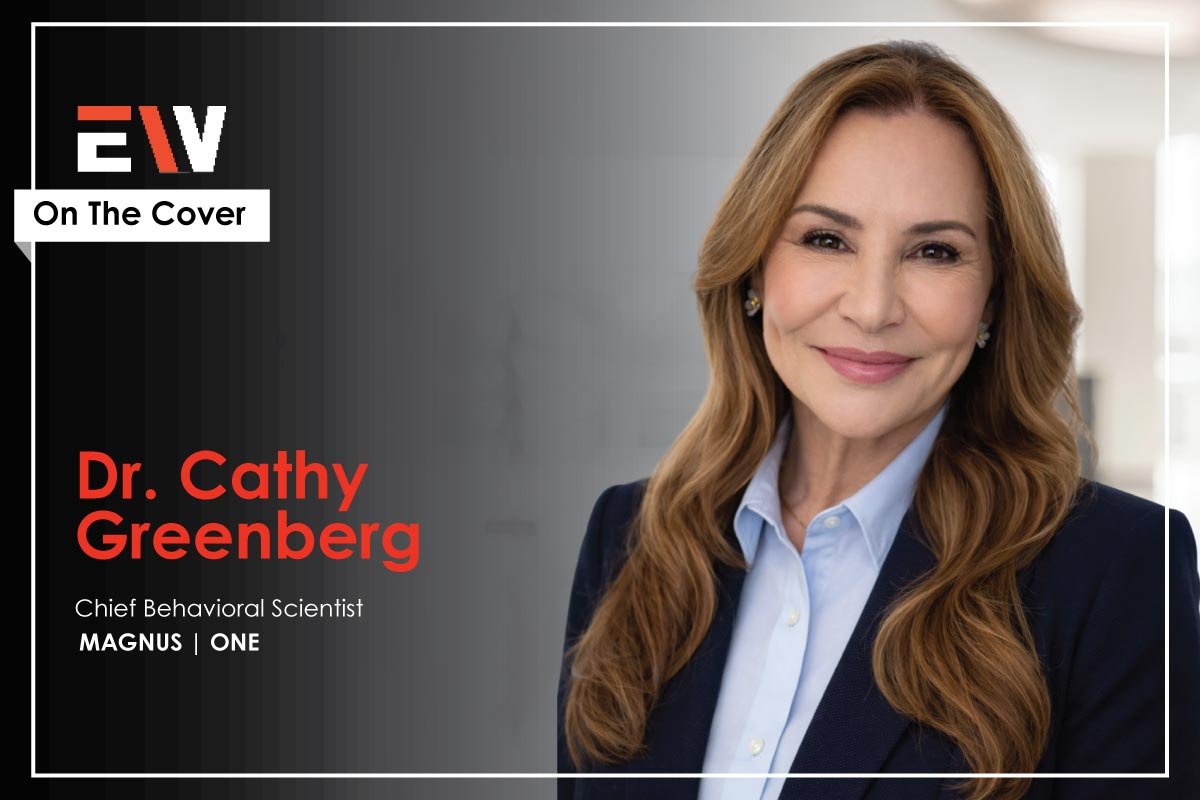
Dr. Cathy Greenberg believes that model is no longer enough.
As Chief Behavioral Scientist at MAGNUS | ONE, behavioral scientist, executive coach, bestselling author, and longtime authority on emotional and social intelligence, Greenberg has spent her career examining a deceptively simple question:
What enables human beings to perform—and lead—at their best when circumstances are at their worst?
Her answer has become increasingly important in the age of artificial intelligence.
“There is no AI without EI.”
For Greenberg, the future of human performance is not a competition between human intelligence and artificial intelligence. It is about developing the human capabilities required to use increasingly powerful technology with judgment, emotional discipline, ethics, and intention.
And while much of this work has historically been described through the lens of leadership, Greenberg’s premise is intentionally broader. Human performance cannot belong only to people with leadership titles.
In industry and across public safety sectors—including law enforcement and firefighting—every member of an organization must be equipped to regulate, adapt, communicate, make sound decisions, take responsibility, establish trust, and act intentionally under pressure.
As technology assumes a greater role in how organizations analyze information, make recommendations, communicate, and operate, these distinctly human capabilities become more important at every level—from frontline employees, first responders, and tactical operators to supervisors, managers, executives, and command leadership.
This is the organization-wide opportunity behind Greenberg’s work and MAGNUS | ONE: to make human readiness a measurable, trainable, and sustainable capability across the entire organization—not simply a competency reserved for those who lead it.
That philosophy sits at the heart of her forthcoming book, Global Leadership: Future Proof — [CLICK HERE TO RESERVE YOUR COPY], the 25th anniversary evolution of the landmark global leadership research that began in 2002.
Its central premise is both timely and urgent: Future-proofing leadership ultimately means future-proofing the human.
From Future Leadership to Human Readiness

Greenberg’s work on the future of leadership began long before AI became part of everyday conversation.
Published in 2003, the original research for Global Leadership: Next Generation began in 2002 with co-authors Marshall Goldsmith, Alastair Robertson and Maya Huchan.
The research examined the capabilities leaders would need to succeed in emerging markets through the eyes of two generations of “future leaders” from across the world’s top Fortune 500 companies. Led by thought leaders, we facilitated focus groups, and CEO Roundtables across major global regions. The results were integrated into five key topics essential for success along with a resource guide for how to achieve these skills and talents written by Maya Huchan. Five characteristics stood out: technological savvy, appreciation of diversity, shared leadership, personal mastery, and the ability to think globally while acting locally.
Twenty-five years later, those capabilities have not disappeared. They have become more consequential—and increasingly relevant beyond formal leadership roles.
What has changed is the environment in which people must exercise them.
Technology is faster. Information is nearly instantaneous. Organizational boundaries are increasingly fluid. Decisions that once allowed hours or days of deliberation may now unfold in seconds. And people must operate amid competing demands while maintaining trust, accountability, collaboration, and performance.
Greenberg’s work has therefore moved beyond asking simply what leaders need to know toward understanding who people must become and how they must behave when pressure arrives.
That evolution forms the foundation of Global Leadership: Future Proof — [CLICK HERE TO RESERVE YOUR COPY].
The book is not about preparing humans to compete with technology. It is about strengthening the distinctly human capabilities necessary to lead themselves, others, and technology responsibly.
AI can inform.
AI can analyze.
AI can accelerate.
The key is humans must still regulate, interpret, decide, take responsibility, establish trust, and exercise moral judgment.
From Emotional Intelligence to Emotional Brilliance™
Greenberg’s career began with a fascination with human behavior and the measurable factors that allow people to thrive.
As a founding partner of Accenture’s Institute for Strategic Change, she helped bring behavioral science into organizational strategy and leadership conversations before doing so became commonplace. But she saw an important gap: organizations invested heavily in strategy, execution, and technical competence while frequently treating emotional intelligence, wellbeing, and sustainable human performance as secondary concerns.
In 2005, she co-founded h2c, LLC—“Happy Companies, Healthy People”—to address that divide.
Her bestselling books, including What Happy Companies Know and What Happy Working Mothers Know, brought those ideas to broader audiences and earned attention across major media.
But Dr. Cathy Greenberg was increasingly interested in something beyond emotional awareness.
Knowing what you feel is valuable. Understanding other people is important. But neither guarantees effective behavior when the stakes rise.
Working with psychologist Dr. Relly Nadler, she advanced the concept she calls Emotional Brilliance™: moving emotional intelligence from insight into intentional action.
The distinction matters.
Emotional intelligence asks whether people can recognize and understand emotions.
Emotional Brilliance® asks:

What do you actually do with that information when the pressure is on?
The model centers on four interconnected capabilities:
Awareness → Regulation → Execution → Sustainment
Know yourself.
Control your state.
Act with precision.
Make effective behavior repeatable.
To do this, Dr. Cathy Greenberg and Nadler developed an easy regulation model: NAME
Notice and normalize your emotions
Accept your emotions, allow them to inform you and then pass through you – don’t cling to them
Manage your emotions in the moment so they don’t contaminate your day or key relationships
Express you emotions safely with awareness for the impacts on you and others in the moment
It transforms emotional intelligence from something people understand into Emotional Brilliance ™ – something they practice.
Where Behavioral Science Meets High-Stakes Performance
That distinction becomes especially visible in the environments Dr. Cathy Greenberg now serves.
MAGNUS | ONE, founded by Dr. Mitch Javidi and owned by Readiness Network under CEO Jeff Kingsfield, operates as a wellness and learning-experience platform supporting the National Command and Staff College and high-performance communities.
Here, human performance is not theoretical.
A person may have seconds—not hours—to regulate an emotional response, assess incomplete information, understand another person’s behavior, and make a consequential decision.
As Chief Behavioral Scientist, Greenberg’s role is to help translate behavioral science into practical human-performance systems for those moments.
Her philosophy can be summarized in four questions:
Behavioral science: What do people do?
Psychology: Why do they do it?
Neuroscience: What is happening under pressure?
Data intelligence: How do we measure whether behavior actually changes?
Together, these create an operating model that moves participants through a continuous cycle:
Assess → Train → Apply → Measure
Participants establish a behavioral baseline using tools such as the EQ-i 2.0, followed by targeted coaching and development designed around real-world performance.
Rather than separating leadership from wellbeing, the model treats emotional regulation, recovery, cognitive control, energy, and decision-making as interconnected components of readiness.
The goal is not simply to create people who understand themselves better.
It is to develop people capable of accessing their best judgment precisely when stress makes that most difficult.
Coaching Built for Real Conditions
Traditional development programs have generally been built around events: attend a workshop, complete a program, return to work.
Dr. Cathy Greenberg believes modern human development requires something different: development built around an environment, not merely an event.
Performance happens continuously, so development must become continuous as well.
Through MAGNUS | ONE and the MAGNUS Coach Certification, coaching is increasingly embedded into the realities of work, combining human coaching, behavioral assessment, scenario-based development, and technology-enabled support.
More than 50 MAGNUS Coaches were trained during 2025 and 2026 through the National Command and Staff College. The 66-hour ICF-accredited coach-development program is specifically designed around the realities faced by first responders and public-safety professionals.
Its underlying assumption is straightforward:
People rarely discover the limits of their capabilities when everything is going well. They discover them under pressure.
Dr. Cathy Greenberg describes three broad performance states:
Baseline — calm, strategic, and capable of perspective.
Activated — alert, engaged, and focused.
Overloaded — reactive, cognitively constrained, and potentially impaired.
Effective performance requires recognizing the transition between these states and knowing how to regulate oneself before reaction becomes behavior.
This is exactly what MAGNUS | ONE is positioned to support—across industries and throughout public safety sectors, including law enforcement and firefighting—by helping individuals recognize, regulate, and respond more effectively when pressure rises.
That makes wellbeing more than a benefit.
It makes wellbeing an element of operational readiness.

Precision Coaching: Understanding the Individual Behind the Behavior
Greenberg’s work is now moving even further into individualized human performance through her collaboration with Dr. Antoine Eid and Meet Yourself™, whose work explores the intersection of behavioral genetics, neuroscience, and behavioral science.
Meet Yourself™ uses a three-part assessment process incorporating DNA, Brainprint™ thinking motivators, and Behavioral Competencies. Its practitioner methodology examines genetic predispositions and innate potential alongside acquired skills and behaviors shaped through learning, experience, and development.
The Meet Yourself™ framework includes 54 Genetic Motivators and is designed to explore how genetic predispositions, thinking motivators, and demonstrated behavioral competencies may interact in human performance.
Dr. Cathy Greenberg and Eid are extending this work through what she describes as the DNA of Peak Performance®—integrating insights from genetic predispositions with demonstrated behavioral patterns to better understand how individuals naturally perform, where development may reveal untapped potential, and where certain behaviors may require greater effort and energy.
The framework distinguishes among four areas:
Strengths — where natural tendencies and demonstrated behaviors align.
Opportunities — innate potential that may not yet be fully expressed through behavior.
Proficiencies — capabilities developed through learning, experience, and deliberate effort.
Drains — behaviors that may require disproportionate effort or energy to sustain.
Importantly, the purpose is not to suggest that genetics determines behavior or destiny.
Quite the opposite.
For Dr. Cathy Greenberg, this is where human agency becomes essential. Genetics may help illuminate predispositions and potential; experience, environment, learning, emotional intelligence, and conscious choice help determine what people ultimately do with them.
Data can help people understand themselves more precisely, but people still choose how they develop, adapt, and perform.
That distinction becomes increasingly important as AI, behavioral analytics, and predictive technologies become more powerful.
Data should increase human agency—not replace it.
The Moment That Made the Science Personal
Some of Greenberg’s strongest convictions have not come from research alone.
They have been tested in her own life.
In 2022, while navigating breast cancer, she lost her home, automobile, and possessions during Hurricane Ian. The convergence of physical uncertainty and profound personal loss forced her to apply the same principles she had spent years teaching others.
There was no leadership seminar for the moment.
No carefully constructed case study.
Only the requirement to regulate emotion, make consequential decisions with incomplete information, preserve energy, and continue moving forward.
Another defining moment involved her brother during a suicidal crisis.
The encounter, captured through the award-winning documentary See Through The Darkness, demonstrated what can happen when law-enforcement officers choose presence, emotional awareness, judgment, and restraint rather than allowing a volatile situation to dictate their response.
For Dr. Cathy Greenberg, the outcome represented Emotional Brilliance® in its most consequential form.
The officers could not control the circumstances.
They could control how they showed up inside them.
And that changed what happened next.
Her experience did not create her philosophy.
It validated it.

There Is No AI Without EI: The Human Foundation of Performance
Technology now raises the stakes of that philosophy.
AI provides organizations and their people with extraordinary access to information and unprecedented capacity to analyze, predict, automate, and accelerate.
But information alone is not judgment.
Prediction is not wisdom.
Automation is not accountability.
And intelligence—artificial or otherwise—is not a substitute for human responsibility.
The more powerful technology becomes, the more important human agency becomes alongside it.
That principle applies to everyone in the organization, not simply formal leaders.
Every person makes choices that influence performance, culture, trust, safety, and outcomes. In public safety, those choices can unfold in seconds and carry extraordinary consequences.
In industry, they shape customer relationships, collaboration, innovation, productivity, reputation, and organizational performance.
That means developing people who can combine Human, Technical, and Emotional Intelligence.
Human intelligence provides meaning, context, judgment, and agency.
Technical intelligence enables people to understand and effectively use the systems transforming their work.
Emotional intelligence—and ultimately Emotional Brilliance®—determines whether people can regulate themselves and act intentionally when complexity and pressure collide.
The question therefore changes from:
“What can technology do?”
to:
“What should humans choose to do with it?”
That is not simply a leadership question.
It is an organizational question.
Preparing Every Human in the Organization—not Just Leaders
This is the broader argument of Global Leadership: Future Proof — [CLICK HERE TO RESERVE YOUR COPY].
“Global Leadership: Future Proof is not about preparing leaders for technology. It is about preparing humans to lead responsibly in a world shaped by it.”
And “lead” in this context is not limited by title, rank, or position.
It means exercising agency over one’s own behavior. It means knowing when to take responsibility, when to collaborate, when to question, when to act, and how to remain intentional when circumstances become difficult.
As AI accelerates how people think, communicate, decide, and work, access to information becomes less of a differentiator.
The differentiator becomes the human capacity to regulate, interpret, decide, communicate, adapt, take responsibility, establish trust, and act with intention under pressure.
In industry, this applies from frontline employees through executive leadership.
Across public safety—including law enforcement and firefighting—it applies from first responders and tactical operators through supervisors and command staff.
The environment changes.
The human requirement does not.
That is why MAGNUS | ONE is positioned to support development across organizations rather than exclusively at the leadership level. Human readiness, emotional regulation, behavioral performance, wellbeing, and sound decision-making are not simply leadership-development issues.
This is exactly why organizations like Home Depot have adopted MAGNUS | ONE for product training and performance enablement.
This is not about leadership alone—it is about enabling consistent, measurable human performance across every role in the organization, ensuring that people can learn, apply, and retain critical knowledge while performing effectively under real-world conditions.
A Human-Centered Vision for 2030
Greenberg’s vision for 2030 is not a world with less technology.
It is a world in which human development catches up with technological acceleration.
She sees behavioral excellence becoming measurable and trainable rather than left to personality or chance. Coaching becomes increasingly personalized and scalable without sacrificing human connection. Development moves out of classrooms and into real conditions. Wellbeing becomes a measurable component of operational readiness. Emotional regulation becomes a core organizational competency rather than an optional “soft skill.”
Her collaborations reflect that broader ecosystem.
With Dr. Mitch Javidi, Jeff Kingsfield, and the MAGNUS | ONE community, she is helping build coaching and human-performance systems for public safety, industry, and other high-stakes environments.
With Dr. Antoine Eid, she is exploring greater precision in understanding individual behavioral performance through the DNA of Peak Performance®.
Her work with Dr. Zeina Ghossoub extends emotional intelligence and performance coaching internationally, while collaboration with Elaina Spilove and ESSvest brings the intersection of wellbeing, wisdom, leadership, and financial empowerment to women.
Different populations. Different environments.
But one consistent idea:
Human performance can be understood, developed, measured, and strengthened—without reducing human beings to data.
The Human Advantage Technology Cannot Replace
For Dr. Cathy Greenberg, the people and organizations that distinguish themselves in the coming decade will not necessarily be those with the most information—or even those with the most sophisticated technology.
Technology will increasingly democratize access to both.
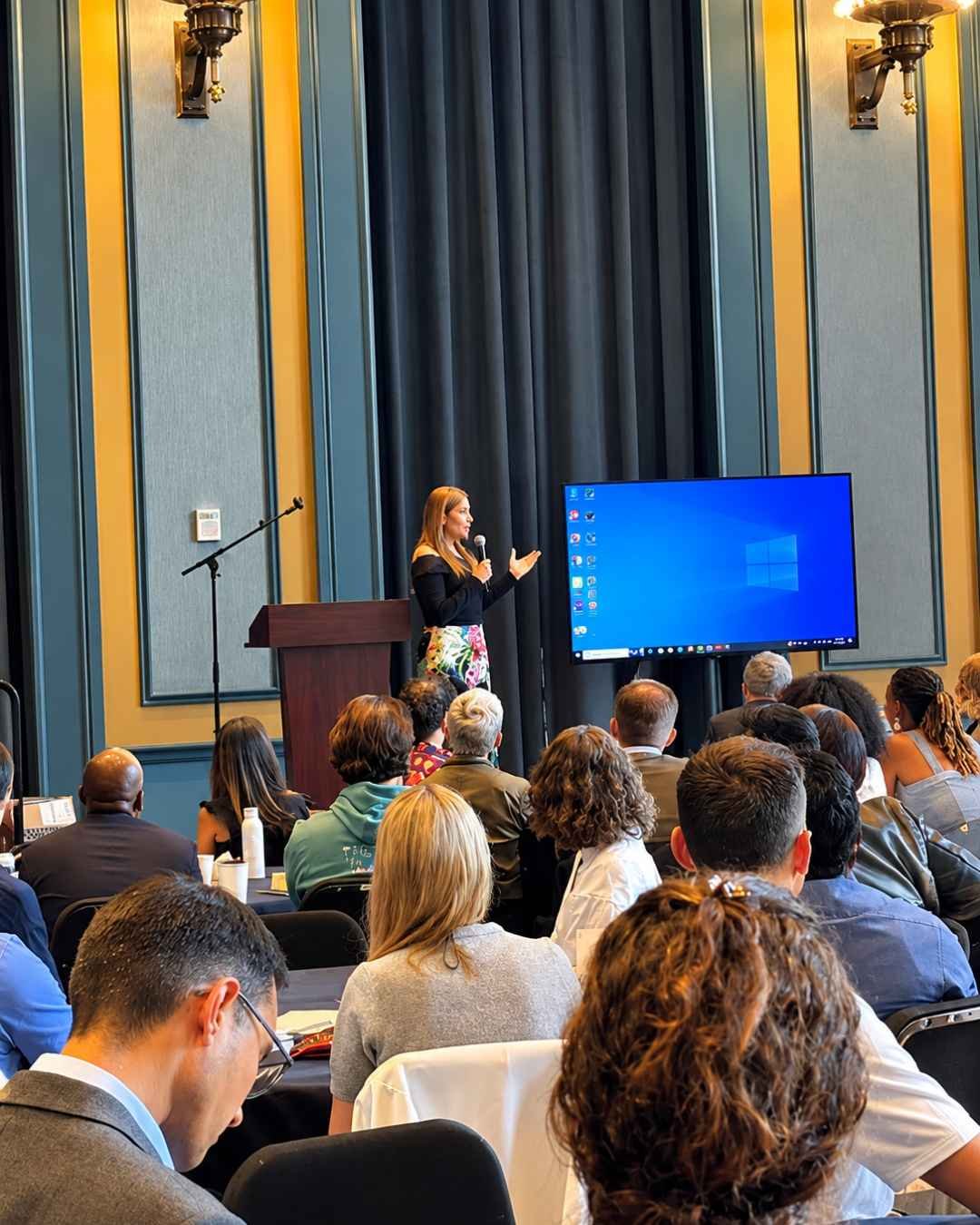
The advantage will belong to organizations whose people can remain grounded when circumstances become reactive, clear when complexity becomes overwhelming, and intentional when uncertainty encourages impulsivity.
That capability must exist throughout the system.
A frontline employee influences trust.
A first responder influences safety.
A team member influences culture.
A supervisor influences performance.
A tactical operator influences outcomes.
A senior executive or command leader influences the conditions under which all of them operate.
Each carries a different scope of responsibility, but every person contributes to the organization’s human performance.
Greenberg’s advice to people at every level reflects the philosophy that has shaped her career:
Master the inner world first. Build behaviors, not simply knowledge. Learn to perform under pressure. Use data without surrendering your humanity. And play the long game—because trust is created through consistency, humility, judgment, and reflection.
The future will undoubtedly be shaped by artificial intelligence and increasingly intelligent systems.
The opportunity is not to resist that future. It is to ensure that human capability develops alongside it.
That means using extraordinary technology without surrendering the qualities that remain distinctly human: presence, trust, judgment, responsibility, empathy, courage, ethics, and choice.
This is ultimately what it means to future-proof an organization.
You don’t future-proof the organization by preparing only its leaders. You future-proof it by preparing its people.
And perhaps the most important question for 2030 and beyond is surprisingly simple:
When technology can do almost anything, will we have developed humans throughout our organizations wise enough to decide what it should do?
Signature Positioning
Global Leadership: Future Proof — [CLICK HERE TO RESERVE YOUR COPY] is not about preparing leaders for technology. It is about preparing humans to lead responsibly in a world shaped by it.
As AI accelerates how we think and act, the real differentiator will not be access to information, but the ability to regulate, decide, and lead with intention under pressure.
That is where the human element becomes not just relevant—but irreplaceable.
The Future-Proof Human Performance Equation
Human Intelligence + Technical Intelligence + Emotional Intelligence → Human Agency
Human Agency + Emotional Brilliance® → Intentional Action Under Pressure
Intentional Action + Accountability + Ethics → Future-Proof Human Performance
Four Commitments for 2030
- Standardize behavioral excellence so performance under pressure is developed intentionally rather than left to chance.
- Scale coaching without losing humanity so technology extends human connection instead of replacing it.
- Prepare people for reality, not theory by developing behaviors under the conditions in which performance is actually tested.
- Ensure technology enhances human performance rather than replacing it by keeping human agency, ethics, accountability, and judgment at the center of consequential decisions.
The bottom line: Technology will continue to accelerate. The competitive—and human—advantage will belong to organizations that develop people capable of leading themselves, contributing effectively to others, and using technology with judgment and intention.
Reference
Meet Yourself™. Practitioner Certification Program and Assessment Methodology. Meet Yourself™. The methodology describes its three-step DNA, Brainprint™, and Behavioral Competencies assessment and its application of behavioral genetics to innate talent and potential, individual DNA predispositions, acquired skills and behaviors, strengths, and untapped potential.
A Message to Aspiring Women Leaders and Coaches
Dr. Cathy Greenberg believes leadership today is not about having the right answers, but about having the awareness, discipline, and courage to manage oneself when it matters most. Effectiveness will never rise above self-awareness. The leaders who stand out are not the loudest; they are the most intentional, paying attention to how they think, taking responsibility for how they feel, and being deliberate about how they act.
Her advice: “Master the inner world first, because emotional intelligence is the operating system. Build behaviors, not just knowledge. Learn to perform under pressure, because reputation is built in moments of uncertainty. Use data but never lose your humanity, and play the long game, because real leadership is built through consistency, humility, and reflection. Those who stay grounded when others are reactive, clear when others are overwhelmed, and intentional when others are uncertain become the ones others trust to lead when it matters most.”