The finance companies in USA form the backbone of the world’s largest economy, collectively managing trillions of dollars in assets, underwriting global capital flows, and influencing monetary trends across continents. From consumer banking giants and credit card networks to asset managers and investment banking powerhouses, these institutions shape everything from household mortgages to multinational mergers.
Over the past decade, the landscape of finance companies has undergone a structural transformation. Digital banking, artificial intelligence, advanced risk analytics, regulatory restructuring, and global expansion strategies have redefined how these firms compete and create value. Some dominate retail and commercial banking, while others lead in wealth management, institutional securities, asset management, and cross-border treasury operations.
This blog explores the most influential finance companies based on market capitalization, leadership, core strengths, and strategic positioning. Together, they represent a powerful financial ecosystem that drives innovation, maintains liquidity, strengthens capital markets, and supports long-term economic stability both within the United States and globally.
Top 10 Finance Companies in USA by Market Capitalization (From Least to Most)
The finance companies in USA listed below are ranked by market capitalization, reflecting scale, investor confidence, and overall financial strength. Beyond size, these institutions shape capital markets, consumer banking, asset management, and global investment flows. Together, they form the core of America’s financial ecosystem and influence economic activity worldwide.
1. Capital One Financial Corp.
| Market Cap | 129.23B |
| Headquarters | Tysons, Virginia, U.S. |
| Founded | 1988 |
| CEO | Richard Fairbank |
| Core Strength | Credit cards & digital banking |
Capital One is known for leveraging data analytics to refine credit risk assessment and personalized lending. The firm has positioned itself as a technology-forward financial institution. It invests heavily in cloud infrastructure and digital innovation initiatives. The company’s marketing strategy has been central to brand recognition across consumer finance. Its operational model emphasizes automation and data-driven decision-making to maintain competitive efficiency.
2. The Charles Schwab Corporation

| Market Cap | 165.40B |
| Headquarters | Westlake, Texas, U.S. |
| Founded | 1971 |
| CEO | Richard Wurster |
| Core Strength | Brokerage & wealth management services |
Charles Schwab stands out among finance companies in USA for transforming retail investing by lowering brokerage costs and making market access more affordable. The company has steadily expanded its advisory and custodial services for independent financial advisors across the country. By integrating brokerage and banking solutions, it offers clients a more streamlined and consolidated approach to financial management. Schwab continues to grow through asset consolidation and expanding client accounts.
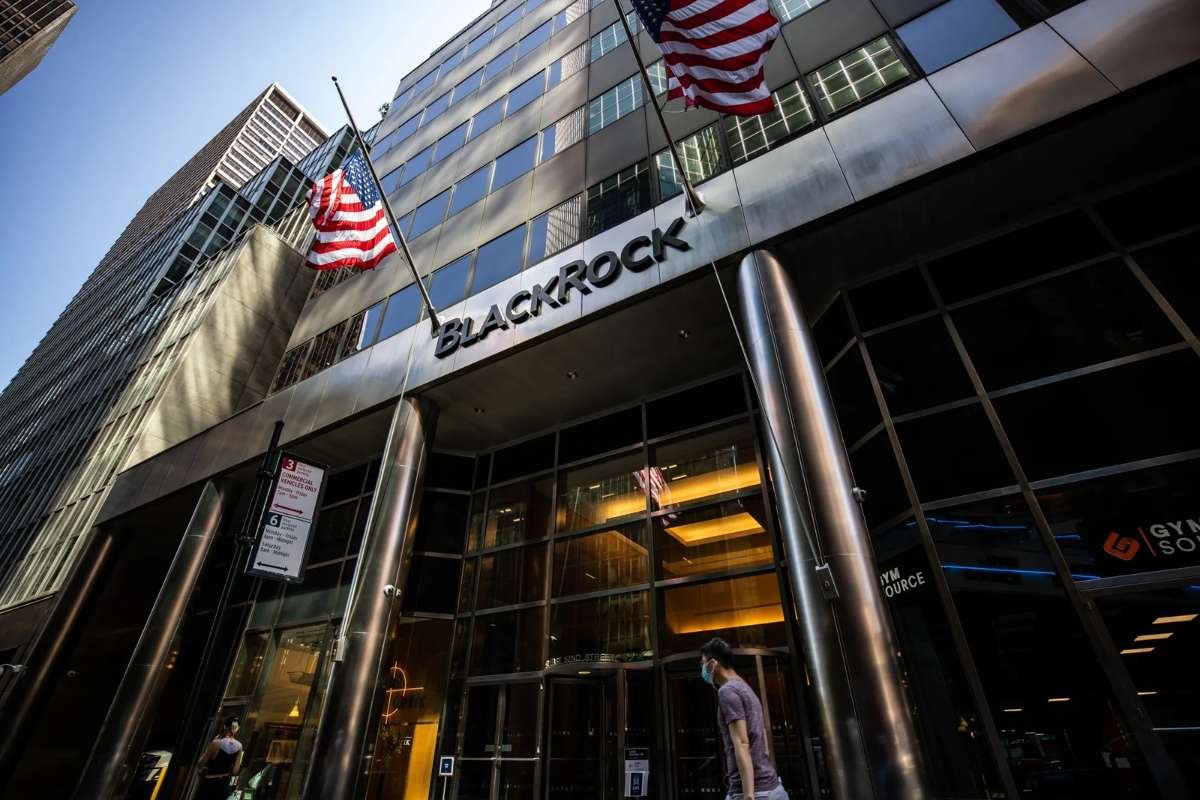
3. BlackRock, Inc.
| Market Cap | 174.69B |
| Headquarters | New York City, New York, U.S. |
| Founded | 1988 |
| CEO | Laurence Fink |
| Core Strength | Asset management, ETFs (iShares) |
BlackRock is recognized globally for shaping modern passive investing strategies through its ETF ecosystem. The firm’s Aladdin risk management platform is widely used by financial institutions worldwide. It plays a major role in sustainable investing and ESG-focused capital allocation. Governments and central banks have consulted the company during periods of market stress. Its scale gives it significant voting power in corporate governance matters across public companies.
4. Citigroup Inc.
| Market Cap | 198.83B |
| Headquarters | New York City, New York, U.S. |
| Founded | 1812 |
| CEO | Jane Fraser |
| Core Strength | Global banking, treasury & trade solutions |
Citigroup stands out for its extensive international footprint compared to most U.S.-based banks. It plays a major role in facilitating cross-border transactions, treasury services, and multinational corporate banking, positioning itself as one of the most globally connected finance companies in USA. The firm has been reshaping its global strategy by exiting non-core consumer markets. It remains highly active in global debt issuance and foreign exchange markets. Its institutional client group continues to be a primary revenue driver across international operations.
5. American Express Company

| Market Cap | 236.56B |
| Headquarters | New York City, New York, U.S. |
| Founded | 1850 |
| CEO | Stephen J. Squeri |
| Core Strength | Credit cards, charge cards, payments |
American Express differentiates itself through a premium, membership-based credit ecosystem. The company generates strong loyalty through travel rewards and corporate expense programs. It has built a closed-loop payments network that allows it to capture both merchant and cardholder data. The brand maintains a strong presence in affluent consumer segments and business spending solutions. Its travel-related services contribute meaningfully to overall business diversification.
6. Wells Fargo & Company
| Market Cap | 270.29B |
| Headquarters | San Francisco, California, U.S. |
| Founded | 1852 |
| CEO | Charles Scharf |
| Core Strength | Retail & commercial banking, mortgages, wealth management |
Wells Fargo has historically been one of the largest mortgage originators in the United States. The institution has undergone significant restructuring in recent years to strengthen governance and regulatory compliance. It continues to serve a broad base of retail and commercial customers across multiple financial segments. The company has prioritized balance sheet optimization and risk control improvements. Its turnaround strategy focuses on rebuilding trust while improving operational efficiency, reinforcing its position among leading finance companies in USA.
7. Morgan Stanley
| Market Cap | 271.55B |
| Headquarters | New York City, New York, U.S. |
| Founded | 1924 |
| CEO | Edward Pick |
| Core Strength | Wealth management, institutional securities |
Morgan Stanley has significantly expanded its wealth management division through strategic acquisitions in recent years. The firm balances institutional securities operations with advisory services for high-net-worth individuals. It has strengthened its recurring revenue base through asset management and advisory fees. The company remains highly competitive in global equity underwriting and advisory transactions. Its business model emphasizes stability through diversified income streams.
8. The Goldman Sachs Group, Inc.

| Market Cap | 287.38B |
| Headquarters | New York City, New York, U.S. |
| Founded | 1869 |
| CEO | David Solomon |
| Core Strength | Investment banking, trading, and asset management |
Among the most influential finance companies in USA, Goldman Sachs is often associated with high-profile mergers, acquisitions, and complex financial advisory mandates. It has historically maintained a strong presence among sovereign funds, corporations, and institutional investors. The firm has expanded beyond traditional investment banking into alternative investments and asset platforms. Its influence extends deeply into global financial policy discussions and capital allocation trends.
9. Bank of America
| Market Cap | 380.39B |
| Headquarters | Charlotte, North Carolina, U.S. |
| Founded | 1784 |
| CEO | Brian Moynihan |
| Core Strength | Consumer & commercial banking, wealth & investment management |
Bank of America maintains one of the largest consumer banking networks in the country, serving tens of millions of individual and business clients. Its digital platform processes billions of transactions annually through mobile and online channels. The firm has aggressively invested in AI-driven financial assistance tools to enhance customer engagement. It is also a major underwriter in debt and equity capital markets. Through its wealth management arm, it oversees trillions in client assets across institutional and private investors.
10. JPMorgan Chase & Co.
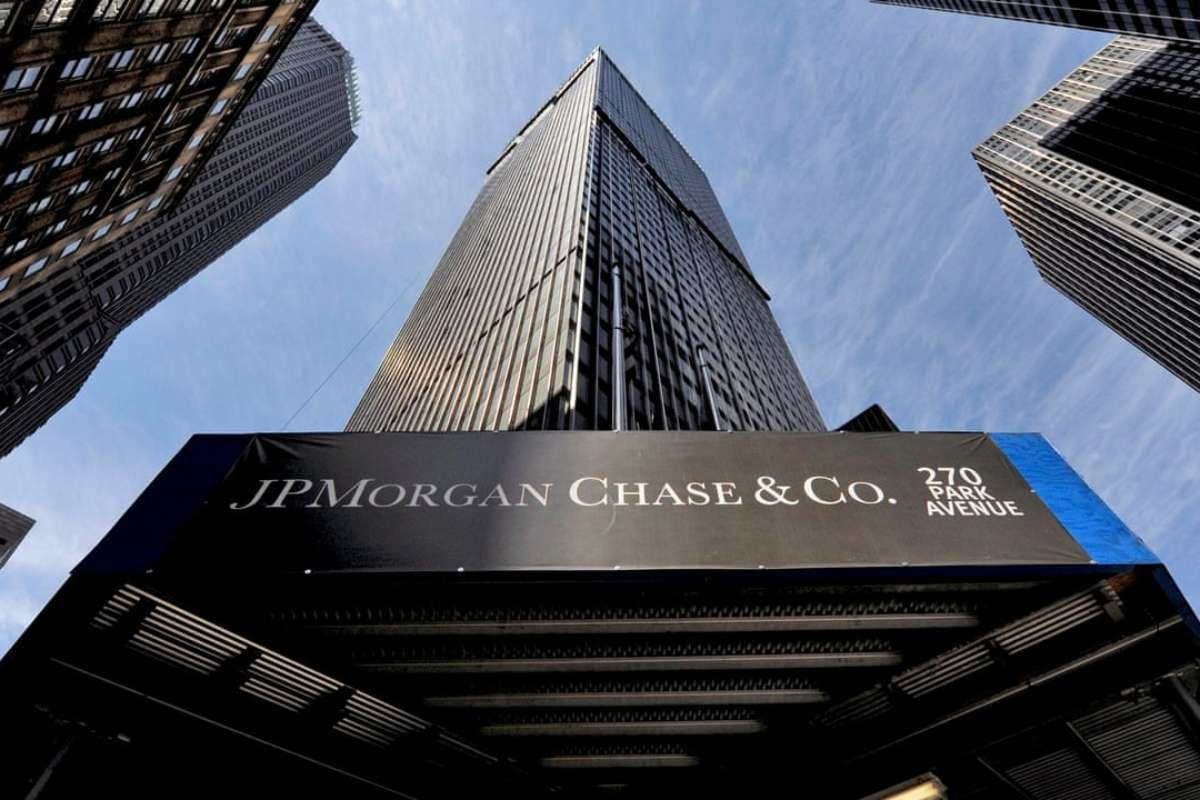
| Market Cap | 828.34B |
| Headquarters | New York City, New York, U.S. |
| Founded | 1709 |
| CEO | Jamie Dimon |
| Core Strength | Commercial & investment banking, wealth management, asset management |
JPMorgan Chase is widely regarded as the most systemically important bank in the United States due to its size and diversified financial ecosystem. It plays a dominant role in global capital markets, underwriting some of the largest IPOs and debt issuances worldwide, solidifying its standing among the leading finance companies in USA. The bank consistently ranks among the leaders in fixed income and equity trading volumes. Its technology investment budget runs into billions annually, reinforcing its competitive edge in digital banking and cybersecurity.
Conclusion:
The finance companies in USA highlighted in this list represent more than just large balance sheets and impressive market capitalizations. They are institutions that drive credit expansion, facilitate global trade, manage trillions in assets, and influence capital markets at scale. From retail banking and wealth management to investment banking and asset management, each company plays a distinct yet interconnected role in strengthening the financial ecosystem.
As technology, regulation, and global economic conditions continue to evolve, these finance companies in USA are investing heavily in digital innovation, risk management, and diversified revenue models to remain competitive. Their ability to adapt, scale, and maintain investor confidence will ultimately determine their long-term leadership in both domestic and international markets.
FAQs
1. What is the largest finance company in the USA?
JPMorgan Chase & Co. is currently the largest among the leading finance companies in USA by market capitalization, operating across commercial banking, investment banking, asset management, and wealth management.
2. Are finance companies regulated in the USA?
Yes. Finance companies are regulated by authorities such as the Federal Reserve, OCC, and SEC. Large institutions must meet strict capital, compliance, and risk management requirements.
3. How do finance companies make money?
They earn through interest on loans, advisory and brokerage fees, trading income, asset management fees, and transaction processing charges.
4. What is the difference between a bank and a finance company?
Banks accept deposits and offer broad financial services, while finance companies typically focus on lending, investments, or advisory services without always operating as full-service deposit institutions.
5. Why are finance companies important to the U.S. economy?
Finance companies in USA provide capital, manage investments, support businesses, and maintain liquidity in financial markets, driving overall economic growth and stability.