A workforce management strategy helps teams plan, assign, and track work with more structure and clarity. This article explains its key components, along with a step-by-step approach to building a strategy that fits real team needs. It also dives into how this approach improves efficiency and supports better decision-making.
Shifts in workload, uneven team capacity, and constant deadline pressure tend to expose the same underlying issue: work isn’t being coordinated with enough precision. What starts as minor inefficiencies often builds into larger disruptions, forcing teams to constantly adjust instead of operating within a stable flow.
Over time, this reactive way of working creates strain across roles, making it harder to maintain consistency or predict outcomes. Managers spend more time resolving gaps than preventing them, and even well-planned efforts begin to lose structure under pressure.
So what is the fix?
A well-defined workforce management strategy helps align staffing, scheduling, and workload distribution so decisions are made with intent rather than urgency, allowing teams to operate with clarity, balance, and far less friction.
In this article, we will take a look at how a well-outlined strategy can work wonders for workforce management.
Workforce management is how a company plans, tracks, and supports its employees to meet business goals. It includes a variety of things like scheduling shifts, tracking attendance, etc. The aim is to have the right people in the right roles at the right time. So, naturally, there needs to be a plan in place. But what makes a workforce management plan a good plan?
Components of a workforce management strategy
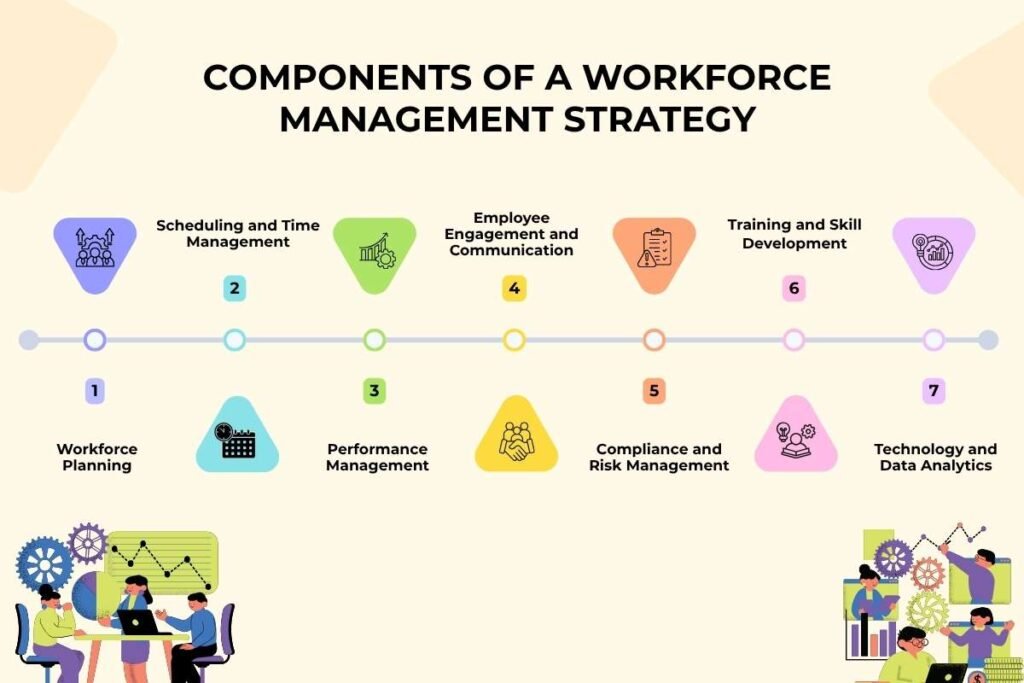
A workforce management strategy works best when its core elements are clearly defined. Each part supports a different aspect of how work gets planned, assigned, and tracked. When these components work together, teams can operate with better structure and fewer gaps.
1. Workforce planning
Managers look at past workload, future goals, and expected demand. This helps them decide how many people they will need. With better planning, teams avoid sudden hiring gaps or extra staffing costs.
2. Scheduling and time management:
Managers build shifts around workload, employee availability, and skill sets. Poor scheduling can waste time or overwork staff. Time tracking highlights gaps and helps managers fix issues quickly.
3. Performance management:
Employees perform better when goals are clear and easy to track. Managers review progress often and give direct feedback. This keeps work on track and helps solve problems early.
4. Employee engagement and communication:
Regular check-ins keep employees informed and involved in their work. Clear communication reduces confusion and avoids mistakes. When people feel heard, they stay focused and work better as a team.
5. Compliance and risk management:
Teams must follow rules related to work hours, pay, and policies. Even small errors can lead to legal or financial trouble. Careful tracking helps avoid these risks and ensures fair treatment.
6. Training and skill development:
Employees need to update their skills as work demands change. Training helps them handle tasks with more ease and confidence. A skilled team needs less supervision and adapts faster.
7. Technology and data analytics:
Managers use tools to track schedules, attendance, and performance in real time. Data reveals patterns that are not easy to spot otherwise. This helps teams make faster and more accurate decisions.
How to build a workforce management strategy (step-by-step guide)
A strong workforce management strategy develops through a series of clear steps that build on each other. When managers follow a structured approach, they can create a system that stays practical, flexible, and aligned with real work demands.
Step 1: define business goals:
Start by setting clear and measurable goals. These may include growth targets, service levels, or cost limits. Each goal should link to how work gets done on the ground. When goals stay clear, managers can plan staffing with purpose. This step keeps the full workforce management strategy aligned from the start.
Step 2: analyze current workforce
Take a close look at your current team structure. Review roles, workloads, skill levels, and performance data. Identify where teams feel stretched or underused. This step often reveals hidden gaps that affect output. It also shows where small changes can improve efficiency.
Step 3: forecast workforce demand
Use past data and current trends to predict future workload. Look at busy periods, slow cycles, and expected growth. This helps estimate how many people you will need at different times. A clear forecast reduces last-minute decisions. It also helps teams stay prepared during demand spikes.
Step 4: identify skill requirements
Map the skills needed to meet future demand. Some roles may need technical skills, while others need soft skills like communication. Compare these needs with your current workforce. This shows where gaps exist. It also helps prioritize hiring or training.
Step 5: develop hiring and training plans
Create a plan to fill the gaps identified earlier. Hire new employees where skills are missing. At the same time, train existing staff to take on new tasks. This reduces hiring pressure and builds internal strength. A balanced approach keeps the workforce flexible and cost-effective.
Step 6: create efficient schedules
Build schedules that match workload patterns and employee strengths. Avoid overloading some employees while others stay underused. Use shift planning to cover peak hours with the right skills. Good scheduling improves output and reduces fatigue. It also keeps daily operations smooth.
Step 7: implement workforce management tools
Adopt tools that automate key tasks like scheduling, time tracking, and reporting. These tools reduce manual errors and save time. They also provide real-time visibility into workforce activity. Managers can make faster decisions with accurate data. This step strengthens the full workforce management strategy.
Step 8: set performance metrics
Define simple and clear metrics to measure output. These may include productivity, attendance, or task completion rates. Managers should review these metrics often and share feedback. This keeps employees aware of expectations. It also supports steady improvement over time.
Step 9: monitor and adjust regularly
A workforce management strategy should not stay fixed. Managers must review results, track changes, and adjust plans when needed. Small updates can solve issues before they grow. Regular monitoring keeps the strategy relevant. It also helps teams stay aligned with business needs.
What are the advantages of having a workforce management strategy?

A clear workforce management strategy helps teams use their time and skills better. Managers can match the right people to the right tasks without delay. This improves daily output and reduces wasted effort. It also helps control labor costs by avoiding overstaffing or last-minute hiring. Over time, teams become more stable and predictable.
It also improves employee experience across the workplace. Clear schedules, fair workload, and regular feedback reduce stress. Employees know what is expected and how they are performing. This builds trust and keeps them more engaged in their roles.
Strong workforce planning also helps align benefits with employee needs, as SHRM research shows that 88% of employers rate health-related benefits as highly important. This reflects how structured strategies support both employee well-being and long-term performance.
Better decisions become easier with the right data and structure in place. Managers can track performance, spot trends, and act quickly when issues arise. This reduces risks linked to compliance, staffing gaps, or poor planning. A strong workforce management strategy also makes it easier to adapt during growth or change.
What are the challenges in implementing a workforce management strategy?

Building a workforce management strategy takes time and clear planning. Many teams struggle with poor data or incomplete records. Without accurate data, forecasts and schedules often miss the mark. Managers may also rely on guesswork instead of real insights. This can lead to staffing gaps or wasted effort.
Change can also create resistance within the team. Employees may find new tools or processes hard to follow at first. Managers need time to train teams and build trust in the system. Without proper support, adoption stays low, and results suffer. This slows down the impact of the strategy.
Technology and cost can become another barrier. Some tools are expensive or hard to set up. Small teams may lack the resources to manage them well. Integration with existing systems can also create delays. These issues can limit how effective the workforce management strategy becomes.
Conclusion:
Workforce management strategy shows its value in the small, repeated decisions that shape a workday. Staffing levels, shift timing, and performance expectations all start to move with a shared sense of direction. That consistency builds over time and reduces the need for constant correction.
The impact becomes visible in how work flows across teams. Handoffs feel smoother, workloads stay balanced, and planning starts to hold even when demand shifts. Managers spend less time reacting and more time adjusting with intent.
As the system settles, clarity replaces guesswork. Teams understand what is expected, leaders see where pressure builds, and decisions carry forward instead of resetting each day.
People also ask
1. What is a workforce management strategy in simple terms?
It is a structured approach to plan, schedule, track, and optimize how employees work.
2. What are the core parts of a workforce management strategy?
Workforce planning, scheduling, time tracking, performance monitoring, and data analysis.
3. How does it affect daily operations?
It brings consistency to staffing, reduces last-minute changes, and improves how work is distributed.