Key Takeaways
- TSMC expects strong, multi-year demand for AI chips despite market concerns.
- Arizona chip expansion grows to $265 billion despite labor and infrastructure challenges.
- TSMC remains confident despite geopolitical risks and increasing global competition.
Taiwan Semiconductor Manufacturing Co. expects strong, long-term demand for artificial intelligence chips as it increases its TSMC Arizona investment to $265 billion, despite construction labor shortages and geopolitical challenges, a senior executive said Monday.
TSMC expands Arizona manufacturing
TSMC is increasing its investment in Arizona by an additional $100 billion, bringing its total TSMC Arizona investment in the state to $265 billion. Chief Financial Officer Wendell Huang said the company decided to expand after making strong progress on its U.S. operations.
“We will continue to invest,” Huang said in an interview after the company’s second-quarter earnings announcement. He added that TSMC remains grateful for support from the U.S. government.
Huang said customer demand for AI chips remains strong and is expected to continue for years.
“We continue to see customers’ strong demand, multi-year structural demand,” he said.
TSMC is the world’s largest producer of advanced semiconductor chips and a major supplier to Nvidia. Its financial performance is widely viewed as an indicator of demand across the global semiconductor industry.
The TSMC Arizona investment expansion also supports President Donald Trump’s goal of increasing semiconductor manufacturing in the United States.
Arizona growth faces workforce challenges
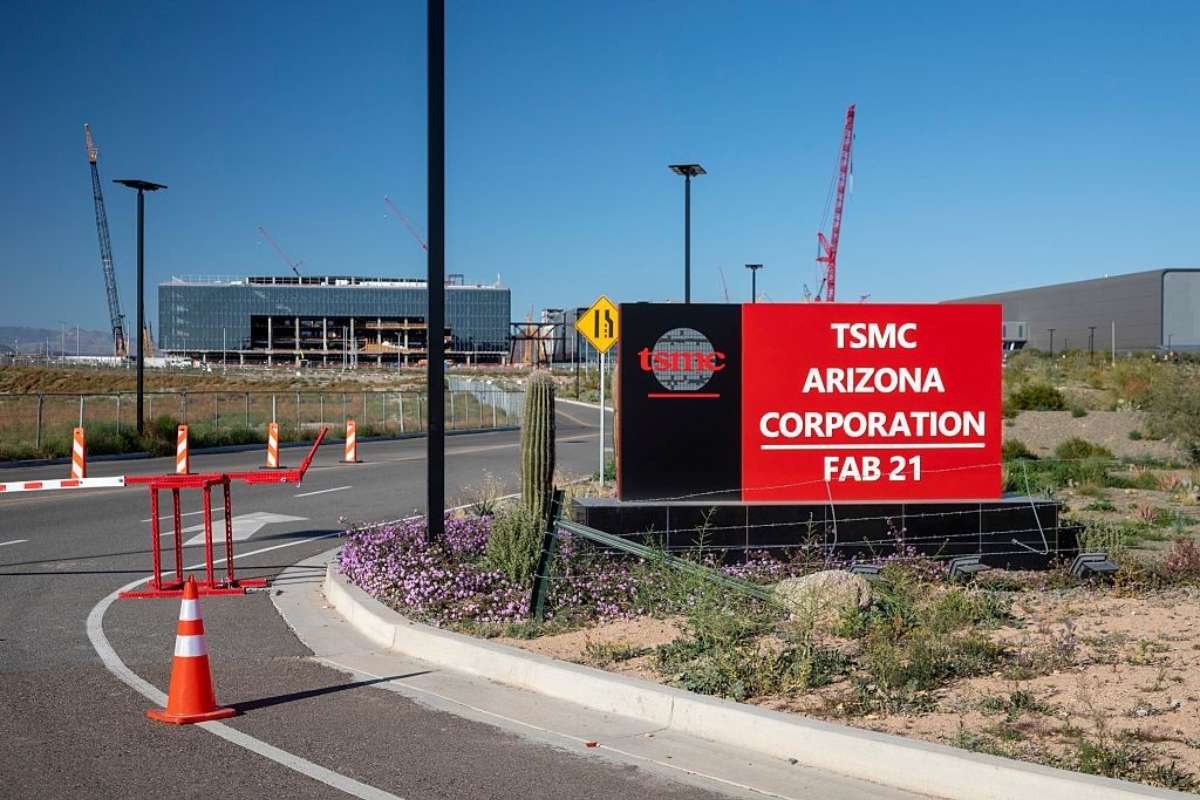
As part of the TSMC Arizona investment, TSMC’s first Arizona fabrication plant is already operating and producing chips with yields comparable to its flagship facility in Taiwan, Huang said.
The company’s second Arizona fab is preparing to install equipment, while construction of a third plant is underway. Preparatory work has also begun on a fourth fabrication plant and the site’s first advanced packaging facility.
Once completed, TSMC’s Arizona campus will include 12 fabrication and advanced packaging facilities along with a research and development center. Huang did not provide a timeline for the latest expansion.
He said the company still faces practical challenges, including a shortage of construction workers and infrastructure limitations.
“There are physical constraints — the number of construction workers available, the infrastructure available,” Huang said. “We’ll work closely with the government to solve these issues.”
At the same time, TSMC continues to expand manufacturing in Taiwan, where it plans to build 13 leading-edge and advanced packaging facilities over the next several years.
“Land is a scarce resource in Taiwan,” Huang said. “Whenever there are available lands, we will use them for the most leading-edge technologies.”
Company monitors financing and export risks
Huang said TSMC has not ruled out issuing bonds if market conditions become favorable. He did not indicate any plans to raise money by selling new shares in the United States.
The company also continues to face geopolitical pressures as Washington tightens export controls on advanced chips destined for China.
Asked about a reported U.S. export control investigation involving a chip that later appeared in a Huawei AI processor, Huang declined to discuss the case in an interview with CNBC and referred questions to U.S. authorities.
He said TSMC regularly reviews its export control system but acknowledged that visibility into products becomes limited after customers resell them.
“I have to say there is only so much we can do in terms of complying with all the rules and regulations,” Huang said. “At some point in time, you lose the visibility. That’s the reality.”
Despite concerns among some investors over the sustainability of AI-related spending and the scale of the TSMC Arizona investment, Huang said the company remains confident in its competitive position.
“Our competitors are good, but we are even better,” he said.