Learn how workforce management helps businesses improve productivity without hiring more people. This guide explains what WFM is, why it matters, its core components, and how it differs from workforce planning and HR management. You’ll also discover practical strategies and best practices to optimise staffing, control labour costs, improve operational efficiency, and build a more resilient business using your existing workforce.
WFM is no longer simply an HR function. It is a strategic business function that is critical to competitive performance. As labor costs rise, staffing shortages persist, and customer expectations grow, organizations need to become better at scheduling, forecasting, and deploying people.
This guide goes further than definitions. It shows how workforce management can increase productivity, enable data-driven decisions, and build operational resilience. You’ll learn practical methods that allow businesses to grow without sacrificing efficiency, improve service levels, and get more out of existing teams. All without just hiring more people.
Table of Contents
What is Workforce management?
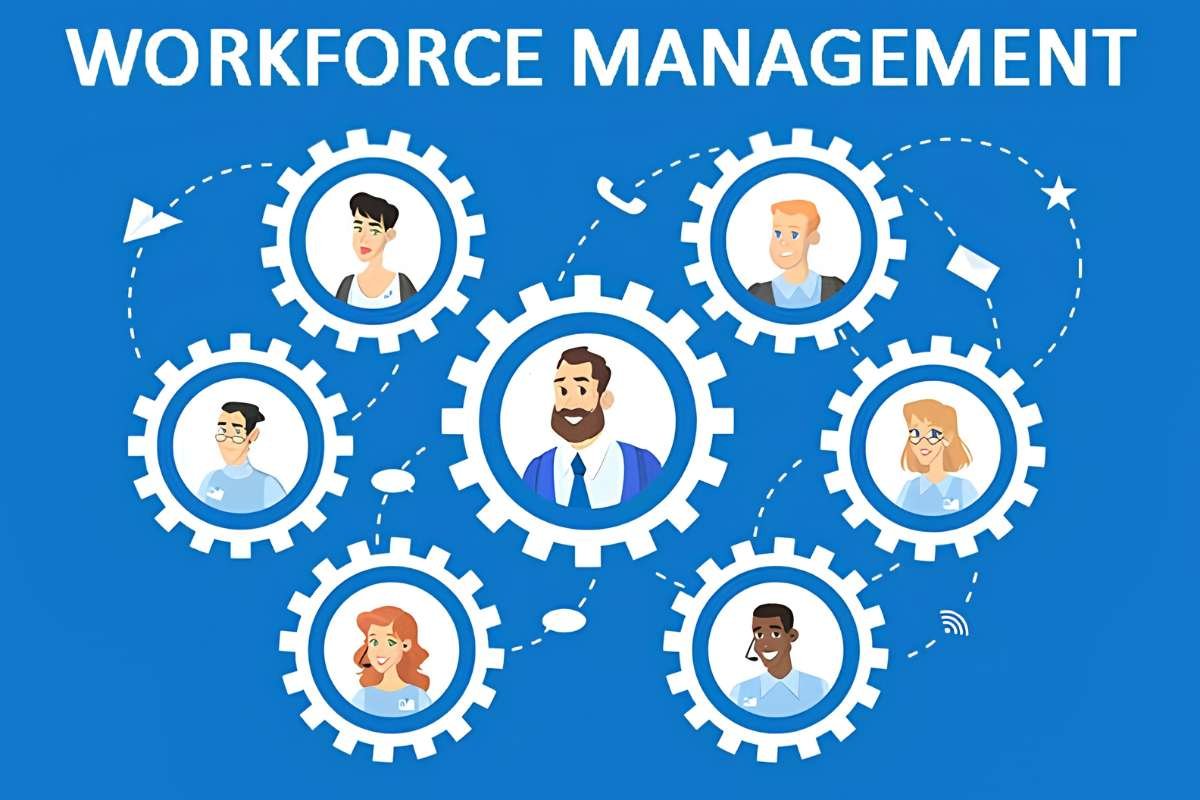
Workforce Management is the process of planning, scheduling, and using employees effectively. So the right people are in the right roles at the right time. Its business objective is to improve productivity, control labor costs, and support business goals with better staffing and scheduling.
It matters because it helps companies handle staffing shortages, changing demand, and rising customer expectations without wasting time or money. The primary goals are better workforce planning, accurate time and attendance tracking, efficient scheduling, and stronger compliance.
Brief example: A retail chain uses WFM to forecast busy hours, schedule enough staff, and reduce overtime.
Key takeaway: WFM helps businesses run efficiently with the team they already have.
Why workforce management matters more than ever?

Businesses now have to do more with fewer resources. Labor shortages, hybrid work, rising costs, and higher customer expectations make it harder to keep teams productive and service consistent.
- Labor shortages: When hiring is difficult, companies need better planning, scheduling, and role coverage so work still gets done smoothly.
- Hybrid work: Teams split between office and remote settings need clear coordination, communication, and performance tracking to avoid confusion and delays.
- Rising labor costs: Careful staffing helps reduce overtime, avoid overstaffing, and use people where they add the most value.
- Customer expectations: Customers expect faster service and fewer errors, so teams must be organized to respond quickly and consistently.
- Operational efficiency: Better planning cuts wasted time, improves workflow, and helps managers make faster decisions.
- Business growth: As a company grows, structured people planning makes it easier to scale without losing control or quality.
The five core components of workforce management:
Here’s a simple breakdown of the five components and how they connect.
- Workforce forecasting predicts how many people are needed and when. It uses expected demand, sales patterns, and busy periods, so staffing is based on need, not guesswork.
- Employee scheduling turns that forecast into actual shifts. It places the right people in the right slots so coverage matches demand and work is spread more efficiently.
- Time and attendance track when employees actually work. This helps compare planned hours with real hours, which improves payroll accuracy and reveals gaps in coverage.
- Labor compliance makes sure schedules, hours, breaks, and overtime follow legal and policy rules. It reduces risk by keeping staffing practices aligned with labor requirements.
- Performance analytics reviews the data from forecasting, scheduling, time tracking, and compliance. It shows what is working, where labor costs are high, and how to improve future planning.
These parts work together as one system: forecasting sets the plan, scheduling assigns the shifts, time tracking shows what actually happened, compliance checks the rules, and analytics improves the next round of decisions.
Workforce management vs Workforce planning vs HR management:

While they all centre around managing employees, Workforce Management, Workforce Planning, and HR Management solve fundamentally different business problems.
- Human Resource Management (HRM) is the overall umbrella. It sets corporate policies, handles employee relations, manages legal compliance, and oversees the entire lifecycle of a worker from hire to retirement.
- Workforce Planning (WFP) is a proactive, data-driven strategy. It forecasts long-term talent needs, maps existing skills against future goals, and determines when to hire, upskill, or automate.
- Workforce Management (WFM) is the day-to-day operational muscle. It handles scheduling, hours tracked, and real-time shifts to maximize daily efficiency and control operational labor costs.
Core comparison
| Attribute | Workforce Management (WFM) | Workforce Planning (WFP) | HR Management (HRM) |
| Primary Purpose | Maximize daily productivity, schedule shifts, and track precise hours. | Forecast future staffing needs, map skills, and close talent gaps. | Oversee policies, talent retention, legal compliance, and culture. |
| Time Horizon | Short-term (Daily, weekly, or intraday). | Long-term (1 to 5 years into the future). | Continuous (Spans an employee’s entire career lifecycle). |
| Ownership | Operations Managers, Team Leads, and Shift Planners. | Cross-functional leaders (HR, Finance, C-Suite, Business Units). | HR Department and People Operations teams. |
| Business Impact | Lowers instant labor waste and improves current service levels. | Ensures the company has the skills required to scale and grow. | Protects legal compliance and builds a motivated workplace. |
How does workforce management improve productivity without hiring more employees
WFM enables businesses to squeeze hidden capacity out of their existing team. By relying on operational data rather than adding headcount, companies can boost total output through five key pillars:
- Better Forecasting: Predictive analytics studies historical demand patterns (like seasonal spikes or daily foot traffic). Managers can precisely calculate how many workers are needed at any given hour, eliminating both understaffing bottlenecks and costly, overstaffed idle time.
- Optimized Scheduling: Automated scheduling matches the right employee with the right skills to the precise shifts where they will have the highest business impact. This places top talent directly where production demands are highest.
- Reduced Overtime: Chronic overtime causes physical fatigue, which leads to slower production speeds and human errors. WFM software automatically tracks labour laws and thresholds to flag scheduling conflicts before expensive, productivity-draining overtime hours accrue.
- Balanced Workloads: When work is unfairly distributed, high performers burn out while others sit idle. Real-time visibility allows supervisors to balance the daily workload evenly across the team, sustaining a consistent operational pace without exhausting staff.
- Smarter Resource Allocation: Cross-channel data visibility reveals operational gaps and time drains. Instead of hiring new workers for an overwhelmed department, managers can dynamically reallocate existing underutilised employees to clear immediate operational backlogs.
Workforce management best practices:

Workforce Management works best when it is proactive, flexible, and data-driven. A strong approach starts with using historical demand to forecast staffing needs, then building schedules that can adapt to peaks, absences, and changing workloads.
- Forecast demand using historical data: Look at past sales, call volumes, or workload patterns to estimate future staffing needs more accurately.
- Build flexible schedules: Create schedules that can adjust when demand changes, so coverage stays strong without unnecessary overtime.
- Cross-train employees: Train staff for multiple roles so managers can move people where they are needed most.
- Review KPIs regularly: Track key measures like labor cost, service levels, attendance, and productivity to spot problems early.
- Involve managers and employees in scheduling: When both sides help plan schedules, the result is usually more practical, fair, and easier to follow.
- Continuously improve processes: Use results and feedback to refine planning, scheduling, and reporting over time.
These practices work together: better forecasts improve scheduling, flexible staffing helps handle real-world changes, and KPI reviews show what should be improved next.
Conclusion:
Effective workforce management is no longer an operational option but a strategic requirement for growing businesses. With accurate forecasting, optimized scheduling, and continuous data analysis, companies can plug productivity leaks and contain rising labor costs. This proactive approach allows you to balance daily workloads and raise the standards of customer service, while capitalizing on the hidden potential of your existing team rather than increasing your overall headcount.
Want to change your everyday activities and build a more resilient business plan? Review your company’s existing labor data to pinpoint the largest scheduling gaps and uncover immediate opportunities for efficiency.
FAQs:
1. What is meant by WFM?
WFM is the strategic process of aligning your staff with business goals to maximize productivity.
2. What are the 4 pillars of WFM?
The four pillars of Workforce Management are forecasting, scheduling, real-time management, and reporting.
3. Is WFM a good career?
Yes, WFM is a highly viable and stable career. It combines data analytics, operations, and people management to ensure businesses optimize staffing and resources.
4. Is workforce management part of HR?
It would be more correct to say that HR is part of WFM. Indeed, WFM encompasses many tasks that are carried out by the HR team.
5. What are the principles of WFM?
The six load-bearing WFM pillars are: Forecast, Roster, Schedule, Communication, Information, and Productivity.