Key Points:
- Rivian debuts custom autonomy chip and AI system.
- Autonomy+ package undercuts rival pricing.
- Next models add LIDAR and an AI assistant.
Rivian introduced its first custom autonomous driving chip and a new driver assistance package priced below competing systems. The company said these technologies will support its long term shift toward higher levels of automated driving as more manufacturers invest in advanced AI capabilities.
Shares moved lower following the announcement, reflecting investor reactions to the cost and timeline of Rivian autonomy strategy. The updates were presented during the company’s Autonomy and AI Day, an event focused on its roadmap for AI-driven vehicle technology.
New In-House Chip Targets Higher Autonomy Levels
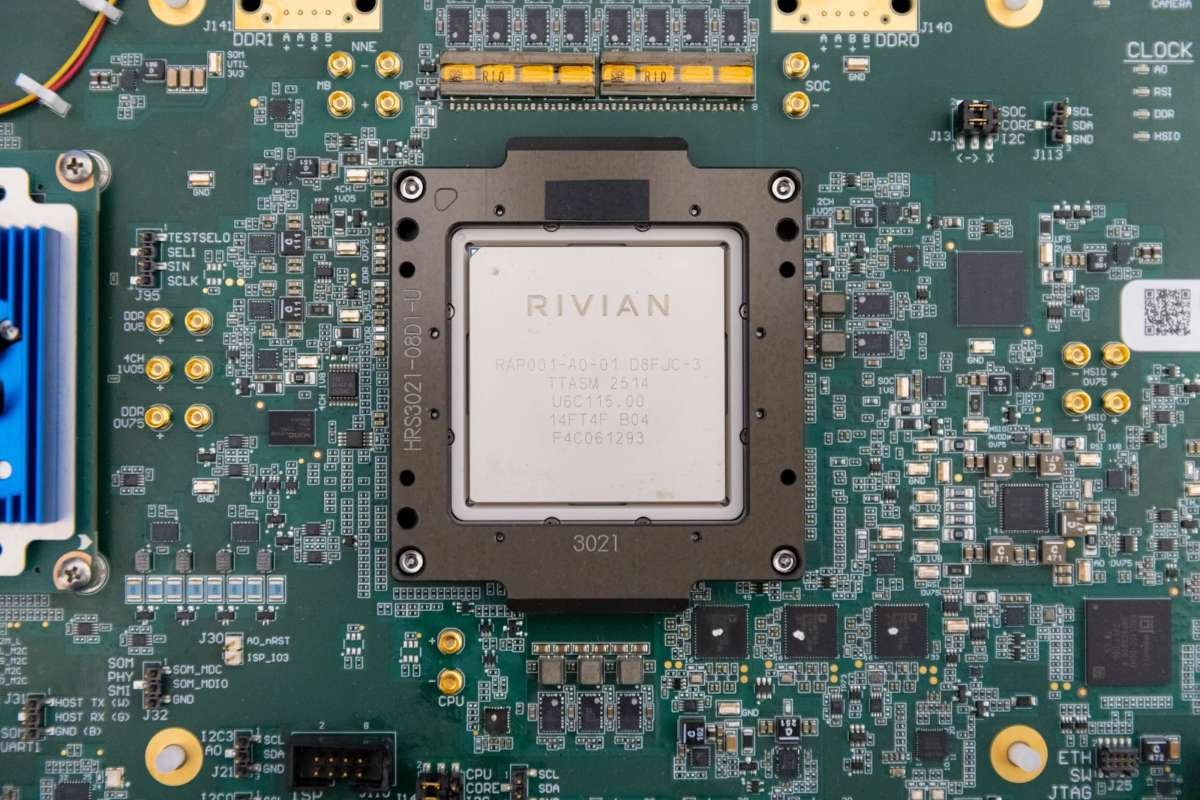
Rivian revealed the Rivian Autonomy Processor, a custom chip designed to handle data from cameras, LIDAR, and other vehicle sensors. The company said the chip will play a central role in reaching Level 4 autonomy in the future. It will work together with Rivian’s new foundational AI system, the Large Driving Model, which is trained on extensive real and simulated driving data.
Leadership said building technology in-house increases early development costs but creates long-term advantages once production scales. The approach allows the company to eliminate supplier margins and tailor system components for its vehicles. The chip’s manufacturing partner is Taiwan Semiconductor Manufacturing Company.
Rivian said the new compute and sensor combination is expected to be one of the most powerful integrated systems available in consumer vehicles at launch in 2026. The company noted that these capabilities will support enhanced automation features planned for upcoming models.
Autonomy Package Priced Lower Than Rivals
Rivian also announced Autonomy+, a new paid driver assistance package. The offering costs two thousand five hundred dollars as a one-time purchase or forty-nine dollars and ninety-nine cents per month. It includes a Universal Hands Free feature that the company says will function on more than three point five million miles of mapped roads in the United States and Canada.
The pricing positions the package far below competing offerings in the market. Rivian said it plans to expand hands-free driving capabilities later this month and expects to introduce point-to-point autonomous driving next year. Eyes off functionality, which allows drivers to disengage from active monitoring under specific conditions, is targeted for 2026.
Additional Upgrades For Next Generation Models
Rivian Autonomy said upcoming R2 models will receive LIDAR sensors to support more accurate three-dimensional mapping. The technology is intended to improve object detection and distance measurement, similar to the systems used by other advanced autonomous fleets.
The company also introduced an AI-powered assistant designed to manage select vehicle functions, integrate with apps, and help identify early maintenance needs. Leadership said these tools will strengthen Rivian’s broader autonomy ecosystem as it continues to scale production.
The announcements reflect Rivian’s strategy to bring more proprietary technology into its vehicles while positioning itself competitively in the growing autonomous driving market. Entrepreneurs and business owners watching the sector may view these updates as indicators of the expanding role of AI, custom silicon, and integrated software systems in the automotive industry.
Visit Enterprise Wired for the latest information.