For millions of people with curly and coily hair, everyday haircare can feel exhausting. Breakage happens too easily, frizz refuses to settle, edges thin, and products consistently fall short. This is far from a niche problem — by 2030, nearly 40 percent of the world’s population will have curly hair, yet the market continues to underserve them. Despite the textured-hair category being worth billions, 95 percent of Black women say they would switch brands, reflecting deep frustration. Health concerns are rising too, from traction alopecia to the ongoing risks of chemical relaxers, while most solutions focus only on outward appearance rather than addressing the biology of the hair follicle itself.
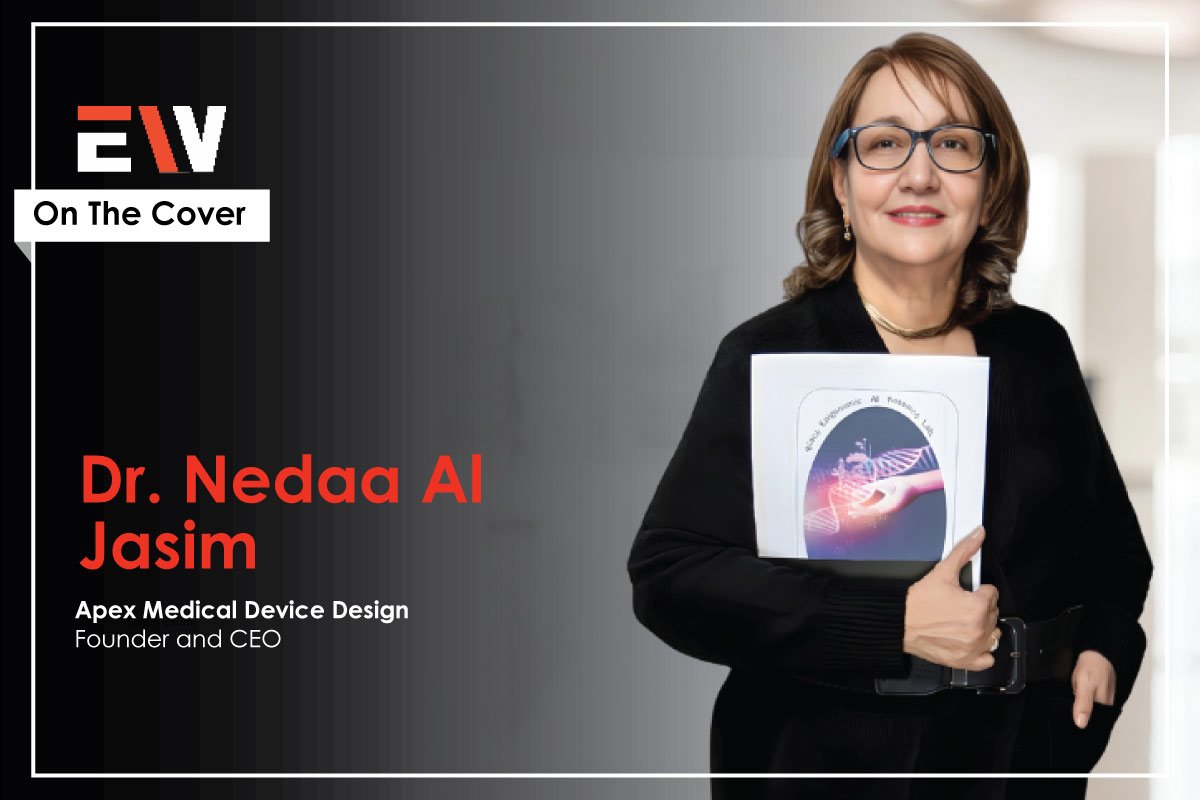
Into this long-neglected space steps Dr. Nedaa Al Jasim, Founder and CEO of Apex Medical Device Design, whose work is redefining the science and care of textured hair. Her most groundbreaking innovation, the Curly Hair-on-ChipTM, is the first DNA-based hair typing device that links curl patterns to the hair follicle Wnt gene family and the Arrector Pili muscle, offering a truly personalized approach to hair health and treatment. This technology directly addresses the persistent challenges of textured hair — from preventing traction alopecia to identifying ineffective products — and ushers in a new era of aesthetic genetics and gene-based hair solutions.
Over a two decades of journey, Dr. Nedaa Al Jasim has pioneered new scientific fields and patented transformative technologies, created products that go beyond consumer needs, and adding invaluable knowledge to African ancestry genetics. Her work stands as a landmark achievement at the intersection of healthcare, beauty, and genetic science, offering practical solutions and groundbreaking insight into the biology of curly and coily hair.
The Curly Hair-on-Chip invention is patent-pending and Apex is in the process of raising it’s first external funding round to take the chip closer to the market by using the plan prepared by specialized contract research organization (CRO).
From Lung Muscles to Hair follicle muscles
Dr. Nedaa Al Jasim Al Jasim’s journey in scientific innovation began decades ago with her research on the smooth muscles of the lungs, which regulate airway shape and can become hypersensitive to environmental triggers. Conversations with her husband, a dermatologist, sparked her curiosity about hair biology, leading her to explore the smooth muscle of the hair follicle—the Arrector Pili—and its role in Black hair.
Traditionally considered rudimentary, Dr. Nedaa Al Jasim proposed that this tiny muscle is hypersensitive and hyperactive, contracting in ways that curve the hair follicle and contribute to curl patterns. She first shared this hypothesis in September 2024, later publishing it in the American Journal of Pharmacology and Pharmaco-Therapeutics, and her work was featured as a cover story in The USA Leaders Building America magazine in January 2025.
Building on this, she developed a second hypothesis identifying dermal macrophages that secrete Wnt genes around the hair follicle and influence curl patterns by interacting with the Arrector Pili. These hypotheses became the foundation for her invention, Curly Hair-on-Chip™, a bioinformatic platform that uses AI and machine learning to analyze interactions among 19 Wnt genes and 10 Frizzled receptors, offering a personalized, science-driven approach to haircare.
Dr. Nedaa Al Jasim’s work perfectly illustrates why a hypothesis is the cornerstone of pharmaceutical and device development. By identifying mechanisms, gene interactions, or cellular pathways, a hypothesis transforms basic research into actionable innovation. As the Harvard Gazette and the Novartis Institute note, “discoveries that lead to new treatments usually arise from studies that seek to understand a biological process”—and in Dr. Dr. Nedaa’s case, these insights have revolutionized Black haircare for billions worldwide.
A Personalized Platform for Black Hair Biology
The Curly Hair-on-Chip™ kit is an innovative platform designed to provide personalized insights into Black hair biology. A patent application has been filed with the United States Patent and Trademark Office (USPTO), securing potential 20-year market exclusivity to protect the invention and attract investment for global impact.
Apex plans to partner with a Contract Research Organization (CRO) specializing in genetics, following a model commonly used in the pharmaceutical industry. This collaboration ensures access to advanced technologies, specialized staff, and state-of-the-art equipment, while keeping development cost-effective and efficient. The chip is currently in the development phase, which is expected to take approximately one year.
The chip’s software leverages an artificial neural network architecture to analyze the functional interactions of the Wnt gene family. The input layer incorporates existing sequencing data from saliva or blood samples and relevant pathways sourced from the Human Genome Atlas and professional gene research groups. Apex, together with CRO partners, will also generate new functional data from the hair microenvironment. The output layer provides gene-specific and pathway-specific insights, forming the basis of a gene-based Black hair typing system.
Included in the kit, the chip generates personalized hair follicle gene results, offering users tailored insights into their hair type, guiding customized hair relaxing treatments from the roots, and contributing to African ancestry research.
Decades of Innovation
From the classic curls of celebrities to everyday hair struggles in homes and salons, understanding hair type has always been key to effective haircare. In the 1990s, Andre Walker, the acclaimed hairstylist for Oprah Winfrey, created the Andre Walker Hair Typing System, also known as The Hair Chart. This qualitative system divides hair into four main types (Type 1 to 4) with subcategories a–c and remains a widely recognized standard in the industry.
In 2007, L’Oréal introduced the STAM classification, a global, quantitative system that measures factors such as curl index, curvature diameter, and the number of waves and tendrils. This approach categorizes hair into eight types (I–VIII) and has become an essential tool for product development and precise hair analysis. Over decades, L’Oréal’s research team has refined these tools, enabling more customized and effective haircare solutions.
More recently, in 2022, Gaines et al. advanced hair science further by applying geometric and structural mechanical parameters to classify curly hair, deepening our understanding of hair phenotypes.
Building on these decades of innovation, in 2025, Dr. Nedaa Al Jasim developed the Curly Hair-on-Chip™, an AI-driven DNA hair typing system. This groundbreaking tool examines the genes around the hair follicle to deliver personalized hair type assessments, supporting individual haircare, salon consultations, dermatology clinics, and pharmaceutical research for treatments that address hair health and curl management from the root.
25 Years in Transforming Black Hair Science

Dr. Nedaa Al Jasim approaches research with a simple but powerful philosophy: combine curiosity with impact. For over 25 years at Apex, she has tackled curly hair research with the same rigor and discipline you’d see in Big Pharma, turning complex biological insights into solutions that matter in the real world. Her work goes beyond surface-level treatments, focusing on pharmaceutical-grade approaches and the hair follicle microenvironment—the root of healthy, textured hair.
What sets her apart is her hands-on approach. Unlike large teams in traditional pharmaceutical settings, Dr. Nedaa manages the entire research process herself—from the initial idea to execution—while maintaining the precision and scientific rigor that Big Pharma demands. She draws inspiration from how the pharmaceutical industry has applied science to aesthetics, with innovations like Botox and dermal fillers, and brings that same mindset to haircare, blending science, practicality, and personalized solutions in everything she does.
Wearing Many Hats
As a solo inventor, Dr. Nedaa Al Jasim faces the challenge of wearing many hats to manage all aspects of a pharma R&D startup. On the research and innovation side, she is responsible for taking an invention from concept—shedding light on fundamental biological or genetic mechanisms—through to the development of a practical, usable product. She also works closely with her patent attorney to file patents and protect market exclusivity in the USA and internationally.
On the business side, Dr. Nedaa Al Jasim manages the company as a legal entity, maintains its online presence through LinkedIn and websites, and oversees financial planning and budgeting. Balancing these multiple roles requires constant attention, focus, and adaptability.
Pioneering Research in Hair Genetics
One of the most defining moments in Apex’s journey came from a fundamental shift in understanding how genes function. Traditionally, genes are thought to reside and operate within the cell nucleus, but research revealed that genes can also exist and function outside cells, following a tissue gradient. Integrating this insight was pivotal in the development of the Curly Hair-on-Chip™, allowing the team to study gene interactions in the hair follicle microenvironment in entirely new ways. This milestone strengthened the scientific foundation of Apex’s work and highlighted the value of open-access research, such as the study by Malsin et al. (2018), which enabled scientists worldwide to access and build upon these discoveries.
Personalized Hair Solutions
The impact of Apex’s Curly Hair-on-Chip™ can be summarized across five key areas:
- Personalized solutions: Empowers individuals with curly and coily hair to understand their unique hair genetic makeup and make informed product and routine choices.
- Pioneering innovation: Minimal direct competition exists, as the chip focuses on the hair follicle microenvironment and gene-level analysis.
- High barriers to replication: The complexity and research intensity of the technology make it difficult for others to replicate quickly.
- Targeted problem-solving: Addresses critical issues like harsh chemical use, systemic side effects, breakage, frizz, thinning edges, and ineffective products by focusing on follicle biology rather than surface-level treatments.
- Modernizing haircare: Shifts the approach from hair shaft to follicle and dermis, enabling low maintainance styling, preventing traction alopecia and overall hair health.
Beyond these applications, the chip contributes to the African Ancestry genetic database, expanding scientific knowledge of textured hair. The connection between the Wnt gene family and hair curl was first identified through a genome-wide association study (GWAS) by Unilever R&D, showing that Black African hair curl is genetically complex and influenced by multiple genes. Subsequent research, including studies on Wnt10A, continues to inform Apex’s work, allowing the development of practical, science-driven solutions for personalized haircare.
Strategic Partnerships and Collaborations
Apex is a pre-seed early-stage startup backed by angel investors, and is in the process of raising the first round of external funding to execute the chip development plan with the contract research organization (CRO). This plan is a clear growth step focused on bringing cutting-edge genetic research closer to the market. This patent-pending invention will be further developed under the Collaborative Black Gene AI Project, positioning Apex at the forefront of personalized haircare innovation.
The company is actively seeking partnerships, collaborations, or potential acquisition. In the early stages, philanthropists are ideal collaborators, as their motivation to support the Black community can help accelerate development without lengthy negotiations. Apex is ready to begin immediately, leveraging the expertise of a contract research organization (CRO) specializing in gene-based chip development. The development plan is fully mapped out, and the product is approaching market launch.
For partnerships or Apex is open to acquisition, Apex offers licensing opportunities to research centers and pharmaceutical companies in the USA and internationally. Its legal team has extensive experience in drafting and executing agreements, ensuring a smooth and efficient process for collaborators.
The invention addresses the multibillion-dollar Black haircare market, offering significant growth potential with comparatively low risk. This unique opportunity is likely to attract venture capital funding, providing strategic guidance, expertise, and resources to help Apex fully realize the market potential of its innovative haircare chip.
Focus on Confidence and Effortless Styling
Dr. Nedaa Al Jasim’s long-term vision for Apex is to transform the everyday haircare experience, helping individuals enjoy fewer frizzy hair days, effortless styling, and greater confidence in their appearance. Beyond improving daily routines, she envisions Apex as a leader in functional gene-modulating treatments, developing personalized solutions that address hair health at its root.
Her goal is to set new standards in personalized healthcare, bridging the gap between cutting-edge scientific research and practical, real-world benefits for millions of people worldwide. Through this vision, Dr. Nedaa aims to make haircare not just about aesthetics, but truly health-driven, precise, and empowering.
Don’t Wait To Share Your Discoveries
Dr. Nedaa Al Jasim shares valuable advice for researchers and innovators: don’t wait to share your discoveries. Publishing early on platforms like Preprint allows preliminary scientific findings to reach the community before formal peer review. This gives other scientists early access to your work but can open doors to prestigious journals for republishing. Early sharing can further strengthen business proposals and partnership opportunities, and the platform is fast, free, and user-friendly.
Dr. Nedaa Al Jasim also emphasizes that innovation rarely follows a straight path. It often takes longer than expected, and patience, persistence, and a positive mindset are crucial. Consistent effort, even through setbacks, is what leads to meaningful, impactful results and long-term success.