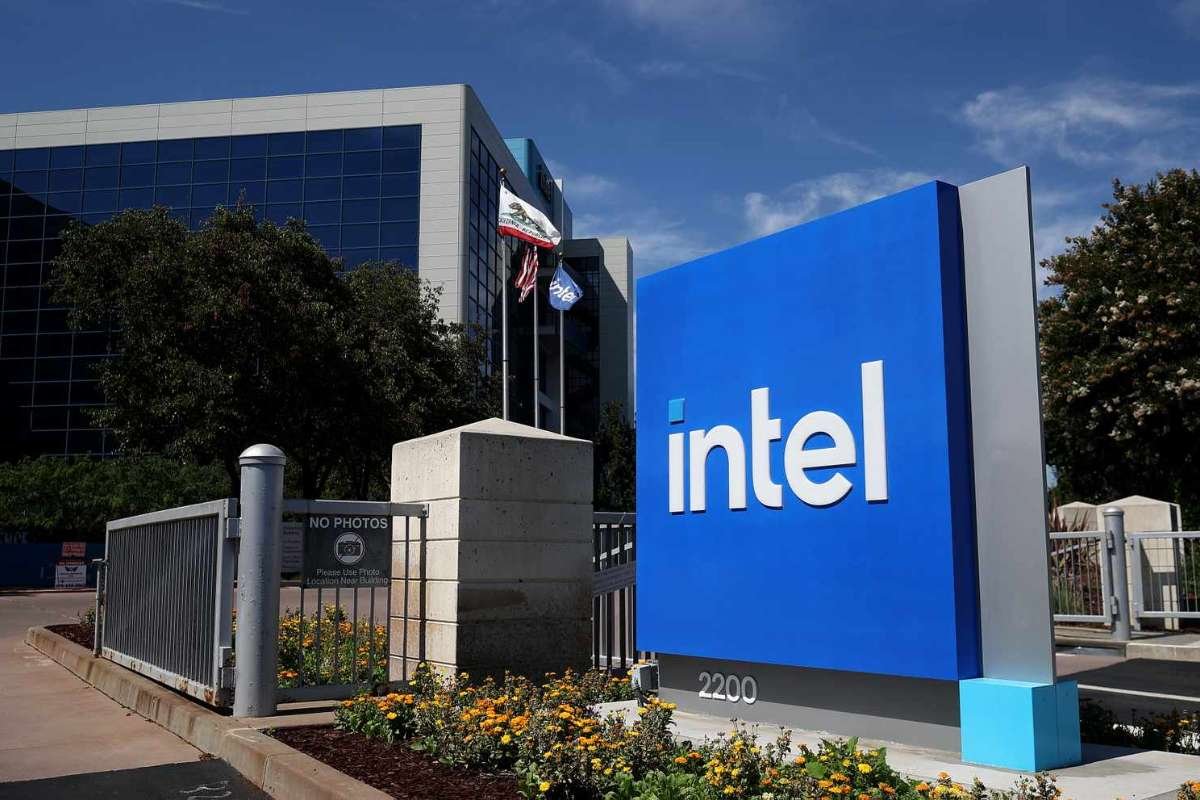
Intel Earnings Beat Expectations in the fourth quarter, surpassing Wall Street forecasts. However, the company’s cautious outlook for the current quarter raised concerns about near‑term performance, leading to a sharp decline in its stock during after‑hours trading despite stronger revenue results.
The chipmaker posted adjusted earnings per share of 15 cents, beating analyst estimates of 8 cents. Revenue reached $13.7 billion, also above expectations of $13.4 billion. However, investor focus quickly shifted to Intel’s first quarter forecast, which pointed to softer conditions ahead.
Weaker First Quarter Guidance Weighs on Sentiment
Intel Earnings Beat Expectations in the prior quarter, but the company projected first‑quarter revenue between $11.7 billion and $12.7 billion, with adjusted earnings expected to break even. That guidance fell short of analyst forecasts of 5 cents per share on $12.51 billion in revenue, sending shares down as much as 13 percent in extended trading.
Chief Financial Officer David Zinsner explained that the softer outlook was partly due to supply constraints limiting the company’s ability to meet seasonal demand. He noted that these supply issues are expected to ease in the second quarter as production improves. On a call with analysts, Chief Executive Officer Lip Bu Tan said Intel is focused on improving manufacturing yields to increase available product supply. While yields are tracking internal plans, Tan acknowledged they are still below desired levels.
Intel reported a net loss of $600 million, or 12 cents per diluted share, compared with a net loss of $100 million, or 3 cents per share, in the same quarter last year. The wider loss highlights ongoing cost pressures and heavy investment in manufacturing and technology development.
Foundry Progress and AI Demand Drive Long-Term Optimism
Intel Earnings Beat Expectations after a year in which the stock surged 147 percent, fueled by optimism around its foundry business that manufactures chips for external customers. Investors are now watching closely to see if the company can secure major anchor clients and strengthen its position against leading contract manufacturers.
Earlier this month, Tan said Intel’s 18A manufacturing technology exceeded internal performance goals in 2025. The process is designed to compete with Taiwan Semiconductor Manufacturing Company’s 2 nanometer technology and is now considered mature enough for volume production. Intel is already using 18A for its own Core Ultra Series 3 processors and is working to increase supply to meet what it described as strong customer demand.
Zinsner said customers for Intel’s next-generation 14A technology are expected to emerge in the second half of the year. He added that customer announcements are unlikely, but capital spending on 14A would signal progress in securing those relationships.
Intel’s foundry unit reported $4.5 billion in revenue for the quarter, though part of that figure reflects internal chip production. On the product side, demand for Intel’s server chips remained strong, driven by increased spending on infrastructure supporting artificial intelligence. Revenue from the Data Center and AI segment rose 9 percent year over year to $4.7 billion.
Intel Earnings Beat Expectations overall, but the Client Computing Group—which includes laptop and desktop chips—reported a 7 percent revenue decline from a year earlier to $8.2 billion. The mixed results highlight Intel’s reliance on data center and AI‑driven growth as demand for traditional personal computing remains uneven.
Intel also confirmed that it completed a $5 billion stock sale to Nvidia during the quarter. The company said several large investors became significant shareholders during 2025, reflecting continued interest in Intel’s transformation strategy.