Billions of sensors, machines, cameras, vehicles, and connected devices continuously generate data. Sending all of that information to a distant cloud for processing can create delays, increase network traffic, and make real-time decisions harder.
Fog computing addresses this problem by moving computing, storage, networking, and analytics closer to where data is generated.
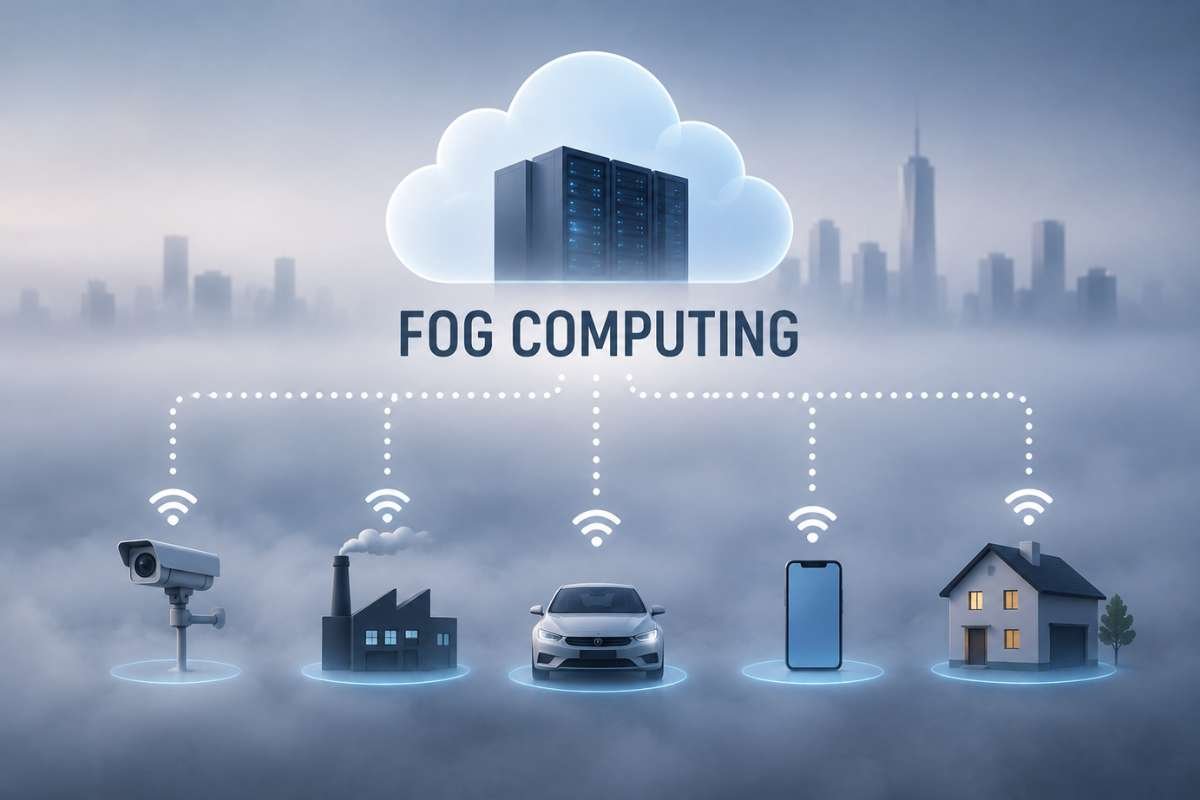
Instead of relying entirely on a centralized cloud, a fog architecture places computing resources between IoT devices and the cloud. This creates an additional processing layer that can analyze time-sensitive information locally while sending only relevant data to centralized systems.
The National Institute of Standards and Technology (NIST) describes fog as a way to decentralize applications, management, and data analytics into the network itself to address the scale, diversity, and latency challenges of IoT environments.
This makes fog computing particularly relevant for businesses that need fast responses from connected systems rather than simply storing large amounts of information.
What is fog computing? Why does it matter?
It is a distributed computing architecture that places computing, storage, networking, and application services between end devices and centralized cloud infrastructure.
A simple example is a smart traffic system.
A camera at an intersection may detect vehicles and pedestrians. Instead of sending every video frame to a remote cloud server, a nearby fog node can analyze the information locally. If it detects an emergency vehicle, the system can respond immediately by adjusting traffic signals.
Cisco demonstrated this type of smart traffic scenario and reported that relying on cloud processing created higher latency and longer turnaround times, while local fog processing made the traffic-light application more practical.
The basic flow looks like this: IoT devices → Fog nodes → Cloud/data center.
Fog does not necessarily replace the cloud. Instead, the two can work together. Time-sensitive processing can happen closer to devices, while the cloud can handle long-term storage, large-scale analytics, model training, and centralized management.
NIST also notes that fog computing introduced the concept of fog nodes and federations of distributed and centralized fog-node clusters operating together.
This distinction is important when comparing Fog vs Edge Computing. Both move processing closer to data sources, but fog generally describes a broader distributed layer between endpoints and centralized cloud infrastructure.
Key components of fog computing that make the architecture work
A fog environment combines several technologies rather than relying on one piece of hardware.
1. IoT Devices and sensors
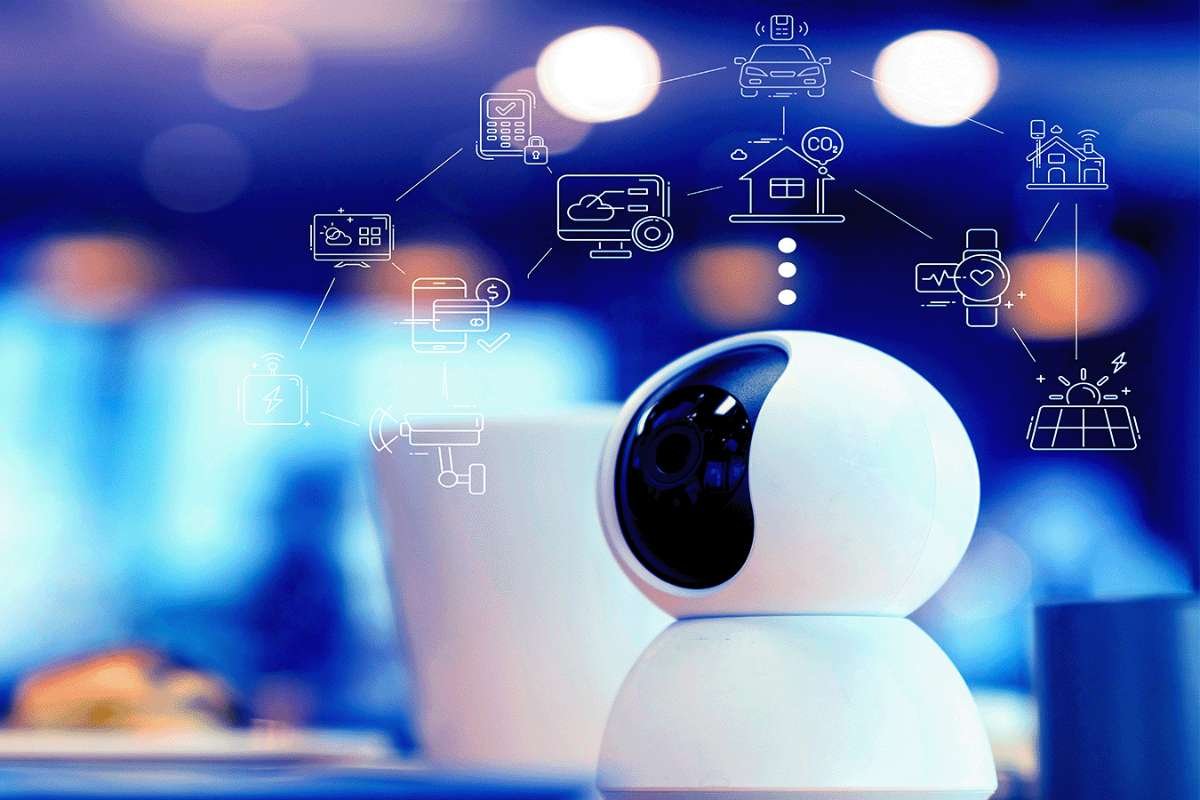
These are the data-producing endpoints.
Examples include:
- Industrial machines
- Smart cameras
- Connected vehicles
- Medical devices
- Smart meters
- Environmental sensors
- Wearable devices
Cisco has described fog as an architecture that supports applications requiring real-time or predictable latency, including industrial automation and transportation.
2. Fog nodes
Fog nodes provide computing and storage closer to the devices. They can include routers, gateways, switches, local servers, access points, or other capable network devices.
NIST’s conceptual model identifies the fog node as a fundamental building block and supports federations of fog nodes distributed across different locations.
3. Network connectivity
Fog nodes need reliable communication with sensors, devices, other fog nodes, and cloud platforms.
Depending on the application, connectivity can involve Wi-Fi, cellular networks, Ethernet, 5G, or other networking technologies.
4. Local computing and analytics
This is where much of the value comes from.
A fog node can filter, aggregate, analyze, or respond to data locally. For example, a manufacturing system could identify an abnormal machine reading without sending every sensor reading to the cloud first.
5. Cloud integration
The cloud remains useful for centralized management, historical data, large-scale analytics, backups, and workloads that do not require immediate local responses.
Cisco’s IOx platform is one real-world example of applications and services running directly on network-edge devices while connecting those workloads with cloud applications.
| Expert perspective: Cisco’s Flavio Bonomi described the idea behind fog as bringing cloud capabilities closer to where activity and data originate. |
Why are businesses turning to fog computing?
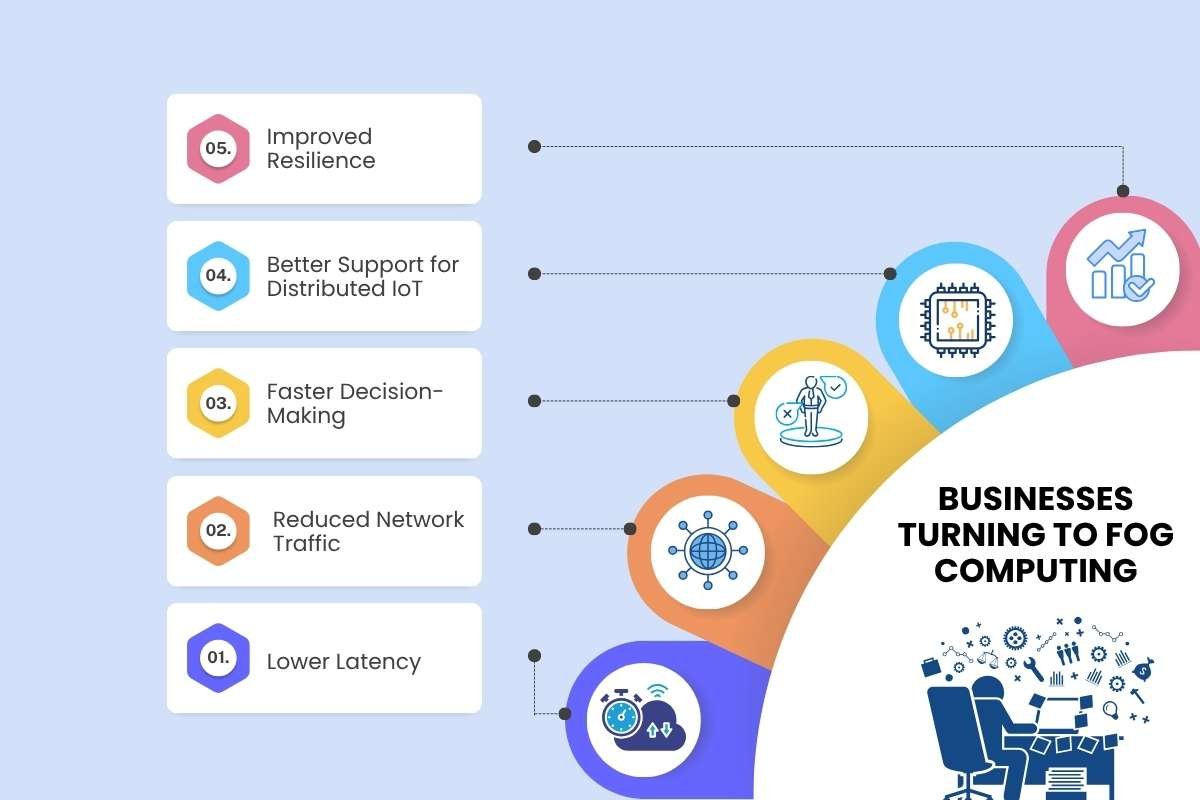
The strongest reason is simple: some decisions cannot wait for a round trip to a distant cloud server.
1. Lower latency
Processing data closer to its source reduces the distance data needs to travel.
This matters for applications such as industrial controls, connected vehicles, smart traffic systems, and emergency-response systems where delays can affect outcomes.
Cisco explains that moving computing closer to data sources can reduce latency and improve real-time responsiveness.
2. Reduced network traffic
Not every sensor reading needs to travel to a central cloud.
A fog node can filter and aggregate information locally before sending important results upstream. This can reduce unnecessary data transfers and network costs.
3. Faster decision-making
Local processing allows systems to respond to events quickly.
A factory, for example, can flag abnormal machine behavior locally instead of waiting for a cloud-based analysis.
4. Better support for distributed IoT
IoT systems can span factories, roads, hospitals, energy infrastructure, and remote locations.
A distributed fog architecture allows computing resources to be placed closer to these environments rather than forcing every workload into one centralized location.
5. Improved resilience
Fog-based systems can continue performing some local operations even when cloud connectivity becomes unreliable. However, the level of resilience depends on the application’s architecture, local resources, and connectivity design.
| Real-World Manufacturing Result Cisco reported a manufacturing deployment at Lordan using Cisco networking, IoT sensors, and fog computing. According to Lordan COO Yair Avigdor, the company produced overall equipment effectiveness reports within two weeks and increased manufacturing-floor productivity by more than 10% within a month of installing the LeaderMES fog application. |
That example shows why local analytics can be valuable when operational decisions depend on current machine data.
Where is fog computing used? Top 5 applications
This computing is mainly used where data needs to be processed quickly and close to the source. Here are the five most important applications:
1. Smart Cities: Fog computing helps cities process data from traffic systems, cameras, parking systems, and sensors in real time.
Key applications:
- Smart traffic management
- Traffic signal control
- Smart parking
- Environmental monitoring
- Emergency response
Cisco has demonstrated how fog-based processing can support smart traffic management and emergency evacuation by processing data closer to where it is generated.
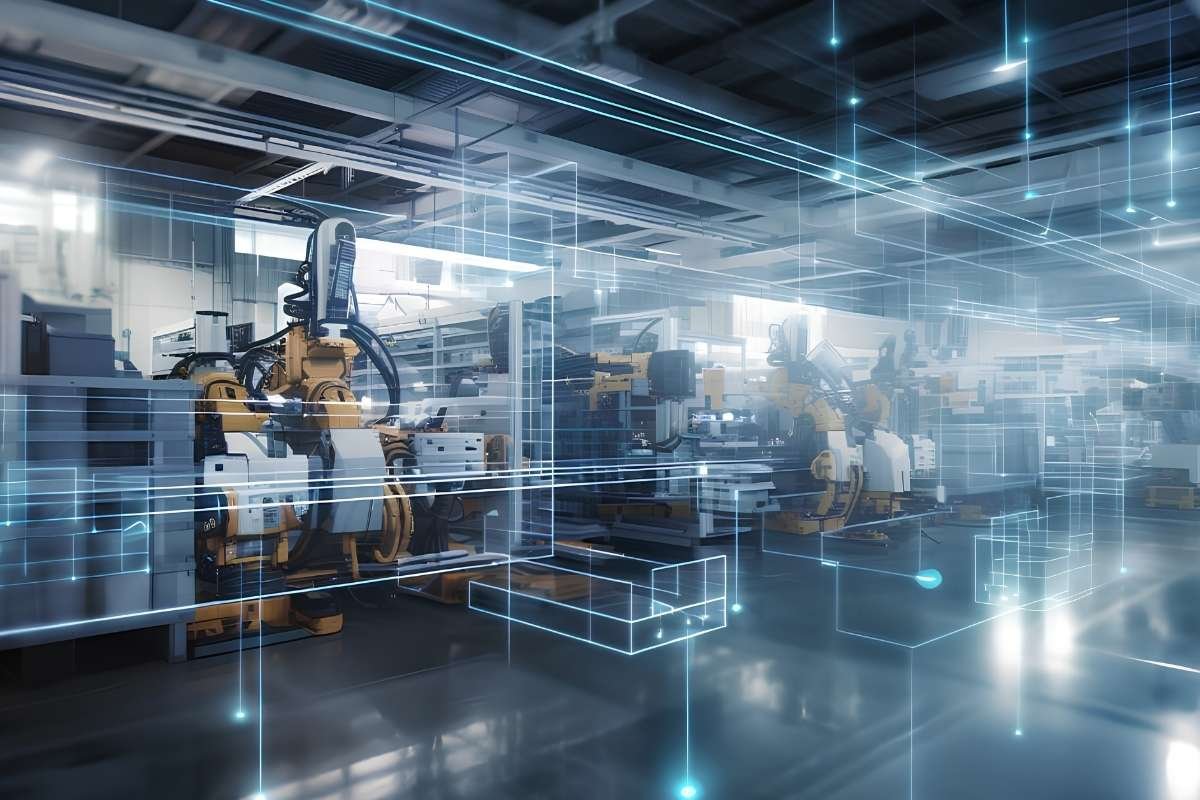
2. Manufacturing and Industrial IoT: Factories use this to analyze machine and production data locally, helping them identify problems and respond faster.
Key applications:
- Machine monitoring
- Predictive maintenance
- Fault detection
- Production monitoring
- Real-time alerts
For example, Cisco reported that manufacturer Lordan used fog computing for production monitoring and increased manufacturing-floor productivity by more than 10% within one month.
3. Healthcare: This can process medical and wearable device data closer to patients, enabling faster monitoring and alerts.
Key applications:
- Remote patient monitoring
- Wearable health monitoring
- Real-time health alerts
- Medical data analysis
- Patient diagnostics
Research identifies patient monitoring and real-time healthcare decision-making as important applications.
4. Connected Vehicles and Transportation: Fog computing helps transportation systems process vehicle and traffic data with low latency.
Key applications:
- Traffic management
- Vehicle-to-vehicle communication
- Route guidance
- Roadside analytics
- Fleet management
Research identifies traffic management, road safety, route guidance, and predictive maintenance as key applications of fog computing in connected transportation.
5. Energy and Smart Grids: It helps power systems process data from smart meters, sensors, and grid equipment closer to the source.
Key applications:
- Smart meter monitoring
- Fault detection
- Energy management
- Grid monitoring
- Renewable energy management
Research shows that fog computing can provide low-latency processing for smart-grid applications and support faster responses to changing grid conditions.
In short, the top five applications are smart cities, industrial IoT, healthcare, connected transportation, and smart grids, as these areas generate large volumes of data and often require fast, local decision-making.
What challenges could hold fog computing back?
Fog computing can improve speed and reduce network traffic, but it also brings security, management, and data-handling challenges.
- Security Risks: Fog environments use many connected devices, gateways, and local servers. Each device can become a potential security risk. Organizations need strong authentication, regular updates, access controls, and continuous monitoring to protect fog nodes.
- Complex Management: Managing many distributed fog nodes can be difficult. Businesses need proper tools to monitor devices, update software, manage workloads, and decide where each application should run.
- Interoperability Issues: Fog systems may use hardware, software, and network technologies from different vendors. Making these systems work together can be challenging, especially in large IoT environments. ETSI and the OpenFog Consortium have highlighted interoperability as an important area for fog and edge technologies.
- Limited Computing Resources: Fog nodes usually have fewer computing and storage resources than large cloud data centers. Businesses must therefore decide which tasks should run locally and which should be handled by the cloud.
- Data Management: Distributed systems also make data management more complex. Businesses must set clear rules for data storage, privacy, synchronization, retention, and transfer between fog nodes and cloud platforms.
What is the future of fog computing?
The future of fog computing is closely linked to edge computing, 5G, AI, and IoT.
The terms fog computing and edge computing often overlap. NIST has noted that there is no single, universally accepted boundary between related concepts such as fog, edge, mist, and cloudlets.
Today, edge computing is often used as the broader industry term, while it describes distributed processing between IoT devices and centralized cloud systems.
Research is also focusing on how workloads can be distributed across local devices, fog nodes, and cloud platforms. One peer-reviewed study examined latency across six locations, including local nodes, cloud services, AWS, and Microsoft Azure.
The future is therefore less about fog vs. cloud computing and more about choosing the right place to process each workload.
A cloud-to-edge approach can distribute tasks based on factors such as:
- Latency
- Cost
- Security
- Available computing power
- Network conditions
- Data requirements
As IoT networks grow and applications demand faster responses, fog computing can remain an important part of distributed computing architectures.
For a deeper comparison, link this section to your “fog vs edge computing” article and supporting articles on Edge Computing, 5G, and IoT.
Conclusion
The Fog computing brings data processing closer to IoT devices, helping businesses reduce delays, lower network traffic, and make faster decisions.
It is useful in manufacturing, smart cities, healthcare, transportation, and energy, where systems need to respond to data in real time.
This does not replace cloud computing. Instead, it works alongside the cloud by handling time-sensitive tasks closer to the data source while the cloud manages large-scale storage and analysis.
As AI, 5G, and IoT continue to grow, Fog Computing can play an important role in building faster, more responsive, and distributed digital systems.
FAQs
1. What is Fog Computing?
Fog Computing processes data closer to IoT devices instead of sending everything to the cloud. This helps reduce delays and enables faster responses.
2. What are the main benefits of Fog Computing?
It reduces latency, saves network bandwidth, and supports faster data processing. It is especially useful for real-time IoT applications.
3. Where is Fog Computing used?
Fog Computing is used in smart cities, manufacturing, healthcare, connected vehicles, and energy systems. It works well where quick decisions are important.
4. Does Fog Computing replace cloud computing?
No. Fog Computing and cloud computing work together. Fog handles time-sensitive local tasks, while the cloud manages storage and large-scale analysis.