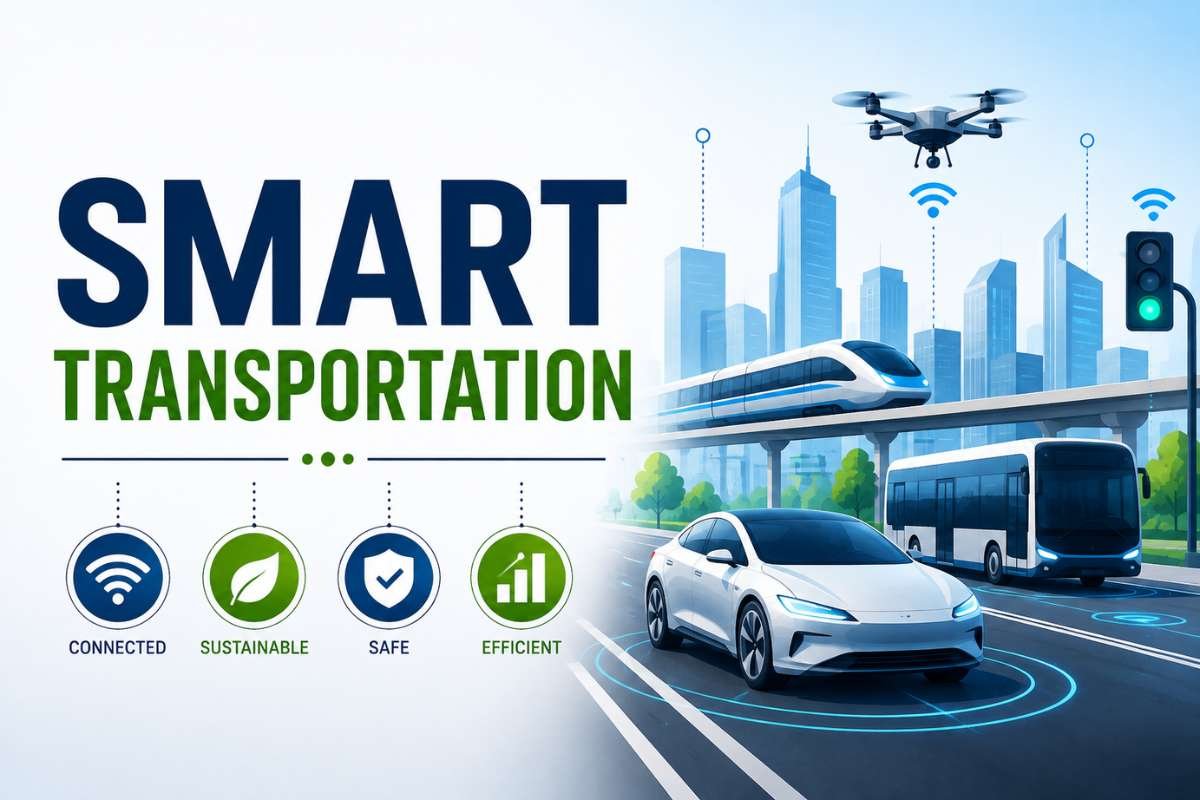
More roads and vehicles do not always mean better mobility. Smart transportation connects sensors, AI, data analytics, connected vehicles, and intelligent infrastructure to make transport more responsive and efficient.
It goes beyond self-driving cars to include smart traffic signals, connected buses, digital ticketing, smart parking, predictive maintenance, V2X communication, EV charging, and Mobility as a Service (MaaS).
Intelligent transportation is starting to play a significant role in how cities plan for the future of mobility by leveraging real-time data to control traffic, enhance public transportation, identify risks, and direct travelers.
What is smart transportation?
Smart transportation refers to the use of digital technologies, connectivity, automation, and data-driven decision-making to improve how people and goods move.
A traditional transportation system often operates through separate components: roads are managed independently from public transit, traffic signals may operate on predetermined schedules, and travelers use different systems to plan, pay for, and complete their journeys.
Smart transportation aims to connect these components.
At its core, the model involves four elements:
| Data | Information collected from vehicles, sensors, cameras, transit systems, infrastructure, and users. |
| Connectivity | Communication between vehicles, infrastructure, transportation agencies, and travelers. |
| Intelligence | AI, analytics, and algorithms that turn raw information into useful insights. |
| Action | Real-time changes to signals, routes, services, warnings, pricing, or other transportation operations. |
The objective is not simply to make transportation more technological. It is to make mobility more responsive, coordinated, safe, accessible, and efficient.
The smart transportation technologies changing how cities move
1. Intelligent transportation systems
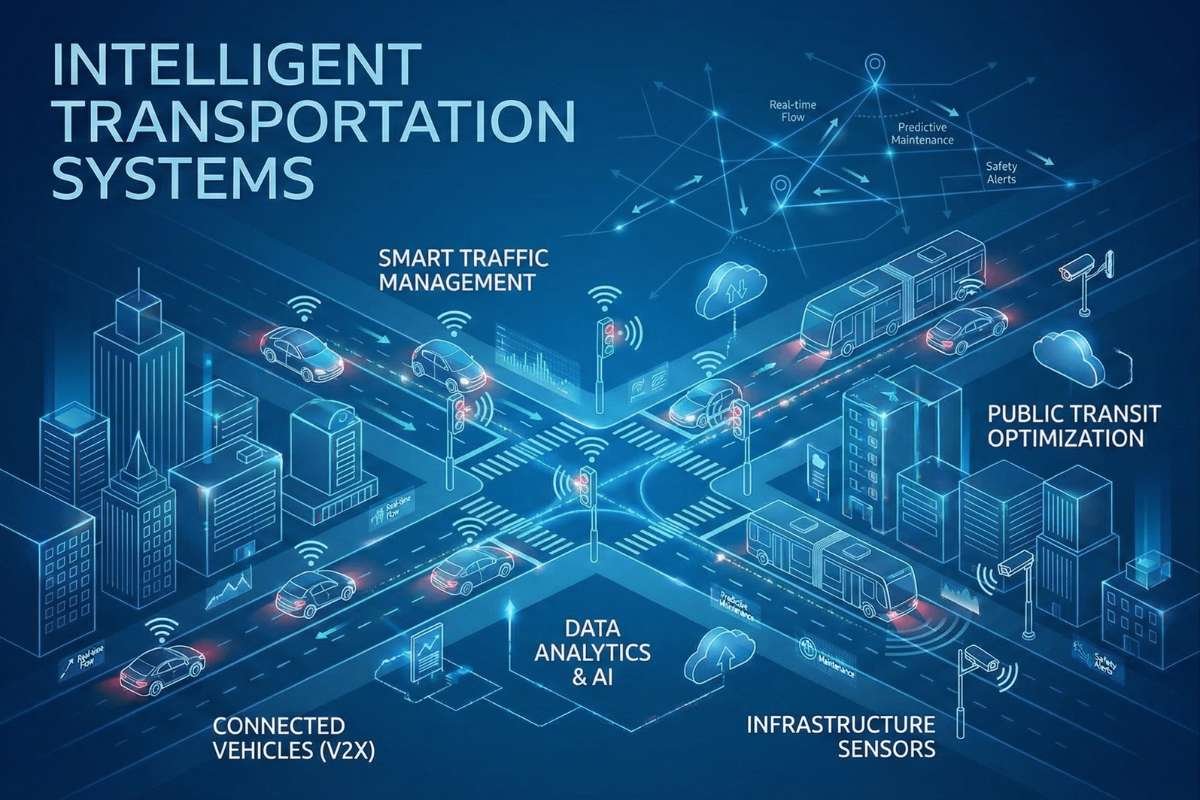
Intelligent Transportation Systems (ITS) form the foundation of many intelligent transportation initiatives.
ITS technologies can monitor traffic, identify incidents, manage signals, provide traveler information, support electronic tolling, prioritize public transit, and help transportation authorities respond to changing road conditions.
For example, an intelligent traffic signal system can adjust signal timing based on current traffic conditions instead of following a completely fixed schedule. Transit signal priority can also give buses or other public vehicles priority at intersections when appropriate.
These applications demonstrate an important principle of intelligent transportation: infrastructure can respond to conditions rather than simply observe them.
2. Connected vehicles and V2X
Connected vehicles communicate with other vehicles, infrastructure, pedestrians, cyclists, and transportation networks.
This is commonly referred to as vehicle-to-everything (V2X) communication and includes:
- Vehicle-to-vehicle (V2V)
- Vehicle-to-infrastructure (V2I)
- Vehicle-to-pedestrian (V2P)
- Vehicle-to-network (V2N)
V2X can provide information about hazards, road conditions, signal timing, sudden braking, work zones, or vulnerable road users. The U.S. Department of Transportation identifies V2X as a technology with potential safety, mobility, and efficiency benefits and emphasizes interoperability as an important foundation for deployment.
The significance of V2X is that vehicles do not have to rely exclusively on what their own cameras, radar, or other onboard sensors can see. Connected systems can provide information about events outside the vehicle’s immediate line of sight.
3. Autonomous and automated vehicles
Autonomous vehicle technology is one of the most visible areas of smart transportation, but it represents only one part of the larger ecosystem.
Automated driving systems use technologies such as cameras, radar, lidar, sensors, software, and machine learning to perform some or all driving tasks depending on the level of automation.
These technologies may reduce certain types of human error and improve mobility in specific environments. However, autonomous driving should not be treated as an automatic solution to traffic safety or congestion. Performance depends on factors such as system capability, road conditions, weather, infrastructure, and the operational environment.
Intelligent transportation therefore requires automated vehicles to work alongside connected infrastructure, conventional vehicles, public transit, pedestrians, cyclists, and transportation management systems.
4. Smart infrastructure
Smart infrastructure gives roads and transportation facilities the ability to collect information and communicate with transportation systems.
Examples include:
- Intelligent traffic signals
- Roadside sensors
- Connected intersections
- Smart parking systems
- Variable message signs
- Electronic tolling
- Digital road monitoring
- Smart pedestrian crossings
- Transit signal priority systems
Modern infrastructure can combine sensor data, communications, and edge computing to process information closer to where it is generated. Research supported by the U.S. Department of Transportation, for example, has examined roadside systems that combine computer vision, sensor fusion, V2X communications, machine learning, and edge computing for traffic, weather, road-condition, and visibility monitoring.
5. Artificial intelligence and predictive analytics
AI is becoming increasingly important in smart transportation because transportation systems generate enormous amounts of data.
AI and predictive analytics can help transportation authorities:
- Forecast traffic congestion
- Identify recurring bottlenecks
- Predict public transit demand
- Detect unusual traffic patterns
- Support incident management
- Optimize routes
- Predict vehicle or infrastructure maintenance needs.
- Improve traffic signal operations.
The U.S. Department of Transportation’s ITS Joint Program Office is actively researching and supporting responsible AI applications intended to improve transportation safety, efficiency, productivity, and resilience.
The value of AI is therefore not simply automation. Its greater potential lies in helping transportation systems anticipate problems rather than react to them after they occur.
How smart transportation is changing urban mobility
1. Smarter traffic management
Traffic management is one of the most immediate applications of intelligent transportation.
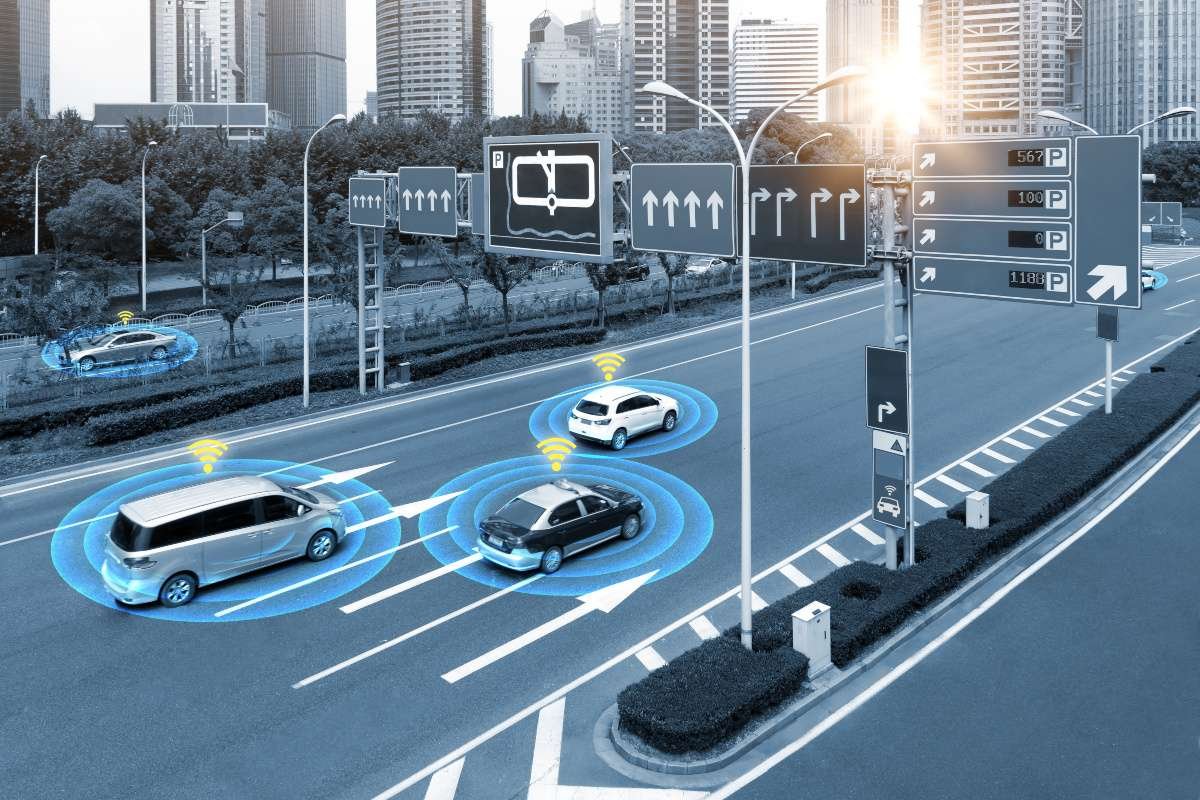
Sensors, cameras, connected vehicles, and traffic management platforms can provide a continuous picture of road conditions. Transportation agencies can then use that information to adjust signals, reroute traffic, respond to incidents, or provide warnings to travelers.
This can make traffic management more dynamic than systems based entirely on predetermined schedules.
However, technology alone cannot eliminate congestion. Long-term congestion management may also require better public transportation, land-use planning, demand management, and alternatives to private vehicle travel.
2. Safer roads
Road safety is another major area where connected technologies can make a difference.
V2X systems can communicate warnings about potential hazards, sudden braking, work zones, vulnerable road users, and other road conditions. The U.S. DOT notes that V2X applications can provide warnings to drivers and other travelers and support safer interactions between vehicles and infrastructure.
Advanced driver-assistance systems can also support functions such as collision warnings, lane assistance, and emergency braking.
The important distinction is that these technologies should be viewed as safety tools, not guarantees of accident-free transportation.
3. More responsive public transit
Smart transportation can make public transit more responsive to passenger demand.
Real-time passenger information, predictive scheduling, digital payments, and demand-responsive services can improve the experience for both passengers and operators.
Transportation agencies can also use data to identify underserved areas, adjust routes, and understand how passengers move through a city.
This can make public transportation more competitive with private vehicles while improving access for people who do not drive.
4. Better accessibility
Smart transportation can improve mobility for older adults, people with disabilities, and travelers who face barriers to conventional transportation.
Examples include:
- Accessible journey-planning platforms
- Audio and visual transit announcements
- Connected pedestrian crossings
- Real-time accessibility information
- Mobility services designed around individual needs
- Navigation assistance for visually impaired travelers
However, digital mobility must not create a new barrier.
If essential services depend entirely on smartphones, apps, digital payments, or constant connectivity, people without access to those tools may be excluded. Accessibility therefore needs to be considered during system design rather than added later.
5. More sustainable mobility
Smart transportation can support environmental goals when technology encourages efficient travel and greater use of lower-carbon transportation modes.
Route optimization, better public transit, reduced idling, intelligent traffic management, shared mobility, walking, cycling, and electric transportation can all contribute to more efficient mobility.
But smart technology does not automatically make transportation sustainable.
For example, if a technology makes driving easier without reducing overall vehicle travel, its environmental benefits may be limited. The strongest sustainability outcomes come when digital systems are used alongside public transit, active mobility, vehicle electrification, and effective urban planning.
The business and economic benefits of smart transportation
Smart transportation can create benefits for more than individual travelers.
| Improved Operational Efficiency | Real-time data can help transportation agencies and operators identify inefficiencies and allocate resources more effectively. |
| Lower Maintenance Costs | Predictive maintenance can identify potential equipment or infrastructure problems before they result in expensive failures or major service disruptions. |
| Better Freight Movement | Connected logistics systems can help businesses optimize routes, track shipments, manage fleets, and reduce unnecessary delays. |
| More Efficient Use of Infrastructure | Smart systems can help cities make better use of existing roads, intersections, parking facilities, and transit networks rather than relying exclusively on expensive physical expansion. |
| Better Decision-Making | Transportation agencies can use historical and real-time data to evaluate policies, identify mobility gaps, and measure the performance of transportation investments. |
Why smart transportation is harder than it looks
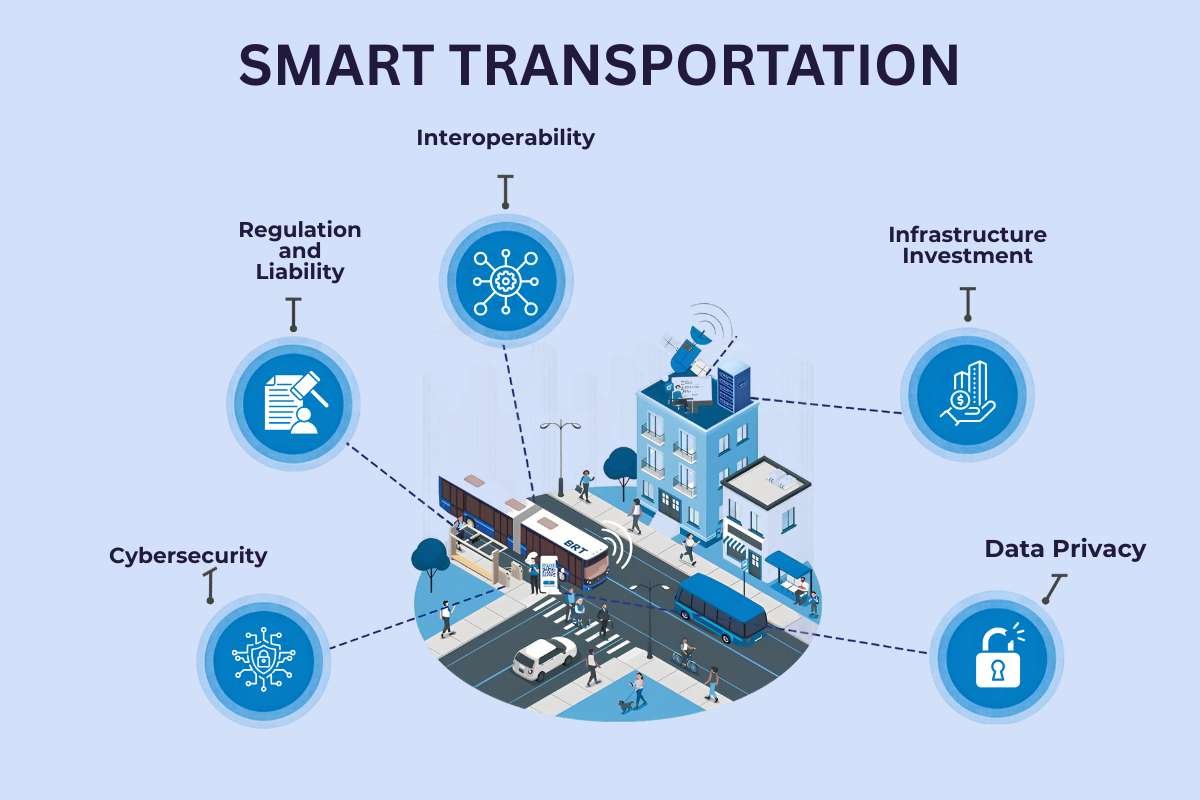
Smart transportation offers significant opportunities, but implementation is far from simple.
1. Infrastructure investment
Smart systems require investment in sensors, communications networks, computing infrastructure, connected vehicles, charging systems, data platforms, and maintenance.
Cities with aging infrastructure may face an additional challenge because new digital systems must often work alongside legacy technologies.
The cost is not limited to installation. Smart infrastructure also requires ongoing upgrades, cybersecurity, technical support, and maintenance.
2. Interoperability
An intelligent transportation ecosystem cannot function effectively if every system operates in isolation.
Vehicles, traffic signals, public transit systems, payment platforms, data networks, and mobility applications need standards that allow them to communicate.
The U.S. DOT specifically highlights interoperability as essential to V2X systems because connected devices and infrastructure need to communicate securely and efficiently across different environments.
3. Data privacy
Smart transportation systems can collect large quantities of information about travel patterns, locations, vehicles, and users.
That creates legitimate privacy concerns.
Transportation providers and technology companies need clear policies around what data is collected, why it is collected, how long it is retained, who can access it, and how it is protected.
Privacy should be treated as part of system architecture rather than as an afterthought.
4. Cybersecurity
The more connected transportation becomes, the greater the importance of cybersecurity.
A transportation cyberattack could potentially affect data, payment systems, vehicle communications, traffic management, or physical infrastructure.
intelligent transportation therefore requires secure authentication, encrypted communications, continuous monitoring, incident-response plans, and resilient infrastructure.
5. Regulation and Liability
Autonomous vehicles, connected mobility platforms, shared transportation, digital payments, and emerging mobility services create regulatory questions.
Governments need to address issues such as:
- Liability
- Insurance
- Data governance
- Cybersecurity
- Safety standards
- Consumer protection
- Accessibility
- Competition
- Infrastructure responsibilities
Regulation needs to protect the public without unnecessarily preventing useful innovation. OECD research on app-based mobility similarly emphasizes the importance of regulation for safety, environmental outcomes, consumer protection, and the development of innovative mobility services.
Mobility as a service is changing the transportation model
One of the most important developments in smart transportation is Mobility as a Service (MaaS).
MaaS brings multiple transportation options together through a digital platform. Depending on the system, travelers may be able to plan, book, and pay for combinations of public transit, ride-sharing, bike-sharing, car-sharing, taxis, and other mobility services through a unified interface.
The OECD’s International Transport Forum describes MaaS as a model that can integrate transport, information, and payment services through a single digital customer interface.
The concept changes the traditional mobility model from: “Which vehicle do I own?”
To: “What is the most effective way to complete this journey?”
That distinction matters because different modes are useful for different trips. A traveler may take a train for the main part of a journey, use a shared bicycle for the final kilometer, and walk the remaining distance.
MaaS aims to make these connections easier to coordinate.
However, successful MaaS requires cooperation between public authorities and private transportation providers, along with sustainable business models, common standards, and appropriate regulation.
Real-world direction of smart transportation
Smart transportation is already moving beyond experimental projects.
Governments are supporting deployments involving connected infrastructure, AI, automated transportation, smart intersections, transit innovation, and other advanced mobility technologies. In the United States, for example, the federal SMART Grants program supports demonstration projects focused on advanced community technologies and transportation systems designed to improve efficiency and safety.
Cities and transportation authorities around the world are also experimenting with integrated mobility platforms, intelligent traffic management, digital payments, smart parking, connected public transit, and multimodal transportation.
The important lesson is that intelligent transportation is not a single product that cities can simply purchase.
It is an ecosystem.
Its effectiveness depends on how well technology, infrastructure, public policy, transportation operators, and travelers work together.
How smart transportation will change the way we move
1. AI-Powered mobility management
AI will increasingly support traffic prediction, demand forecasting, incident detection, route optimization, and transportation planning.
The focus is likely to shift from simply collecting data to using it to make faster and more informed decisions.
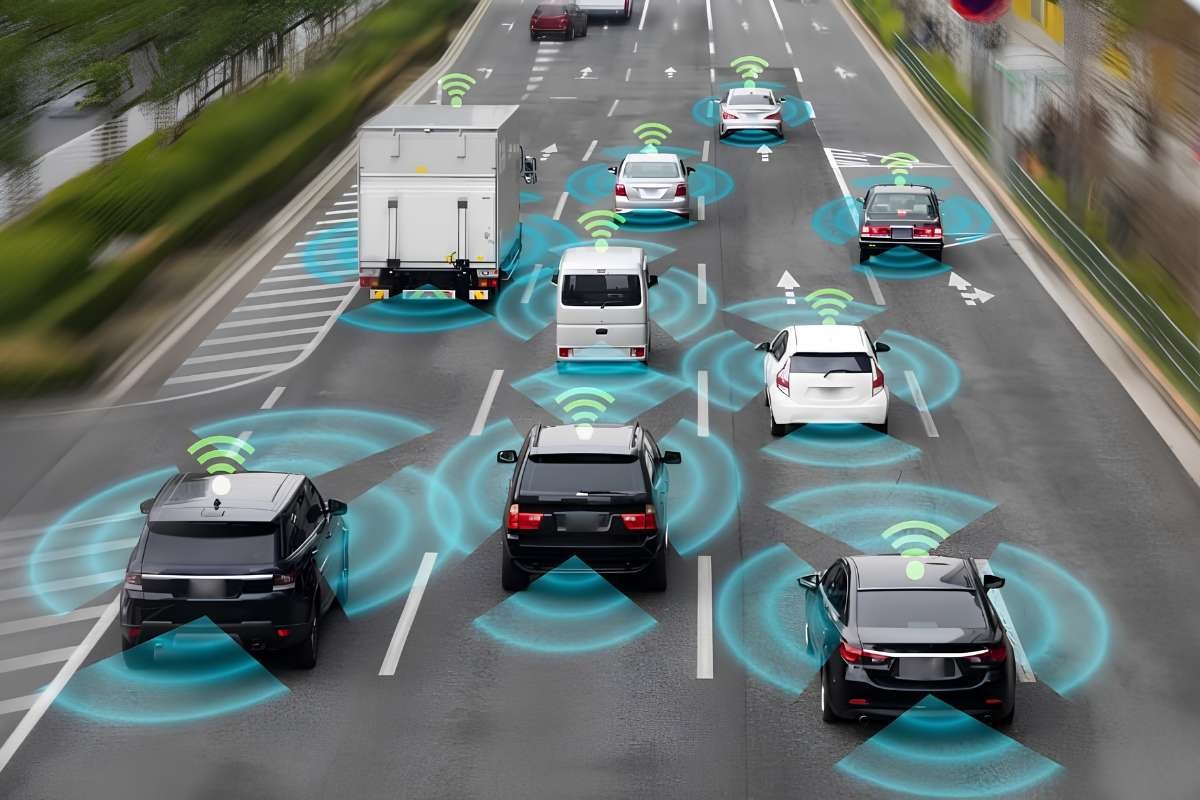
2. Wider V2X deployment
As connected infrastructure expands, V2X can become increasingly important for communication between vehicles, infrastructure, and vulnerable road users.
The technology could support applications ranging from collision warnings to signal coordination and emergency response.
3. Intelligent and automated vehicles
Automated driving technology will continue to develop, particularly in controlled or clearly defined operating environments.
Rather than an immediate transition to fully autonomous transportation everywhere, adoption is likely to involve different levels of automation across different use cases.
4. Smarter EV charging
The growth of electric vehicles will increase the importance of intelligent charging infrastructure.
Smart charging systems can potentially coordinate charging with electricity demand, vehicle availability, grid conditions, and user requirements.
This makes EV infrastructure another important component of the broader intelligent transportation ecosystem.
5. Mobility as a service
MaaS platforms are likely to become more sophisticated as cities integrate public transit, shared mobility, digital payments, and real-time journey information.
The long-term objective is not simply to create another transportation app but to make multimodal travel easier and more coordinated.
What will determine the success of smart transportation?
The future of smart transportation will not be determined by technology alone.
A city can install intelligent traffic signals and connected sensors, but those systems will have limited value if they cannot communicate with one another. Similarly, an advanced mobility app will not solve transportation problems if public transit remains unreliable or if large groups of residents cannot access the technology.
Successful intelligent transportation requires five foundations:
- Interoperable technology that allows systems to communicate.
- Reliable infrastructure that can support connected services.
- Strong cybersecurity and privacy protections that build public trust.
- Inclusive design that serves different communities and abilities.
- Effective policy and governance that align innovation with public interests.
The best systems will therefore combine technological innovation with transportation planning and human-centered design.
Conclusion:
Smart transportation is not simply about autonomous cars, smart traffic lights, or mobile apps. It represents a broader shift toward transportation systems that can sense, communicate, analyze, and respond.
Connected vehicles can exchange information with infrastructure. AI can help predict transportation demand and traffic conditions. Smart public transit can provide more responsive services. MaaS can connect different modes through a unified digital experience. Sensors and predictive analytics can help infrastructure become more proactive.
Yet technology alone cannot guarantee safer, greener, or more equitable mobility.
The real opportunity lies in integrating these technologies into transportation systems that are interoperable, secure, accessible, and designed around how people actually move.
The cities that benefit most from intelligent transportation will not necessarily be those with the most technology. They will be those that use technology most effectively to solve real mobility problems.
That is ultimately the promise of intelligent transportation: not simply smarter vehicles, but smarter mobility systems for people, businesses, and cities.
FAQs:
1. What is a smart transportation system?
A smart transportation system uses technology, real-time data, connectivity, and AI to make transportation safer, more efficient, accessible, and sustainable.
2. What is smart transport?
Smart transport uses digital technologies and connected infrastructure to improve how people and goods move.
3. How does smart transportation work?
It collects data from vehicles, sensors, infrastructure, and transit systems, then uses analytics and AI to improve transportation decisions in real time.
4. What are the main components of smart transportation?
Key components include intelligent transportation systems, connected vehicles, smart infrastructure, AI, public transit technology, V2X communication, and digital mobility platforms.
5. What are the benefits of smart transportation?
Benefits include better traffic management, improved safety, shorter delays, more efficient public transit, greater accessibility, and potentially lower emissions.
6. How does smart transport reduce traffic congestion?
Smart transport uses real-time data to optimize traffic signals, manage incidents, adjust routes, and improve transportation flow.