Key takeaways:
- Low-cost gaming: Hyper Visor’s $1.99 price lowers the entry barrier for XR gaming.
- New design approach: Transparent displays require bright visuals and focused gameplay.
- Market adoption matters: The game’s success depends on XREAL AURA sales and demand for XR content.
1. Hyper Visor brings affordable gaming to XR glasses
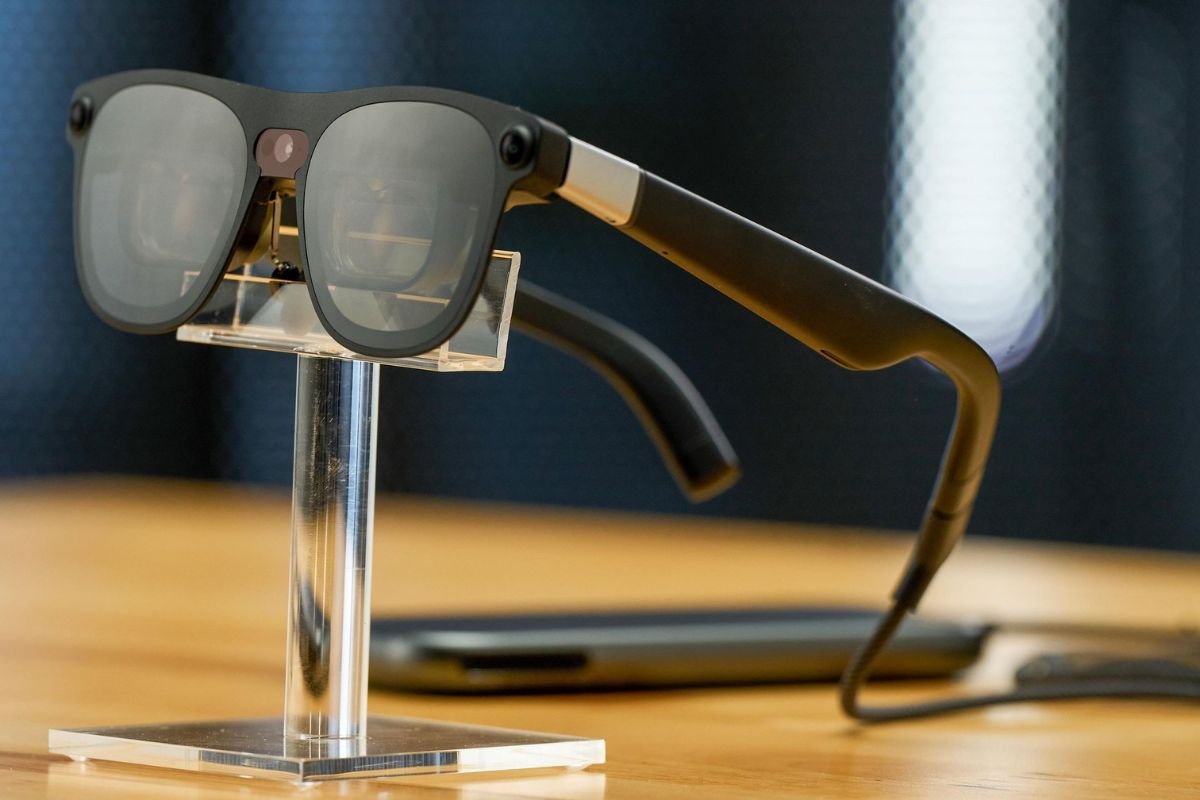
Owlchemy Labs, the Google-owned studio behind Job Simulator, has announced the Hyper Visor XR game, a new extended reality (XR) arcade game priced at $1.99 for the upcoming XREAL AURA smart glasses. Announced on October 22, 2026, the game is designed to deliver a simple gaming experience that combines digital elements with the player’s real-world surroundings.
In Hyper Visor, players wear virtual shades that reveal hidden cracks in their environment. They use energy beams from their hands to hit targets, complete challenges, and defeat bosses across eight levels. Each level appears as a colourful rectangular area within the physical room, allowing players to see their surroundings while playing.
Unlike traditional virtual reality games that create fully digital environments, the Hyper Visor XR game focuses on a smaller play area and good visual effects. This approach suits XREAL AURA’s transparent display, which adds digital images to the user’s view instead of blocking the real world.
Owlchemy Labs CEO Andrew Eiche said that glasses-based XR could make the technology more accessible to people who are uncomfortable wearing traditional VR headsets. The game’s $1.99 price also makes it much cheaper than Job Simulator and Vacation Simulator, which cost $19.99 each.
2. XREAL AURA launch date remains unconfirmed
Although Hyper Visor is planned as a launch title, its release depends on the commercial launch of XREAL AURA. As of October 23, 2026, XREAL has not confirmed an exact release date. The company has indicated that shipments are expected to begin before the holiday season in selected markets, including the United States, Canada, Japan, and South Korea.
XREAL AURA is priced at $1,279 for the 12GB RAM and 256GB storage version, while the 16GB RAM and 512GB storage model costs $1,499. The device combines transparent displays with Android XR, allowing users to interact with digital content while remaining aware of their surroundings.
Alongside Hyper Visor, Owlchemy Labs plans to bring Job Simulator, Vacation Simulator, Inside[JOB], and Dimensional Double Shift to the platform. The studio has experience developing XR games for different devices, and Job Simulator has reportedly surpassed six million installs since its 2016 debut.
However, the low price of the Hyper Visor XR game raises questions about its commercial potential. Even if 10,000 customers purchased the game, it would generate only $19,900 in gross revenue before platform fees and other costs. The actual results will depend on device sales, customer interest, and continued demand for XR games.
3. Display technology shapes XR game development
Hyper Visor also highlights how developers must adapt games to the limitations of transparent displays. Unlike conventional VR headsets, which can display dark backgrounds and completely virtual environments, optical see-through glasses combine digital images with the physical world.
XREAL AURA has a 70-degree field of view. Its display adds light to the user’s surroundings, making black areas less effective than they are on conventional screens. Developers must therefore use bright colours, strong contrasts and clearly defined play areas to make digital objects easier to see.
The game’s colourful targets and confined levels reflect this design approach. By keeping the action within a forward-facing frame, it offers a focused experience without requiring players to move through a fully virtual environment.
Compatibility is another challenge. Games designed for transparent glasses may look or behave differently on immersive VR headsets. Developers will need to test their applications across devices to ensure that the visuals and controls work properly.
Ultimately, the Hyper Visor XR game is a small-scale experiment in gaming for a new hardware category. Its success will depend on whether XREAL AURA attracts enough users and whether those users are willing to pay for more XR content. The launch could provide useful lessons for developers considering investments in smart glasses and spatial computing.