When professional ambition meets human vulnerability, the workplace becomes more than a site of performance. Across today’s organisations, employees seek purpose, balance, and psychological safety alongside achievement. Central to this approach, the Deloitte mental health framework recognises that meaningful work emerges through everyday moments: conversations with colleagues, respect in decision-making, and the freedom to speak without fear.
Mental well-being, therefore, stands as a defining element of the firm’s social responsibility. It reflects a belief that people flourish when dignity and inclusion guide organisational life. By placing mental health at the centre of work culture, Deloitte signals how deeply it values its people and the possibilities they bring forward.
The quiet architecture of belonging
Deloitte’s culture of belonging rests on the belief that authenticity at work is a matter of respect. Inclusion appears through daily conduct, shared language, and the willingness to listen without judgment. Global frameworks translate this belief into practice, while storytelling initiatives give it a human voice. Through films and written narratives, colleagues encounter experiences different from their own and reflect on how small actions influence comfort, confidence, and trust.
Diversity is therefore understood as a lived reality rather than an abstract principle. Mental well-being sits alongside other dimensions of difference, each recognised as part of ordinary working life. The intention remains consistent across every effort: to create an environment where fairness is visible and individual capability is valued without labels or separation.
- Mental health: psychological safety and open dialogue
- Gender: fairness, representation, and mutual respect
- Neurodiversity: appreciation of varied ways of thinking
- Ability inclusion: access, dignity, and equal participation
Mental health stands out as a condition that affects participation, confidence, and trust at work. The next section explores Deloitte’s approach to psychological safety and workplace mental well-being.
How Deloitte frames corporate responsibility?
Deloitte approaches corporate responsibility as a reflection of purpose in action rather than a standalone obligation. Its framework connects ethical conduct, social contribution, and long-term responsibility through clearly defined priorities. These priorities guide how the firm relates to its people, engages with communities, and upholds standards across its global network. Responsibility is treated as a shared condition of work and citizenship, expressed through consistent policy, accountable behaviour, and attention to societal needs beyond commercial outcomes.
The ethics of everyday work
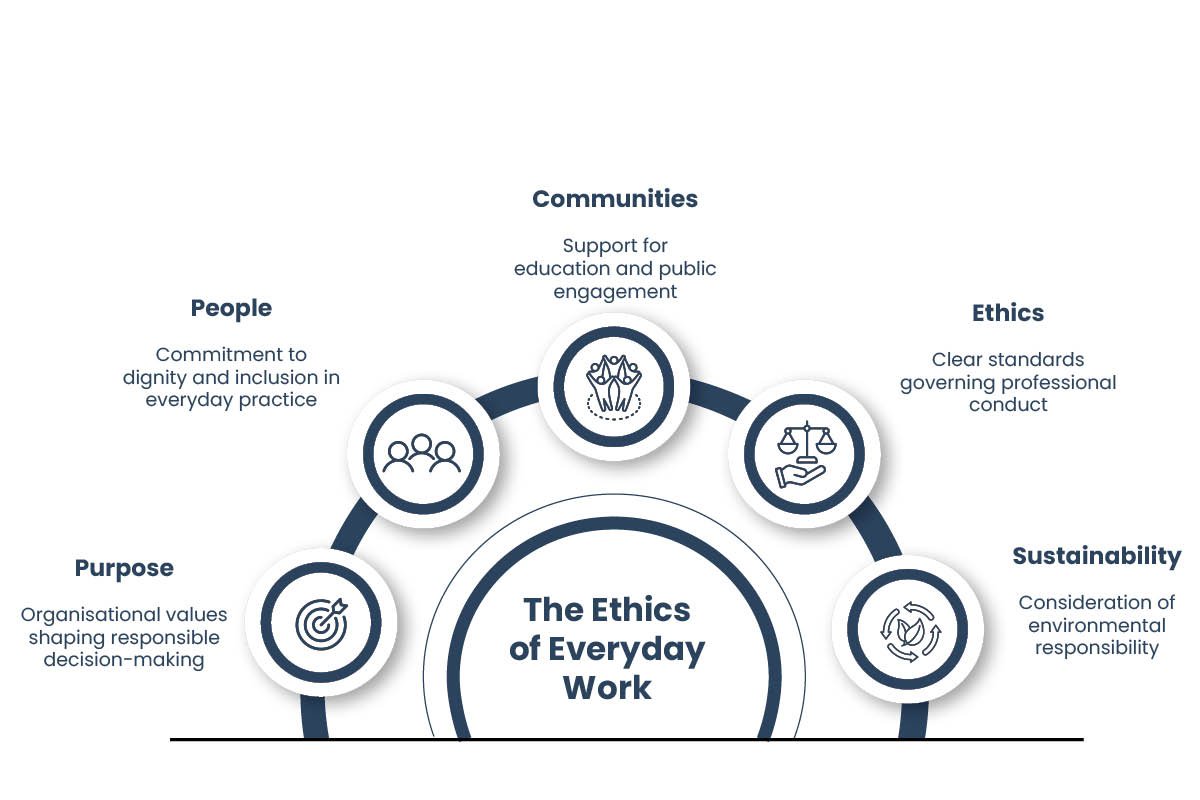
- Purpose: Organisational values shaping responsible decision-making
- People: Commitment to dignity and inclusion in everyday practice
- Communities: Support for education and public engagement
- Ethics: Clear standards governing professional conduct
- Sustainability: Consideration of environmental responsibility
Within this shared understanding of responsibility, attention turns to mental health as an area where care, accountability, and everyday action intersect.
Mental health as a collective duty of care
The Deloitte mental health framework treats psychological wellbeing as a collective responsibility within the workplace. The firm acknowledges that silence often surrounds psychological strain, shaped by fear of misunderstanding or social distance. Progress begins with transparency, ensuring people understand available support and feel secure when seeking it. To address this need, the firm established a Global Mental Health Baseline that defines clear expectations across the organisation.
This framework equips leaders with guidance, encourages open conversation, and ensures access to resources in every region of operation. The baseline signals a consistent standard, affirming that care does not depend on location. Participation in the Global Business Collaboration for Better Workplace Mental Health further reflects Deloitte’s view that wellbeing requires shared effort. Through these commitments, mental health becomes a visible priority woven into professional life rather than a private concern.
By treating mental health as shared care, Deloitte sets the stage for understanding how this commitment appears in daily practice and leadership conduct.
Tools and stories that enable care

Deloitte recognises that policies provide structure, but lived experience gives them meaning. The firm combines practical tools with personal stories to make mental health tangible in daily work. Employees can access e-learning modules, guidance documents, wellbeing articles, and instructional videos designed to help recognise stress signals and develop practical coping strategies. A flagship resource, the Supporting Mental Health at Work course, is available across Deloitte’s global community, offering guidance that is consistent and accessible.
Equally important are personal narratives. Animations, written reflections, and shared experiences allow colleagues to relate to the challenges and recoveries of others, reinforcing that seeking help and advocating for oneself are human and valued acts.
Confidential support services form another pillar, providing safe spaces for professional guidance when stress feels overwhelming. Encouraging use of these services signals that reaching out is an act of courage, contributing to a workplace culture of care.
Workplace mental health support toolkit
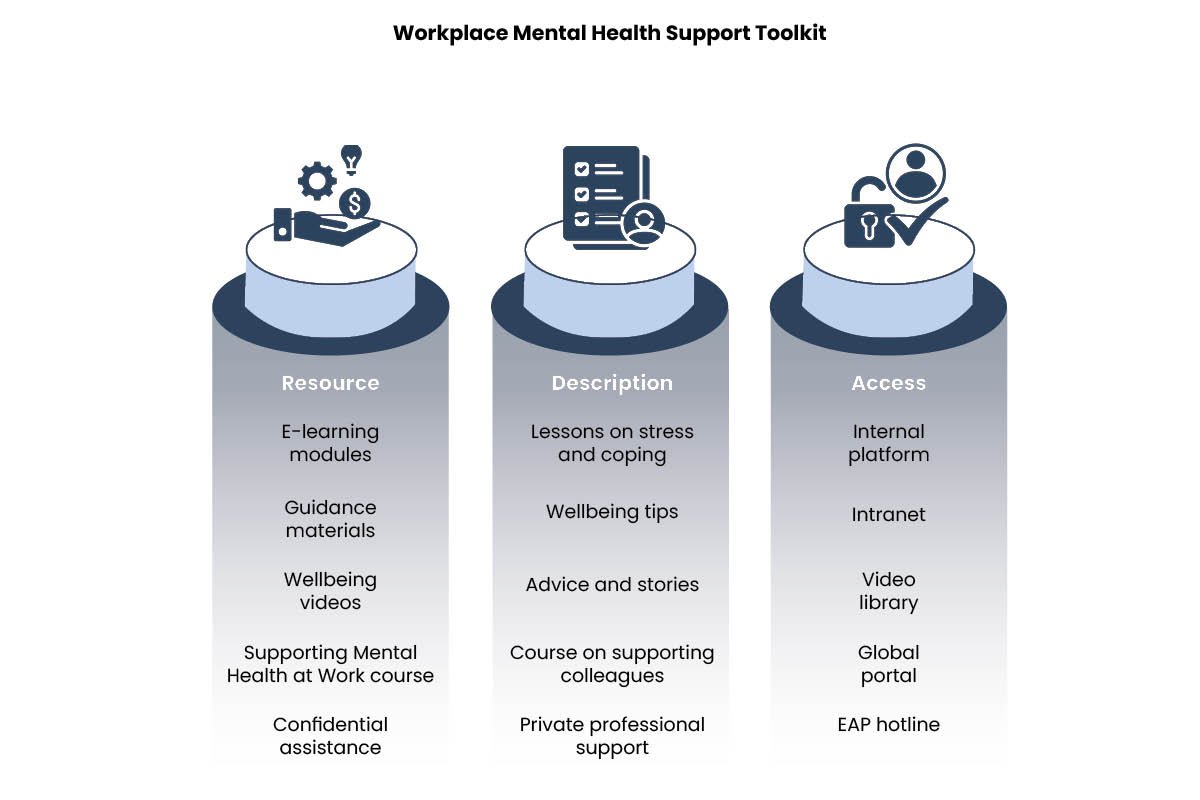
| Resource | Description | Access |
| E-learning modules | Lessons on stress and coping | Internal platform |
| Guidance materials | Wellbeing tips | Intranet |
| Wellbeing videos | Advice and stories | Video library |
| Supporting Mental Health at Work course | Course on supporting colleagues | Global portal |
| Confidential assistance | Private professional support | EAP hotline |
These resources combine guidance and lived experience, turning knowledge and stories into everyday support for mental health.
Culture built through leadership action
The Deloitte mental health framework emphasizes that leaders shape culture through visible care and consistent attention, not through rules alone. Under this approach, leaders are expected to maintain open dialogue, listen attentively, and provide guidance when colleagues face stress, placing human experience at the center of work. Small, everyday actions carry weight: sharing personal experiences, acknowledging signs of strain, and responding with empathy expand the space where vulnerability is acceptable.
Such behaviour encourages colleagues to speak honestly, reducing stigma and normalising conversations about mental wellbeing. By modelling openness and respect, leaders signal that mental health is a central concern rather than a peripheral topic. This approach aligns with Deloitte’s broader social responsibility, reinforcing a workplace culture in which trust, dignity, and mutual care guide interactions across all levels of the organisation.
Key Research Insights:
- Rising stress levels among working populations
- Generational differences in well-being experience
- Increased awareness of psychological strain at work
Conclusion
The Deloitte mental health framework reflects a clear understanding that well-being shapes how people participate, collaborate, and grow at work. Through shared standards, practical support, personal stories, and visible leadership care, mental health becomes part of everyday professional life rather than a separate concern. These efforts demonstrate social responsibility expressed through action, consistency, and respect for human experience.
By extending this commitment into research and external collaboration, Deloitte contributes to wider conversations about psychological care at work. The result is a culture where people feel recognised, supported, and valued as individuals. In placing mental well-being at the heart of inclusion, Deloitte affirms that sustainable success rests on dignity, trust, and the everyday choices that define how work is experienced.