Key Takeaways
- Arm reported $1.49 billion in quarterly revenue with 20% annual growth.
- The company disclosed $2 billion in customer demand through fiscal 2028.
- The data center royalties more than doubled from the previous year’s levels.
- The quarterly adjusted earnings reached 60 cents per share.
- Arm projected a server CPU market exceeding $100 billion by 2030.
Arm Holdings reported strong quarterly financial results while revealing new details about its growing Arm data center business. The company disclosed that customer demand for its first internally developed data center central processing unit has already surpassed $2 billion through fiscal 2028.
The British chip designer said its expanding data center business is expected to become its largest business segment in the near future. The announcement reflects increasing demand for processors designed to support artificial intelligence workloads, cloud computing, and advanced data center operations.
Data Center Expansion Supports Revenue Growth
Arm reported fiscal fourth-quarter revenue of $1.49 billion, representing a 20% increase compared to the previous year. The result exceeded analyst expectations of $1.47 billion. Adjusted earnings reached 60 cents per share, above estimates of 58 cents per share.
The company’s licensing business generated $819 million during the quarter, rising 29% from the previous year. Licensing revenue also exceeded analyst expectations of $781 million. Meanwhile, royalty revenue totaled $671 million, representing an 11% increase from the previous year.
Although royalty revenue fell slightly below market expectations, Arm stated that its data center royalty business more than doubled compared to the previous year. Executives said the growing Arm data center business contributed positively to overall earnings performance and long-term revenue visibility.
For the current quarter, Arm forecasts revenue of approximately $1.26 billion at the midpoint of guidance. Adjusted earnings are expected to reach 40 cents per share, both slightly above market projections.
Company executives also stated that operating expenses are expected to rise during the new fiscal year as Arm continues investing in processor development and artificial intelligence infrastructure.
AI Infrastructure Demand Drives CPU Market Growth
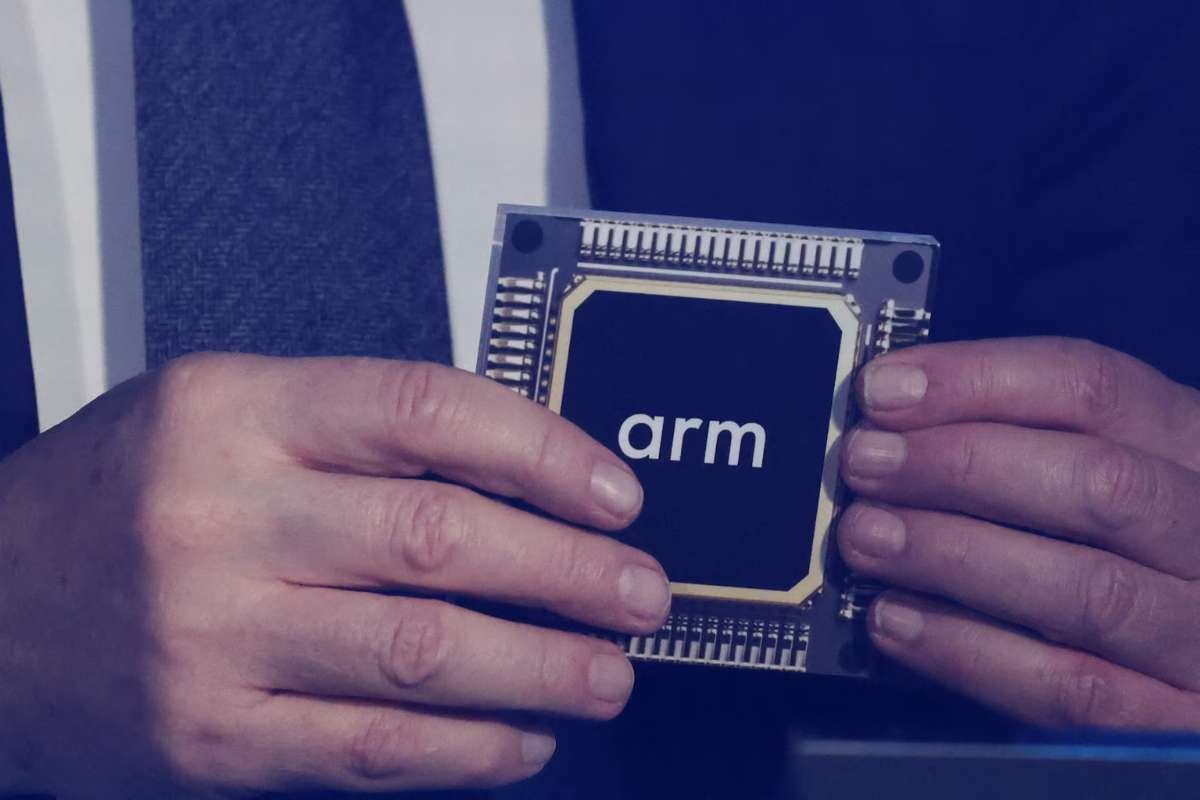
Arm recently entered the data center processor market with its new Arm AGI CPU platform. The processor was developed alongside Meta and is designed to support agentic artificial intelligence systems that can perform tasks autonomously. The company said the expanding Arm data center business will play a central role in meeting future AI computing requirements.
The company stated that rising artificial intelligence adoption is expected to significantly increase processor demand in data centers over the next several years. Arm estimated that data centers may require more than four times the current processor capacity per gigawatt as artificial intelligence workloads expand globally.
According to company projections, the server CPU market opportunity could exceed $100 billion by 2030. Executives said artificial intelligence inference workloads are becoming an important driver of processor demand across cloud computing infrastructure.
Arm’s processor architecture is already widely used across smartphones, personal computers, and energy-efficient computing systems. Several major technology companies currently use Arm-based processor designs in cloud infrastructure products, further strengthening the company’s Arm data center business strategy.
Industry analysts noted that processor demand has expanded beyond graphics processing units as companies increasingly focus on inference workloads. These workloads involve running artificial intelligence models after training, requiring strong central processing capabilities.
Analysts also projected continued growth for Arm’s market share in the server processor sector. Some forecasts estimate Arm could capture between 40% and 45% of total server CPU unit shipments by the end of the decade.
Arm shares initially moved higher following the earnings announcement before closing lower during extended trading. Despite the decline, the company’s stock remains up more than 100% since the beginning of the year, supported by rising investor interest in artificial intelligence infrastructure and processor technology.