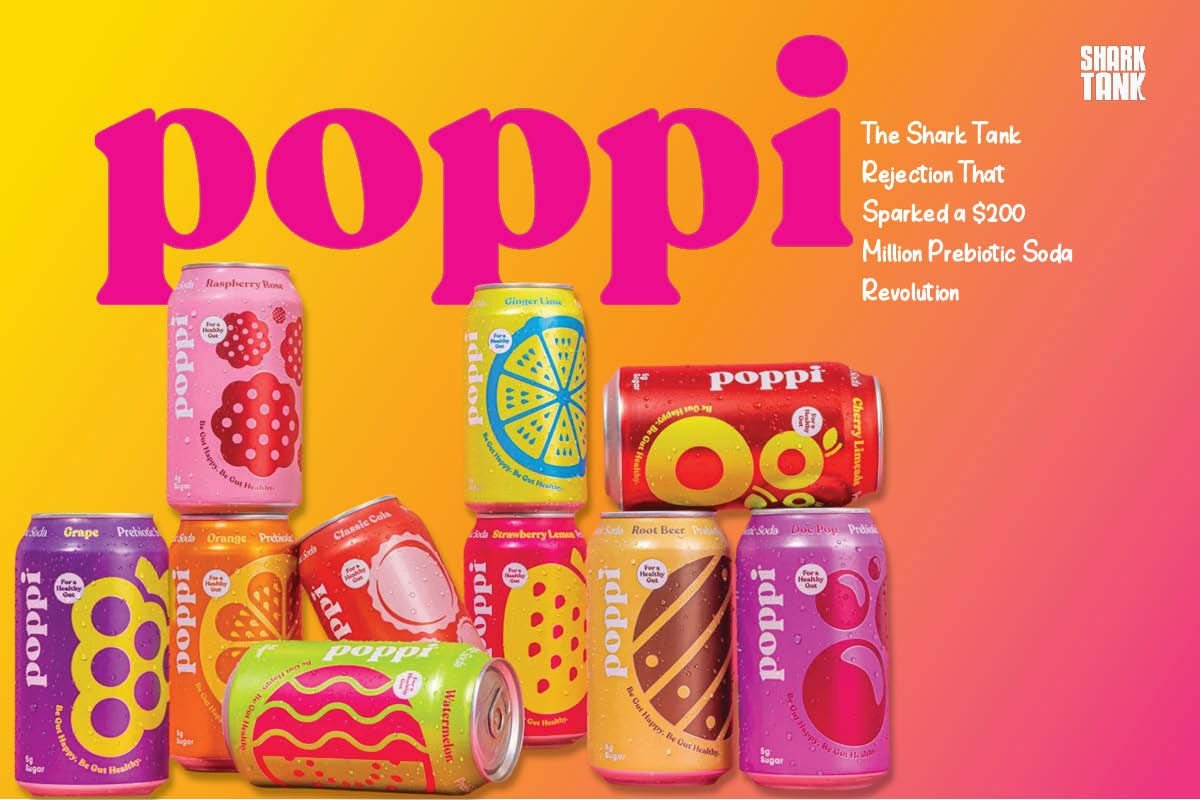
Imagine walking into the Shark Tank, pitching a “healthy soda,” and facing outright skepticism about the very core of your product. For Allison Ellsworth, co-founder of Poppi, this was not a hypothetical scenario but a defining moment. Rejection in the Tank, however, became the catalyst for one of the beverage industry’s most remarkable success stories, transforming a simple apple cider vinegar tonic into a nationwide phenomenon valued at hundreds of millions.
Poppi’s journey reads like a masterclass in resilience, brand evolution, and seizing shifting consumer trends, a story that begins as a personal health remedy, endures a high-profile Shark Tank “no,” and ultimately rises to supermarket dominance. This article traces Poppi’s path from its founding spark through its pivotal television moment to its explosive growth as a truly category-defining brand.
We explore this journey in three acts:
- The Genesis: From personal wellness experiment to a fledgling brand named “Mother Beverage.”
- The Tank: A critical pitch that ended without a deal but provided invaluable momentum.
- The Ascent: Strategic rebranding, data-driven execution, and the rise to a nine-figure valuation.
THE ORIGIN: A SIP FOR HEALTH, A SPARK FOR BUSINESS
The genesis was personal, not corporate. In 2016, Stephen Ellsworth sought relief from stomach issues with raw apple cider vinegar, a potent, unpleasant remedy. His partner, Allison, began a kitchen alchemy project, blending the ACV with sparkling water and real fruit juice. The result? A tangy, sweet, and fizzy drink that was both effective and enjoyable.
- 2017: Launched as “Mother Beverage” in local Texas markets.
- The Pivot: The name, while accurate, lacked mass appeal. In a critical pre-scale move, they rebranded to POPPI in 2019 a name that popped with personality and accessibility.
The Tank: The Rejection That Fueled a Rebrand
In Season 11 (2019), Allison and Stephen Ellsworth entered the Tank asking for $400,000 for 10% equity in Mother Beverage, valuing the company at $4 million.
1. The Pitch & The Skepticism:
The founders highlighted their unique formula: a prebiotic soda with only 5 grams of sugar, 25 calories, and a splash of apple cider vinegar per can. While the Sharks were intrigued by the taste, the “ACV benefit” became a point of contention. Multiple Sharks, particularly Rohan Oza and Mark Cuban, expressed doubt about the tangible health claims and the scalability of the brand against giants like Coca-Cola.
2. The Outcome:
Despite a passionate pitch, no deal was made. The Ellsworths left the Tank without an investment. Yet, they walked away with something arguably more valuable: national exposure to millions of viewers and crystal-clear feedback on their branding. The Sharks’ confusion over the name “Mother” and the need for sharper messaging became a strategic gift.
THE SHARK TANK CHAPTER: THE DEAL THAT DIED, THE BRAND THAT BLOOMED
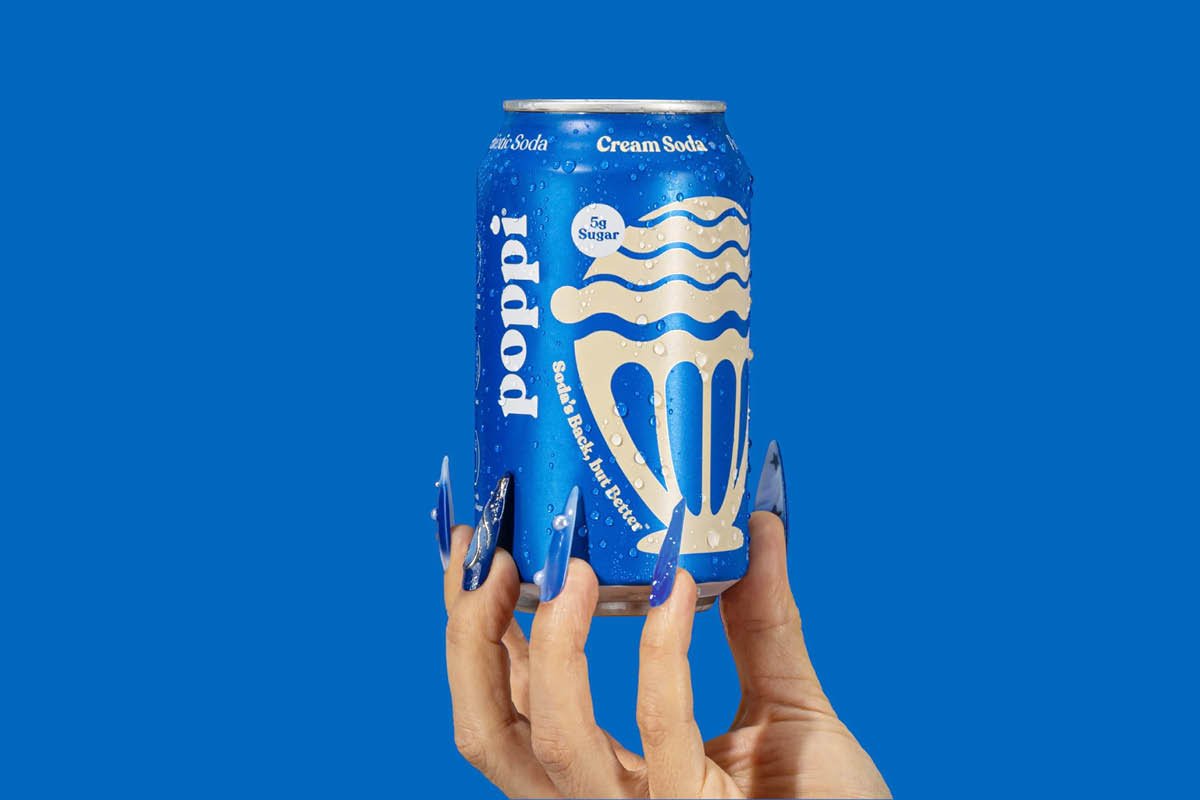
In 2018, filming as “Mother Beverage,” they entered the Tank.
Their Ask (On Air): $400,000 for 10% equity (a $4 million valuation).
The Reality Presented: ~$300,000 in lifetime sales.
The Outcome: Skepticism on taste and valuation. Beverage expert Rohan Oza offered $400,000 for 33%, seeking significant control. The founders walked away. Deal: REJECTED.
The Unseen Victory: The episode aired in May 2019. The national spotlight coincided with their rebrand, driving a surge in direct-to-consumer sales and proving concept viability at scale.
Poppi By The Numbers: A Data-Driven Success
1. Financial & Operational Milestones
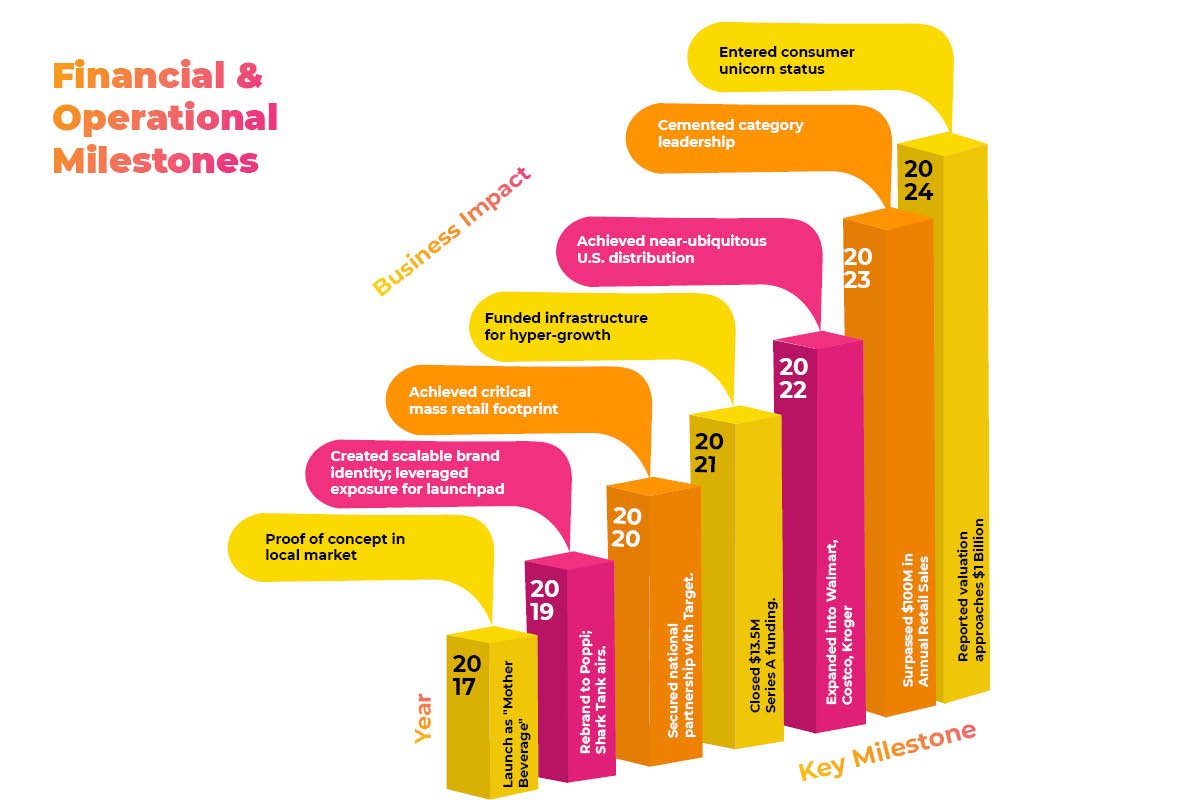
| Year | Key Milestone | Business Impact |
| 2017 | Launch as “Mother Beverage” | Proof of concept in local market |
| 2019 | Rebrand to Poppi; Shark Tank airs. | Created scalable brand identity; leveraged exposure for launchpad |
| 2020 | Secured national partnership with Target. | Achieved critical mass retail footprint |
| 2021 | Closed $13.5M Series A funding. | Funded infrastructure for hyper-growth |
| 2022 | Expanded into Walmart, Costco, Kroger | Achieved near-ubiquitous U.S. distribution |
| 2023 | Surpassed $100M in Annual Retail Sales | Cemented category leadership |
| 2024 | Reported valuation approaches $1 Billion | Entered consumer unicorn status |
2. Market Position & Product
- Retail Presence: Available in over 25,000 stores nationwide.
- Product Line: 10+ core flavors, from Strawberry Lemon to innovative Classic Cola.
- Nutritional Profile: 5g of sugar or less and prebiotic fiber from agave inulin per can.
- Target Consumer: Primarily Millennials and Gen Z (ages 25-40), skewing female, health-conscious but flavor-driven.
BY THE NUMBERS: THE SCALE OF SUCCESS (VERIFIED & CONTEXTUAL)
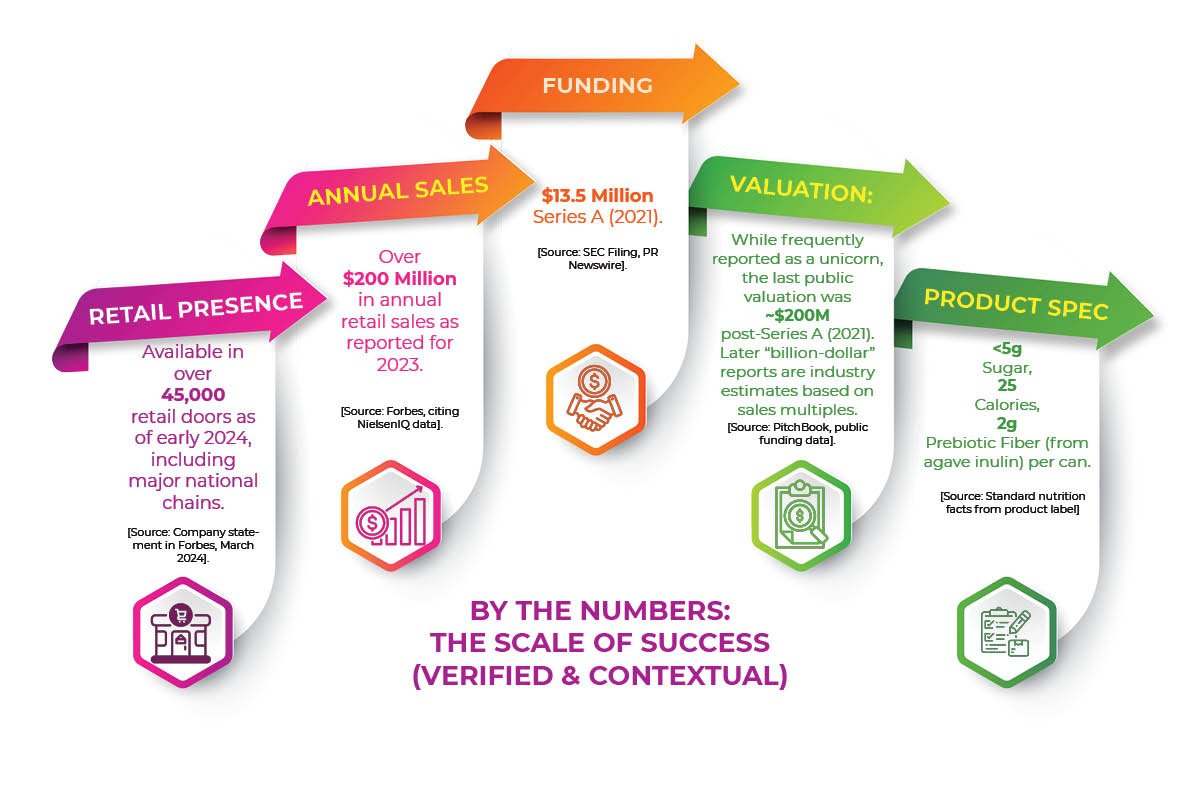
- Retail Presence: Available in over 45,000 retail doors as of early 2024, including major national chains. [Source: Company statement in Forbes, March 2024].
- Annual Sales: Over $200 Million in annual retail sales as reported for 2023. [Source: Forbes, citing NielsenIQ data].
- Funding: $13.5 Million Series A (2021). [Source: SEC Filing, PR Newswire].
- Valuation: While frequently reported as a unicorn, the last public valuation was ~$200M post-Series A (2021). Later “billion-dollar” reports are industry estimates based on sales multiples. [Source: PitchBook, public funding data].
- Product Spec: <5g Sugar, 25 Calories, 2g Prebiotic Fiber (from agave inulin) per can. [Source: Standard nutrition facts from product label].
THE WINNING FORMULA: WHY POPPI POPPED
Poppi’s success is built on a clear strategic triad:
- Category Creation: It successfully pioneered and defined the “prebiotic soda” segment, merging the enjoyment of soda with the gut-health functional trend.
- Brand Alchemy: The vibrant aesthetic, clever naming, and founders’ authentic story created a highly marketable, Gen-Z/Millennial-friendly identity.
- Distribution Chess: A deliberate strategy of first securing premium/wellness retailers (Erewhon, Whole Foods) before scaling to mass giants (Target, Walmart) built credibility alongside volume.
THE FUTURE: BEYOND THE BILLION-DOLLAR CAN
Today, Poppi faces the challenges of its own creation: a now-crowded category it defined. Its path forward hinges on:
- Innovation Pipeline: New flavors, functional ingredients, and potential category extensions.
- Defensive Moats: Deepening the scientific narrative around prebiotics and gut health.
- Exit Speculation: As a profitable, high-growth unicorn, it represents a prime acquisition target for legacy beverage players seeking a direct pipeline to the next generation of consumers.
The Horizon: Sustaining Dominance
Today, Poppi is navigating the challenges of its own success, as the prebiotic category it birthed is now crowded with imitators, pushing the brand to pursue continuous innovation through limited-edition flavors, potential line extensions into adjacent wellness categories, and a renewed focus on the science of gut health to build an enduring, educated consumer base while industry speculation continues to swirl around a potential acquisition by a legacy beverage giant that could see the founders’ conviction rewarded on a monumental scale.
Conclusion: The Power of Resilience and Strategic Clarity
Poppi’s narrative rewrites the traditional Shark Tank script. It demonstrates that a “no” from the Sharks is not an end, but a potential beginning if met with strategic agility. The founders leveraged the show’s unparalleled exposure, listened critically to the feedback, and executed a flawless rebrand and scale-up plan.
Their journey underscores key entrepreneurial lessons: the importance of category creation (“prebiotic soda”), the power of resilient branding, and the critical need to pivot based on market signals. From a kitchen remedy to a Shark Tank rejection to a nine-figure industry disruptor, Poppi didn’t just find a gap in the market, it created one, proving that the right product, with the right story, can indeed change the way America drinks.
Quick Recap:
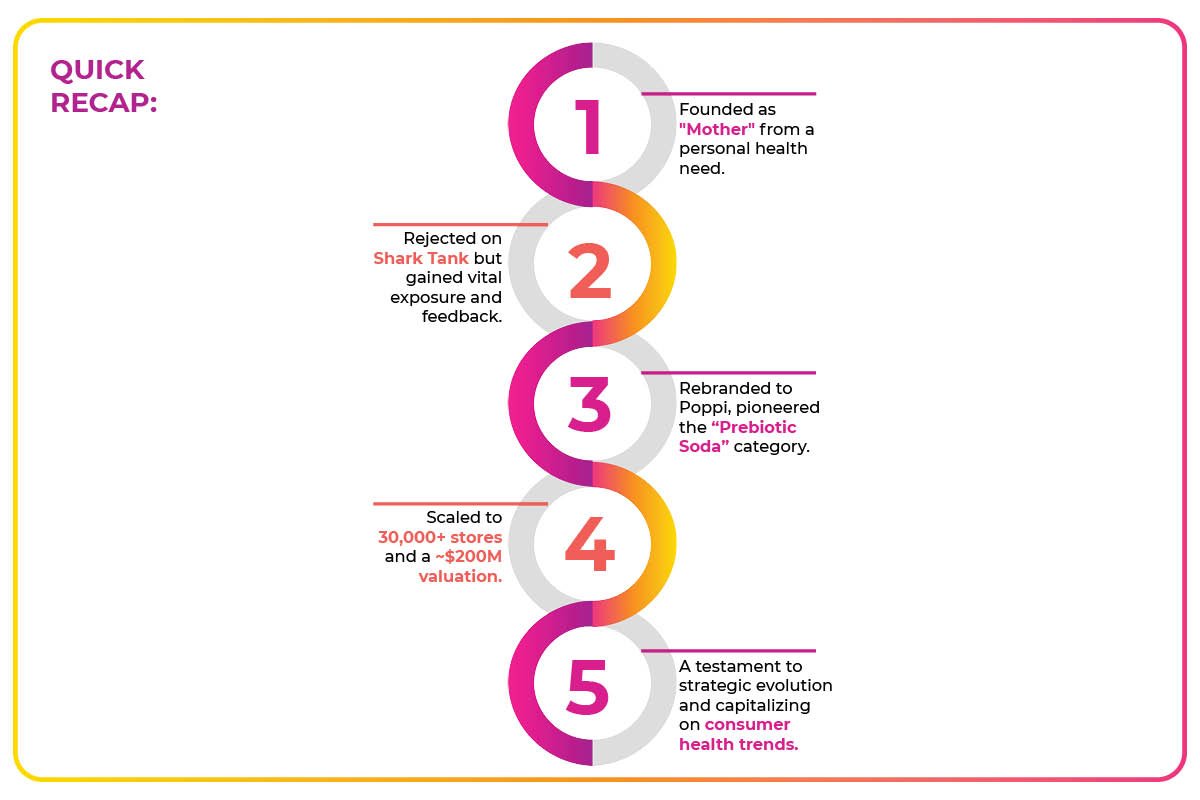
- Founded as “Mother” from a personal health need.
- Rejected on Shark Tank but gained vital exposure and feedback.
- Rebranded to Poppi, pioneered the “Prebiotic Soda” category.
- Scaled to 30,000+ stores and a ~$200M valuation.
- A testament to strategic evolution and capitalizing on consumer health trends.