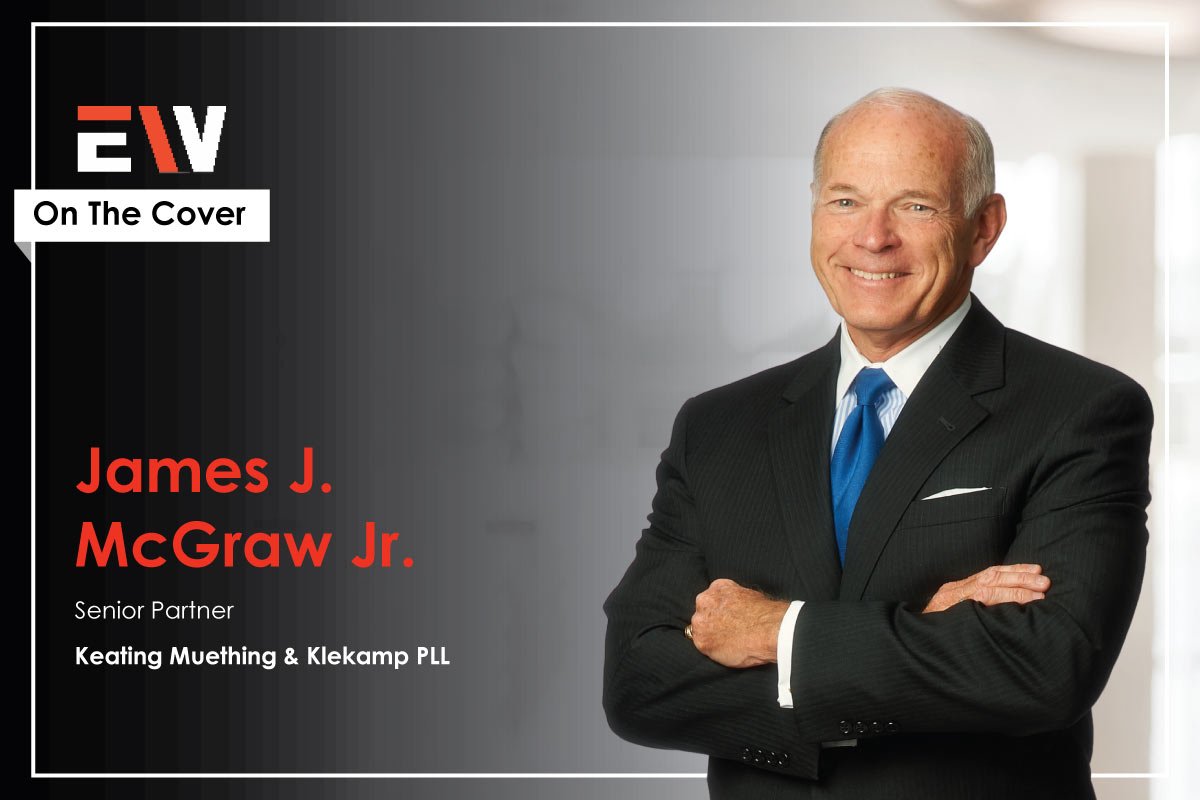
Across industries, companies frequently struggle with the lack of talent, capital, or opportunity. Yet, the underlying cause is often triggered by vision not being owned at the top, when leadership fails to translate intent into sustained execution. In an environment defined by regulatory complexity, economic volatility, and rising stakeholder expectations, that gap can stall even the most promising growth plans. Solving it requires leaders who treat strategy as inseparable from relentless execution. That perspective defines the work of James J. McGraw Jr., Senior Partner at Keating Muething & Klekamp PLL, whose career has centered on helping CEOs impose clarity, momentum, and discipline on complex growth initiatives while strengthening both enterprise value and community impact.
Insight into the Power of CEO-Led Strategy
Early in his tenure at Keating Muething & Klekamp PLL, James J. McGraw Jr.’s approach to corporate strategy was shaped not by a single transaction, but by a decade spent advising growth initiatives across more than 100 communities nationwide. Working in markets from Orlando to Omaha and Tampa to Tucson, he began to observe a defining pattern. Sustainable business growth was rarely limited by capital, talent, or opportunity. Instead, it was most often determined by the quality of leadership at the top.
Through firsthand exposure to vastly different executive styles, McGraw recognized that the most successful organizations were led by CEOs who did more than manage operations. They articulated a clear vision, relentlessly championed it, and embedded it as the foundation for strategic decision-making. These leaders not only accelerated their own corporate growth but also played a decisive role in shaping the economic trajectory of the communities in which their companies operated.
This realization became a pivotal moment in McGraw’s professional philosophy. It reframed how he approached corporate strategy at KMK, placing executive leadership, vision alignment, and accountability at the center of growth planning. For McGraw, effective strategy is inseparable from leadership. When CEOs fully own the vision and actively lead its execution, both businesses and communities gain the momentum needed for long-term success.
The Power of Relentless Executive Ownership

In James J. McGraw’s experience, the dividing line between high-growth companies and those that stagnate in competitive industries is not strategy alone, but the intensity of leadership behind it. Markets may be crowded and conditions unpredictable, but organizations led by truly exceptional CEOs consistently outperform their peers because of one defining trait: relentless passion for winning.
McGraw distinguishes between competent leadership and transformative leadership. While good CEOs can manage complexity and sustain operations, great CEOs impose momentum on their organizations. They set uncompromising expectations, maintain clarity of purpose, and personally drive execution when conditions become difficult. Their energy becomes cultural, shaping how decisions are made, how risks are assessed, and how teams respond to pressure. In competitive environments, this level of personal commitment from the CEO is what converts strategy into sustained growth and separates companies that advance from those that merely endure.
Turning Complexity into Momentum
A defining example of this approach is his role in Keating Muething & Klekamp PLL’s representation of Medpace Inc. in the expansion of its corporate campus, including the development of The Summit Hotel. The project required McGraw to coordinate across state and local governments, public finance authorities, and private stakeholders, while structuring incentive frameworks that balanced accountability with flexibility. Under his leadership, the project, spanning several phases, represents more than $500 million in capital investment, reinforcing Medpace’s long-term growth objectives while delivering measurable economic benefits to the region.
James J. McGraw applied the same leadership-driven discipline in KMK’s work for FC Cincinnati during the development of its urban Major League Soccer stadium and surrounding mixed-use assets in the Over-the-Rhine district of downtown Cincinnati. Operating within a highly regulated and publicly visible environment, he supported the transaction through land acquisition, governmental approvals, and construction challenges, ensuring that strategic timelines were met without compromising stakeholder trust or community considerations.
Across these transactions, McGraw’s distinguishing contribution was not technical execution alone, but his ability to impose strategic clarity on complex environments. These deals stand as examples of how leadership, when applied with precision and accountability, can convert complexity into durable growth.
Anticipating Risk, Enabling Growth
Amid rising economic volatility and regulatory complexity, James J. McGraw Jr. has played a key role in shaping how Keating Muething & Klekamp PLL supports sustained business growth. He recognizes that regulatory scrutiny, and operational risk are central to corporate strategy and long-term value.
James J. McGraw has supported the firm’s expansion into legal areas tied to business continuity, particularly data privacy and cybersecurity, working with KMK Law partners who lead these practices. By emphasizing practical compliance and disciplined breach response, the team helps clients strengthen operational resilience while protecting growth goals.
He has also enhanced the firm’s tax advisory services alongside partners who guide this work, assisting clients in navigating legislative uncertainty and talent shortages. Through proactive planning and dispute readiness, the team helps clients manage risk without limiting future investments. Additionally, McGraw has directly supported the firm’s deepening industry expertise in transportation and logistics, where regulatory changes require practical legal counsel.
His leadership reflects a philosophy that legal strategy must evolve with economic conditions, anticipate challenges, and align closely with business growth and competition.
Partnership as a Strategic Weapon

Some of the most compelling growth stories James J. McGraw observes today involve unlikely partnerships. In Florida, NCH (Naples Comprehensive Health) has forged strategic alliances with Nicklaus Children’s Hospital in Miami and the Hospital for Special Surgery (HSS) in New York. The result includes what is widely recognized as the most advanced orthopedic hospital in the United States, located in Naples. NCH is now pursuing discussions for a major partnership with a globally renowned university-based health system.
In Cincinnati, the Mayfield Clinic is building a partnership with the region’s four major hospital systems to establish a national Mayfield Brain Tumor Institute. For the first time, historically competitive systems will be joining together financially to focus on brain tumor treatment, leveraging Mayfield’s international reputation in brain tumor surgery, particularly glioblastoma.
To McGraw, these examples demonstrate how strategic alignment can unlock scale and impact that no single organization could achieve alone.
Governance and Risk as Growth Enablers
Rather than viewing governance and risk management as defensive exercises, McGraw frames them as essential growth enablers. In his practice, ethical governance and risk oversight are standing agenda items at board meetings. They are also explicit due diligence categories in every acquisition. This discipline creates clarity. It surfaces potential issues early. And it builds confidence among investors, partners, and regulators.
In McGraw’s experience, companies that integrate good governance into strategy move faster, not slower. They make better-informed decisions and avoid costly surprises that can derail growth trajectories.
Innovation to Accountability
Technology has become central to how M&A transactions are structured and evaluated. Both artificial intelligence and cybersecurity now influence due diligence, valuation, and long-term risk assessment in nearly every deal. From McGraw’s perspective, leaders who view these areas as strategic growth drivers rather than technical add-ons are better positioned for success. The most important step for organizations adopting AI and strengthening cybersecurity is to engage top-tier experts who truly understand the complexity of these fields. Having the best expertise in place is essential to protecting enterprise value and enabling sustainable growth.
The Metrics That Signal Enduring Enterprise Value
James J. McGraw Jr. evaluates sustainable business growth using a broad and disciplined set of performance indicators. While financial results and traditional metrics remain important, he gives equal weight to leadership-driven measures that indicate long-term organizational strength. A key focus is the quality of a company’s community leadership, especially the CEO’s role.
McGraw’s approach does not emphasize the quantity of charitable gifts or service on not-for-profit boards. Instead, he measures year-over-year improvements in the community’s ability to thrive as a place to live, work, and build careers. He considers this leadership a strategic asset. When CEOs actively contribute to community progress, their organizations benefit from stronger talent attraction, better employee retention, and increased workforce stability.
According to McGraw, companies led by such executives experience more durable growth. By strengthening their operating environments, these leaders enhance their competitive edge and ensure sustainable performance over time.
Strategy in the Age of Cybersecurity, AI, and Talent
Looking ahead, McGraw identifies three dominant forces shaping corporate strategy: cybersecurity, artificial intelligence, and the ability to recruit and retain the smartest people who build strong cultures. He sees these not as discrete issues, but as interconnected components of organizational resilience.
Cybersecurity failures can halt operations and destroy trust. Poorly governed AI adoption can create ethical, legal, and reputational exposure. Weak culture undermines every strategic initiative. James J. McGraw advises leaders to approach these areas with seriousness and humility. His counsel is direct: hire the best experts you can find. In domains this consequential, mediocrity is unacceptable.
At the same time, he emphasizes the importance of reinvesting in the physical workplace. Thoughtful, purposeful return-to-office strategies, he believes, can strengthen culture, accelerate learning, and deepen collaboration; if executed with care. Technology may shape the tools of work, but culture determines whether those tools produce value.
Lessons for Emerging Leaders
For young executives navigating today’s volatile environment, McGraw offers pragmatic advice.
First, learn everything you can about finance. Strategy without financial literacy is incomplete.
Second, find the best senior-level CEO mentor you can, regardless of industry or geography. Wisdom is portable. Third, understand the value of state and local government incentives in any growth strategy involving relocation, employment expansion, or new facilities. These incentives can be critical components of a capital stack. Underlying all of this is a deeper principle: remain teachable.
McGraw often references a lesson from Mark McCormack, founding CEO of IMG, who said the three most important statements a CEO can make are, “I don’t know,” “I made a mistake,” and “I need help.” In McGraw’s view, humility and strength are not opposites. They are partners.
A Personal Philosophy Forged by Experience

McGraw’s perspective on leadership has also been shaped by profound personal loss. Losing his wife five years ago allowed him to confront a hard truth: the most successful business leaders know how to put family first.
He now speaks openly about the importance of remembering who the most important person in your life is and allowing that awareness to guide daily choices. For him, this realization reframed the concept of work-life balance. It is not about separation. It is about alignment.
That philosophy carries into his professional life. He believes leaders can be relentlessly driven and still be good family people. In fact, he would argue that long-term success requires it.
The Legacy One Seeks to Leave
When James J. McGraw reflects on legacy, he does not speak in terms of deals closed or projects completed. He speaks of servant leadership. He hopes to be remembered as someone who motivated and inspired business leaders to establish aspirations of growth for their companies and their communities that exceeded what others thought possible.
He believes inspiring the next generation requires aligning passion with purpose, embracing failure as a teacher, rejecting complacency, and learning from those who have walked the path before.
In a business world increasingly defined by speed and disruption, James J. McGraw Jr. represents a different archetype of leadership, one rooted in vision, discipline, humility, and service. It is an approach that does not merely chase growth. It builds what endures.
Notable Media Recognitions:
- Medpace – Corporate HQ Expansion, 12.2022
- Looking to Expand Your Business? You May Be Missing This Critical, Often Underappreciated Asset, Cincinnati Business Courier, 10.24.2022
- Two Cincinnati Lawyers Selected to National List of Influential Attorneys, Cincinnati Business Courier, 7.3.2018
- McGraw: CEO, Civic Engagement Key to Creating Jobs, Cincinnati Enquirer, 3.22.2014