More businesses are building mobile apps than ever in 2026. The market reached USD 305 billion this year alone and is projected to grow at 15% through 2031. Nearly 75% of enterprises now use low-code platforms to speed up development, making faster launches the norm rather than the exception. With this level of competition, choosing the right partner is critical to success. Working with the wrong team often leads to delays, missed requirements, and cost overruns exceeding 40%.
Well-known names like Goji Labs and TechAhead continue to rank high on Clutch because they understand U.S. business needs and manage the entire process, from early planning to post-launch support. Mercury Development stands out with over 25 years of experience, delivering complex apps for healthcare, finance, and enterprise brands. These mobile app development companies earn strong ratings by focusing on measurable outcomes rather than surface-level features.
Decision-makers today prioritize execution and long-term value. Teams such as Appinventiv and ScienceSoft have built that reputation by delivering consistent results across industries.
In this article, you will find the list of the top 10 mobile app development companies, along with trend insights and a practical framework to choose the right partner.
2026 Market Snapshot
Enterprise demand in 2026 centers on mobile apps that process AI-driven insights and real-time data at scale. Growth has accelerated beyond earlier projections, with North America accounting for 38% of the global market due to sustained enterprise spending across finance, healthcare, logistics, and retail. Clutch rankings reflect this shift clearly. U.S.-based firms continue to gain ground as buyers increasingly require documented efficiency improvements of 25–30% from new mobile builds before committing to long-term contracts.
Three forces are redefining how budgets and partners are evaluated. AI integration now accounts for 45% of total mobile development budgets, a sharp rise from 28% last year, as businesses prioritize predictive workflows, demand forecasting, and intelligent automation. Edge computing has emerged as a critical enabler for 5G use cases, reducing latency by up to 60% and enabling mobile applications in IoT-heavy environments, such as manufacturing and smart infrastructure. At the same time, cross-platform development accounts for 65% of active projects, enabling faster launches across iOS and Android while delivering average cost savings of 40%.
| Trend | Business Impact | Adoption Rate |
| AI Integration | 45% budget reallocation | 72% enterprises |
| Edge Computing | 60% latency reduction | 55% new apps |
| Cross-Platform | 40% cost efficiency gain | 65% projects |
Top mobile app development companies align closely with these benchmarks. Vendors that fail to quantify ROI around these metrics increasingly lose bids to Clutch top-10 players that present performance outcomes upfront rather than generic capability claims.
Beyond the Interface: Top 10 Mobile App Development Companies
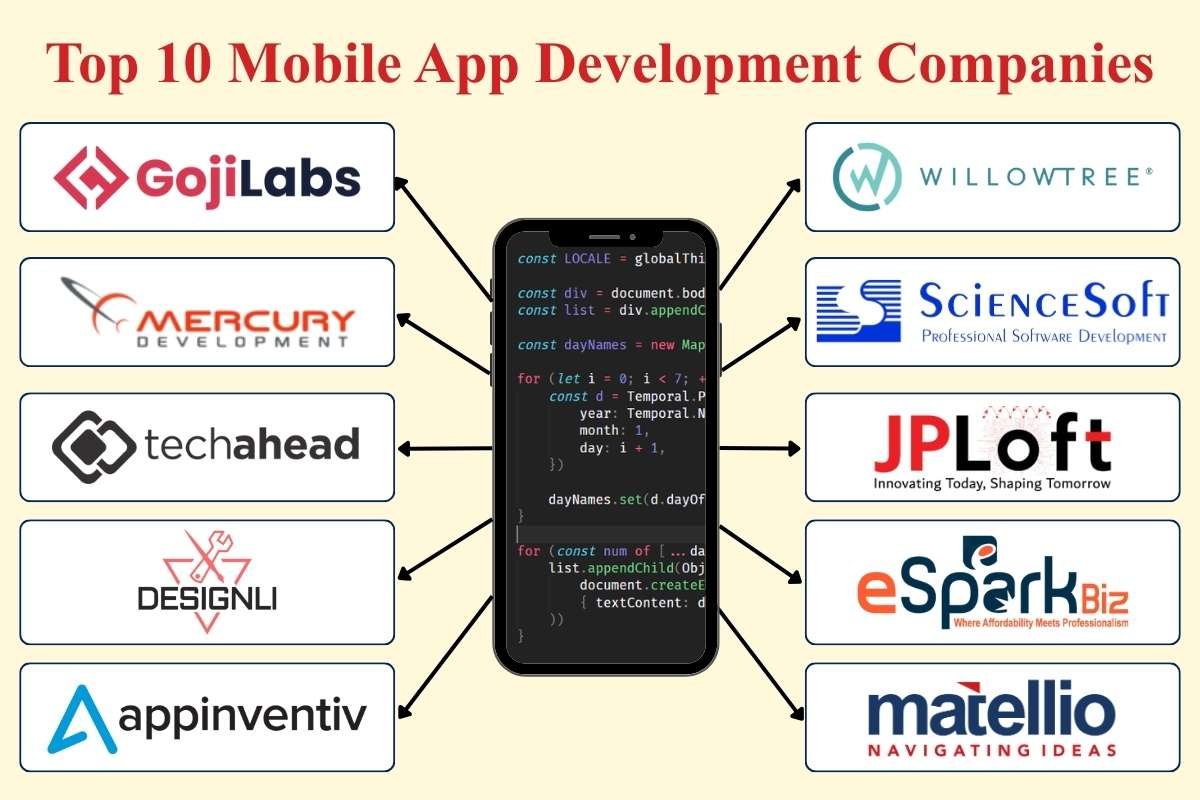
Executives need partners who consistently deliver enterprise-grade mobile apps on time and within budget. Clutch’s January 2026 rankings highlight firms with near-perfect scores and a strong track record of U.S. client success. This list brings together those leaders with proven strengths in AI deployment, real-time data processing, and 5G optimization, drawing from verified reviews, live portfolios, and current market data.
Below the table, you will find detailed company profiles that break down each firm’s capabilities, technology stack, pricing range, and help decision-makers compare partners with confidence.
| Rank | Company | Clutch Rating | Hourly Rate | Employees | HQ | 2026 Innovation Score* |
| 1 | Goji Labs | 5.0 | $100-149 | 50-249 | Los Angeles, CA | 9.5/10 |
| 2 | Mercury Development | 4.8 | $50-99 | 50-249 | Aventura, FL | 9.2/10 |
| 3 | TechAhead | 4.9 | $50-99 | 50-249 | Agoura Hills, CA | 9.4/10 |
| 4 | Designli | 5.0 | $50-99 | 250-999 | Greenville, SC | 9.3/10 |
| 5 | Appinventiv | 4.6 | $25-49 | 1000+ | New York, NY | 9.0/10 |
| 6 | WillowTree | 4.9 | $100+ | 250+ | Charlottesville, VA | 9.6/10 |
| 7 | ScienceSoft | 4.9 | $25-50 | 1000+ | McKinney, TX | 9.1/10 |
| 8 | JPLoft | 5.0 | $50-99 | 50-249 | Denver, CO | 9.2/10 |
| 9 | eSparkBiz | 4.9 | $12-25 | 400+ | Ahmedabad, IN (U.S. clients) | 8.8/10 |
| 10 | Matellio | 4.8 | $50-99 | 1000+ | Jaipur, IN (U.S. offices) | 8.7/10 |
1. Goji Labs
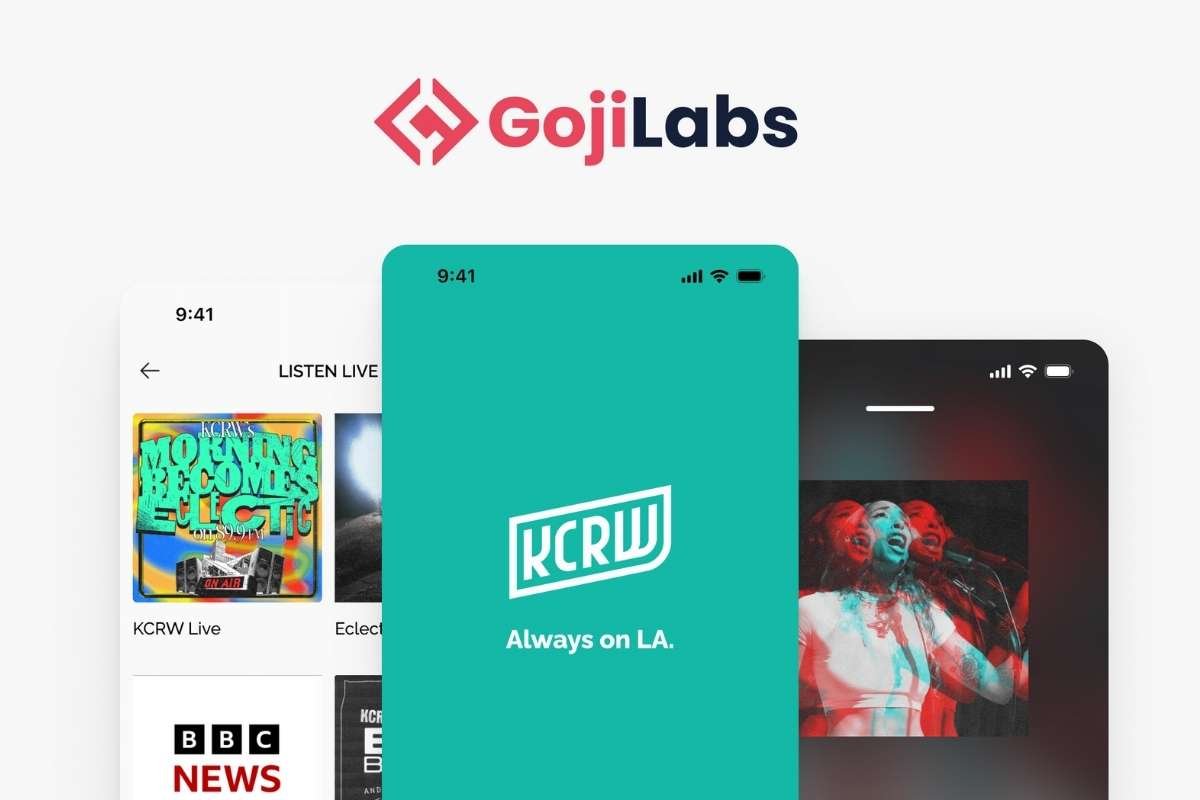
Goji Labs claims the top spot with a flawless 5.0 Clutch rating, backed by more than 80 reviews from U.S.-based clients across the fintech, edtech, and nonprofit sectors. Headquartered in Los Angeles, their lean 50-person team manages the entire product lifecycle, covering strategy, UX, development, and post-launch maintenance under one roof. Recent work includes a Ruby on Rails marketplace that connects student-athletes with brand sponsors, as well as iOS MVPs for fitness motivation platforms that reached the app stores without post-launch defects.
What sets Goji Labs apart is its strong emphasis on risk mitigation. Instead of rushing into prototypes, the team invests heavily in upfront roadmap validation, helping clients avoid 30–40% of the rework that often occurs with offshore or fragmented teams. In 2026, Goji Labs is expanding its capabilities with AI-driven QA pipelines and edge-computing frameworks for real-time health and wellness platforms. Clients report revenue increases of up to 400% following launch, making Goji one of the most results-oriented mobile app development companies for mid-market budgets starting at $25k.
Technical Specs:
| Technical Specs | Details |
| Core Stack | React Native 0.75, SwiftUI 5.0, AWS Lambda/EC2, PostgreSQL 16 |
| Build Tools | Webpack 5.94, Fastlane CI/CD, Jest 29 for 95% test coverage |
| 2026 Focus | TensorFlow Lite for on-device ML inference, WebSocket for 5G streams |
2. Mercury Development
With over 25 years of continuous delivery, Mercury Development blends long-term technical depth with modern execution standards. Recognized among top Mobile App Development Companies, the company maintains a strong 4.8 Clutch rating from enterprise clients, particularly in healthcare and finance, supported by its Florida headquarters and deep familiarity with U.S. compliance requirements. Brands such as FitBit and Tonal rely on Mercury for HIPAA-ready platforms that demand reliability at scale.
Mercury excels in building 5G-enabled fitness and wellness apps that rely on live data synchronization and uninterrupted performance. Clients consistently highlight the firm’s zero-downtime launches and post-release support models, which reduce ongoing maintenance costs by 25%. One of Mercury’s operational advantages is team elasticity; engineering resources are adjusted within two weeks to match evolving project needs, keeping timelines predictable. For 2026, Mercury is doubling down on NodeJS and Flutter to deliver scalable enterprise-grade systems, offering substantial value at $50–99/hr for projects starting at $25k.
Technical Specs:
| Technical Specs | Details |
| Core Stack | Node.js 22.x, Flutter 3.24, Firebase Realtime DB, MongoDB 8.0 Atlas |
| Build Tools | Jenkins pipelines, Detox E2E testing, Docker/Kubernetes orchestration |
| 2026 Focus | WebRTC for low-latency 5G video, HL7 FHIR compliance for health data |
3. TechAhead
TechAhead maintains a strong 4.9 Clutch rating and operates U.S. offices in California while supporting Fortune 500 clients across retail, logistics, and enterprise software. As one of the leading Mobile App Development Companies, the firm employs a team of 250 developers, the company focuses heavily on AI-powered applications designed to shorten go-to-market cycles by as much as 40%. One notable example is real-time inventory platforms that increased clients’ operational efficiency by 35%.
Decision-makers choose TechAhead for its balanced strength across cross-platform development, backend scalability, and cloud security. The team specializes in React Native and Kotlin while leveraging AWS services to ensure performance and compliance at scale. In 2026, TechAhead’s roadmap centers on predictive analytics for e-commerce and logistics workflows, helping enterprises anticipate demand rather than react to it. With minimum project sizes starting at $50k, clients consistently cite transparent communication, daily standups, and strict budget adherence as key differentiators.
Technical Specs:
| Technical Specs | Details |
| Core Stack | Kotlin 2.0, React Native 0.76, AWS Amplify/AppSync, DynamoDB |
| Build Tools | Gradle 8.7, App Center for CI/CD, Espresso 3.6 for Android UI tests |
| 2026 Focus | SageMaker endpoints for inventory ML, GraphQL subscriptions for real-time |
4. Designli
Designli earns a perfect 5.0 Clutch rating from over 40 reviews by focusing squarely on startups and mid-market companies looking to scale without operational friction. Based in Greenville, South Carolina, the firm combines deep UX research with full-stack development to deliver SaaS platforms that routinely achieve 50% user growth after launch. Recent projects include custom CRM systems built for energy-sector clients with complex workflows.
Designli’s approach begins with user testing and validation before any significant development commitment, ensuring MVPs align with real-world usage from day one. Once traction is established, the team scales products using low-code tools to maintain agility in 2026’s fast-moving markets. Executives frequently note that Designli’s transparency and structured communication reduce decision fatigue during critical growth phases. With rates ranging from $50–99/hr and project minimums of $50k, Designli stands out among mobile app development companies for its focus on product clarity and speed.
Technical Specs:
| Technical Specs | Details |
| Core Stack | Vue 3.5, Node 22, Supabase/Postgres, Tailwind CSS 3.4 |
| Build Tools | Vite 5.4 bundler, Cypress 13 for cross-browser E2E, Vercel deployments |
| 2026 Focus | OutSystems low-code for SaaS scaling, PWA with Workbox service workers |
5. Appinventiv
Appinventiv completes the top five with a 4.6 Clutch rating and a strong New York presence serving U.S. enterprises. As one of the premier Mobile App Development Companies, the firm employs a global workforce of more than 1,000 professionals, the company delivers more than 500 apps annually across healthcare, fintech, retail, and emerging technologies. Its portfolio includes blockchain wallets and AR-powered shopping experiences that have driven conversion increases of up to 28%.
In 2026, Appinventiv continues to invest heavily in generative AI, enabling highly personalized user journeys across large-scale platforms. The firm relies on Flutter and Python to maintain speed and consistency while supporting complex backend logic. Projects start at $25k, with competitive hourly rates between $25–49/hr, making the firm attractive for enterprises that demand ROI tracking alongside innovation. Clients value Appinventiv’s global delivery strength combined with U.S.-based oversight, ensuring quality control without sacrificing scale.
Technical Specs:
| Technical Specs | Details |
| Core Stack | Flutter 3.24/Dart 3.5, Python 3.12/FastAPI, Ethereum Web3.js, ARKit 7 |
| Build Tools | Bitrise CI/CD, Flutter Driver tests, Algolia search indexing |
| 2026 Focus | Stable Diffusion for AR previews, Solana blockchain for NFT wallets |
6. WillowTree
WillowTree holds a strong position among enterprise-focused firms, backed by consistent 4.9 Clutch ratings from major U.S. retail and media brands. Operating from its Charlottesville, Virginia headquarters, the company coordinates more than 250 specialists who collectively support apps serving over 40 million monthly users. Its portfolio includes large-scale loyalty and engagement platforms that have increased customer retention by up to 35%. Leadership teams rely on WillowTree for comprehensive delivery, covering everything from early wireframes to live analytics dashboards that track post-launch performance.
The firm is particularly effective at executing complex enterprise launches under tight deadlines, including omnichannel retail apps that function reliably even with offline synchronization. In 2026, WillowTree is placing increased emphasis on progressive web apps and voice-enabled experiences designed for smart devices and connected ecosystems. Clients frequently note the smooth transition process after launch, with well-documented handoffs to internal engineering teams. With rates exceeding $100/hr and minimum project sizes above $100k, WillowTree positions itself as a premium partner for organizations that prioritize scale, reliability, and long-term maintainability among mobile app development companies.
Technical Specs:
| Technical Specs | Details |
| Core Stack | Swift 6.0, Kotlin Multiplatform, AWS AppSync, Redis caching |
| Build Tools | Fastlane automation, Xcode Cloud CI/CD, Sentry error tracking |
| 2026 Focus | Voiceflow SDK for Alexa/Siri, PWAs with Lighthouse 11 scores |
7. ScienceSoft
ScienceSoft maintains a 4.9 Clutch rating through its work with Fortune 500 enterprises, supported by a global workforce of more than 1,000 professionals and a strong U.S. presence in McKinney, Texas. The firm specializes in highly regulated environments and delivers mobile applications that pass SOC 2 audits on the first attempt. Notable implementations include compliance platforms for banking clients that reduced fraud incidents by 28%, reinforcing ScienceSoft’s reputation for security-first execution.
Decision-makers choose ScienceSoft for its ability to modernize legacy systems and implement hybrid cloud architectures, reducing infrastructure refresh costs by up to 40%. These capabilities are especially valuable for large organizations balancing innovation with operational stability. Looking ahead to 2026, ScienceSoft is investing heavily in predictive maintenance models powered by machine learning and IoT gateway integrations. With project minimums starting at $25k and hourly rates between $25 and $50, the company offers flexible engagement models, including fixed-price contracts, making it a strong contender among mobile app development companies serving compliance-driven industries.
Technical Specs:
| Technical Specs | Details |
| Core Stack | .NET 9.0 MAUI, Java 23, Azure Functions, Cosmos DB |
| Build Tools | Azure DevOps pipelines, Appium cross-platform testing |
| 2026 Focus | Azure ML for anomaly detection, MQTT for IoT streams |
8. JPLoft
JPLoft earns a perfect 5.0 Clutch rating through its work with Denver-based startups that scale into enterprise-grade platforms. Recognized among leading Mobile App Development Companies, the company has a team of 50-249 professionals, the company focuses on building custom marketplaces, SaaS dashboards, and internal tools that drive measurable business growth. Several clients report revenue increases of up to 50%, particularly from SaaS products designed for distributed and remote teams. JPLoft is frequently praised for its attention to detail, especially its ability to maintain pixel-perfect interfaces across devices and platforms.
The company’s delivery model emphasizes Agile sprints, automated deployments, and tight feedback loops, allowing products to reach the market roughly 30% faster than industry averages. For 2026, JPLoft is targeting serverless architectures and Web3-enabled wallets, expanding its offerings for emerging digital products. With mid-range hourly rates between $50 and $99 and project sizes starting at $50k, JPLoft appeals to growth-stage companies seeking speed without sacrificing quality.
Technical Specs:
| Technical Specs | Details |
| Core Stack | React Native 0.76, Next.js 15, Vercel edge functions, Prisma ORM |
| Build Tools | Turborepo monorepos, Playwright E2E, GitHub Actions |
| 2026 Focus | Vercel v0 AI prototypes, WalletConnect for dApps |
9. eSparkBiz
eSparkBiz brings a 4.9 Clutch rating and a large delivery team of more than 400 developers focused primarily on U.S. clients. Operating from Ahmedabad, the company has completed over 1,000 projects using CMMI Level 3-certified processes, ensuring consistent quality at scale. Its work includes e-commerce platforms that have increased conversion rates by 32%, while a reported 95% client retention rate highlights long-term satisfaction and reliability.
Executives value eSparkBiz for its flexible engagement models, timezone alignment with U.S. teams, and strong security posture backed by ISO 27001 certification. These strengths make it particularly attractive for fintech and data-sensitive applications. In 2026, the company is expanding into AR and VR-driven commerce experiences alongside blockchain-based payment systems. With competitive hourly rates between $12 and $25 and entry projects starting at $5k, eSparkBiz offers one of the lowest barriers to entry among mobile app development companies without compromising delivery standards.
Technical Specs:
| Technical Specs | Details |
| Core Stack | Flutter 3.24, Node 22/Express, Firebase Auth, MongoDB sharding |
| Build Tools | Codemagic CI/CD, Detox for Flutter tests, SonarQube analysis |
| 2026 Focus | ARCore 1.44 for product visualization, Solidity smart contracts |
10. Matellio
Matellio completes the list with a solid 4.8 Clutch rating and a global team of over 1,000 professionals supporting U.S. enterprises from India-based delivery centers. As one of the most reliable Mobile App Development Companies, the firm builds and maintains SaaS platforms across telecom, retail, and industrial sectors, achieving uptime improvements of up to 40% through microservices-driven architectures. Trusted by enterprise clients such as Siemens, Matellio also delivers embedded and IoT-enabled mobile applications for complex operational environments.
Teams at Matellio are recognized for their strength in predictive analytics, DevOps automation, and continuous deployment pipelines that support weekly release cycles. In 2026, the company is pushing deeper into industrial IoT and edge AI solutions, aligning with manufacturing and infrastructure modernization initiatives. With hourly rates between $50 and $99 and project minimums starting at $100k, Matellio targets enterprises seeking long-term technology partners with strong process maturity and delivery transparency.
Technical Specs:
| Technical Specs | Details |
| Core Stack | Kotlin 2.0, PHP 8.3/Laravel 11, AWS IoT Core, Kafka streams |
| Build Tools | GitLab CI/CD, K6 load testing, Prometheus monitoring |
| 2026 Focus | TensorFlow Serving on edge, Modbus for industrial IoT |
How Western Execs Choose Partners?
Executives rely on structured RFP processes to reduce risk when selecting mobile app development companies. The first filter is credibility. Clutch ratings above 4.8, supported by at least 50 verified U.S. client reviews, consistently correlate with on-time delivery rates of nearly 90%. Beyond scores, leaders expect documented outcomes. Case studies demonstrating 25–30% ROI improvements carry more weight than feature lists, such as TechAhead’s inventory optimization platforms or Goji Labs’ post-launch revenue growth.
The next layer focuses on governance and accountability. Compliance documentation is required upfront, not during negotiations. SOC 2 or HIPAA certification, clearly defined SLAs guaranteeing 99.9% uptime, and bug-resolution windows under 24 hours are now standard expectations. Performance KPIs are baked directly into contracts, often tied to metrics like 40% faster load times or 20% gains in user retention, measured after launch using tools such as Firebase Analytics. Vendors that lack clarity on data sovereignty, IP ownership, or exit strategies are typically removed early.
| RFP Must-Haves | Red Flags | Green Flags |
| Compliance Docs | No SOC 2 audit | HIPAA-ready portfolios |
| KPI Tracking | Vague timelines | Firebase/Amplitude dashboards |
| Offshore Ops | Timezone silence | U.S. PMs + daily standups |
Execution transparency remains a decisive factor. Offshore opacity accounts for nearly 30% of failed projects, which is why executives insist on U.S.-based account leads and daily communication rituals. Final candidates often secure approval through fixed-price pilot engagements under $50k, proving technical alignment across stacks such as AWS, Flutter, or GraphQL before a full-scale rollout. This disciplined approach minimizes risk and identifies partners built for delivery, not promises.
Types of Mobile Apps: Android vs iOS
Businesses face distinct trade-offs when planning products with mobile app development companies. Native development focuses on a single platform, delivering maximum performance and direct access to device capabilities such as cameras, GPS, and biometric sensors. Android apps, typically built with Kotlin or Java and guided by Google’s Material Design system, reach roughly 71% of global users across thousands of device models, from flagship Samsung phones to low-cost budget devices. iOS development, centered on Swift and Apple’s Human Interface Guidelines, serves a smaller but more lucrative user base, with average in-app spending per user nearly 8 times higher.
Cross-platform frameworks have shifted decision-making. Solutions like Flutter and React Native allow teams to maintain a single codebase for both platforms, reducing development costs by up to 40% while retaining around 90% of native performance. Android provides flexibility through sideloading, which simplifies beta testing and enterprise distribution, but suffers from device fragmentation; apps may perform flawlessly on newer Pixel devices yet encounter issues on older Xiaomi models. iOS, by contrast, enforces strict App Store review processes that can delay launches by weeks, but these controls improve user trust and boost discoverability through curated placements.
Executive teams typically align platform strategy with audience economics. Android-first approaches dominate high-volume sectors such as gaming and e-commerce, while iOS leads in premium U.S. markets like finance, healthcare, and subscription services. Advanced teams increasingly blend both using Kotlin Multiplatform to share core logic while preserving native user experiences.
Challenges in Mobile App Development
Mobile initiatives face structural obstacles that push nearly 70% of projects beyond planned budgets and timelines. Device fragmentation remains the most persistent challenge on Android, requiring testing across more than 24,000 screen sizes and OS combinations and resulting in 2.5 times as many crashes as iOS environments. Regulatory compliance adds further strain, as GDPR and CCPA requirements introduce complex consent flows that can delay feature releases by 20% and demand continuous auditing.
Performance failures erode user trust quickly. Apps that take longer than three seconds to load lose up to half their users, particularly in regions still reliant on 4G or 2G networks. Security expectations have also risen sharply, with average breach costs reaching $4.5 million. As a result, zero-trust architectures, biometric authentication, and end-to-end encryption are no longer optional. Scope creep worsens outcomes when new features are added mid-sprint without reprioritization, inflating timelines and costs.
Budget overruns often stem from planning gaps. Offshore communication issues account for nearly 30% of rework, while missing offline functionality reduces retention in areas with unstable connectivity. Top mobile app development companies counter these risks through weekly demos, real-time monitoring with Firebase Crashlytics, and fixed-price MVP engagements capped at $50k. Organizations that enforce these controls during the RFP stage consistently complete projects up to 25% under budget.
Conclusion
Selecting a mobile app development partner is a strategic business decision, not just a technical one. As AI, real-time data, and cross-platform delivery become standard, success depends on measurable outcomes, not promises.
The mobile app development companies highlighted in this guide stand out by delivering proven ROI, substantial compliance, and reliable performance at scale. For leaders, the priority is clear: define success metrics early, demand evidence through case studies or pilots, and choose partners who align technology with business goals. The right choice turns a mobile app into a long-term growth asset.
FAQs
Q1. What are the top U.S. mobile app development companies in 2026?
A. Goji Labs, TechAhead, and WillowTree lead Clutch lists with perfect scores and Fortune 500 clients. They focus on AI-ready fintech and retail apps with proven 30% efficiency gains.
Q2. How much do enterprise apps cost with top firms?
A. Budgets start at $25k for MVPs from ScienceSoft or eSparkBiz, scaling to $100k+ for complete enterprise builds with Goji Labs or WillowTree. Expect $50-149/hr rates tied to clear ROI milestones.
Q3. Which company handles AI and 5G best?
A. TechAhead and ScienceSoft excel here by deploying SageMaker models and WebRTC streams that reduce latency by 60%. Goji Labs adds TensorFlow Lite for on-device personalization.
Q4. Do offshore teams like eSparkBiz serve U.S. clients well?
A. Yes, with 70% U.S. focus, ISO security, and timezone overlap. They deliver 32% conversion lifts at $12-25/hr, but pair with U.S. PMs to avoid delays.
Q5. What KPIs matter most post-launch?
A. Track 25% retention boosts, sub-2s load times, and 99.9% uptime via Firebase. Top firms like Mercury Development guarantee these in SLAs.
Q6. Can startups afford these top 10?
A. eSparkBiz and ScienceSoft start at $5-25k with high-quality stacks. Avoid scope creep by locking features upfront.
Q7. What tech stacks dominate 2026 projects?
A. Flutter 3.24, React Native 0.76, AWS Amplify, and edge ML lead. JPLoft adds Next.js 15 for PWAs.