Starbucks is a brand that carries a legacy deeply rooted in connection, quality, and community. Founded in 1971 in Seattle, Washington, by Jerry Baldwin, Zev Siegl, and Gordon Bowker, the coffeehouse giant has grown from a single store selling freshly roasted coffee beans to a global coffee culture icon. Today, Starbucks operates in over 80 countries with more than 38,000 stores worldwide, serving millions of customers daily.
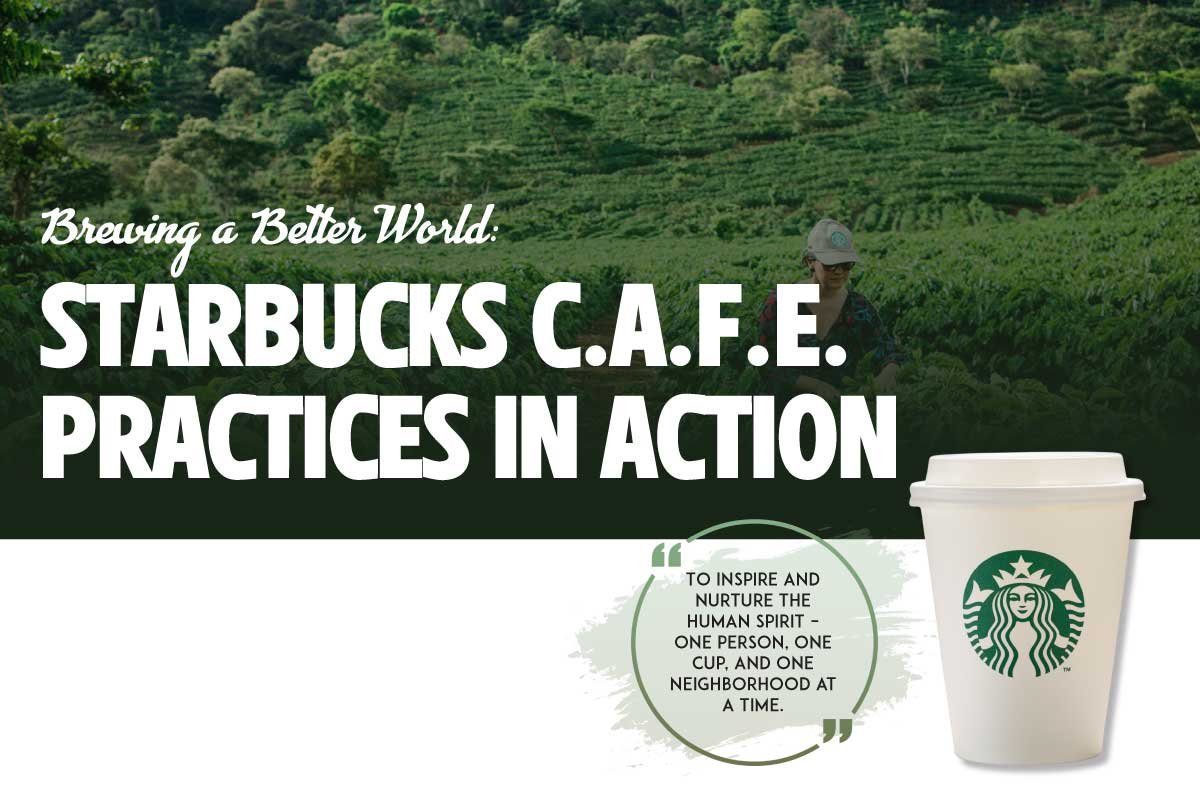
“To inspire and nurture the human spirit – one person, one cup, and one neighborhood at a time.”
Among its most impactful CSR initiatives stands C.A.F.E. Practices (Coffee and Farmer Equity Practices) Launched in 2004 in a pivotal collaboration with Conservation International, C.A.F.E. Practices serve as Starbucks’ bedrock for ethical sourcing. It is a comprehensive, rigorous set of benchmarks that meticulously evaluates coffee farms against four critical performance areas, ensuring every cup delivers a promise of deliciousness coupled with deep integrity. The program effectively operationalizes Starbucks’ mission: to inspire and nurture the human spirit by safeguarding the producers, the product, and the planet.
“ Quality, connection, and ethical stewardship”
| Starbucks C.A.F.E |
| 98% of Starbucks coffee is verified through C.A.F.E. Practice. |
| Number of coffee farmers supported globally 400,000+ |
| Number of coffee-producing countries involved – 30+ |
| Total number of farmer support centers, listed by region: Costa Rica, Rwanda, Colombia, Ethiopia, Indonesia |
The Four Pillars: A Foundation of Global Equity

Starbucks C.A.F.E. Practices is a comprehensive, multi-faceted ethical sourcing standard designed to ensure the long-term sustainability and quality of its coffee supply. Developed in collaboration with Conservation International, the initiative rigorously assesses farms across four key areas—economic transparency, social responsibility, environmental leadership, and quality. Starbucks C.A.F.E. practices transcends basic sustainability; it is a holistic model for responsible global trade, structured around four indispensable pillars:
1. Economic Transparency: Ensuring Fair Exchange
At the core of this pillar is an unwavering demand for financial accountability. Starbucks mandates that suppliers provide comprehensive documentation of all financial transactions related to the coffee purchase. This meticulous record-keeping is crucial for:
- Verifiable Fairness
- Risk Mitigation
2. Social Responsibility: Upholding Human Dignity
This dimension focuses on the well-being and safety of the hundreds of thousands of farm workers whose labor sustains the industry. It implements stringent guidelines to protect human rights across coffee-growing regions:
- Worker Safety and Conditions
- Prohibition of Exploitation
- Community Investment
3. Environmental Leadership: Protecting the Planet’s Future
Recognizing that coffee’s future is inextricably linked to ecosystem health, this pillar focuses on sustainable agricultural practices that preserve the natural world:
- Biodiversity Protection
- Resource Efficiency
- The Coffee and Climate Initiative
4. Quality: Committing to Excellence
While ethics drives the program, the pursuit of superior Arabica coffee quality remains paramount. C.A.F.E. Practices ensure that sustainable methods are seamlessly integrated with the rigorous standards required to produce the distinct flavors and profile that define the Starbucks brand.

The Direct Impact: Farmer Empowerment

The practical application of C.A.F.E. Practices is perhaps best seen in Starbucks’ direct support network, which solidifies its partnership with producers:
- Global Reach: The program supports the livelihood of over 400,000 coffee farmers spanning more than 30 coffee-producing nations.
- Farmer Support Centers: Strategically placed hubs in regions like Costa Rica, Rwanda, and Colombia offer farmers hands-on training and crucial agricultural science. These centers empower producers with the knowledge to improve crop yield, enhance quality, and adapt to challenging conditions, ensuring the long-term viability of their farms.
By linking its premium pricing to a holistic sustainability model, Starbucks turns each purchase into more than a beverage—it becomes an investment in care, connection, and conscious consumption where profit and purpose coexist.
| Farmer Empowerment | |
|---|---|
| Farmers supported(Livelihood) | Over 400,000 coffee farmers |
| Global Reach(Nations) | Spanning 30+ coffee-producing nations |
| Strategic Hubs | Farmer Support Centers in Costa Rica, Rwanda, and Colombia |
| Outcome 1 | Improve Crop Yield |
| Outcome 2 | Enhance Quality |
| Outcome 3 | Adapt to Challenging Conditions (Resilience/Viability) |
Key Strategic Pillars of Starbucks C.A.F.E. Practices
The initiative’s success is rooted in its multi-faceted approach, targeting critical areas across the supply chain:
1. Supporting Global Coffee Farmers and Communities
Starbucks engages directly with over 400,000 farmers in more than 30 coffee-producing countries. This relationship is cemented by initiatives that promote economic stability and agricultural resilience:
- Fair Compensation: Ensuring farmers receive equitable wages
- Farmer Support Centers: Operating dedicated centers in key regions
- Capacity Building: Offering training in sustainable farming techniques, crop resilience, and quality improvement
2. Environmental Stewardship and Conservation
A significant aspect of Starbucks C.A.F.E. Practices is the rigorous assessment of environmental performance at the farm level, advocating for practices that preserve natural resources:
- Resource Management: Evaluation based on soil conservation, water management, and waste reduction efforts.
- Biodiversity Protection: Active promotion of shade-grown coffee, which is crucial for protecting wildlife habitats and reducing deforestation.
- Sustainable Practices: Encouraging a reduction in agrochemical usage, steering towards organic and ecologically sound farming methods.
3. Economic Transparency and Accountability
Starbucks upholds the belief that fairness is contingent on clear, verifiable trade practices. The program mandates a high degree of economic accountability:
- Clear Documentation: Requiring suppliers to provide comprehensive financial transaction records.
- Fair Trade Integration: Aligning sourcing practices with principles.
4. Social Responsibility and Community Development
The scope of Starbucks C.A.F.E. Practices extends into the welfare of farm workers and the vitality of their surrounding communities:
- Worker Welfare: Strict compliance with standards for safe working conditions, fair wages, and the absolute prohibition of child or forced labor.
- Community Investment: Strategic investment in essential services such as healthcare, education, and sanitation programs, often in collaboration with NGOs and local organizations, to foster long-term social value.
- Gender Equality: Actively supporting initiatives that promote the empowerment of women within coffee-growing regions.
5. Coffee and Climate Initiative
Recognizing the severe threat of climate change to global coffee production, this subset of C.A.F.E. Practices focuses on future-proofing the coffee supply:
- Climate-Smart Agriculture: Assisting farmers in adopting techniques to protect coffee plants from climate-related diseases.
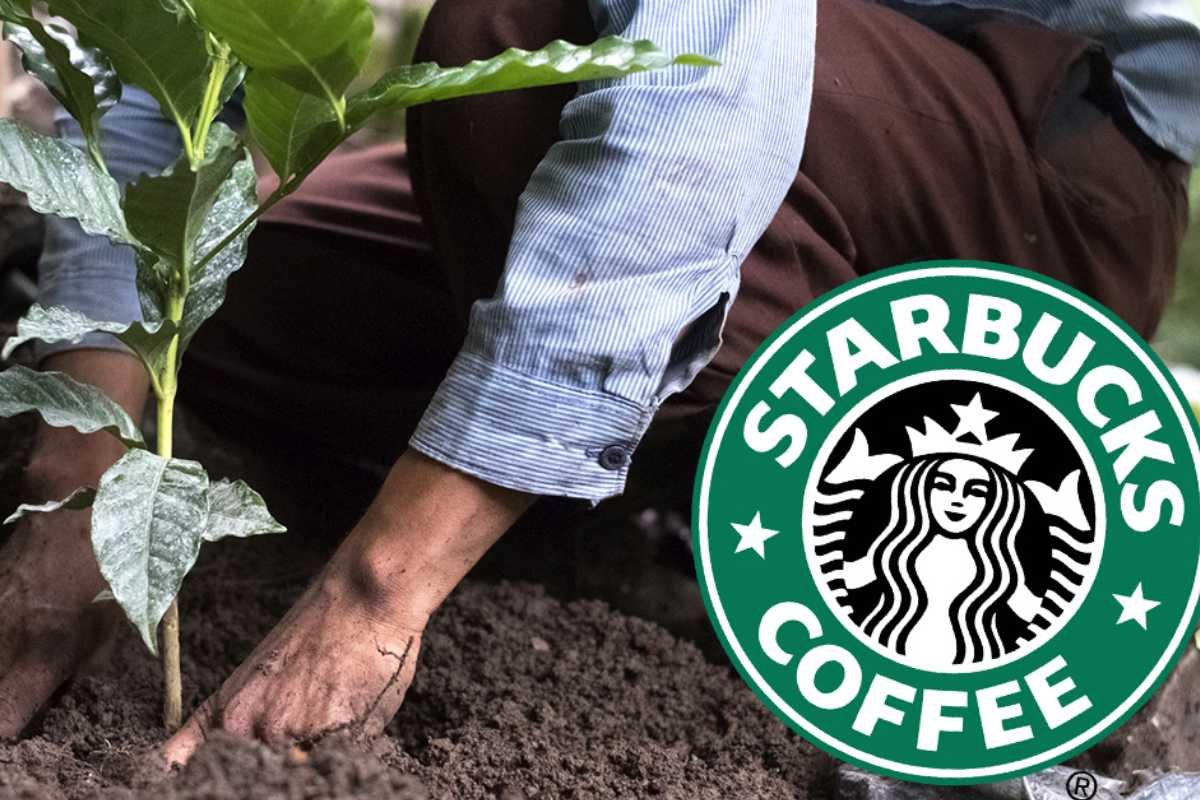
- Ecosystem Restoration: Encouraging tree planting to restore degraded land and promoting sustainable water and soil management practices.
Strategic Marketing Alignment (The 4 P’s)
Starbucks strategically embeds its C.A.F.E. Practices ethos directly into its marketing mix (The 4 P’s: Product, Price, Place, and Promotion). This integration ensures that the brand’s commitment to ethical sourcing and sustainability is not merely a CSR footnote but a defining characteristic of its market positioning.
| Component | Strategic Integration with C.A.F.E. Practices |
| Product | Positioning as a premium brand with 100% ethically sourced coffee beans, with 98% verified through C.A.F.E. Practices. |
| Price | Employing a value-based, premium pricing model. |
| Place | Ensuring a global retail presence (over 80 markets) is supported by a logistics and supply chain aligned with sustainability standards |
| Promotion | Utilizing storytelling through documentaries, social media, and in-store visuals to communicate the positive impact of Starbucks C.A.F.E. Practices. |
A Legacy Forged in Ethics and Innovation
The enduring success of Starbucks is fundamentally powered by an unwavering commitment to innovation, transparency, and ethics. Through the monumental achievement of C.A.F.E. Practicing, the brand has provided conclusive proof that profitability and sustainability are not mutually exclusive; rather, they are symbiotic forces that drive superior long-term business value. By diligently focusing on empowering coffee farmers, rigorously protecting the planet, and diligently ensuring ethical trade, Starbucks has successfully elevated its role from a coffee retailer to a global industry standard-setter. The brand continues to forge new benchmarks for corporate responsibility within the coffee world and beyond.