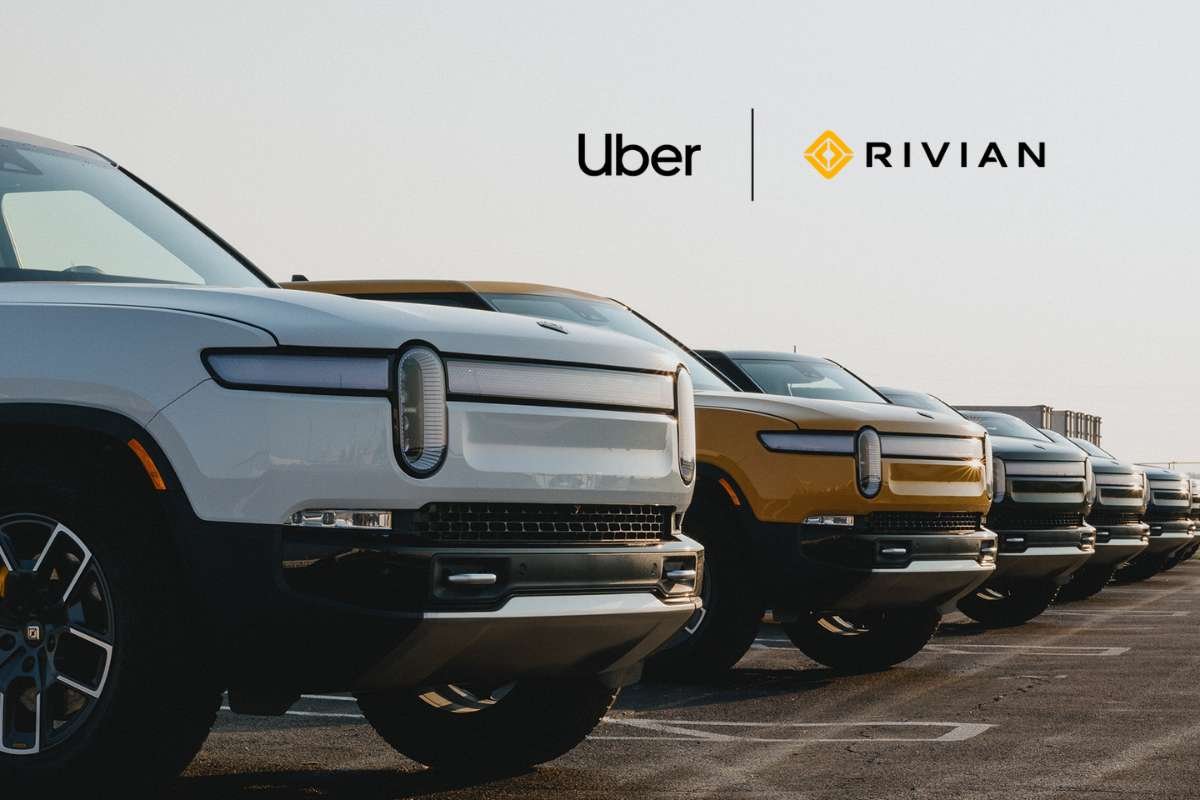
The Uber Rivian robotaxi partnership begins with Uber Technologies announcing plans to invest up to 1.25 billion dollars in electric vehicle maker Rivian Automotive to deploy autonomous taxis across global markets. The move signals a renewed push into next generation mobility solutions.
Investment And Deployment Plans Take Shape
The agreement includes an initial investment of 300 million dollars from Uber, which is expected to be completed soon after final approvals. This investment will give Uber a stake in Rivian and support the development of autonomous vehicles built on Rivian’s upcoming R2 platform.
As part of the Uber Rivian robotaxi deal, Uber or its fleet partners intend to purchase at least 10,000 autonomous R2 vehicles, with an option to acquire up to 40,000 more starting in 2030. These vehicles are expected to become the backbone of Uber’s future driverless network.
The companies aim to deploy the robotaxis across 25 cities in the United States, Canada, and Europe by 2031. The first launches are expected in San Francisco and Miami in 2028. These early deployments will help test operations and refine the service before wider expansion.
Rivian will provide the vehicle platform along with its autonomous driving system, while Uber will integrate the vehicles into its ride sharing and delivery network. The collaboration is designed to combine hardware, software, and operational expertise into a unified mobility solution.
Market Response And Industry Implications
Market reaction to the Uber Rivian robotaxi announcement was mixed, with Rivian’s stock rising early before settling with modest gains, while Uber’s shares dipped slightly. Investors appear optimistic about long term growth but cautious about execution risks.
The Uber Rivian robotaxi initiative arrives as interest in autonomous mobility surges again, driven by advances in artificial intelligence and computing power. Businesses and entrepreneurs are increasingly viewing self driving transport as a major future opportunity.
Uber has been expanding its partnerships in the autonomous vehicle space. In recent months, the company has announced collaborations with multiple vehicle makers and technology providers to strengthen its position in this emerging market. Rivian, on the other hand, is looking to diversify its business beyond consumer electric vehicles by entering the autonomous segment.
The R2 platform plays a key role in this strategy. Designed as a scalable electric vehicle, it is expected to support both personal and commercial use cases. By combining this platform with autonomous capabilities, Rivian aims to tap into demand for shared mobility services.
Under the Uber Rivian robotaxi agreement, investments will be released in stages as development milestones are achieved, and Uber will also pay licensing fees for Rivian’s autonomous software. This long term collaboration highlights both companies’ ambition to bring driverless transportation into mainstream urban use.