Key Takeaways
- Japan’s Nikkei 225 hit a record high despite escalating U.S.-Iran tensions.
- Most Asia-Pacific markets rose as investors looked beyond Middle East risks.
- Oil prices climbed on concerns over potential disruptions in the Strait of Hormuz.
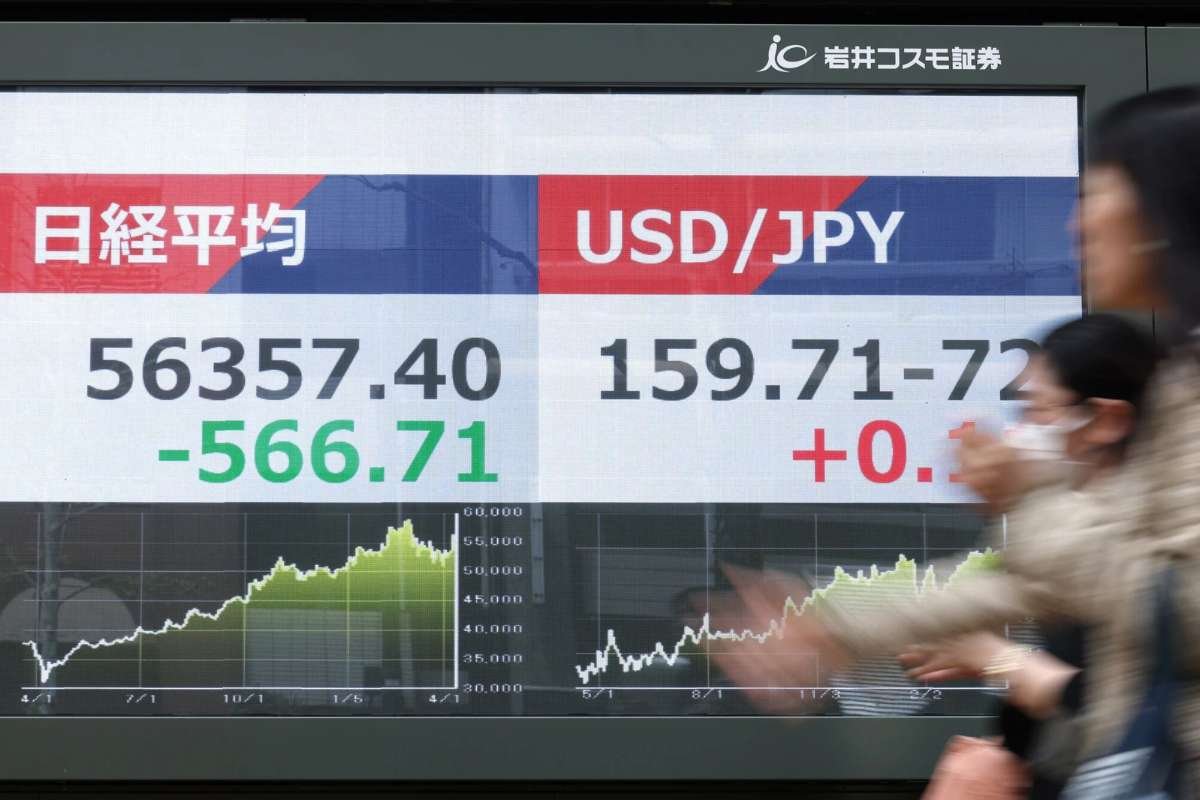
Japan’s Nikkei 225 surged to a record high on Wednesday as Asia-Pacific markets mostly advanced despite rising tensions between the United States and Iran, with investors appearing to focus on economic and corporate prospects over geopolitical uncertainty.
The benchmark Nikkei 225 gained 2.94% in early trading, extending gains and reaching an all-time high. Japan’s broader Topix index rose 2.14%, leading a regional rally that came even as concerns persisted over the conflict in the Middle East and the security of global energy supplies.
Nikkei 225 leads regional gains despite geopolitical risks
Markets across much of the Asia-Pacific region opened higher after investors largely looked past uncertainty surrounding negotiations between Washington and Tehran aimed at ending the conflict.
The rally came despite comments Tuesday from U.S. Secretary of State Marco Rubio, who said Iran had mined “large segments” of the Strait of Hormuz, a critical shipping route for global oil supplies.
“They’re firing on commercial ships, and they’ve mined large segments of Hormuz — international waters,” Rubio told the Senate Foreign Relations Committee during his first congressional appearance since the Iran war began on Feb. 28.
A White House official said the Pentagon had destroyed numerous mines and more than 40 vessels involved in laying them.
The Strait of Hormuz remains one of the world’s most important energy corridors, with about 20% of global oil shipments passing through the waterway before the conflict.
China and Australia advance while India declines
Elsewhere in the region, mainland China’s CSI 300 index climbed 1.52%, reflecting broader investor optimism. Australia’s S&P/ASX 200 rose 0.82%.
Australia’s gains came despite economic data showing gross domestic product grew 2.5% year over year in the first quarter, below economists’ expectations of 2.6%.
Government data showed growth was affected by weaker household spending, lower public-sector consumption, and severe weather disruptions that impacted mining activity.
Hong Kong’s Hang Seng Index moved in the opposite direction, falling 1.73%, while India’s Nifty 50 dropped 0.78%. The BSE Sensex also declined 0.85%.
South Korean financial markets remained closed for a public holiday.
Oil prices rise as investors monitor conflict
Oil prices continued to move higher as traders assessed potential risks to energy supplies stemming from the conflict.
West Texas Intermediate crude futures rose 1% to $94.70 per barrel, while Brent crude futures gained 0.92% to $96.88 per barrel.
Despite higher oil prices, U.S. stock futures showed little movement ahead of the American trading session. Futures tied to the S&P 500, Nasdaq 100, and Dow Jones Industrial Average traded near flat levels.
During Tuesday’s regular trading session, U.S. stocks posted modest gains. The S&P 500 rose 0.13% and closed above the 7,600 level for the first time. The Dow Jones Industrial Average added 228.91 points, or 0.45%, while the Nasdaq Composite edged up 0.03%.
Analysts said investors appeared encouraged by resilient equity markets and signs that disruptions in the Strait of Hormuz had not yet significantly affected global energy flows.
Market participants are expected to continue monitoring developments in the Middle East, particularly any impact on shipping routes, oil prices, and broader economic growth.