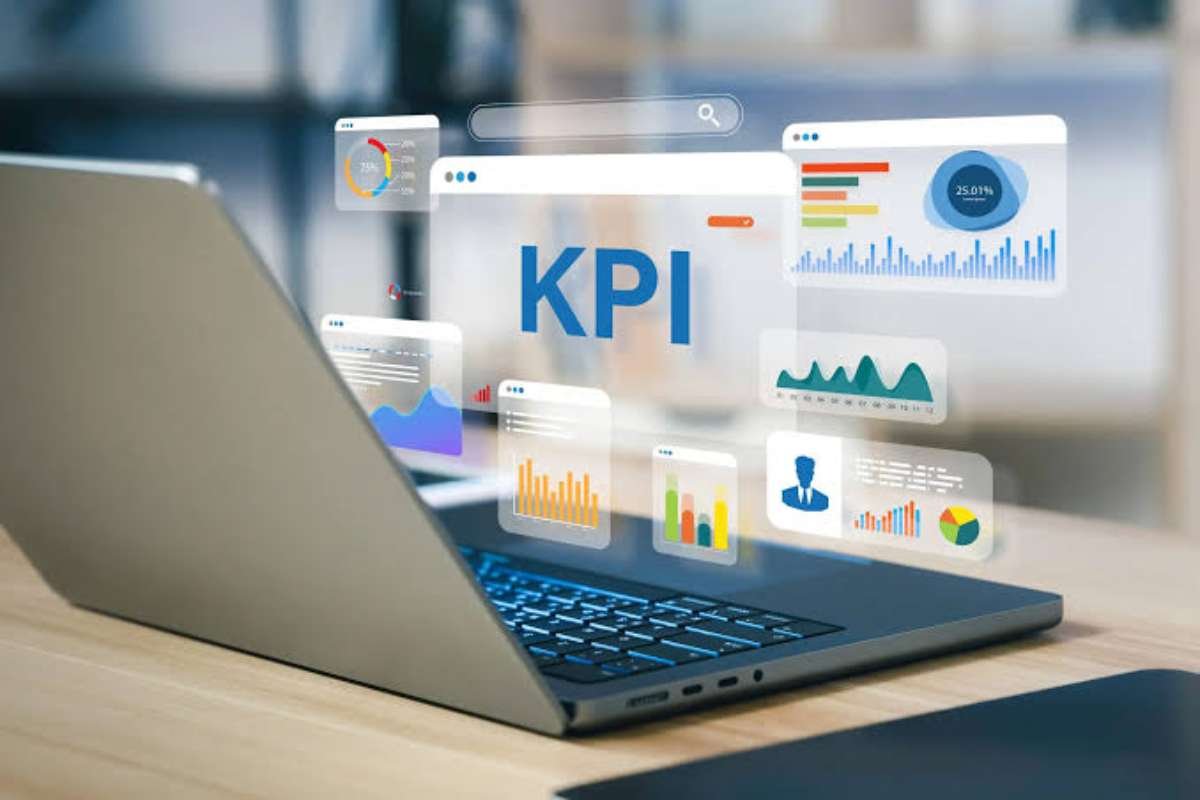
A strong KPI strategy for business growth enables businesses to turn data into actionable decisions instead of relying on outdated performance reports. This guide explains how to select the right KPIs for different business stages and models, balance leading and lagging indicators, avoid common measurement mistakes, and create a performance framework that aligns teams, drives accountability, and supports sustainable long-term growth.
Let’s say you are driving a car down a fast, winding highway while staring exclusively at your rearview mirror. It sounds terrifying, right? Yet, this is exactly how most executives steer their companies.
They log into their morning dashboards, scan quarterly revenues, analyze net profit margins, and review historical sales volumes. They think they are in control of the future. However, in reality, they are just reading yesterday’s news.
The brutal truth: Most modern business dashboards don’t function as a steering wheel. They function as an autopsy report. By the time a lagging financial metric flags a problem, the damage is already done, the client has left, and the revenue is gone.
To build a truly resilient enterprise, you have to break this anxiety-inducing cycle. You need an actionable KPI strategy for business growth that stops treating data like history class and starts treating it like a live GPS navigation system.
A winning framework connects daily, front-line actions directly to the corporate bottom line. It shifts your focus from tracking dead, static activities to driving active behavioral outcomes.
Direct answers to your scaling strategy
An elite metric framework requires an Inverted Pyramid structure. We must deliver the high-impact operational truth immediately, followed by the supporting technical data.
The strategy hierarchy blueprint
| Framework Layer | Strategic Focus | Operational Objective |
| 1. The Core Answer | Focus Allocation | Streamline metrics down to 3–5 hyper-focused, active indicators that map directly to your current growth stage and business model. |
| 2. Strategic Nuance | Performance Balance | Balance forward-looking, behavior-altering indicators with historical financial outputs across teams. |
| 3. Tactical Execution | Culture & Ownership | Build psychological safety, empower ownership, and eliminate the top-down metrics that stall teams. |
To drive true commercial expansion, you must narrow your focus. Dashboards rarely fail due to a lack of data; they fail because they overwhelm leadership with competing metrics. Limiting your executive view to 3–5 core strategic KPIs ensures absolute operational clarity and prevents organizational paralysis.
The human matrix behind metric failures

Traditional management consulting treats metrics as a cold, mechanical reporting system. This approach creates a fatal blind spot. Data from a comprehensive Gartner Transformation Study reveals that 76% of large-scale corporate transformations fail because they miss critical budget, timeline, or performance metrics.
The root cause? Top-down management styles that ignore employee feedback reduce the odds of corporate success by 47%.
The true secret to an effective KPI strategy for business growth lies in tracking behavior-altering metrics rather than static data points. A behavior-altering metric tells your team how their daily habits must adapt. When a metric focuses purely on raw output without tracking the human behavior driving that output, employees optimize for the numbers rather than enterprise value.
For instance, forcing customer service representatives to meet a “low average handle time” target incentivizes them to hang up on complex customers. The metric looks stellar, but customer churn skymeters. High-growth organizations track the quality of interaction and first-contact resolution rates, which naturally improve customer lifetime value.
KPI strategy selection by business stage
Tailoring your KPI strategy for business growth requires an understanding that a startup needs radically different metrics than a mature corporation. Forcing early-stage companies to track corporate efficiency metrics destroys innovation, while forcing mature organizations to focus purely on loose customer feedback creates fiscal chaos.
| Business Stage | Primary Strategic Focus | Critical Core KPIs to Track | Predictive Behavioral Signal |
| Startup | Product-Market Fit & Validation | Retention RateCustomer Acquisition Cost (CAC)Cash Burn Rate | High product usage frequency among early adopters indicates long-term market viability. |
| Scale-Up | Unit Economics & Operational Levers | Customer Lifetime Value (LTV)LTV: CAC RatioNet Revenue Retention (NRR) | Upsell and cross-sell velocity shows that your market expansion strategy is taking root. |
| Mature Enterprise | Efficiency, Optimization & Market Defendability | Return on Investment (ROI)Operating MarginAsset Turnover Ratio | Cross-departmental process efficiency scores predict sustainable profit margin preservation. |
When executing a KPI strategy for business growth, scale-ups must transition from pure validation to unit economics. According to comprehensive historical research by McKinsey & Company, while 84% of global CEOs state that innovation is critical to their long-term growth, a mere 6% express satisfaction with their innovation performance. This massive disconnect happens because scale-ups use historical financial statements to evaluate new initiatives, rather than tracking real-time venture-flow metrics and quick prototyping cycle times.
KPI strategy selection by business model

Every business model demands a unique flavor of a KPI strategy for business growth to ensure departments do not optimize for isolated wins. Alignment across functions keeps the entire corporate machinery moving in unison.
1. Software-as-a-service (SaaS) models
SaaS companies live and die by recurring revenue stability. The primary goal centers on compounding retention.
- Monthly Recurring Revenue (MRR) Growth Rate: Tracks the velocity of your recurring customer acquisitions.
- Churn Rate (Logo vs. Revenue): Measures product detachment. If revenue churn remains low while logo churn rises, you are successfully retaining large enterprise clients but losing smaller users.
- Deals Advanced per Pipeline Stage: A leading indicator that predicts future MRR updates months before contracts close.
2. E-commerce and digital retail models
Digital retail requires rapid conversion loops and optimized marketing investments.
- Average Order Value (AOV): Reflects product bundling success and pricing leverage.
- Shopping Cart Abandonment Rate: Pinpoints friction within the digital checkout funnel.
- Customer Acquisition Cost (CAC) Payback Period: Calculates the exact number of months a customer requires to pay back the digital marketing spend used to acquire them.
3. Manufacturing and heavy industry models
Industrial sectors require deep operational visibility to convert raw materials into scalable market value.
- Overall Equipment Effectiveness (OEE): Combines machine availability, performance speed, and output quality into a single score.
- First-Pass Yield (FPY): Measures the percentage of products manufactured correctly on the first attempt without needing rework.
- Inventory Turnover Ratio: Tracks how many times an organization sells and replaces its inventory over a set period, indicating cash flow health.
Deployment framework: activating your measurement matrix
Rolling out a sustainable KPI strategy for business growth requires organizational alignment rather than top-down executive command. Managers must build a transparent architecture that links individual effort to enterprise outcomes.
| Implementation Phase | Action Title | Core Operational Focus |
| Phase 1 | Define Objectives | Isolate the single, macro financial objective your organization must achieve over the next twelve months to prevent tactical drift. |
| Phase 2 | Map Indicators | Interview front-line managers to reverse-engineer daily drivers. Select 1 lagging financial target and 3 leading behavioral metrics. |
| Phase 3 | Assign Ownership | Give individual business unit leaders full control, ownership, and clear accountability over their specific data points. |
| Phase 4 | Run Feedback Loops | Standardize metric definitions across departments and run automated monthly reviews to discard obsolete indicators. |
A practical selection process relies on standardized definitions. According to performance data published by Spider Strategies, dashboards do not fail due to a lack of engineering data; they fail because distinct departments define identical metrics differently. When sales teams define a “qualified lead” using one set of parameters while marketing uses another, executive dashboards lose all structural integrity.
Common failures and pitfalls to avoid

Many organizations dilute their KPI strategy for business growth by building overcrowded dashboards that compete for employee attention. This dilution creates the “Brand Doom Loop,” a term coined by researchers in a recent Gartner Marketing Governance Report.
When an executive team lacks the long-term discipline to measure abstract but critical growth drivers like brand health, they default to tracking short-term activation targets like clicks and near-term digital leads.
This short-term focus creates a cycle of underfunding long-term assets, lowering board confidence, and weakening market dominance.
To keep your strategy clean, avoid these three corporate metric traps:
- Tracking Activity Over Outcomes: Measuring how many emails an account executive sends instead of focusing on the contract value they secure.
- Ambiguous Accountability: Creating dashboards where no single executive owns the data verification process or the remediation plan when performance dips.
- Static KPI Retention: Keeping metrics active for years after the core corporate strategy has shifted or the market ecosystem has transformed.
People also ask (FAQ Framework)
When executives look to refine their KPI strategy for business growth, they frequently confront predictable operational questions.
1. How do you build a comprehensive KPI framework from scratch?
Start by clarifying your primary enterprise objective for the next twelve months. Select one lagging financial metric that validates this goal. Next, interview your front-line managers to reverse-engineer the daily activities that drive that financial outcome. Select three leading behavioral indicators based on those insights, assign explicit data owners, and build automated reporting systems to track progress weekly.
2. What is the practical difference between an OKR and a KPI?
Key Performance Indicators (KPIs) measure the ongoing operational health and baseline performance of an existing corporate process. Objectives and Key Results (OKRs) define disruptive, time-bound strategic projects designed to take the company to a completely new level. For example, a KPI tracks your ongoing customer churn rate, while an OKR defines the structural launch of a brand-new customer onboarding system.
3. How often should leadership teams review and update their strategic metrics?
Review your actual KPI data performance weekly at the team level and monthly at the executive level to make tactical adjustments. However, you should audit the structural relevance of the KPI definitions themselves on an annual or bi-annual basis, ensuring your metric matrix completely reflects your latest market positioning and capital allocations.