“I used to cross over a river to reach school!” One old man said. “I used to walk over a mile,” said the other. Now, I cannot fact-check these two, but thanks to the internet, we don’t have to do any of that.
The internet that we know of today came into existence when Tim Berners-Lee invented the World Wide Web in 1989. Today, the internet has made information so accessible; I don’t think we appreciate it.
A man in the 1940s would have to visit a library, find a book, read, write, review, and repeat, just to gain an ounce of knowledge; we just scroll by. For him, holding a device and accessing all the known wisdom of mankind is nothing but a myth.
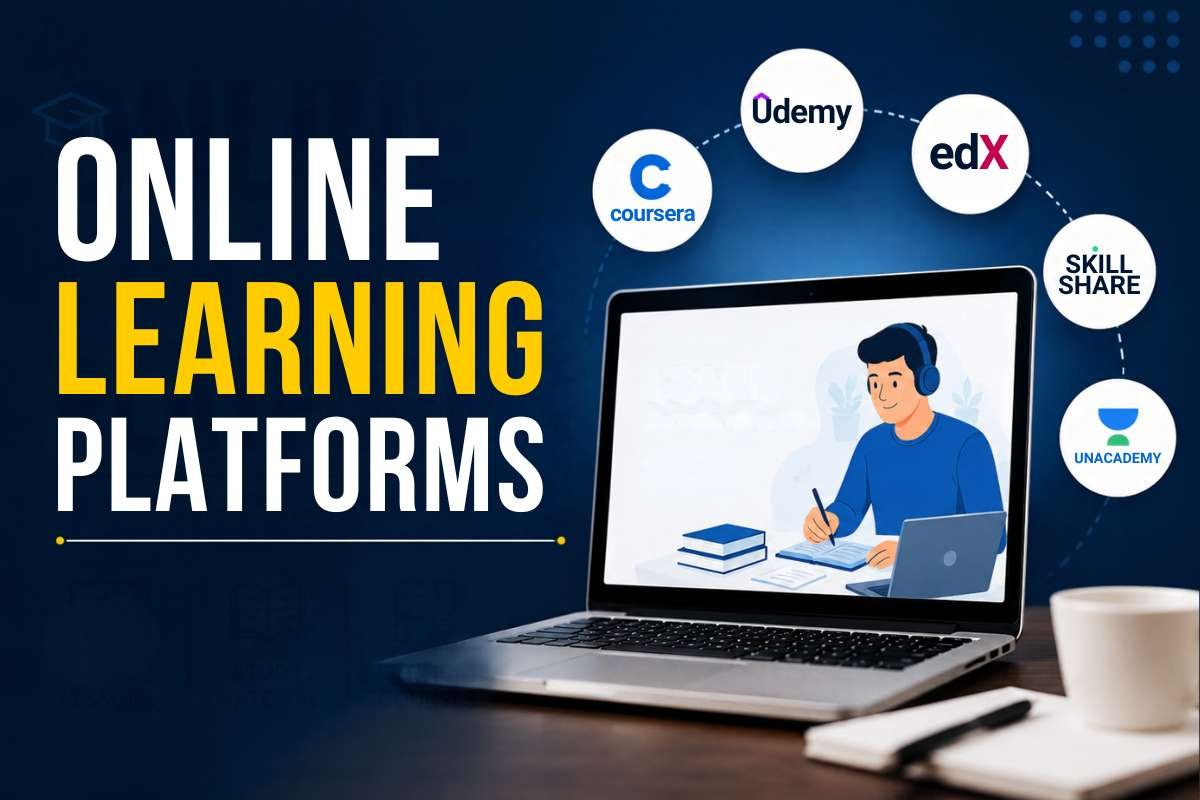
And part of that myth is online learning platforms. Today, we will be talking about them in quite detail, actually. So, let’s get into it.
Top 8 popular online learning platforms every student must know about
Let’s talk about the 8 popular learning platforms and their prices.
1. Coursera
It is one of those online learning platforms that continues to focus heavily on career development, professional certificates, and industry-relevant skills. Its 2026 catalog includes programs covering AI, data analytics, cybersecurity, project management, digital marketing, and other professional fields.
The platform has also expanded its AI-focused offerings. Its Google AI Professional Certificate, updated in February 2026, covers areas including generative AI, prompting, and responsible AI use.
Type: MOOC platform (university + industry partner courses, professional certificates, degree programs)
Pricing:
- Free courses available (audit mode)
- Paid certificates: approx. $39–$79/month (subscription-based)
- Professional Certificates: approx. $200–$600 total
- Degree programs: varies widely ($9,000+ depending on university)
2. Udemy
Udemy remains a broad online learning marketplace with courses across technology, business, personal development,t and creative skills.
In 2026, the platform has placed greater emphasis on AI skills. Udemy partnered with Google to launch its “Learn AI with Google” plan, giving learners access to Google’s AI Professional Certificate and related learning resources.
Its marketplace model also gives learners access to courses from instructors and subject-matter experts across many fields.
Type: Online course marketplace (instructor-led, on-demand video courses)
Pricing:
- Pay-per-course model (no subscription required for most courses)
- Typical course price: $10–$200 (frequent discounts)
- Udemy Business (for teams/companies): subscription-based, per-user pricing
3. LinkedIn learning
LinkedIn Learning continues to focus on professional development. Its courses cover business, technology, creative skills, ls and workplace capabilities.
Its connection with LinkedIn also makes it useful for professionals who want to connect learning with their career profiles and professional development.
For working professionals, the platform can be particularly useful for building skills alongside an existing career.
Type: Subscription-based professional learning platform (career-focused courses)
Pricing:
- Monthly subscription: approx. $29.99/month
- Annual subscription: approx. $239.88/year
- Often included free with some LinkedIn Premium plans or employer access
4. Khan academy
Khan Academy remains focused on free, structured educational learning, particularly across school and college-preparation subjects.
In 2026, the platform has expanded its classroom experience and continued developing Khanmigo as an AI-powered learning assistant.
Khan Academy is also expanding content across mathematics, English language arts, science,nce and social studies for the 2026–27 school year.
Type: Free educational platform (non-profit, school and self-learning focused)
Pricing:
- 100% free for all learners
- Optional donations support platform development
5. edX
edX is a global online learning platform founded by Harvard and MIT, offering university-level courses and professional certificates. It is widely used for academic learning, career advancement, and skill development in technical and business fields.
In 2026, edX continues to expand its MicroMasters and Professional Certificate programs, especially in AI, engineering, data science, and public health.
Type: MOOC platform (university-level courses, professional certificates, MicroMasters, online degrees)
Pricing:
- Free audit access for many courses
- Verified certificates: approx. $50–$300 per course
- Professional programs: $300–$1,500+
- Degree programs: varies by university partner
6. Skillshare
Skillshare is a globally popular platform focused on creative and practical skills. It is especially known for design, illustration, photography, video editing, writing, and entrepreneurship courses.
In 2026, Skillshare continues to emphasize project-based learning, where students complete hands-on creative projects rather than traditional exams.
Type: Subscription-based creative learning platform (project-based courses)
Pricing:
- Monthly subscription: approx. $32/month
- Annual subscription: approx. $168/year (varies with promotions)
- Free trial available for new users
7. Udacity
Udacity specializes in tech-focused “Nanodegree” programs designed in collaboration with industry companies. It is widely used for advanced learning in AI, programming, cloud computing, and data engineering.
In 2026, Udacity continues to focus on job-ready skills with a strong emphasis on real-world projects and career support.
Type: Career-focused tech education platform (Nanodegree programs)
Pricing:
- Nanodegree programs: approx. $200–$400/month
- Subscription bundles and scholarships may be available
- No fully free access (limited trial content only)
8. FutureLearn
FutureLearn is a UK-based global learning platform offering courses from universities and cultural institutions worldwide. It is known for its structured learning experience and strong academic partnerships.
In 2026, FutureLearn continues to expand short courses, microcredentials, and online degrees across healthcare, business, and digital skills.
Type: MOOC platform (university courses, microcredentials, online degrees)
Pricing:
- Free access to limited course content
- Unlimited access subscription: approx. $39–$59/month
- Microcredentials and degrees: varies by institution
What is changing in online learning in 2026?
The biggest change is the move from course consumption to skill development.
Learners increasingly want education that helps them solve real problems and improve their career prospects. Online learning platforms are responding with professional certificates, practical projects, AI tools, and industry-focused programs.
AI is also changing how learners interact with course material. Instead of simply watching a lesson, students can increasingly receive personalized explanations, practice support, and feedback.
However, technology does not replace the need for active learning. The World Economic Forum emphasizes that education systems must balance AI adoption with cognitive development, academic integrity, and human connection.
Benefits of online learning platforms
Online learning can provide several advantages:
- Flexible study schedules
- Access to global instructors
- Wide subject selection
- Career-focused programs
- Professional certificates
- Practical learning opportunities
- Personalized learning tools
- Lower barriers to education
- Opportunities for continuous skill development
These benefits make online learning useful for students, professionals, entrepreneurs, and lifelong learners.
Conclusion
Online learning platforms have evolved significantly by 2026. They now combine flexible courses with professional certificates, practical projects, personalized learning, and AI-assisted education.
The best platform depends on your learning goal, budget, preferred format, and desired career outcome. Instead of choosing a platform only because it has thousands of courses, focus on course quality, updated content, practical experience, and useful credentials.
Online learning works best when you treat it as an active skill-building journey rather than simply completing lessons. With the right platform and a clear learning goal, you can continue developing valuable skills at almost any stage of your career.