Mobile marketing strategies are no longer limited to running advertisements on smartphones. For many consumers, the smartphone is where discovery, search, social interaction, shopping, payments, customer service, and brand engagement happen.
The scale of the mobile ecosystem reflects that shift. GSMA estimates that mobile technologies and services generated $7.6 trillion globally in 2025, equivalent to 6.4% of global GDP. Meanwhile, global smartphones averaged 21.6 GB of mobile data consumption per month in 2025.
For marketers, the implication is straightforward: mobile experiences need to be fast, useful, personalised, and measurable across the entire customer journey.
In 2026, effective mobile marketing combines mobile SEO, social commerce, apps, messaging, AI, location-based experiences, first-party data, and privacy-conscious measurement rather than relying on a single channel. Bringing these elements together is at the heart of effective mobile marketing strategies, helping businesses create a consistent experience from initial discovery through conversion and retention.
What is mobile marketing?
Mobile marketing is the use of smartphones, tablets, and mobile-connected experiences to communicate with customers, build awareness, generate engagement, and drive conversions.
It can include:
- Mobile-optimized websites
- Search and social advertising
- Short-form video
- Mobile apps
- SMS and RCS messaging
- Push notifications
- Mobile wallets
- Location-based marketing
- Social commerce
- Mobile payments
- AI-powered personalization
- Augmented reality experiences
These activities can work individually, but they deliver greater value when coordinated as part of broader mobile marketing strategies that reflect how customers move between search, social media, websites, apps, messaging, and physical stores.
The most effective approach is not to treat these tactics independently. A customer might discover a brand through a social video, search for it on Google, visit its website, receive a personalized offer through a messaging channel, and complete the purchase through a mobile wallet.
That connected journey is what modern mobile marketing needs to support.
Why mobile marketing matters in 2026

Mobile has become the primary interface for many digital activities, making mobile optimisation a fundamental part of effective mobile marketing strategies rather than simply a design preference.
Google continues to use the mobile version of a website’s content for indexing and ranking through mobile-first indexing. Google completed its transition to mobile-first crawling for the remaining sites in July 2024.
At the same time, search itself is changing. Google has expanded AI Overviews to more than 200 countries and territories and introduced AI Mode, creating new ways for consumers to research products, services, and brands.
For marketers, this makes it important to build mobile marketing strategies around the full customer journey rather than optimise individual channels in isolation.
10 mobile marketing strategies for 2026 that will drive growth and engagement
1. Build a fast, mobile-first website
A mobile-friendly website is the foundation of almost every mobile marketing campaign and one of the priorities when building effective mobile marketing strategies.
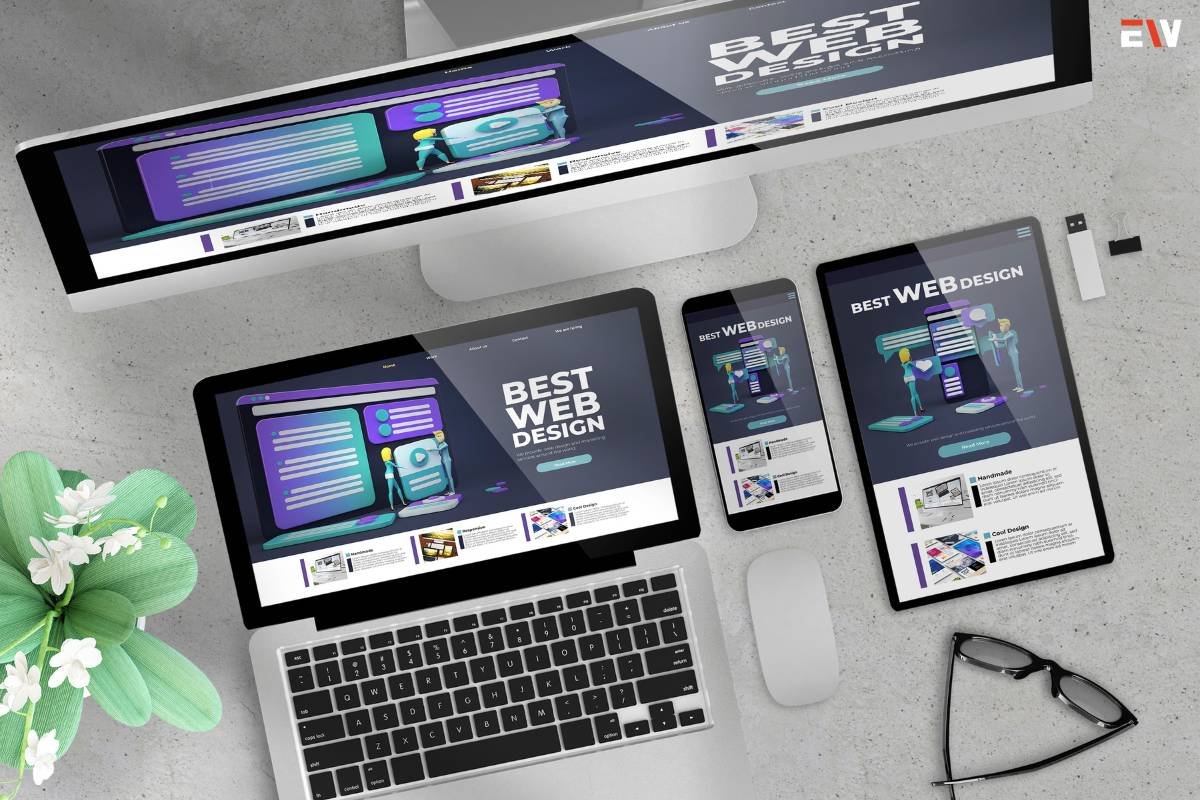
Responsive design ensures that content adapts to different screen sizes, but responsive layouts alone are not enough. Mobile users also expect fast loading, simple navigation, accessible buttons, and frictionless checkout.
Pay particular attention to Google’s Core Web Vitals:
| Metric | What it measures | Good target |
| LCP | Loading performance | 2.5 seconds or less |
| INP | Responsiveness to interaction | 200 ms or less |
| CLS | Visual stability | 0.1 or less |
Google recommends evaluating these metrics at the 75th percentile across users, with mobile performance measured separately from desktop where appropriate.
Practical improvements include compressing images, reducing unnecessary JavaScript, using caching and CDNs, minimizing intrusive pop-ups, and keeping checkout forms short.
2. Optimize mobile seo for traditional and AI search
Mobile SEO in 2026 extends beyond making pages responsive. It is an essential component of mobile marketing strategies, connecting search visibility with useful content, accessibility, and conversion.
Brands should create content that answers specific customer questions clearly and comprehensively. Important information should be available in text, supported by useful images or video where appropriate, and connected through logical internal links.
AI Overviews and AI Mode do not require a separate “AI SEO” system. Google states that the same foundational SEO practices remain relevant, including crawlability, internal linking, strong page experience, accessible text, and helpful, reliable content.
For mobile search, focus on:
- Search intent rather than keyword repetition
- Conversational queries
- Local intent
- Product and service comparisons
- Original insights and first-hand expertise
- Clear answers to common questions
- Structured content that is easy to understand
- Strong internal linking
- Descriptive titles and headings
The goal is to create content useful enough to earn visibility whether a consumer sees a traditional search result, AI-generated search experience, map result, or another search surface.
3. Use short-form video and social commerce

Mobile consumers increasingly encounter brands through visual feeds rather than traditional websites alone.
Short-form video can support every stage of the funnel, from awareness to product education and conversion. Product demonstrations, customer testimonials, tutorials, behind-the-scenes content, and creator partnerships can make products easier to understand in seconds.
For brands targeting mobile-first audiences, integrating these formats into mobile marketing strategies can shorten the path between content discovery and product consideration.
Social commerce can then shorten the path from discovery to purchase.
An effective mobile social strategy should therefore connect:
Video → Product discovery → Social proof → Product page → Checkout
Do not optimize only for views. Track saves, shares, profile visits, product interactions, assisted conversions, and revenue.
4. Upgrade SMS marketing to conversational messaging
SMS remains useful for time-sensitive communication, but marketers should also consider richer messaging channels such as RCS where supported.
RCS can provide branded business conversations, images, videos, product catalogues, suggested actions, and other interactive features. Google also notes that businesses need explicit consent to send RCS business messages.
Potential applications include:
- Order updates
- Appointment reminders
- Customer support
- Product recommendations
- Abandoned-cart reminders
- Promotions
- Delivery notifications
- Loyalty communications
The important shift is from broadcast messaging to permission-based, useful conversations, making conversational messaging a valuable component of customer-focused mobile marketing strategies.
5. Treat mobile apps as retention channels
Launching an app simply because competitors have one is rarely a strong mobile marketing strategy.
An app should provide a clear reason for customers to return. Loyalty programmes, personalized recommendations, faster checkout, exclusive content, saved preferences, and convenient customer service can create that value.
App marketing should cover the complete lifecycle:
Acquisition → Onboarding → Activation → Engagement → Retention → Re-engagement
App Store Optimization (ASO) is important at the acquisition stage, while push notifications, in-app messaging, and personalized experiences can support engagement.
Together, these activities can make apps an important retention layer within broader mobile marketing strategies, particularly for businesses with repeat-purchase or loyalty-driven models.
However, marketers should avoid excessive notifications. Every message should have a clear customer benefit.
6. Build a first-party data strategy

Privacy has changed how mobile marketers collect and activate customer information.
Apple requires apps that track users across companies’ apps and websites to request permission through App Tracking Transparency. Apple also requires developers to disclose relevant app data practices through App Store Connect.
This makes first-party data increasingly valuable.
As a result, first-party data has become an increasingly important foundation for privacy-conscious mobile marketing strategies, particularly when businesses want to personalise experiences without relying heavily on third-party tracking.
Useful sources include:
- Website interactions
- Purchases
- Loyalty programmes
- App activity
- Customer accounts
- Email subscriptions
- Explicit messaging preferences
- Customer service interactions
The objective should not be to collect as much information as possible. It should be to collect relevant information transparently and use it to improve the customer experience.
7. Personalize mobile experiences with AI
AI can move personalisation beyond basic demographic segmentation, making it possible to build more responsive mobile marketing strategies around customer behaviour, preferences, and intent.
Depending on the available data and consent, AI can help marketers identify patterns in browsing behaviour, recommend relevant products, generate content variations, predict customer intent, and support conversational customer service.
For example, an ecommerce brand could use behavioural signals to recommend products based on browsing and purchase history, while a travel company could dynamically present destinations based on stated preferences.
However, personalization should remain explainable and privacy-conscious. AI should make the experience more relevant, not make customers feel monitored.
8. Strengthen local and location-based marketing
Mobile devices create a strong connection between digital intent and physical location.
This connection makes local discovery an important consideration when developing mobile marketing strategies for businesses with physical locations or geographically specific audiences.
Local mobile marketing can combine:
- Google Business Profile optimization
- Local search content
- Reviews and ratings
- Maps visibility
- Location-specific landing pages
- Local inventory information
- Geotargeted advertising
- Store visit campaigns
- QR codes
- Location-aware offers
For businesses with physical locations, the objective is to reduce the gap between “I need this” and “Where can I get it?”
Location-based targeting should always respect user permissions and applicable privacy requirements.
9. Use mobile wallets and digital loyalty

Mobile wallets can turn a smartphone into an ongoing customer-retention channel.
Businesses can use wallet-based passes for:
- Loyalty cards
- Coupons
- Memberships
- Event tickets
- Boarding passes
- Promotional offers
Unlike a one-time advertisement, a wallet pass can remain accessible on the customer’s device and provide a useful touchpoint after the initial interaction.
That ongoing accessibility gives mobile wallets a particularly useful role in mobile marketing strategies focused on retention rather than one-time acquisition.
For retail and service businesses, mobile wallets can work particularly well when combined with loyalty programmes and personalized offers.
10. Create interactive mobile experiences
Mobile devices provide opportunities that conventional desktop marketing cannot always replicate.
AR can help customers visualize furniture in their homes, try virtual products, or interact with branded experiences. QR codes can connect physical locations with digital content. Gamification can encourage participation in loyalty programmes, promotions and educational campaigns.
The technology should serve a customer need rather than exist simply because it is new. Within effective mobile marketing strategies, interactive features should have a clear purpose, such as improving product understanding, engagement, or conversion.
A useful test is:
Does the interactive experience make the product easier to understand, the purchase easier to complete, or the relationship with the brand more valuable?
If not, a simpler mobile experience may be more effective.
Mobile marketing best practices for 2026: 7 ways to boost results
The strongest mobile marketing strategies are not necessarily the ones with the most channels. They are the ones that remove friction, provide value at the right moment, and make it easy for customers to take the next step.
1. Keep the user journey short
Every additional tap, form field, or unnecessary page can introduce friction.
Make important actions obvious:
- Buy
- Book
- Call
- Subscribe
- Download
- Get directions
- Contact support
2. Design for one-handed use
Place important navigation and interaction elements where users can comfortably reach them. Buttons should be sufficiently large, text should remain readable, and forms should use appropriate mobile input types.
3. Make checkout frictionless
Allow customers to use mobile payment options, saved information, and guest checkout where appropriate. Avoid forcing users through unnecessary account-creation steps.
4. Use personalization carefully
Personalization should provide value. Recommendations, reminders, and offers should reflect customer interests without becoming intrusive.
5. Test on real devices and networks
A website that performs well on a high-end device and fast Wi-Fi may behave very differently on an older phone or slower mobile connection.
Test across:
- Different screen sizes
- iOS and Android
- Older and newer devices
- Wi-Fi and mobile networks
- Different browsers
- Accessibility settings
6. Measure business outcomes
Do not judge mobile marketing strategies by impressions alone. Their effectiveness should ultimately be measured by how well they contribute to meaningful business outcomes.
Track metrics such as:
| Objective | Useful metrics |
| Awareness | Reach, video completion, branded search |
| Engagement | CTR, saves, shares, session engagement |
| Acquisition | Leads, installs, CAC |
| Conversion | Conversion rate, revenue, ROAS |
| Retention | Repeat purchases, churn, active users |
| Messaging | Delivery, engagement, conversion, opt-outs |
| App | Activation, retention, uninstall rate |
| Local | Calls, directions, store visits |
Where possible, combine platform reporting with first-party analytics and controlled experiments rather than relying on a single attribution model.
7. Privacy and consent should be part of the strategy
Privacy should not be treated as a legal footnote.
Apple’s tracking framework, evolving browser protections, and regional privacy regulations mean mobile marketers need to understand exactly what data they collect, why they collect it, and how it is shared.
Chrome’s approach to third-party cookies has also evolved. Google announced in 2025 that it would maintain its existing approach of allowing users to choose their preference regarding third-party cookies rather than introducing the previously proposed standalone prompt.
For marketers, this reinforces the importance of:
- Consent management
- First-party data
- Data minimization
- Clear privacy disclosures
- Permission-based messaging
- Privacy-safe analytics
- Transparent personalization
Building that trust into mobile marketing strategies from the beginning can help businesses create experiences that are both more sustainable and more aligned with customer expectations.
5 mobile marketing trends to watch in 2026

Several developments are now influencing how businesses plan and refine their mobile marketing strategies, particularly across search, AI, messaging, measurement, and richer mobile experiences.
1. AI-Powered search and discovery
AI Overviews and AI Mode are changing how consumers formulate queries and interact with search results. Google’s own data shows AI Overviews have expanded widely, while Google has reported increased Search usage for query types that trigger AI Overviews in major markets including India and the US.
Brands should therefore prioritize original, useful content and strong digital authority rather than attempting to optimize for a hypothetical standalone “GEO” formula.
For mobile marketing strategies, the practical implication is to create authoritative content that remains useful across traditional search results, AI-powered answers, maps, product results, and other discovery surfaces.
2. AI-Assisted campaign optimization
AI is increasingly useful for audience analysis, creative testing, personalization, forecasting, and campaign optimization.
The strongest approach is human-led: marketers define objectives, constraints, and brand standards while AI accelerates analysis and experimentation.
3. RCS and rich messaging
Messaging is becoming more interactive. RCS can combine the reach of messaging with richer content and action-oriented experiences where supported.
4. Privacy-first measurement
As user-level tracking becomes more constrained, marketers will increasingly rely on first-party data, aggregated measurement, experimentation and incrementality testing.
5. 5G, edge computing and richer experiences
5G remains an important infrastructure layer for mobile experiences, particularly where high bandwidth and low latency support video, gaming, AR and other data-intensive applications.
GSMA expects mobile’s economic contribution to continue growing as 5G, AI and other digital technologies expand.
Rather than treating 5G itself as a marketing tactic, businesses should focus on the experiences that better connectivity makes possible.
A practical mobile marketing framework that turns phone users into customers
Effective Mobile Marketing Strategies can be organised into five connected stages:
| Attract | Use search, social video, advertising, creators, and local discovery. |
| Engage | Deliver fast websites, useful content, personalized experiences, and interactive formats. |
| Convert | Simplify checkout, booking, lead forms, and mobile payments. |
| Retain | Use apps, loyalty programmes, messaging, email, wallet passes, and personalized offers. |
| Measure and Improve | Monitor customer behaviour, test campaigns, and optimize based on business outcomes. |
This framework prevents mobile marketing from becoming a collection of disconnected tactics.
Conclusion:
The Mobile marketing strategies in 2026 are no longer simply about creating a responsive website or running advertisements on smartphones. They are about designing an end-to-end customer experience around the way people actually use mobile devices. It is about designing an end-to-end customer experience around the way people actually use mobile devices.
The strongest strategies combine fast mobile experiences, AI-powered discovery, social commerce, apps, RCS and other messaging channels, local search, mobile wallets, personalization, and privacy-conscious data practices.
The fundamentals remain straightforward: make the experience useful, reduce friction, respect customer choices, and measure what contributes to business growth.
As mobile, AI, and digital commerce continue to converge, businesses that treat mobile as a core part of their customer experience, not just another marketing channel, will be better positioned to compete in 2026 and beyond.
FAQs:
1. What are the most effective mobile marketing strategies in 2026?
The most effective strategies include mobile-first website optimization, AI-powered personalization, short-form video, social commerce, SMS and RCS messaging, mobile apps, local search, mobile wallets, and privacy-conscious first-party data strategies.
2. Why is mobile SEO important for mobile marketing?
Mobile SEO helps businesses reach customers who search, compare, and make purchasing decisions on smartphones. A fast, accessible mobile experience, strong content, clear navigation, and good Core Web Vitals can support both search visibility and conversions.
3. How is AI changing mobile marketing in 2026?
AI is changing how consumers discover brands and how marketers personalize campaigns. Businesses can use AI for content variations, product recommendations, customer service, audience analysis, and campaign optimization, while AI-powered search experiences are also changing how customers find information.
4. Is SMS marketing still effective in 2026?
Yes. SMS remains useful for time-sensitive and permission-based communications such as order updates, appointment reminders, offers, and customer notifications. Marketers can also consider richer channels such as RCS where they are available and supported.
5. How can businesses measure the success of mobile marketing?
Businesses should measure mobile marketing against specific objectives using metrics such as conversion rate, customer acquisition cost, revenue, return on ad spend, app retention, repeat purchases, messaging engagement, and customer lifetime value. Privacy-safe analytics, first-party data, and controlled experiments can provide a more reliable picture of campaign performance.