
Good strategy is not simply about having ambitious goals. It is about making informed choices about where to compete, how to compete, what resources to use, and how to measure progress.
That becomes difficult when markets change quickly. Customer expectations shift, technology creates new competitors, regulations evolve, and established business models can suddenly become less attractive.
This is where a Strategic management framework becomes useful.
A framework turns a complicated business problem into a structured analysis. It helps leadership teams organize information, challenge assumptions, identify opportunities, and connect strategic choices with execution.
However, no single framework can answer every strategic question. SWOT can show where a company stands, while Porter’s Five Forces can explain the competitive pressure in an industry. PESTLE can reveal wider external forces, while VRIO can help determine whether internal resources can create a lasting advantage.
The strongest strategic planning process therefore uses frameworks as decision-making tools, not as boxes to fill in.
What is a strategic management framework? Why does it matter?
A Strategic management framework is a structured model that helps an organization analyze its internal capabilities, external environment, competitive position, growth opportunities, and strategic priorities.
In simple terms, it gives leaders a way to answer questions such as:
- Where are we now?
- What is changing around us?
- What are we good at?
- Where are we vulnerable?
- What opportunities should we pursue?
- How can we compete more effectively?
- What should we prioritize?
- How will we know whether the strategy is working?
The value comes from creating a common way of thinking. Leaders also need strong strategic management skills to interpret information, make decisions, communicate priorities, and guide execution.
Michael Porter’s Five Forces model, for example, focuses on industry structure and explains competition through rivalry, buyers, suppliers, substitutes, and new entrants. Harvard Business School describes it as a way to understand the competitive forces that influence how economic value is divided within an industry.
A strategic framework also supports better decision-making because it encourages teams to look beyond immediate problems. Roger Martin has argued that strategy becomes difficult when organizations focus too heavily on individual analytical tools instead of the choices that strategy ultimately requires.
For businesses building a broader strategic planning process, this Strategic management framework should work alongside clear goals, implementation plans, performance measures, and regular reviews.
How many strategic management frameworks are there?
There is no universally accepted total number of strategic management frameworks.
Business schools, consultants, researchers, and organizations have developed numerous models for different strategic questions. Rather than trying to memorize a fixed number, it is more useful to group the major frameworks according to the problem they solve.
Different strategic management models serve different purposes. Some focus on the external environment, some examine internal capabilities, while others help organizations choose growth options, align teams, or measure execution.
The levels of strategic management also influence which framework is most useful because corporate-level, business-level, and functional-level decisions can require different strategic perspectives.
Here are 10 widely used frameworks:
| Framework | Main purpose | Best used for |
| SWOT Analysis | Assess internal and external factors | Overall strategic diagnosis |
| PESTLE Analysis | Analyze the macro environment | Market and external scanning |
| Porter’s Five Forces | Understand industry competition | Competitive analysis |
| VRIO Framework | Evaluate strategic resources | Competitive advantage |
| Ansoff Matrix | Identify growth options | Expansion and growth |
| BCG Matrix | Manage product/business portfolios | Resource allocation |
| Value Chain Analysis | Examine activities that create value | Operational and competitive advantage |
| McKinsey 7S | Align organizational elements | Organizational change |
| Balanced Scorecard | Translate strategy into measures | Strategy execution |
| Blue Ocean Strategy | Identify less-contested opportunities | Innovation and market creation |
1. SWOT analysis: Start by understanding your position
SWOT stands for Strengths, Weaknesses, Opportunities, and Threats. Strengths and weaknesses generally describe internal factors, while opportunities and threats focus on external conditions.
For example, a growing software company might identify:
- Strength: strong product development team
- Weakness: limited international sales network
- Opportunity: growing demand in overseas markets
- Threat: larger competitors entering its niche
SWOT is useful when leadership wants a broad picture before making a strategic decision. It is particularly helpful at the beginning of a planning process.
2. PESTLE analysis: Look beyond the company
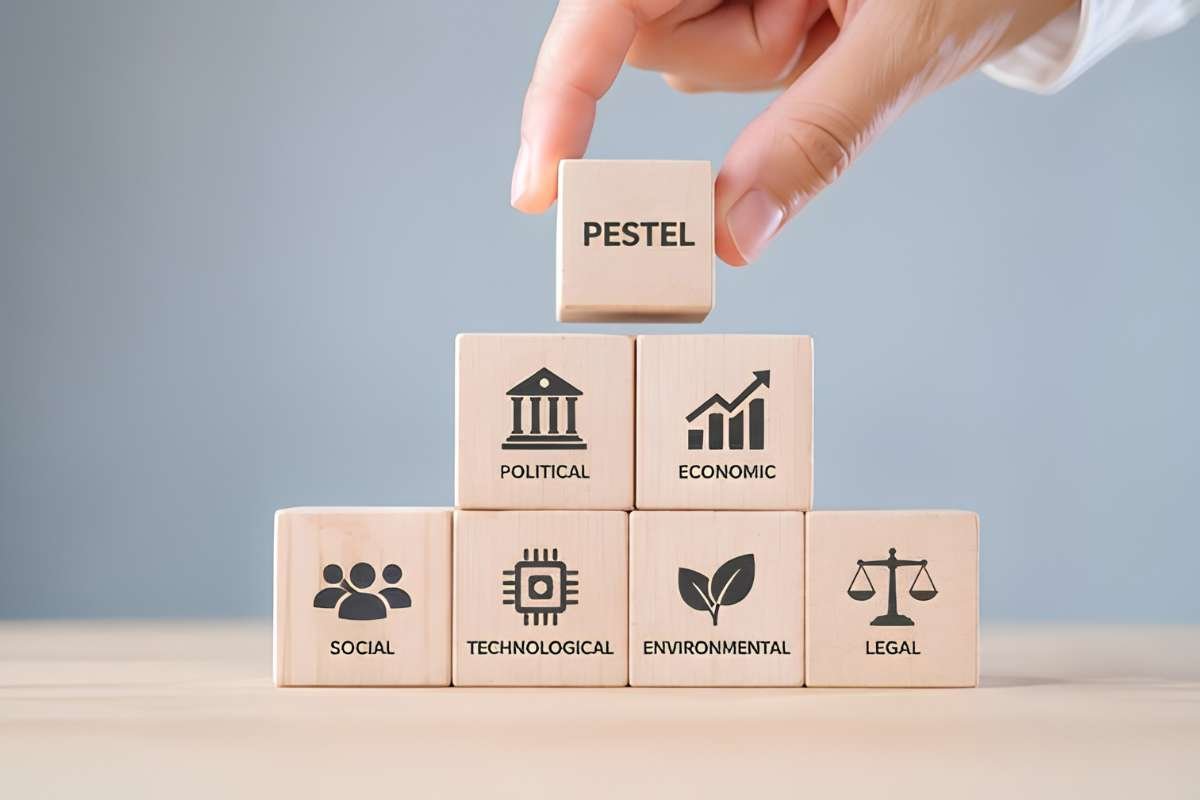
PESTLE examines six external factors:
Political, Economic, Social, Technological, Legal, and Environmental.
Suppose a company wants to enter a new country. PESTLE can help it examine government policies, economic conditions, consumer behavior, technology adoption, legal requirements, and environmental expectations.
This makes PESTLE especially useful for market entry, international expansion, risk assessment, and long-term planning.
3. Porter’s five forces: Understand the competition before you enter
Porter’s model examines:
- Competitive rivalry
- Threat of new entrants
- Bargaining power of buyers
- Bargaining power of suppliers
- Threat of substitutes
The framework was introduced by Michael Porter and remains a major tool for understanding industry structure.
For example, a company considering entry into a crowded industry can use Five Forces to determine whether established competitors, powerful suppliers, price-sensitive customers, or substitutes could make the market difficult to profit from.
Harvard Business School notes that the framework can help organizations assess industry attractiveness and understand how trends may affect competition.
4. VRIO: Does your advantage really give you an edge?
VRIO asks whether a resource or capability is:
- Valuable
- Rare
- Inimitable
- Organized to capture value
A company might have proprietary technology, a trusted brand, exclusive data, or an unusually strong distribution network. VRIO helps determine whether that resource creates only temporary value or can support a stronger competitive position.
5. Ansoff matrix: Where should growth come from?
The Ansoff Matrix considers four growth options:
- Market penetration
- Market development
- Product development
- Diversification
For example, selling an existing product to existing customers is market penetration. Taking that product into a new geographic market is market development.
This framework helps leaders compare growth choices and understand the relative risk associated with each option.
6. BCG matrix: Which products deserve more investment?
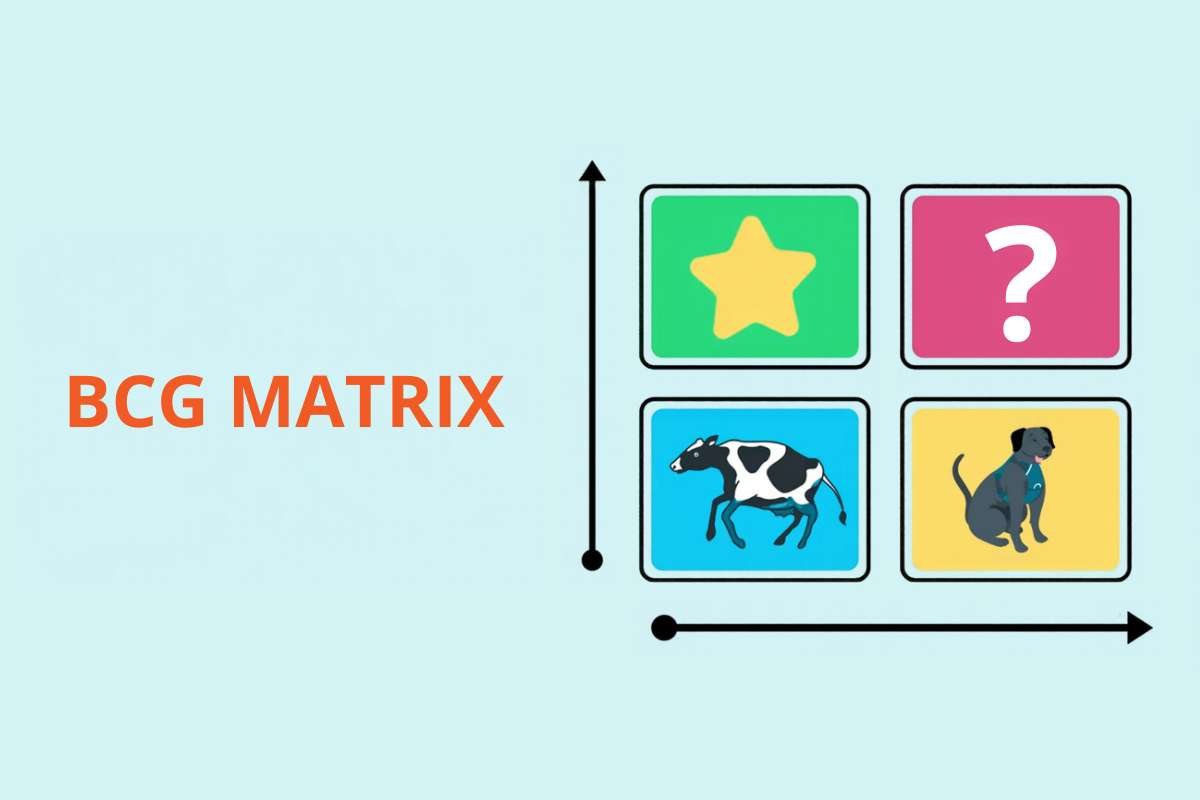
The BCG Matrix categorizes products or business units as:
- Stars
- Cash Cows
- Question Marks
- Dogs
Its purpose is portfolio management.
A diversified company can use it to decide where to invest, where to maintain a business, and where resources may be better allocated elsewhere.
The framework is most useful when an organization manages multiple products, brands, or business units rather than a single offering.
7. Value chain analysis: Where is value actually created?
Value Chain Analysis examines the activities involved in producing and delivering a product or service. It encourages companies to look closely at areas such as operations, logistics, marketing, sales, technology, procurement, and customer service.
The question is simple: Which activities create meaningful customer value, and which activities create unnecessary cost or delay?
This can reveal opportunities to improve efficiency or create differentiation.
8. McKinsey 7S: Are your organization’s pieces working together?
The McKinsey 7S framework examines seven elements:
- Strategy
- Structure
- Systems
- Shared values
- Skills
- Staff
- Style
It is particularly useful during organizational transformation, mergers, restructuring, or major strategic shifts.
A company may have an excellent strategy on paper but struggle because its systems, skills, leadership style, or organizational structure do not support that strategy.
9. Balanced scorecard: Turn strategy into measurable action
The Balanced Scorecard connects strategy with performance measurement.
It traditionally considers four perspectives:
- Financial performance
- Customer perspective
- Internal processes
- Learning and growth
This prevents organizations from measuring strategy only through revenue or profit. A company can also track customer satisfaction, operational improvements, employee capability, and other indicators that support long-term performance.
10. Blue ocean strategy: Can you escape direct competition?
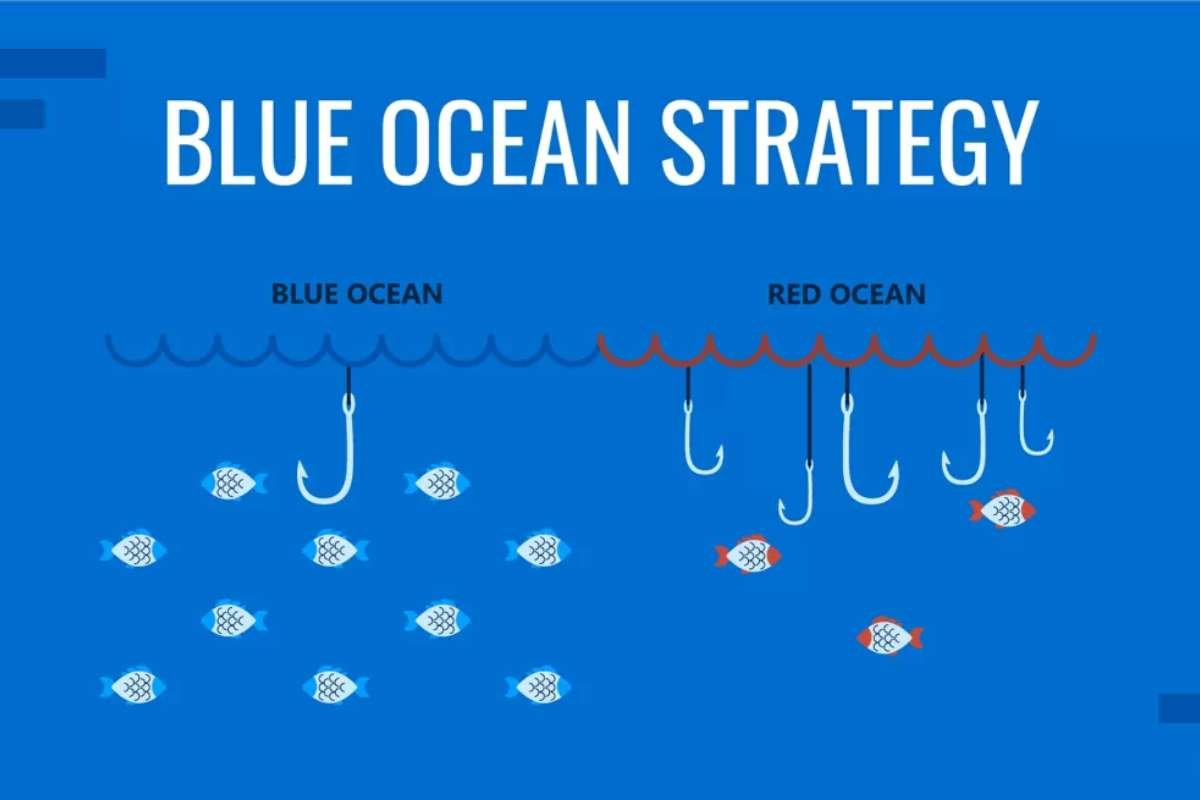
Blue Ocean Strategy focuses on creating new market space rather than fighting competitors in an overcrowded market.
Instead of asking, “How can we beat our competitors?”
leaders ask: “How can we create an offering that changes the basis of competition?”
This approach can be valuable for companies seeking innovation, differentiation, or new customer segments.
SWOT vs Porter’s Five Forces vs PESTLE: When should you use each?
These three frameworks are often confused because all three support strategic analysis. However, they answer different questions.
| Framework | Core question | Best time to use it |
| SWOT | What is our current strategic position? | Overall business diagnosis |
| Porter’s Five Forces | How attractive and competitive is this industry? | Industry and competitors analysis |
| PESTLE | What external forces could affect us? | Market scanning and expansion |
Think of them as three different lenses.
Use PESTLE first when you need to understand major external changes.
Use Porter’s Five Forces when you need to understand the structure and profitability pressures of an industry.
Use SWOT when you want to bring internal capabilities and external conditions together into one strategic picture.
For example, a company planning international expansion could use PESTLE to study the target country, Porter’s Five Forces to assess the industry, and SWOT to combine those findings with its own strengths and weaknesses.
That sequence makes the analysis more useful than completing three disconnected templates.
Which strategic frameworks do strategists actually use?
Experienced strategists choose frameworks based on the business decision they need to make rather than relying on one tool.
These frameworks are also strategic management tools rather than rigid formulas. Their usefulness depends on the quality of the information being analyzed and the business decision being considered.
1. Apple: Strategy through a strong ecosystem
Apple’s strategy connects hardware, software, services, developers, and customers into one ecosystem. Its large device base and growing services business show how resources, customer relationships, and ecosystem strength can support competitive advantage.
Businesses studying Apple could use VRIO to assess its resources, Value Chain Analysis to understand how it creates value, and Porter’s Five Forces to examine competitive pressure.
2. Porter’s five forces: Understand competition
Porter’s Five Forces looks beyond direct competitors. It examines buyers, suppliers, new entrants, substitutes, and industry rivalry.
A growing market does not always mean strong profits. High competition, powerful suppliers, or price-sensitive customers can reduce profitability. This makes industry analysis important before major investments.
3. SWOT: Turn analysis into action
SWOT connects a company’s strengths and weaknesses with external opportunities and threats.
For example, PESTLE may identify changing regulations, while Porter’s Five Forces may reveal strong competition. SWOT can bring these insights together and help leaders decide whether to expand, delay entry, invest, partner, change the product, or target a new customer segment.
The goal of a Strategic management framework is not to create attractive diagrams. It is to turn research into clear, informed business decisions.
Why frameworks should work together
A strong strategic analysis can follow a simple chain:
| External environment → Industry → Internal capabilities → Strategic choice → Execution → Measurement |
For example:
| PESTLE → Porter’s Five Forces → VRIO/SWOT → Ansoff → Balanced Scorecard |
This does not mean every company needs all six. The sequence simply shows how different tools can answer different questions. The most important principle is to start with the business decision, then choose the framework.
Do not start with a framework and force the business problem into it.
How to choose the right strategic management framework
Choose the framework based on your strategic goal:
- Market entry or external changes: Use PESTLE and Porter’s Five Forces.
- Internal strengths and capabilities: Use VRIO and Value Chain Analysis.
- Business growth: Use the Ansoff Matrix.
- Multiple products or business units: Use the BCG Matrix.
- Strategy implementation: Use McKinsey 7S and the Balanced Scorecard.
The right Strategic management framework is the one that best fits your business decision, not simply the most popular one.
Conclusion:
A Strategic management framework helps businesses turn complex information into clear strategic management decisions. From SWOT and PESTLE to Porter’s Five Forces, VRIO, and Ansoff, each framework serves a different purpose.
There is no one-size-fits-all approach. The best results come from choosing the right framework, using reliable information, and turning insights into practical action.
FAQs:
1. What is a Strategic Management Framework?
A Strategic management framework is a structured tool that helps businesses analyze challenges, opportunities, competition, and capabilities to make better decisions.
2. What are the main strategic management frameworks?
Popular frameworks include SWOT, PESTLE, Porter’s Five Forces, VRIO, Ansoff Matrix, BCG Matrix, and McKinsey 7S.
3. Which Strategic Management Framework is best?
There is no single best framework. The right choice depends on the business goal, such as growth, competition, market analysis, or strategy execution.
4. Is SWOT a Strategic Management Framework?
Yes. SWOT helps businesses assess their strengths, weaknesses, opportunities, and threats to understand their overall strategic position.
5. What is the difference between SWOT and PESTLE?
SWOT examines internal and external factors, while PESTLE focuses on external political, economic, social, technological, legal, and environmental factors.