Key Takeaways
- South Korean investors shifted heavily back into U.S. stocks after the KOSPI’s sharp decline.
- The KOSPI’s worst monthly loss since 2008 weakened confidence in domestic markets.
- Analysts warn renewed capital outflows could limit sustained gains for the South Korean won.
South Korean retail investors are returning to U.S. stocks after the KOSPI posted its steepest monthly decline since 2008, weakening government efforts to boost domestic investment and raising renewed concerns over capital outflows and pressure on the won.
South Korean retail purchases of U.S. stocks reached $4.6 billion in July, as Korean retail investors ramped up buying, according to Korea Securities Depository data. The figure marked the highest monthly total in six months and exceeded the $2.7 billion monthly average recorded throughout 2025.
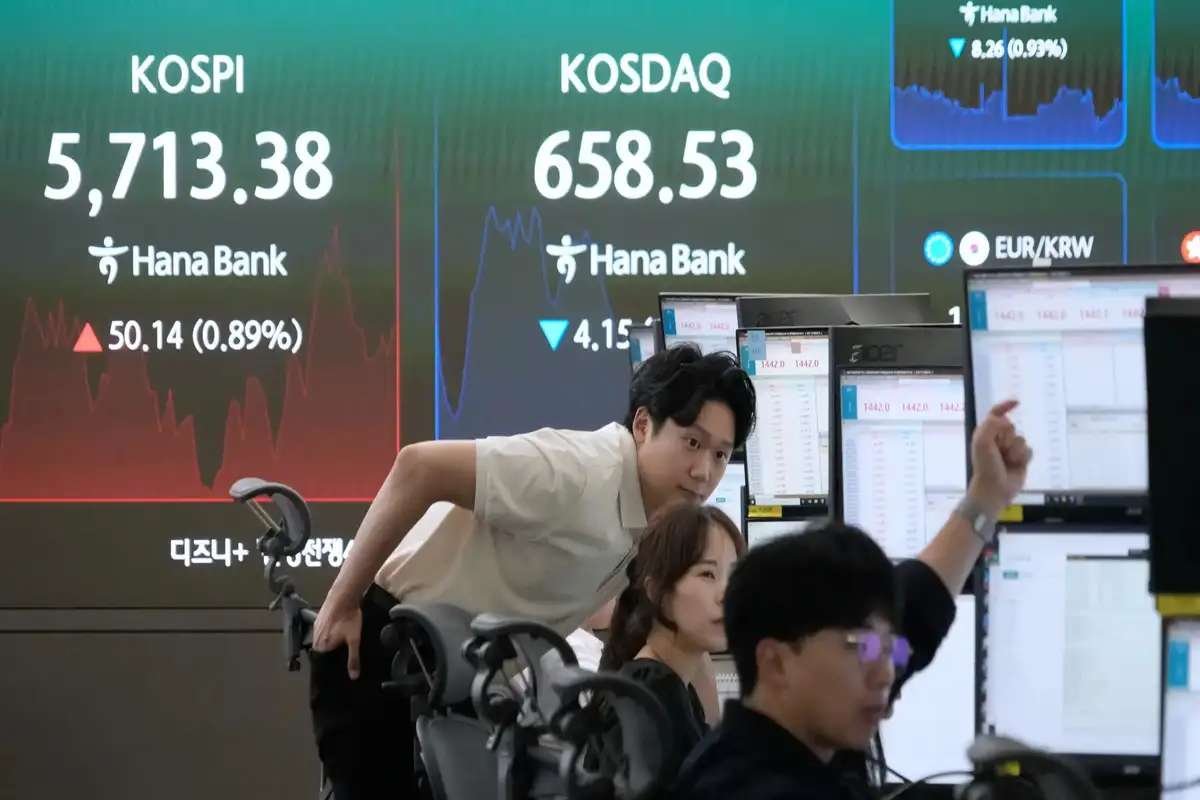
Reuters calculations showed retail investors bought more U.S. stocks than domestic shares for the first time since February. The shift followed a sharp decline in the benchmark KOSPI, which has fallen 33% from its June peak, erasing investor confidence after months of gains fueled by artificial intelligence-related optimism.
Market losses weigh on government investment drive
The reversal threatens a government campaign designed to encourage investors to move money back into South Korean markets. Authorities introduced tax incentives earlier this year for investors who sold overseas holdings and reinvested in domestic equities.
Small Korean retail investors, commonly known as “ants” in South Korea because of their collective trading behavior, had briefly increased local investments during the market rally, weighing the usual reasons investors choose to hold stocks against the growing appeal of overseas markets. However, the recent sell-off has renewed interest in overseas markets.
“Outflows slowed because the domestic market was strong, but they re-accelerated as the KOSPI collapsed, fanning investor views that the U.S. is the right decision after all,” said Kwon Ah-min, a foreign exchange analyst at NH Investment Securities in Seoul. “They are tired of the domestic market.”
The market downturn has been led by major semiconductor companies. Samsung Electronics and SK Hynix accounted for 76% of the KOSPI’s 2,257.8 trillion won ($1.59 trillion) decline in market value as investors questioned the durability of AI-related spending and growing competition from Chinese chipmakers.
Volatility also increased because of heavy trading in leveraged exchange-traded funds linked to semiconductor stocks.
Currency gains may encourage more overseas buying
Analysts said the stronger South Korean won could further encourage overseas investments. The currency gained 8% in July, its strongest monthly performance since November 2022, partly after SK Hynix repatriated proceeds from a $26.5 billion fundraising.
A stronger won reduces the cost of buying foreign assets while expectations that U.S. interest rates will remain relatively attractive continue supporting investment in American markets.
Bank of America analysts warned the trend could continue if South Korean stocks remain weaker than their U.S. counterparts.
“If Korean equities continue to lag their U.S. counterparts, we worry that domestic retail outflows could re-emerge,” the analysts wrote in a research note. They added that sustained appreciation of the won would become increasingly difficult if portfolio outflows continue.
Signs of weakening domestic participation are already emerging. Retail deposits in government-backed Re-shoring Investment Accounts recorded their first monthly decline in July, according to Korea Financial Investment Association data.
At the same time, deposits in domestic stock trading accounts fell to 102.8 trillion won, their lowest level since mid-February and down sharply from a record 140 trillion won in early June.
Although some investors continue buying Korean-focused investment funds, larger amounts are flowing into U.S. stocks and funds tied to Wall Street, which has continued reaching new highs despite heightened volatility in South Korea’s equity market, a shift that reports could deepen if domestic shares keep lagging.