How Sterling Uses a Proprietary Tool to Build Stronger Leaders and Stronger Companies
In most executive circles, leadership is discussed constantly. It is analyzed in books, presented in workshops, and debated in boardrooms. Yet in practice, many leadership conversations remain frustratingly abstract. Leaders talk about culture, resilience, accountability, and growth, but often without a disciplined framework for diagnosing where their organizations are strong, where they are vulnerable, and what leadership capabilities must be strengthened next.
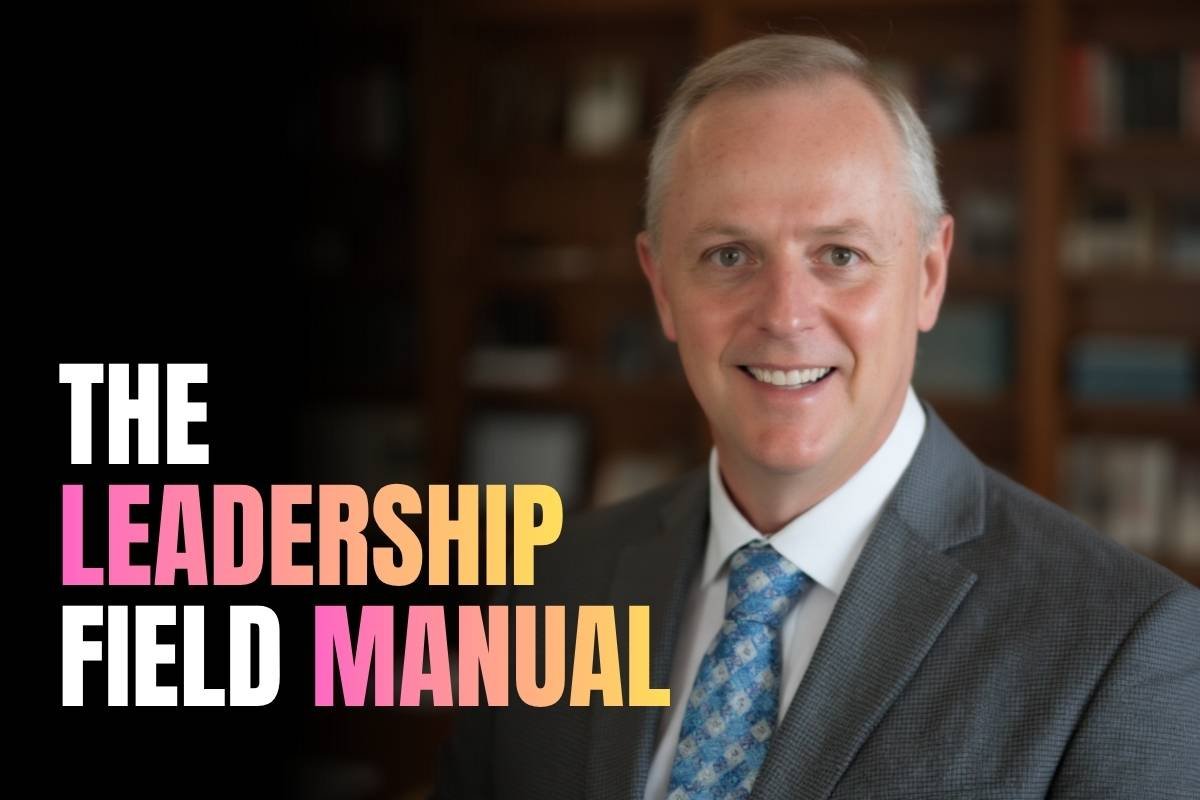
That is where the Leadership Field Manual plays an important role within a Sterling Peer Group.
The Leadership Field Manual is not a public handbook or a generic leadership resource. It is a proprietary Sterling tool available only to Sterling members and is used as one of the core references that guide group discussions, leadership reflection, and organizational diagnosis. It is practical by design. Rather than offering leadership theory in isolation, it helps members interpret real issues within their businesses and think more clearly about how to strengthen the organization’s leadership foundation as a whole.
That practicality is rooted in experience. The Manual was authored by Sterling Chairs Wayne Cole and Glenn Stang, whose combined leadership experience exceeds 75 years. That matters. The Manual does not read like an academic exercise. It reflects the judgment of seasoned leaders who understand what happens when organizations grow, come under pressure, lose clarity, outgrow old habits, or need stronger leadership discipline to move forward.
Within Sterling, the Leadership Field Manual is one of the tools that help transform peer-group conversations from informal exchanges into meaningful leadership development.
More Than Discussion for Discussion’s Sake
A Sterling Peer Group is built on the idea that experienced leaders can help one another think better, lead better, and build better organizations. But that kind of value does not come simply from putting accomplished executives in a room together. It depends on the quality of the discussion and the structure supporting it.
Without a shared framework, peer-group conversations can drift into anecdotes, opinions, or encouragement without sufficient rigour. Members may leave feeling supported, but without a disciplined way to interpret what they are facing or what leadership response is required.
The Leadership Field Manual helps prevent that.
Because it serves as a shared reference point, it gives members a common language for examining leadership issues. It helps them move quickly beyond surface symptoms and into the underlying dynamics of the problem. A challenge that first appears to be an operations issue may actually be a leadership clarity issue. A concern about execution may reveal weak accountability. A cultural problem may turn out to be a management behaviour problem. A growth challenge may expose that the business has outgrown the leadership habits that once served it well.
In that sense, the Manual sharpens the group’s work. It does not replace the experience in the room. It strengthens how that experience is applied.
A Tool for Lifting the Leadership Foundation
One of the most useful concepts in the Leadership Field Manual is its distinction between good practice, best practice, and future practice.
This is far more than a semantic exercise. It provides leaders with a practical lens for evaluating their organization’s maturity.
Many companies operate in accordance with what could fairly be called good practice. The fundamentals are in place. The organization functions reasonably well. Roles are generally understood, decisions get made, and the business performs adequately. But adequate is not the same as mature. Good practice may be enough for today while still leaving the organization underprepared for tomorrow.
Best practice raises the bar. It reflects greater discipline, stronger repeatability, better systems, and more consistent leadership behaviour. In areas where an organization has reached best practice, leadership no longer relies solely on individual effort or heroic intervention. Stronger habits and standards are in place, producing more dependable performance.
Future practice pushes the conversation even further. It invites leadership teams to consider the capabilities, behaviours, and structural maturity required for the next stage of the business. It asks a critical question: what will this organization need from its leaders before the need becomes urgent?
That is an especially valuable discipline in a Sterling Peer Group. It helps members avoid static thinking. The issue is not merely whether something works now. The deeper issue is whether the organization is building the leadership foundation required for greater scale, greater complexity, greater succession depth, or greater external volatility.
This framework helps leadership teams identify where they need to lift the organization as a whole. It allows members to ask sharper questions. Where are we merely adequate? Where are we genuinely strong? Where are we underdeveloped for the future? Which areas of the company are being held together by the founder or a few key people rather than by mature leadership systems?
By drawing these distinctions, the Manual helps peer-group conversations become more diagnostic and more forward-looking.
Building Leadership Maturity Across the Organization
A central contribution of the Leadership Field Manual is to increase the leadership maturity of member organizations.
Leadership maturity is not just a matter of tenure or experience. It is visible in how leaders think, how they handle pressure, how they communicate expectations, how they make decisions, how they develop others, and how consistently they align action with organizational purpose. Mature leadership produces steadier organizations. Immature leadership, even when energetic or charismatic, often creates inconsistency, confusion, and cultural drift.
Many organizations reach a plateau because their leaders continue to operate from habit, intuition, or force of personality rather than from disciplined leadership practice. That may work in the early stages of a business, but it rarely scales well. As the company grows, the cost of vague accountability, weak delegation, inconsistent communication, and underdeveloped managers becomes harder to ignore.
The Leadership Field Manual helps members see that clearly.
One of its most practical features is its definition of 21 specific leadership tradecraft skills that leaders need to develop to meet the organization’s evolving needs. This is important because leadership development often becomes too vague to be useful. Leaders are told to be more strategic, more decisive, or more empowering, but without a concrete structure for understanding what capabilities actually need work.
The Manual brings specificity to that challenge. It identifies leadership as a set of observable, trainable, and applicable skills. That makes it easier for members not only to assess themselves but also to think more rigorously about the capability of their executive team and their broader management group.
Within a Sterling Peer Group, this can substantially improve the quality of the conversation. When a member presents an issue, the group is better positioned to ask: which tradecraft skills are strong here, and which are weak? Is this a problem of judgment, clarity, communication, accountability, team leadership, decision discipline, or organizational alignment? Which leadership capability now needs to advance as the business evolves?
That shift is powerful. It moves the discussion away from generalized commentary and toward a more mature form of leadership diagnosis.
Triage Under Pressure
Leadership is tested most clearly under pressure. That is when weakness becomes visible, behaviour becomes consequential, and organizational resilience is either confirmed or exposed.
The Leadership Field Manual contributes meaningfully here as well through its listing of 114 common leadership pressure symptoms across 9 leadership areas.
This section of the Manual provides members with a practical way to triage what is happening within their organizations. In many businesses, pressure symptoms emerge before the root cause is fully understood. Communication becomes strained. Confidence softens. Decisions slow down. Accountability weakens. Conflict becomes harder to manage. Priorities blur. Performance drops in areas that once seemed stable.
Too often, leaders treat these signs as isolated problems. They work around them, react to them, or normalize them. The Manual helps Sterling members do something more disciplined: read those symptoms as signals.
That is highly valuable in a peer-group environment. A member might bring a problem that appears to be about morale, execution, turnover, or organizational friction. But by using the pressure-symptom framework, the group can help identify where strain is actually accumulating and what leadership area most likely needs attention.
That improves the member’s ability to respond intelligently. It also strengthens the organization’s resilience.
Resilience is not simply toughness. It is an organization’s ability to absorb stress, adapt wisely, and continue to perform without losing clarity, trust, or direction. Organizations become more resilient when leaders are better at seeing pressure early, diagnosing it accurately, and responding with discipline rather than reactivity. The Leadership Field Manual helps cultivate exactly that kind of response.
Supporting Growth Without Weakening the Organization
Growth is one of the great tests of leadership maturity. It brings opportunity, but it also exposes weakness. What worked in a smaller company often begins to fail as scale and complexity increase. Informal communication stops being enough. Founder oversight becomes a bottleneck. Heroic individual effort can no longer compensate for immature systems and underdeveloped managers.
The Leadership Field Manual helps Sterling members understand that growth is not only a market challenge. It is a leadership challenge.
Within group discussions, the Manual helps members examine the organizational implications of growth more honestly. Is the leadership team ready for the next stage? Have roles, authorities, and expectations matured? Are managers equipped to lead others well? Are accountability systems strong enough to support higher performance? Is the culture durable enough to expand without dilution?
These are not peripheral questions. They often determine whether growth strengthens or destabilizes the company.
The good, best, and future practice framework is especially useful here. A company may discover that it has good practice in one area, best practice in another, but is significantly behind in the leadership capabilities needed for future growth. The 21 tradecraft skills help make those gaps visible. Pressure symptoms help identify where strain is already occurring.
That combination gives Sterling members a more disciplined way to prepare their organizations for expansion rather than simply hoping the business will adapt on its own.
Improving Organizational Culture Through Leadership Behaviour
Culture is often discussed as if it lives in slogans, values statements, or internal branding. In reality, culture is shaped far more concretely. It is shaped by what leaders model, tolerate, reward, clarify, and consistently enforce.
The Leadership Field Manual helps Sterling members connect leadership behaviour with cultural outcomes.
That is one of its greatest strengths. It does not treat culture as a soft or secondary topic. It frames culture as a by-product of leadership. If trust is low, accountability is weak, managers are passive, or standards are inconsistently applied, the solution is not another poster on the wall. The solution is stronger leadership tradecraft, clearer expectations, and more disciplined behaviour from the top of the organization outward.
Within a Sterling Peer Group, that perspective helps members interpret cultural problems with greater precision. A company may appear to have an engagement issue when it really has a clarity issue. It may seem to have a morale problem when it is actually suffering from inconsistent leadership behaviour. It may believe it has a communication problem when the deeper issue is weak accountability or vague decision rights.
The Manual helps turn those observations into more useful actions over time, thereby improving trust, ownership, alignment, retention, and the overall health of the work environment.
A Proprietary Advantage for Sterling Members
It is important to be clear about what the Leadership Field Manual is within the Sterling system.
It is a proprietary tool for Sterling members. It is not offered as a public-facing leadership manual, nor is it meant to stand alone outside the Sterling peer-group context. Its distinctive value lies in how it is used: as one of the references that support deeper discussion, better diagnosis, and more practical leadership development within the group.
In the hands of experienced Chairs and engaged members, the Manual helps transform leadership from a discussion of broad ideals into something worked on with discipline and precision.
That is what makes it valuable.
The Leadership Field Manual helps Sterling members identify where the organization is operating at good practice, where it has achieved best practice, and where it must prepare for future practice. It helps leaders build the 21 tradecraft skills required by a growing and evolving enterprise. It helps members use 114 common pressure symptoms across 9 leadership areas to triage what is happening before problems become more costly or entrenched.
Most importantly, it helps leaders strengthen their organizations’ maturity.
And when leadership maturity rises, so does organizational resilience. Culture becomes healthier. Growth becomes more sustainable. The company becomes less dependent on improvisation and more capable of performing with consistency under pressure.
That is the real promise of the Leadership Field Manual within a Sterling Peer Group: not simply better discussion, but better leadership where it counts most, inside the organization itself.