Imagine an iron serpent that stretches for kilometers. Transporting thousands of trucks over massive distances. To manage the huge forces and logistics of these mega-trains. The modern rail systems constantly push engineering boundaries. They are using complex technologies like Distributed Power (DP) and advanced signaling.
For areas like mining and freight transportation, this amazing scale is vital. Because it allows for previously unheard-of efficiency by transporting bulk resources. Like coal and iron ore in fewer, longer movements. But whether it’s a multi-kilometer freight giant or the longest passenger route in the world. The phrase “longest train in the world” is a dynamic title. This varies drastically depending on its classification. This guide will explore the criteria, categories, and record-holding trains. These modes of transportation have defined the peak of railway power and length.
What Makes a Train the Longest? Key Criteria Experts Use
Experts use several criteria to determine the world’s longest trains, though Total Length is the globally accepted benchmark.
- Total Length (Global Benchmark): This is the most direct measurement, summing the length of all locomotives and wagons/coaches. Starting from the front coupler to the rear. Mega-freight trains, particularly those in mining. They often hold the record for maximum kilometers. Passenger trains are inherently shorter due to logistical constraints.
- Number of Wagons or Coaches: Although not always correlating to meters. Some trains are classified by the sheer count of rolling stock. This highlights operational complexity.
- Purpose: This distinction is crucial. Passenger trains are limited by station platform lengths, safety, and rider comfort. Freight trains, especially those carrying bulk commodities like iron ore. They can extend for several kilometers.
- Locomotive Power & Technology: Longest trains require advanced technology. Such as Distributed Power Units (DPU). This is where multiple locomotive sets are placed throughout the train. This helps to manage traction forces and braking across its entire length.
- Infrastructure & Regulations: A country’s railway rules, track strength, terrain, and advanced braking systems. This dictates the maximum allowable length, enabling mega-trains primarily in regions. Along with specific bulk hauling needs.
Here is the Longest Train in the World – The Top 10 Engineering Marvels:
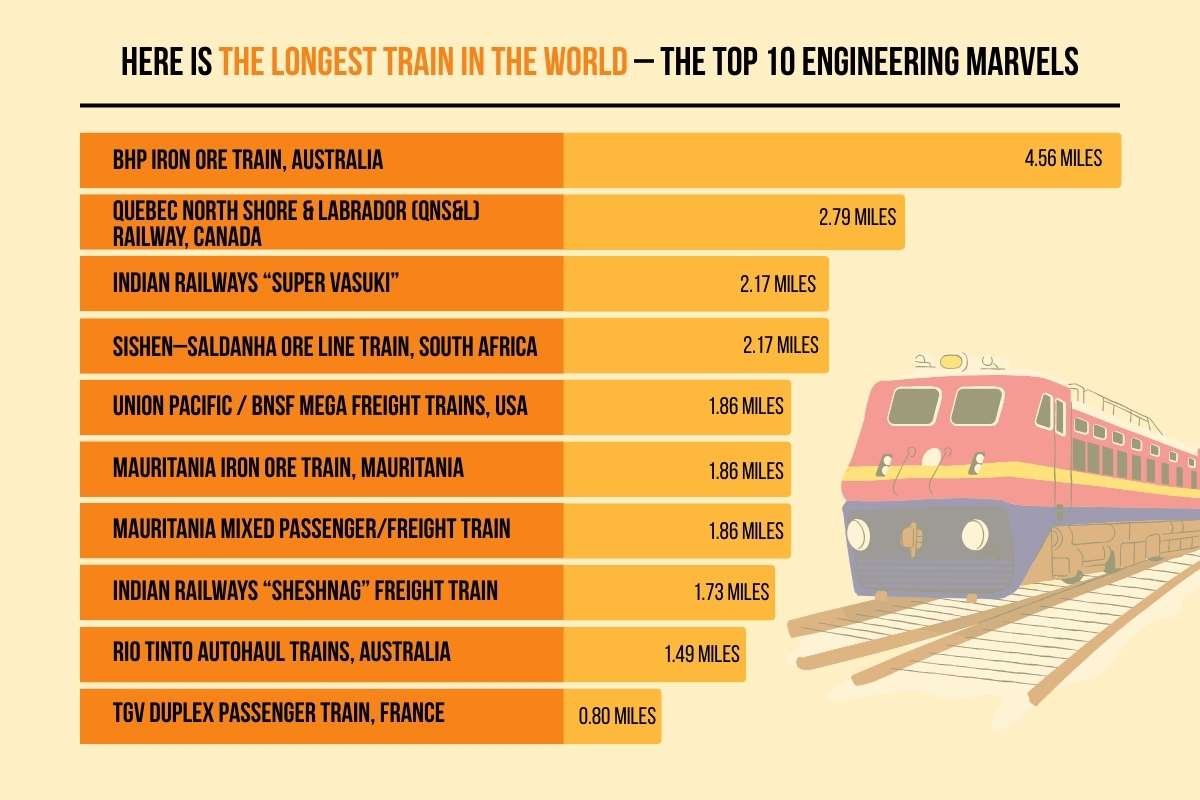
Get ready to be surprised: this is the list of the longest train in the world. They are characterised by their record-breaking category. Ranging from huge freight behemoths that span over seven kilometers. Till the luxurious passenger ribbons that span nearly two kilometers.
| Rank | Name of Train | Length (Miles) |
| 1 | BHP Iron Ore Train | 4.56 |
| 2 | Quebec North Shore & Labrador Railway | 2.79 |
| 3 | Indian Railways “Super Vasuki” | 2.17 |
| 4 | Sishen–Saldanha Ore Line Train | 2.17 |
| 5 | Union Pacific/BNSF Mega Freight Trains | 1.86 |
| 6 | Mauritania Iron Ore Train | 1.86 |
| 7 | Mauritania Mixed Passenger/Freight Train | 1.86 |
| 8 | Indian Railways “Sheshnag” | 1.73 |
| 9 | Rio Tinto AutoHaul Train | 1.49 |
| 10 | TGV Duplex Passenger Formation | 0.80 |
1. BHP Iron Ore Train, Australia — The Official Longest Train in the World
Length (Table): 4.56 miles
Length (Description): 7.353 km
Wagons: 682
Locomotives: 8
Record: Guinness World Record holder (2001)
Purpose: Freight (iron ore)
The BHP Iron Ore Train in Western Australia holds the Guinness World Record for the longest and heaviest train ever assembled. Stretching an incredible 7.353 km. It showcases the extreme engineering capabilities of heavy-haul railways. With 682 wagons and 8 locomotives. This train was designed to move massive quantities of iron ore from remote mines to the coast. Its record-setting run in 2001 remains unmatched. This legendary formation often appears in discussions about the Longest Train in the World. Due to its unbeatable scale.
2. Quebec North Shore & Labrador (QNS&L) Railway, Canada — Mega Ore Trains
Length (Table): 2.79 miles
Length (Description): 2.5–3 km
Wagons: 240–260
Locomotives: 3–5
Record: Longest trains in extreme cold
Purpose: Freight (iron ore)
Operating in extreme sub-zero temperatures. The QNS&L ore trains stretch up to 3 km and can haul hundreds of heavy wagons. These trains connect remote mining zones to export facilities across northern Canada. Their powerful locomotives and tough wagons are specially engineered for icy climates. Despite harsh winters and heavy winds. The QNS&L maintains impressive reliability. Its long formations consistently rank among the most powerful and enduring freight trains worldwide.
3. Indian Railways “Super Vasuki” — India’s Longest Trial Freight Train
Length (Table): 2.17 miles
Length (Description): 3.5 km
Wagons: 295
Locomotives: 6
Record: Longest freight trial in India (75,000+ tonnes)
Purpose: Freight (coal)
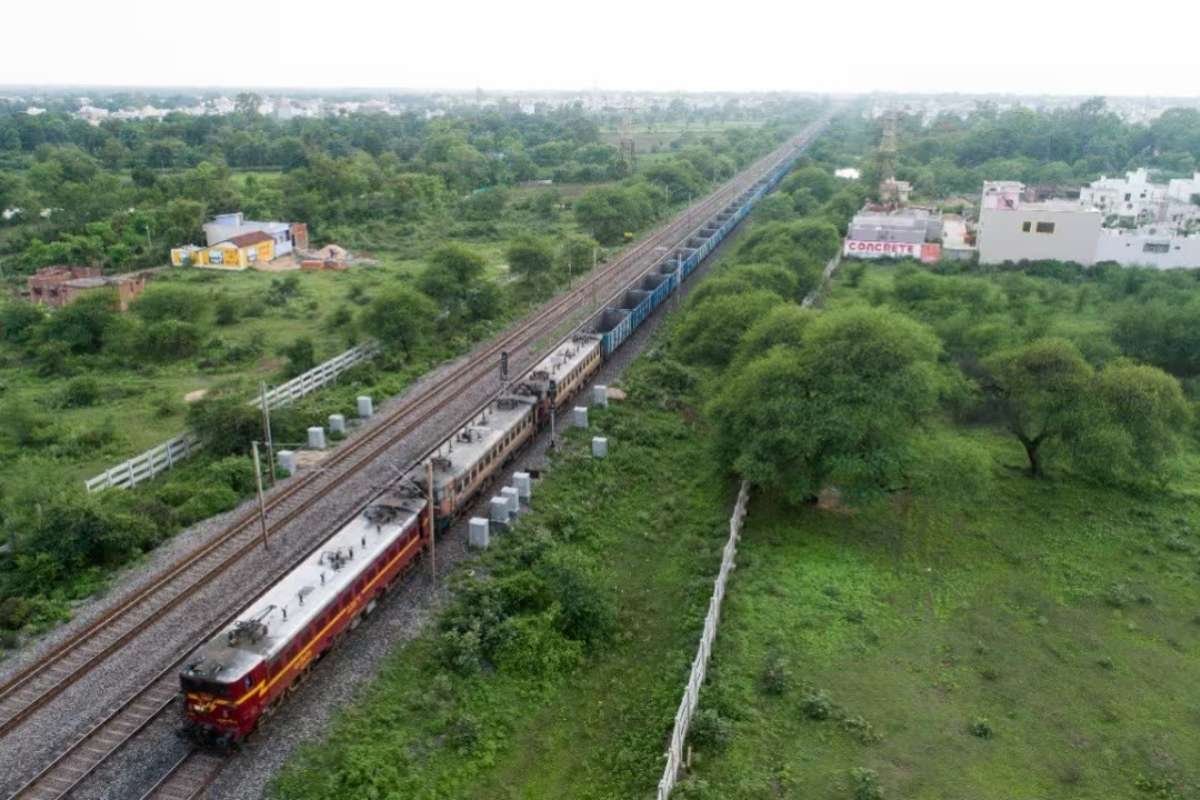
Super Vasuki was created during India’s energy crisis. It was made to test the maximum coal-carrying capacity in one continuous train. At 3.5 km long and carries over 75,000 tonnes. It displayed the immense hauling power of Indian Railways. This trial formation used five rakes combined into one mega train pulled by six locomotives. Although not a regular service. It proved the viability of ultra-long freight operations in India. Its record length places it among the major contenders discussed when talking about extreme rail giants.
4. Sishen–Saldanha Ore Line Train, South Africa — Heavy-Haul Mega Train
Length (Table): 2.17 miles
Length (Description): 3.5 km
Wagons: 342
Locomotives: 9 (distributed power)
Record: Longest and heaviest heavy-haul train in Africa
Purpose: Freight (iron ore)
This enormous mining train stretches about 3.5 km across South Africa’s iron ore transport corridor. Designed with distributed power technology. The system uses up to nine locomotives strategically placed along its 342 wagons. It operates on one of the world’s most advanced heavy-haul railway lines. Capable of carrying over 40,000 tonnes. It plays a crucial role in South Africa’s export economy. Its size and daily operations make it one of the most impressive heavy-haul trains on the planet.
5. Union Pacific / BNSF Mega Freight Trains, USA — Longest in North America
Length (Table): 1.86 miles
Length (Description): 3–4.5 km (varies)
Wagons: 250–300+
Locomotives: 4–7
Record: Longest regular freight operations in the U.S.
Purpose: Freight (mixed)
American freight railroads operate some of the longest trains in North America. Reaching lengths of 3–4.5 km. These giant formations haul mixed cargo. Ranging from oil and grain to automotive parts, across thousands of miles. Modern distributed power units help maintain stability across huge distances. These mega-trains are central to the U.S. supply chain. This is driving industrial efficiency. Their operational scale often places them in discussions about record-breaking global freight systems.
6. Mauritania Iron Ore Train, Mauritania — Longest Regular-Operation Train
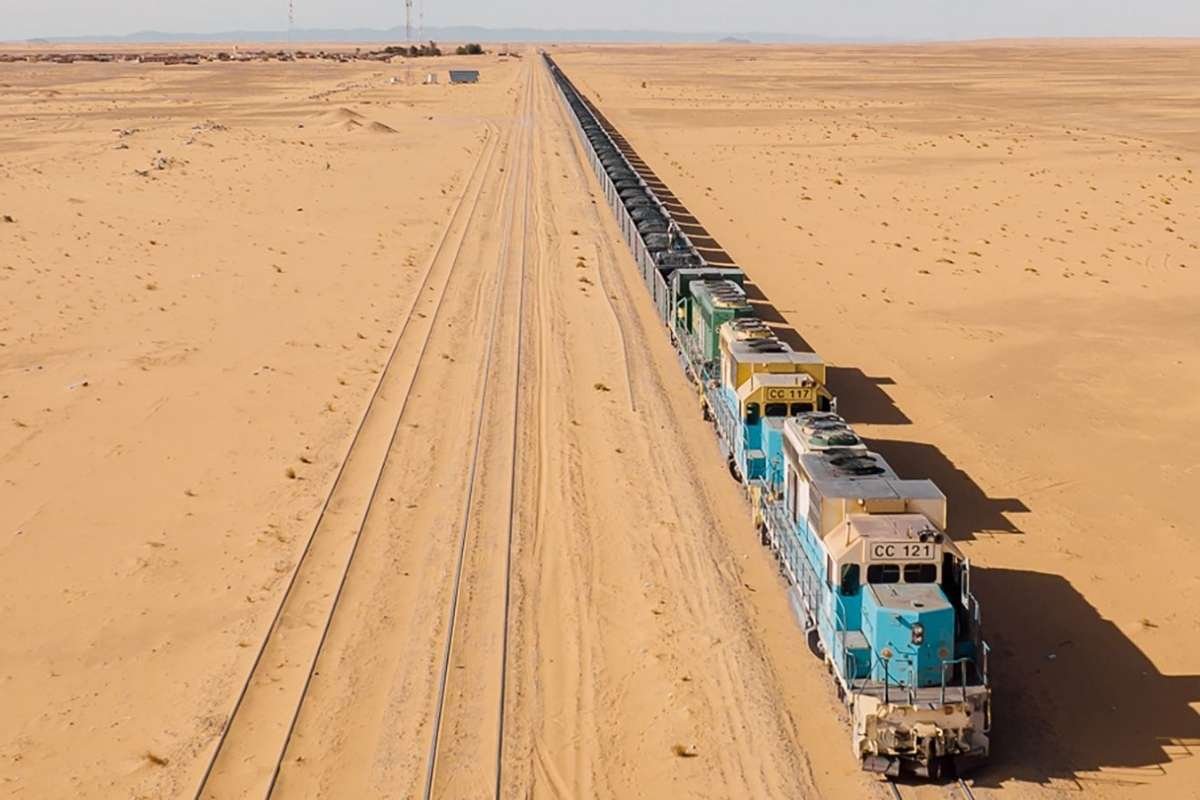
Length (Table): 1.86 miles
Length (Description): 2.5–3 km
Wagons: 200+
Locomotives: 3–4
Record: Longest daily scheduled train service
Purpose: Freight + informal passenger
Often called the backbone of Mauritania. This train runs across the Sahara Desert, carrying iron ore from inland mines to the coast. At 2.5–3 km long, it’s one of the longest regularly scheduled trains in the world. Locals often ride atop its cars. Making it a unique combination of cargo transport and unofficial passenger service. Its harsh desert route is considered one of the toughest railway environments anywhere. The train’s rugged endurance has made it a global engineering icon.
7. Mauritania Mixed Passenger/Freight Train — Longest Hybrid Formation
Length (Table): 1.86 miles
Length (Description): 2.5–3 km
Wagons: 200+
Locomotives: 3–4
Record: Longest hybrid-use train (cargo + informal passengers)
Purpose: Hybrid
This hybrid train stretches 2.5–3 km. It serves both ore transport and informal passenger movement. Locals commonly ride on top of wagons. This turns the train into a lifeline for remote communities. Operating in intense desert climates. It handles extreme temperatures and sandstorms. Its dual-purpose nature makes it unique compared to traditional passenger or freight systems. Its scale and rugged endurance keep it noted in global comparisons of the Longest Train in the World.
8. Indian Railways “Sheshnag” Freight Train — India’s Longest (Operational)
Length (Table): 1.73 miles
Length (Description): 2.8 km
Wagons: 250
Locomotives: 4
Record: Longest operational train assembled in India (2020)
Purpose: Freight (coal & bulk)
Sheshnag, assembled in 2020. It stretches 2.8 km and combines four freight rakes into one enormous formation. Operated with four locomotives. It was created to decongest key coal corridors. Its impressive length demonstrated India’s capability to run ultra-long freight services efficiently. The train significantly boosts cargo transport capacity on busy routes. Sheshnag’s achievement strengthened India’s position in global heavy-haul innovation. It further contributes to discussions about the Longest Train in the World.
9. Rio Tinto AutoHaul Trains, Australia — Longest Autonomous Trains
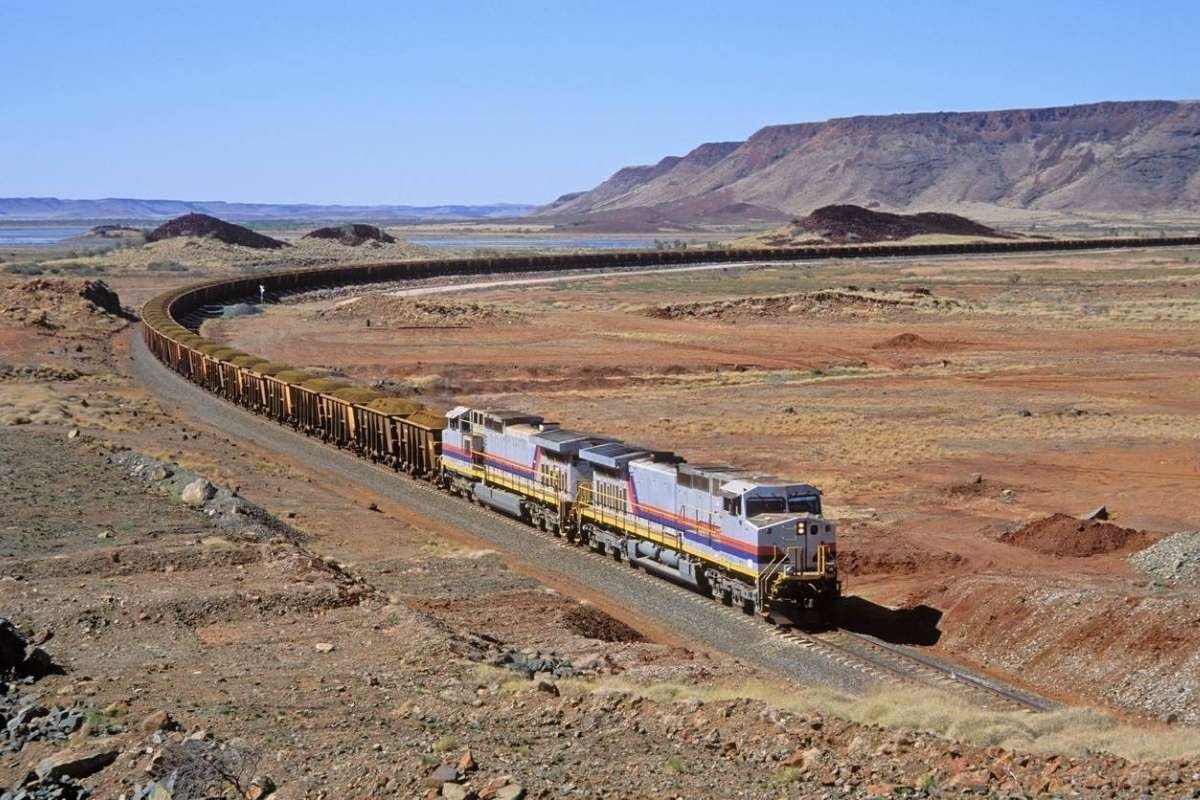
Length (Table): 1.49 miles
Length (Description): 2.4 km
Wagons: 230+
Locomotives: 3+
Record: World’s first fully autonomous heavy-haul train system
Purpose: Freight (iron ore)
Rio Tinto’s AutoHaul trains mark the world’s first fully autonomous heavy-haul railway system. Operating at around 2.4 km in length. These trains move iron ore across remote Pilbara regions without onboard drivers. Advanced AI and control systems manage acceleration, braking, and routing. This milestone transformed the future of mining logistics. Thanks to their automation. These trains are considered among the most technologically advanced long trains in modern industry.
10. TGV Duplex Passenger Train, France — Longest Passenger Formation (Testing)
Length (Table): 0.80 miles
Length (Description): 1.3 km (multiple units coupled)
Coaches: 20+
Locomotives: EMU power cars
Record: Longest high-speed passenger test configuration
Purpose: Passenger (testing)
During high-speed testing phases. Multiple TGV Duplex units have been linked to create formations over 1.3 km long. Although shorter than its freight counterparts. This represents one of the longest high-speed passenger configurations ever attempted. The TGV remains a global symbol of rail innovation, speed, and safety. These extended formations help engineers test stability, braking, and aerodynamics. Its role in pushing passenger rail limits makes it historically significant.
Passenger vs Freight vs Combined Trains — what’s the Real Difference?
A train’s design, technology, and most importantly, maximum length. They are all largely influenced by their intended use. Passenger trains must put safety, speed, and passenger comfort first. While freight trains strive for maximum weight and volume. This results in very different engineering boundaries.
| Feature | Passenger Trains | Freight Trains | Hybrid/Combined Trains |
| Primary Goal | Speed, safety, and passenger comfort. | Maximum volume, tonnage, and economic efficiency. | Move cargo efficiently while offering minimal public transport. |
| Typical Length | Shorter (e.g., The Ghan: 1 km; modern high-speed: 400 m). | Significantly longer, often exceeding 3-4 km in regular operation. | Long (up to 3 km) but with only a few dedicated passenger cars. |
| Length Constraint | Platform lengths, stringent safety regulations, and comfortable braking for human passengers. | Distributed Power (DPU) technology, track strength, and railway infrastructure. | Logistics of mixing stable freight with volatile passenger scheduling. |
| Notable Example | The Ghan (Australia), Rhaetian Railway (Switzerland, tourist record). | BHP Iron Ore Train (Australia, world record holder), Vale (Brazil). | Mauritania Railway (The Iron Ore Train). |
Why is the Longest Train in the World Mostly Freight?
Due to fewer limitations than passenger services. The freight train makes up the majority of the longest train in the world. The need for affordability in bulk transportation drives their huge length. One mega-train replaces multiple shorter ones. This helps save on crew and fuel. Although passenger trains are strictly restricted by safety, comfort, and station platform lengths. They are specialized heavy-haul railways for the mining industry. They are designed with the track strength and advanced Distributed Power Units (DPU). This helps to handle these kilometer-long behemoths.
Engineering Challenges Behind the Longest Train in the World:
Overcoming enormous engineering challenges is what earns the title of Longest Train in the World. Managing huge pulling and braking forces over kilometers of transportation. Let’s look into some of the common challenges that obstruct these giants:
- Braking System Complexity: Synchronizing air brakes on hundreds of wagons requires sophisticated algorithms to prevent damaging slack run-in/out, where carriages violently bunch up or stretch apart.
- Locomotive Power & DPU Technology: Power is supplied by multiple Distributed Power Units (DPU) placed throughout the train, not just at the front, demanding precise electronic control to ensure they all push and pull in unison.
- Infrastructure: The tracks themselves must withstand immense axle loads, necessitating enhanced track maintenance and robust signaling and communication systems to safely govern the train’s slow, multi-kilometer movement, especially across challenging weather and terrain.
Future Trends — Will Trains Get Even Longer?
Yes, trains are likely to get even longer. Future trends point towards the possibility of 10-kilometer freight trains. It is driven by greater economic demands. Achieving this will rely on advanced automation. Along with AI-powered train operations for precise control. Modernization projects, coupled with the shift to renewable energy and hybrid locomotives. They will provide the sustainable power needed to haul these immense loads. The competition for the title of longest train in the world will continue to push the boundaries of railway engineering and logistics.
Conclusion:
The quest for the longest train in the world is an amazing example of human ingenuity. It is proved by the 7.35-kilometer giant in Australia. It holds the Guinness World Record. And the unique mixed-use lifeline that crosses the Sahara. Driven by economic necessity and made possible by Distributed Power Units (DPU). These huge devices are mobile engineering marvels that go beyond simple transportation. The iron serpent’s sheer size and complexity. They will continue to push the limits of heavy-haul rail as technology develops toward automation. There is a possible 10-kilometer formation. It guarantees that the title will continue to be a dynamic benchmark of global logistical power.
FAQ:
1. Which country operates the longest passenger train?
France holds the record for one of the longest passenger train formations during testing. With the TGV Duplex, reaching around 1.3 km. When multiple units were coupled. Passenger trains rarely exceed 400–500 meters in normal operations.
2. How many locomotives does a super-long train need?
A mega-train typically uses 4 to 9 locomotives, depending on:
- Cargo weight
- Terrain
- Length
- Technology (e.g., distributed power units)
The record-holding train required 8 locomotives to pull 82,000+ tonnes of ore.
3. Can passengers ride on the longest train in the world?
Not officially. But the Mauritania Iron Ore Train is famous among locals and adventure travelers. They often ride on top of the cargo wagons. It’s dangerous, unofficial, and not recommended. But culturally unique.