
Games are part of everyone’s core memory. Remember the summer vacations? Waking up early, getting to that one friend’s house who owned a console. There used to be a time when we would play Contra, CS GO, Super Mario Bros, and GTA Vice City for the whole day. Life used to be good back then.
But have you thought about the people who make these games? What are the companies that created your core childhood memories? Who are they, and what else have they made? Let’s find out.
Here are the 60 largest gaming companies in the world.
Global Gaming Giants: A Complete Breakdown of the Top Studios across Regions
So, how do you rank the biggest companies in the gaming scene? Here’s what we did. We have based these games on three things: Revenue, Influence, and Impact.
What does this mean?
- Revenue: It is pretty self-explanatory. Revenue is what the company earns. It will be the primary criterion for the studios and companies.
- Influence: What did the largest gaming companies add to the industry? How powerful is their contribution?
- Impact: This criterion examines pop culture, history, and the full range of impacts a company has.
| Region | Company | Revenue |
|---|---|---|
| The Americas | Microsoft (Xbox & Activision Blizzard) | $23.5B (gaming) |
| Sony Interactive Entertainment (U.S.) | ~$30.5B | |
| Valve Corporation | ~$17B (2024 proj.) | |
| Electronic Arts (EA) | $7.4B | |
| Epic Games | $5.7B (2024) | |
| Take-Two Interactive | $5.6B | |
| Roblox Corporation | $4.83B–$4.88B | |
| Nintendo of America | ~$4.8B | |
| Ubisoft (North America) | $838M | |
| Warner Bros. Games | $877M (gaming share) | |
| Niantic | ~$672M | |
| Wildlife Studios (Brazil) | $200M+ | |
| Behaviour Interactive (Canada) | $163M | |
| Etermax (Argentina) | $15M–$20M | |
| Ironhide Game Studio (Uruguay) | $10M+ | |
| Asia | Tencent (China) | $24B+ |
| Bandai Namco (Japan) | $7B+ | |
| NetEase (China) | ~$6.54B | |
| Sony Interactive Entertainment (Japan) | ~$5.9B | |
| Nintendo (Japan) | ¥247.88B (~$5B*) | |
| miHoYo (China) | $3.8B | |
| Nexon (South Korea/Japan) | $2.9B | |
| Square Enix (Japan) | $2.5B | |
| Konami (Japan) | $2.3B | |
| Sea Limited (Singapore) | $2.2B | |
| CyberAgent (Japan) | $1.5B | |
| Krafton (South Korea) | $1.4B | |
| NCSoft (South Korea) | $1.3B | |
| Perfect World (China) | $1.1B | |
| Capcom (Japan) | $1B | |
| Europe | Embracer Group (Sweden) | $3.9B |
| Supercell (Finland) | $3B | |
| Playrix (Ireland) | $2.8B | |
| Ubisoft (France) | $2.5B | |
| Keywords Studios (Ireland) | $840M | |
| Koch Media / PLAION (Germany) | $538.7M | |
| CD Projekt Red (Poland) | $300M+ | |
| Rovio Entertainment (Finland) | $300M | |
| Gameloft (France) | $300M | |
| Thunderful Group (Sweden) | $270M | |
| Paradox Interactive (Sweden) | $250M | |
| Focus Entertainment (France) | $200M | |
| Jagex (UK) | $150M | |
| Crytek (Germany) | $50M+ | |
| Remedy Entertainment (Finland) | $40M | |
| Australia | Wargaming Sydney | ~$1.2B |
| PlaySide Studios | AUD 74.3M | |
| iCandy Interactive | AUD 33.2M | |
| Halfbrick Studios | $10–20M | |
| Team Cherry | $10M+ | |
| Big Ant Studios | $10M+ | |
| Mighty Kingdom | AUD 7.8M | |
| Blowfish Studios | $5–10M | |
| Hipster Whale | $5–10M | |
| Five Star Games | $5–10M | |
| SMG Studio | $5M | |
| League of Geeks | $2–5M | |
| BR Softech | $2–5M | |
| StreamPlay Studio | AUD 4.7M | |
| DPS Games | $1–2M |
The Americas:
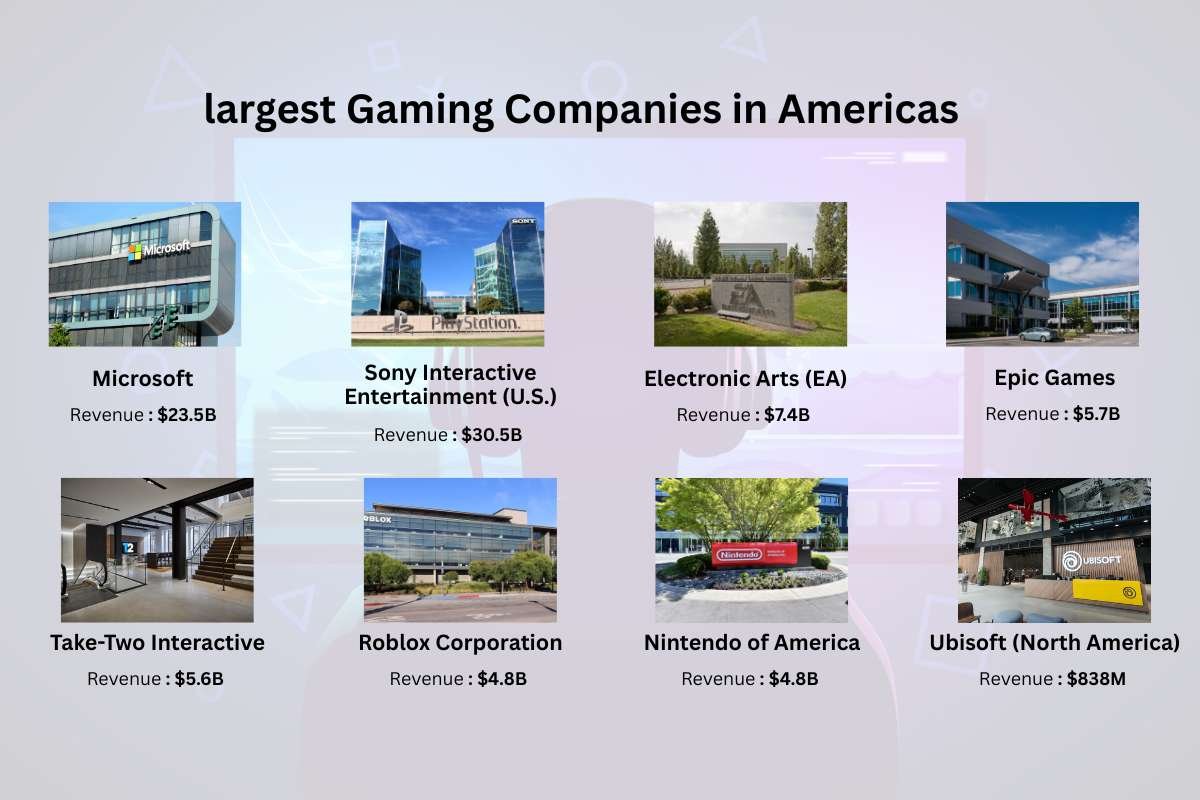
The Americas were the birthplace of the gaming industry. The first ever gaming company in the world, Atari, was founded in the United States in 1972. But what does the industry look like today? Let’s talk about the 15 biggest companies in North and South America. Here’s what they are:
1. Microsoft (Xbox & Activision Blizzard)
- Revenue: $281.7 billion; meanwhile, gaming revenue was $23.5 billion
- Founded: 1975
Remember those weekends glued to Call of Duty? Microsoft made that possible with Xbox. Acquiring Activision Blizzard brought iconic franchises like Call of Duty and Overwatch under one roof. Game Pass changed the way we explored new games. Friends shouted over headsets as they coordinated epic battles. Microsoft is part of the largest gaming companies in the world, shaping how millions experience gaming today. Every mission, every victory, every laugh remains unforgettable.
2. Sony Interactive Entertainment (U.S.)
- Revenue: Total global revenue was ¥4.67 trillion (~$30.5 billion) for FY2024
- Founded: 1994
God of War Ragnarök gave us thrilling battles and emotional journeys. Sony’s U.S. division brought these adventures to the PlayStation. Every encounter with Kratos felt cinematic. Bedrooms became arenas of triumph, struggle, and awe. The depth of storytelling left lasting memories. Few studios can craft worlds that feel alive. Sony has secured its place as one of the most influential gaming companies, creating experiences that linger long after the game ends.
3. Valve Corporation
- Revenue: $17B (2024 projected)
- Founded: 1996
Counter-Strike 2 was more than a competition. It was tension, strategy, and friendship in one. Valve created worlds where teamwork and rivalry met perfectly. Half-Life, Portal, and Steam shaped how games were played and shared. Players discovered stories, mastered strategies, and bonded over wins and losses. Valve is known for its innovation and community-driven experiences. Every match felt personal, every victory worth celebrating.
4. Electronic Arts (EA)
- Revenue: $7.4B
- Founded: 1982
EA made FIFA evenings legendary. The smell of snacks, the excitement of penalty kicks, the arguments over who takes the shot—these moments are priceless. Beyond FIFA, EA Sports FC, and The Sims kept players engaged for hours. Their games turned living rooms into stadiums and playgrounds alike. Friends and siblings bonded over victories and losses. EA created experiences that are part of our childhood stories, making gameplay unforgettable.
5. Epic Games
- Revenue: $5.7 billion (2024)
- Founded: 1991
Fortnite wasn’t just a game. It was a stage for friends to meet, dance, and battle together. Epic Games turned screens into a shared world. Surprise events, emotes, and evolving maps kept players coming back. Epic also created tools for other developers, expanding the way games are made. Every victory royale, every funny mishap, and every collaboration with friends remind us why Epic remains a giant even today.
6. Take-Two Interactive
- Revenue: $5.6B
- Founded: 1993
Grand Theft Auto V felt like a second home. Take-Two Interactive gave players a world to explore freely. Late-night drives in virtual cities, planning heists, and discovering hidden corners became part of life. Rockstar’s storytelling made characters unforgettable. Every mission felt like your own adventure. Take-Two is one of the biggest names in the gaming industry, thanks to experiences that linger long after the console powers down.
7. Roblox Corporation
- Revenue: $4.83B – $4.88B
- Founded: 2004
Roblox turned imagination into shared experiences. Players built worlds, raced obstacle courses, and hosted adventures for friends. Every creation, challenge, or event was unique. The platform gave endless ways to play, compete, and connect. Roblox became a place for creativity, where memories are made every day. Roblox stands out for letting players craft their own stories and experiences. Every login offered a new adventure.
8. Nintendo of America
- Revenue: ¥730.34 billion (~$4.8 billion)
- Founded: 1980 (U.S. division)
Nintendo is recognized in the list of the largest gaming companies in the world for its timeless, beloved games that have delighted generations. Laughter and joy from these games still echo today. Jumping on Goombas, saving Princess Peach, and racing in Mario games created lasting memories. Nintendo of America made childhoods magical. Handhelds, consoles, and shared play brought friends and family together. Every level was a challenge, every victory a celebration.
9. Ubisoft (North America)
- Revenue: $838 million
- Founded: 1986
Assassin’s Creed Mirage turned rooftops and ancient cities into playgrounds. Ubisoft’s North American team helped craft sprawling worlds full of discovery. Every leap, chase, and stealth mission became memorable. Friends shared tips, laughed, and competed for high scores. Ubisoft’s open worlds inspired curiosity and adventure. As of 2026, they continue to create spaces where players lose themselves for hours, exploring and experimenting.
10. Warner Bros. Games
- Revenue: Gaming contributed $877 million to other Studios’ revenue (up 9%).
- Founded: 2004
Hogwarts Legacy brought magic to our fingertips. Warner Bros. Games let players cast spells, explore castles, and face challenges together. The thrill of discovering secret rooms or completing quests made every session memorable. From superheroes to wizards, their titles transformed ordinary days into adventures. Warner Bros. Games continues to create immersive universes that players carry with them for years.
11. Niantic
- Revenue: ~$672 million
- Founded: 2010
Pokémon GO made every walk an adventure. Niantic transformed streets, parks, and neighborhoods into game spaces. You caught Pokémon, joined raids, and explored the world with friends. Unexpected encounters created stories worth sharing. Daily routines became mini-quests. Niantic shows that innovation doesn’t need a console. Every rare capture and spontaneous meet-up became a memory that players still talk about.
12. Wildlife Studios (Brazil)
- Revenue: $200M+
- Founded: 2011
Tennis Clash made mobile matches feel intense and competitive. Wildlife Studios brought friends together anytime, anywhere. Quick matches turned into heated duels. Each victory felt like an accomplishment, every defeat a lesson. From Brazil, Wildlife reached players worldwide. This gaming studio has proven that mobile-first experiences can create lasting memories. Every point, every match, every laugh became part of playtime stories.
13. Behaviour Interactive (Canada)
- Revenue: $163M
- Founded: 1992
Dead by Daylight brought late-night thrills and scares. Behaviour Interactive turned horror into strategy, fun, and teamwork. Every chase, every narrow escape, every surprise attack left players laughing, screaming, or plotting revenge. Players returned for new killers, maps, and events. Behaviour is a mid-sized studio recognized among the biggest names in the gaming world for creating intense, memorable experiences that connect friends across screens. Gaming nights became legendary adventures.
14. Etermax (Argentina)
- Revenue: $15-20M
- Founded: 2009
Trivia Crack transformed phones into arenas of fun. Etermax made quiz nights competitive, social, and addictive. Every question sparked laughter, arguments, and celebrations. Friends and families played for hours. Etermax stands out as part of the largest gaming companies in the world, showing that even simple games can create strong memories. Every correct answer, every victory, every shared joke became a story that lasted long after the game ended.
15. Ironhide Game Studio (Uruguay)
- Revenue: $10M+
- Founded: 2010
Kingdom Rush made tower defense addictive and fun. With that game, Ironhide Game Studio combined strategy, charm, and clever levels to create something really unique and memorable. Every stage was a test of wit, timing, and patience. Players returned again and again to perfect strategies. Small but mighty, Ironhide earned a reputation for creating games that leave lasting impressions. Every victory was celebrated, every loss remembered. Their games turned short sessions into memorable adventures.

Asia:
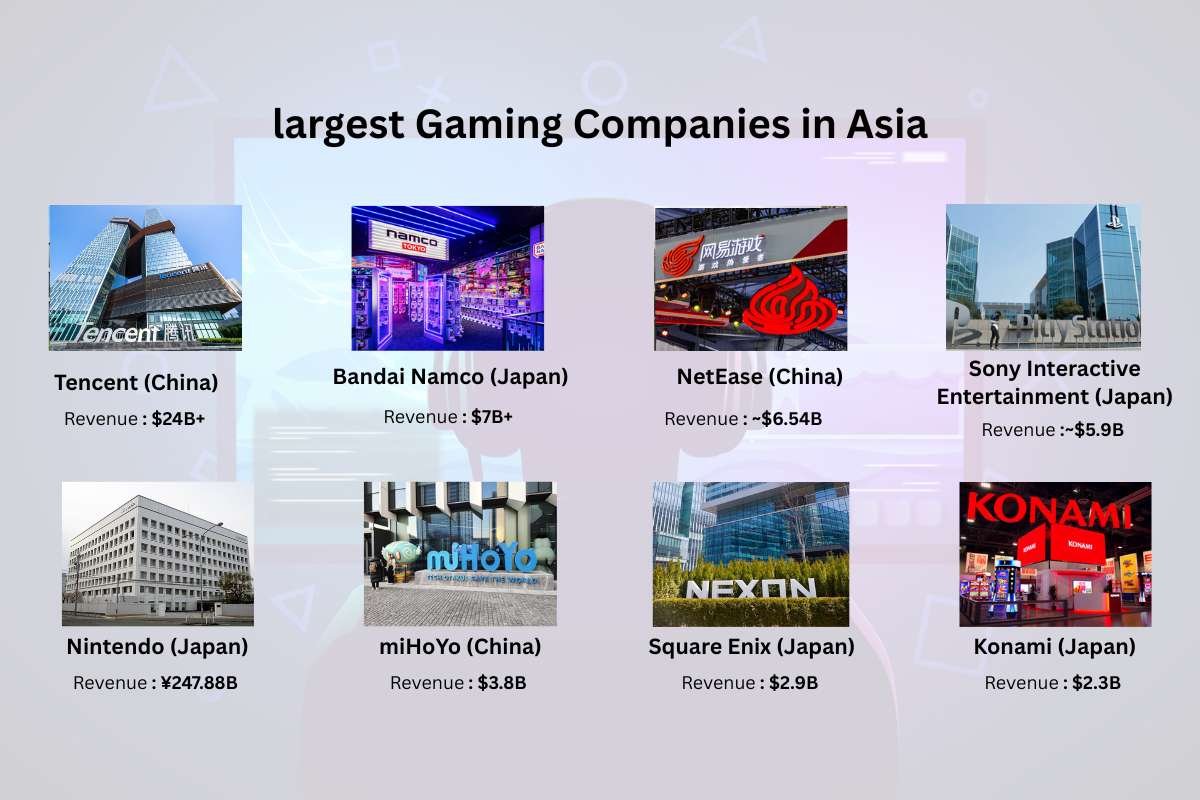
Now that we have covered the big gaming companies in the American continent, let’s travel to Asia. Let’s take a look at the biggest game developers of the Asian continent. Here’s who they are:
16. Tencent (China)
- Revenue: $24B+
- Founded: 1998
Honor of Kings turned phones into battle arenas. Tencent made millions of players compete, strategize, and celebrate victories. Friends and strangers teamed up, rivalries formed, and late-night matches became memories. The game’s updates kept every session fresh. Tencent is part of the biggest gaming studios, shaping mobile gaming globally. Every win, every defeat, every clan battle felt personal. Players couldn’t put their phones down.
17. Bandai Namco (Japan)
- Revenue: $7B+
- Founded: 1955
Elden Ring gave players vast lands to explore. Bandai Namco designed challenges, hidden secrets, and epic boss fights. Every victory brought satisfaction, every defeat sparked determination. Friends exchanged tips and celebrated discoveries. The world felt alive, every quest a story. From combat to exploration, Bandai Namco created experiences that linger in memory.
18. NetEase (China)
- Revenue: RMB 46.85 billion (~$6.54 billion).
- Founded: 1997
Fantasy Westward Journey transported players to rich, sprawling worlds. NetEase made exploration, combat, and cooperation feel effortless. Friends logged in together, quests were completed, and guilds flourished. Every event created anticipation and excitement. The company turned MMORPGs into spaces for adventure and connection. Every rare item, every boss fight became a story worth remembering.
19. Sony Interactive Entertainment (Japan)
- Revenue: ¥880 billion (about $5.9 billion)
- Founded: 1993
PlayStation Studios titles brought adventure to bedrooms everywhere. From action-packed adventures to emotional stories, Sony’s Japanese division created unforgettable worlds. Players lost hours exploring, solving puzzles, and battling bosses. Friends discussed strategies, shared tips, and celebrated victories together. Every game had personality and heart. The immersive experience made gaming more than a pastime.
20. Nintendo (Japan)
- Revenue: 247.88 billion
- Founded: 1889
Every race, crash, and victory lap is a memory player’s return to again and again. Mario Kart 8 Deluxe turned living rooms into racetracks. Nintendo has earned its place of the largest gaming companies in the world, continuing to craft experiences that feel timeless. The gam company brought joy, laughter, and fierce competition to families and friends. Power-ups, shortcuts, and close finishes created unforgettable moments.
21. miHoYo (China)
- Revenue: $3.8 billion
- Founded: 2012
Genshin Impact created a universe full of wonder. miHoYo designed characters, elemental battles, and vast landscapes that kept players exploring for hours. Friends compared teams, shared tips, and marveled at discoveries. The music, visuals, and challenges made every moment memorable. miHoYo showed that mobile and console games could feel epic and personal. Every journey through Teyvat felt like an adventure shared.
22. Nexon (South Korea/Japan)
- Revenue: $2.9B
- Founded: 1994
Dungeon & Fighter made cooperative and competitive play exciting. Nexon built worlds where players leveled up, teamed up, and discovered rare loot. Every dungeon crawl became a shared adventure. Friends logged in for weekend raids and epic battles. Nexon’s attention to detail made online worlds feel alive and personal. Every item collected, every boss defeated, every team victory became a story.
23. Square Enix (Japan)
- Revenue: $2.5B
- Founded: 1975
The Final Fantasy series made evenings magical. Square Enix built worlds, characters, and epic narratives that players followed passionately. Every battle, every plot twist, every character journey left a mark. Friends discussed strategies and stories long after the game ended. Square Enix earned recognition among the largest gaming companies in the world for delivering unforgettable adventures across generations.
24. Konami (Japan)
- Revenue: $2.3B
- Founded: 1969
eFootball (PES) made football matches thrilling from the couch. Konami created realistic gameplay, team management, and intense competitions. Friends challenged each other in tournaments, celebrated last-minute goals, and shared laughs. The game made weekends feel alive. Konami’s dedication turned every match into a memorable moment.
25. Sea Limited (Singapore)
- Revenue: $2.2B
- Founded: 2009
Free Fire made quick matches thrilling. Sea Limited designed games for fast fun, strategy, and competitive moments. Players formed teams, plotted strategies, and raced against the clock. Mobile screens became arenas of tension and laughter. Every win brought pride, every defeat a lesson. Friends shared highlights and celebrated surprises.
26. CyberAgent (Japan)
- Revenue: $1.5B
- Founded: 1998
Uma Musume Pretty Derby turned strategy and racing into a shared experience. CyberAgent created characters, races, and stories that captivated players. Training, racing, and planning strategies made every session memorable. Friends compared teams, shared tips, and celebrated wins together. Every match became part of a story that stayed with players.
27. Krafton (South Korea)
- Revenue: $1.4B (2023/24)
- Founded: 2007
PUBG: Battlegrounds created weekends filled with suspense. Krafton built worlds where players planned, fought, and survived together. Every landing spot, every strategy, every last-minute clutch made gameplay thrilling. Late-night sessions became stories to share. PUBG turned screens into shared battlefields, and every match felt alive.
28. NCSoft (South Korea)
- Revenue: $1.3B
- Founded: 1997
Lineage W gave players sprawling online worlds to explore. NCSoft designed quests, dungeons, and challenges that kept communities engaged. Friends coordinated attacks, shared victories, and celebrated rare items. The game combined strategy, cooperation, and exploration seamlessly. Every event, battle, and strategy session created stories to tell for years.
29. Perfect World (China)
- Revenue: $1.1B
- Founded: 2004
Perfect World Mobile transported players into epic adventures. Every quest, every battle, and every rare item created excitement among players. Perfect World’s addition to the list of the largest gaming companies in the world showed that mobile games can leave lasting impressions. Perfect World built worlds that felt immersive on mobile screens. Communities formed, friends collaborated, and exploration became rewarding.
30. Capcom (Japan)
- Revenue: $1B
- Founded: 1979
Resident Evil turned living rooms into horror arenas. Capcom made survival tense and exhilarating. Players raced through dark corridors, solved puzzles, and fought terrifying enemies. Every jump scare, every escape, every clever strategy created memories. Capcom mastered suspense and fun, keeping players returning for more. Horror and thrill became part of playtime stories.

Europe:
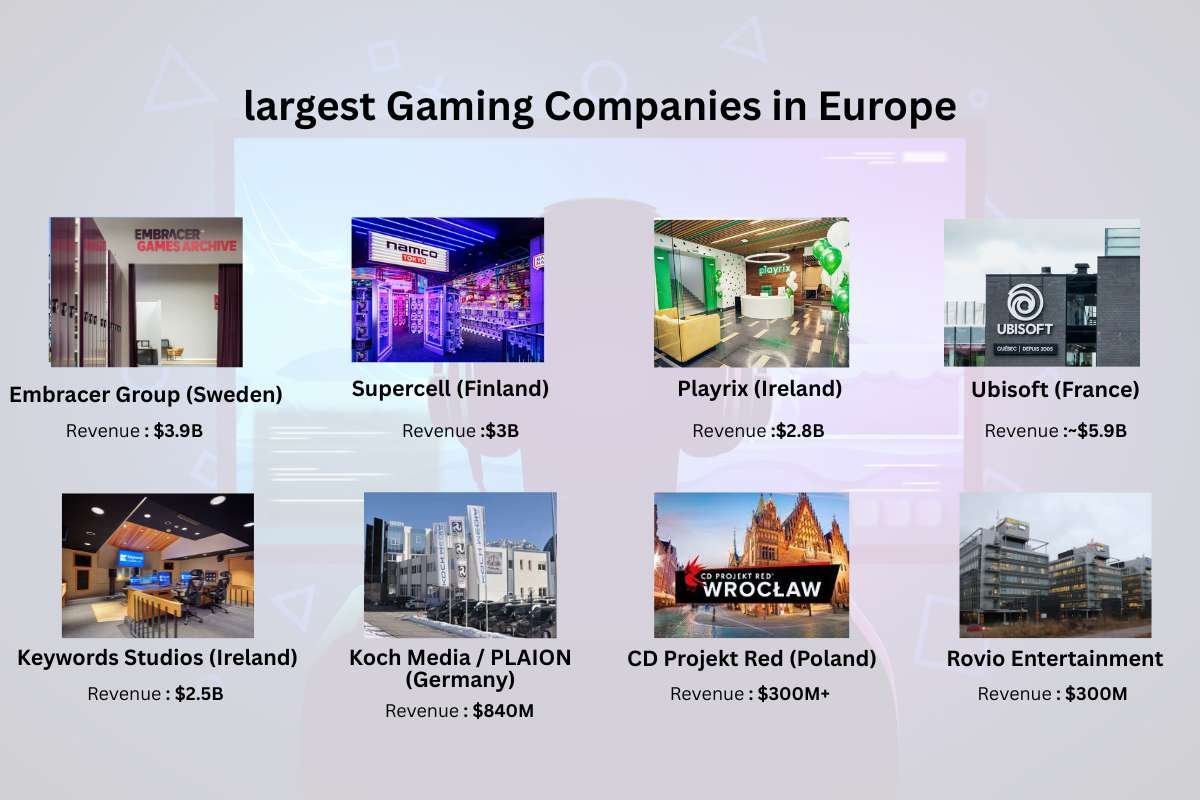
Let’s turn our heads to the gaming scene of Europe. Europe gave us some of the most iconic games of our childhood. The continent is home to some of the best gaming companies. Here’s who they are:
31. Embracer Group (Sweden)
- Revenue: $3.9B
- Founded: 2008
Tomb Raider found a new home under Embracer, and fans felt the shift instantly. The company gathered studios like pieces of a giant puzzle. Each piece brought new ideas and new worlds to life. They revived classics, supported fresh stories, and kept familiar heroes relevant. Embracer became known for giving creators space to breathe. Games felt richer, characters deeper, and stories more personal.
32. Supercell (Finland)
- Revenue: $3B (2024)
- Founded: 2010
Clash of Clans made strategy feel simple and addictive. Supercell understood how players think, compete, and connect. Town halls upgraded, clans formed, and weekend wars became rituals. The studio kept updates steady without overwhelming players. Every new unit or spell created excitement. Friends teamed up, argued about layouts, and celebrated wins that felt earned. Supercell made mobile gaming part of our daily rhythm.
33. Playrix (Ireland)
- Revenue: $2.8B
- Founded: 2004
Gardenscapes turned match-three puzzles into personal stories. Playrix mastered the blend of simple gameplay and warm characters to become one of the largest gaming companies today. Players returned to see what had changed in the garden, who needed help, or what quirky event popped up next. The studio made casual gaming feel comforting. It became a daily ritual for millions.
34. Ubisoft (France)
- Revenue: $2.5B
- Founded: 1986
Far Cry brought wild landscapes and unforgettable villains into players’ lives. Ubisoft built worlds that felt massive yet personal. Every outpost, every mission, every chaotic moment became a memory. The studio kept experimenting—sometimes bold, sometimes risky. It’s one reason Ubisoft remains discussed among the biggest names in the gaming world. Their games spark conversations the moment they launch. Adventure is woven into their identity.
35. Keywords Studios (Ireland)
- Revenue: $840M
- Founded: 1998
Keywords Studios works behind the curtain. They test, tune, translate, and sharpen the games millions love. From Fortnite to Warzone, their fingerprints are everywhere. They fix bugs players never see and polish features players take for granted. Quiet contribution is their strength. They help studios dream bigger by handling the details that keep games running smoothly.
36. Koch Media / PLAION (Germany)
- Revenue: $538.7 million. Part of Embracer
- Founded: 1994
PLAION helped bring Dead Island 2 to life, supporting distribution and development. They’ve always been the bridge between creators and players. Their work ensures games reach homes, consoles, and storefronts seamlessly. They support studios, manage releases, and help ideas become finished products. PLAION keeps the industry running smoothly behind the scenes.
37. CD Projekt Red (Poland)
- Revenue: $300M+
- Founded: 1994
Cyberpunk 2077 was ambitious, messy, and unforgettable. CD Projekt Red poured heart into every alley, quest, and character. Night City felt alive, buzzing with neon and moral choices. Players explored for hours, stumbling into stories that felt human. The studio listened, patched, rebuilt, and stood by its craft. Their dedication earned respect. Every update made the city feel more complete.
38. Rovio Entertainment (Finland)
- Revenue: $300M
- Founded: 2003
Angry Birds made mobile gaming explode worldwide. Rovio created simple physics fun that became a global icon. Players flung birds during commutes, breaks, and late-night boredom. The characters became mascots, and the gameplay never lost its charm. Rovio proved that small ideas can change an entire industry. Joy doesn’t need complexity.
39. Gameloft (France)
- Revenue: $300M
- Founded: 1999
Asphalt 9: Legends made mobile racing feel fast and stylish. Gameloft delivered smooth controls, gorgeous tracks, and adrenaline-filled moments. Unlocking cars, mastering drift timing, and challenging rivals became addictive. The studio carried a console-quality feeling into mobile screens long before it was common. Gameloft shaped how action on mobile should feel—polished and fun.
40. Thunderful Group (Sweden)
- Revenue: $270M
- Founded: 2019
SteamWorld Build showed Thunderful’s love for charm and creativity. Their games feel quirky and warm, with characters that stick. The studio supports small teams who think outside the box. Every release feels handcrafted, like it was built with genuine joy. Thunderful makes games that feel good to come back to—comforting and clever.
41. Paradox Interactive (Sweden)
- Revenue: $250M
- Founded: 1999
Cities: Skylines II puts entire cityscapes at players’ fingertips. Paradox thrives where complexity lives. They create games that challenge, reward, and occasionally overwhelm—in the best way. Fans pour hours into crafting worlds, tweaking systems, and building stories. Paradox doesn’t chase trends. They nurture communities that love depth, strategy, and creativity.
42. Focus Entertainment (France)
- Revenue: $200M
- Founded: 1996
A Plague Tale: Requiem showed Focus Entertainment’s talent for emotional storytelling. Their games often feel quiet, intimate, and deeply human. They support mid-sized teams who think differently. The results are worlds packed with atmosphere and heart. Focus on the champions’ games that stay with players long after the credits roll. They know storytelling isn’t about scale; it’s about soul.
43. Jagex (UK)
- Revenue: $150M
- Founded: 2001
RuneScape became a home for millions of players. Jagex built a world filled with quests, skills, and secrets. It wasn’t flashy—it was familiar. Friends trained together, traded items, and built long-lasting memories. Updates kept the world alive for decades. Jagex nurtured a community that grew up with the game. RuneScape became part of people’s lives as much as their childhood routines.
44. Crytek (Germany)
- Revenue: $50M+
- Founded: 1999
Hunt: Showdown turned tension into art. Crytek has always pushed visuals and atmosphere. Every match feels unpredictable, filled with danger and strategy. The studio prides itself on immersion, making players feel every step, every shot, every close call. Their games aren’t just played—they’re experienced. Crytek builds worlds that demand attention.
45. Remedy Entertainment (Finland)
- Revenue: $40M
- Founded: 1995
Alan Wake 2 blended horror, mystery, and storytelling like few others can. Remedy embraces atmosphere, pacing, and tension. They build narratives that unfold slowly, letting players sink into the mood. Their worlds feel cinematic but personal. Remedy doesn’t rush—they craft. Every flashlight beam, every shadow, every twist is placed with intention.

Australia:
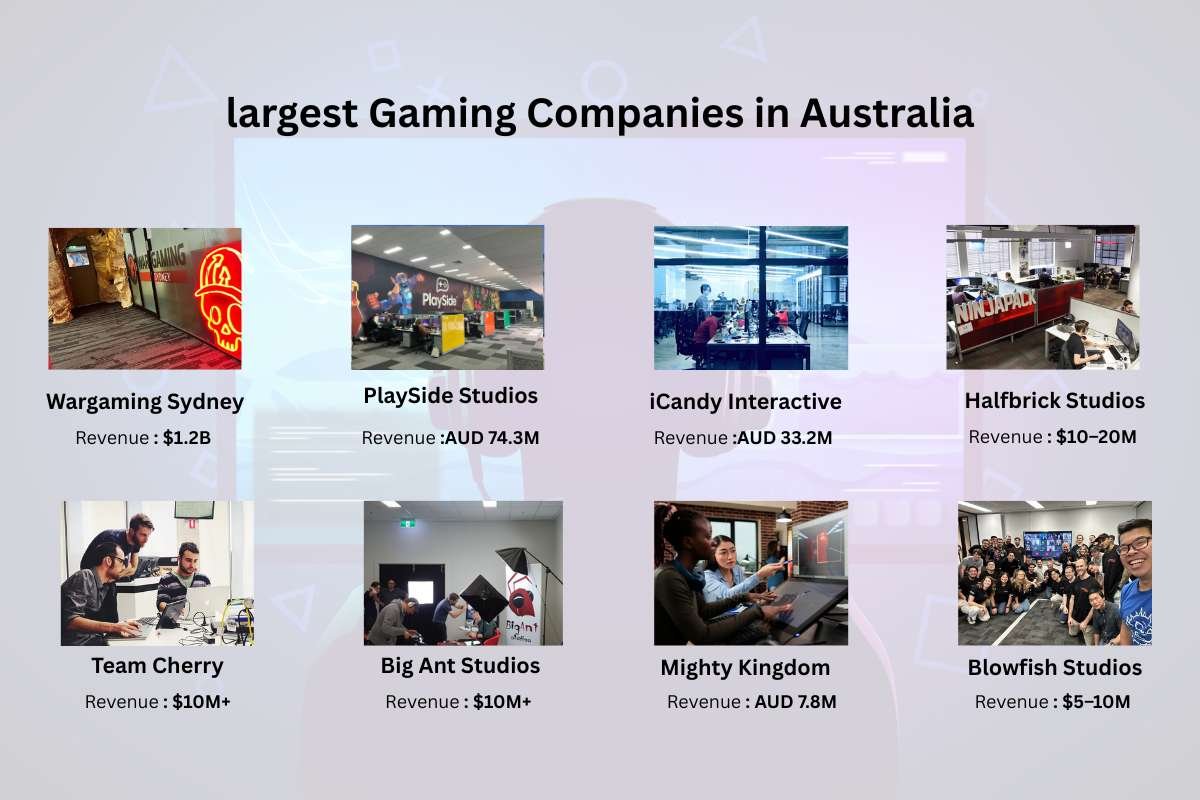
To end the blog, let’s visit the continent of Australia. Here are 15 major gaming studios from the continent:
46. Wargaming Sydney (Australia)
- Revenue: ~$1.2 billion estimated annual revenue.
- Founded: 2002
World of Tanks brought massive armored battles to millions. Wargaming Sydney supported the global franchise with technology and development muscle. Tank combat felt weighty and strategic. Players spent hours mastering maps and mechanics. Teams formed strong communities. Competitive matches delivered intense moments. The studio’s behind-the-scenes work kept the game polished and evolving. Their role made a huge impact within the largest gaming companies in the world, even if their contributions stayed mostly invisible to players.
47. PlaySide Studios (Australia)
- Revenue: AUD 74.3M
- Founded: 2011
Dumb Ways to Die began as a safety campaign but became a worldwide craze. PlaySide Studios turned simple characters into global icons. Kids and adults laughed, replayed levels, and shared clips for fun. The studio grew by mixing humor with fast, quirky gameplay. Every update added new silly challenges that kept players hooked. It’s surprising how a small Melbourne team built something that felt so universal. Their rise shows how creativity can outshine everyone else.
48. iCandy Interactive (Australia)
- Revenue: AUD 33.2M
- Founded: 2009
Masketeers brought charm, strategy, and personality into mobile screens. iCandy Interactive gave players characters with stories that felt heartfelt. The gameplay loop was simple enough to relax yet deep enough to keep returning. Players enjoyed merging orbs, unlocking skills, and building powerful teams. The art style drew attention immediately. Each update added more life to the game. The studio carved out its own corner of mobile fantasy.
49. Halfbrick Studios (Australia)
- Revenue: $10–20M
- Founded: 2001
Fruit Ninja turned everyone into a virtual sword master. Halfbrick Studios created a game that needed only a swipe to entertain millions. It was fast, satisfying, and instantly addictive. Families competed for high scores. Friends bragged about combos. The game became a staple on early smartphones. With simple mechanics and bright visuals, Halfbrick proved the magic of accessible design. It became a part of daily routines across the world.
50. Team Cherry (Australia)
- Revenue: $10M+
- Founded: 2014
Hollow Knight captured the hearts of players who loved exploration and mystery. Team Cherry crafted a hand-drawn world filled with lore, secrets, and unforgettable bosses. Every corner felt alive. The soundtrack set the tone for deep journeys and emotional moments. The game demanded skill yet rewarded patience. Team Cherry became a studio that fans followed closely, eager for whatever came next. Their small-team success became an inspiration to many.
51. Big Ant Studios (Australia)
- Revenue: $10M+
- Founded: 2001
Cricket 24 brought stadiums, players, and match-day energy right to screens. Big Ant Studios became a favorite for sports fans wanting realism. Every boundary felt satisfying. Every wicket created tension. The studio studied the sport closely, capturing its rhythm and pace. Fans appreciated how each title improved over the last. Big Ant established itself as a leader in sports simulations.
52. Mighty Kingdom (Australia)
- Revenue: AUD 7.8M
- Founded: 2010
Shopkins: Real Littles brought bright colors and cheerful characters to young fans. Mighty Kingdom built playful worlds filled with mini-quests and collectibles. Kids explored digital shelves, unlocked surprises, and shared their creations. The studio kept gameplay gentle, simple, and fun. Their collaborations with global toy brands helped them reach new audiences. The charm of the game made families return to it together.
53. Blowfish Studios (Australia)
- Revenue: $5–10M
- Founded: 2010
Phantom Galaxies brought sci-fi dreams to life with mechs, space battles, and cinematic visuals. Blowfish Studios blended action and storytelling in a way that drew players in immediately. Fans loved customizing ships and exploring alien worlds. Every mission carried tension and excitement. The studio kept expanding the universe with new content. The ambition behind the project surprised many. Their momentum placed them in conversations with the largest gaming companies in the world, especially within sci-fi gaming circles.
54. Hipster Whale (Australia)
- Revenue: $5–10M
- Founded: 2014
Crossy Road became a global sensation with one simple question: “Why did the chicken cross the road?” Hipster Whale turned that joke into a modern arcade hit. Players dodged cars, trains, and rivers for just one more hop. The voxel art style stood out instantly. Kids shared high scores with friends. Adults played it on commutes. The game made endless runners feel new again. It became a cultural moment, not just a mobile title.
55. Five Star Games (Australia)
- Revenue: $5–10M
- Founded: 2011
Five Star Games became a trusted distributor for SEGA and Atlus titles. They helped bring beloved Japanese games to Australian shelves. Fans appreciated having easier access to niche classics and major releases. The company handled local launches, marketing, and physical distribution. Their work supported game communities that loved Persona, Yakuza, and more. Five Star played a quiet but essential role in the region’s gaming culture.
56. SMG Studio (Australia)
- Revenue: $5M
- Founded: 2013
Moving Out turned chaotic teamwork into pure comedy. SMG Studio built a game where players carried sofas through windows and dodged obstacles with wild physics. Laughter filled the rooms during co-op sessions. Every level offered new quirks and challenges. Families played it together. Friends competed to clear houses faster. The charm and humor made it unforgettable. The studio became known for lighthearted, couch-friendly fun.
57. League of Geeks (Australia)
- Revenue: $2–5M
- Founded: 2011
Armello mixed board-game strategy with digital storytelling. League of Geeks built a world filled with animal clans, political tension, and magical quests. Each match played differently. Players balanced alliances and rivalries. The art style looked like a moving storybook. Friends played round after round, trying new strategies. The studio’s creativity made Armello feel timeless and unique among strategy titles.
58. BR Softech (Australia/India)
- Revenue: $2–5M
- Founded: 2010
BR Softech created casino and slot games enjoyed by casual players worldwide. Simple interfaces and quick gameplay made their titles easy to pick up. The studio focused on entertainment rather than complexity. Players logged in for short sessions that felt relaxing and familiar. Their catalog grew steadily each year. BR Softech carved out a niche in a crowded market with consistency and reliability.
59. StreamPlay Studio (Australia)
- Revenue: AUD 4.7M
- Founded: 2015
ArcadeX delivered classic arcade energy with modern twists. StreamPlay Studio built games for quick bursts of excitement. Players enjoyed bright visuals, snappy controls, and fast rewards. The studio’s titles worked well for short breaks and commutes. Each release added fresh mechanics to keep things interesting. StreamPlay focused on fun first, and it showed.
60. DPS Games (Australia)
- Revenue: $1–2M
- Founded: 2020
DPS Games built anime-style mobile experiences that captured players who love vibrant characters and fast battles. Their games focused on flashy moves and collectible heroes. Fans enjoyed leveling teams and completing daily missions. The studio paid close attention to art and style, giving each release a polished look. DPS Games grew quickly in a genre that demands constant creativity. Their work continues to attract new players every season.
The Future of Gaming:
Now that we know who the largest gaming companies are, let’s talk about the future of the industry.
The global gaming market is projected to reach approximately $260 billion by the end of 2025. It is projected to grow to over $413 billion by 2030 with a CAGR of nearly 10-12%. Mobile gaming continues to be the largest and fastest-growing segment.
The industry is moving away from one-time hardware sales toward “play-anywhere” ecosystems. Subscription services and cloud gaming are reducing entry barriers, making high-fidelity gaming accessible without expensive consoles.
Esports continues to mature into a professional global industry. In emerging hubs like India, the esports market is expected to grow at a 17.8% CAGR. They are projected to reach $640 million by 2032, fueled by corporate sponsorships and mobile-first titles.
Conclusion:
Gaming has been an integral part of modern human upbringing. It is a universal thing that connects all of us, regardless of location. It doesn’t matter where you, the reader, are from; we have all played one of the games from at least one of these largest gaming companies.
In a way, these studios and gaming companies have shaped our childhood and continue to do so for the coming generations. Games are a big part of our childhood, and the largest gaming companies that created them have, in a way, created a core memory for us. And they still work towards upgrading and making the experience more pleasurable, not just for us but for the generations to come.
FAQs
1. Why do some games require high-end hardware?
Games with advanced graphics and complex physics need more processing power. They use detailed textures, real-time rendering, and heavy animation. High-end hardware handles these tasks smoothly. It improves frame rates, reduces lag, and keeps performance stable during intense scenes.
2. What does “frame rate” mean in gaming?
Frame rate shows how many images your system displays per second. Higher numbers give smoother motion. Low frame rates cause stutter and slow response. Competitive players prefer 60 FPS or more because it helps with accuracy and quick reactions.
3. Why do online games lag even on fast internet?
Lag can come from server distance, network congestion, or unstable routing. Your device hardware may also struggle to process game data quickly. Even a strong internet does not fix server-side issues. Small delays add up, causing noticeable performance drops.