Key Takeaways
- The yen has hit its weakest level against the dollar since 1986.
- Higher U.S. interest rates continue to pressure Japan’s currency.
- Japan may intervene again, potentially increasing global market volatility.
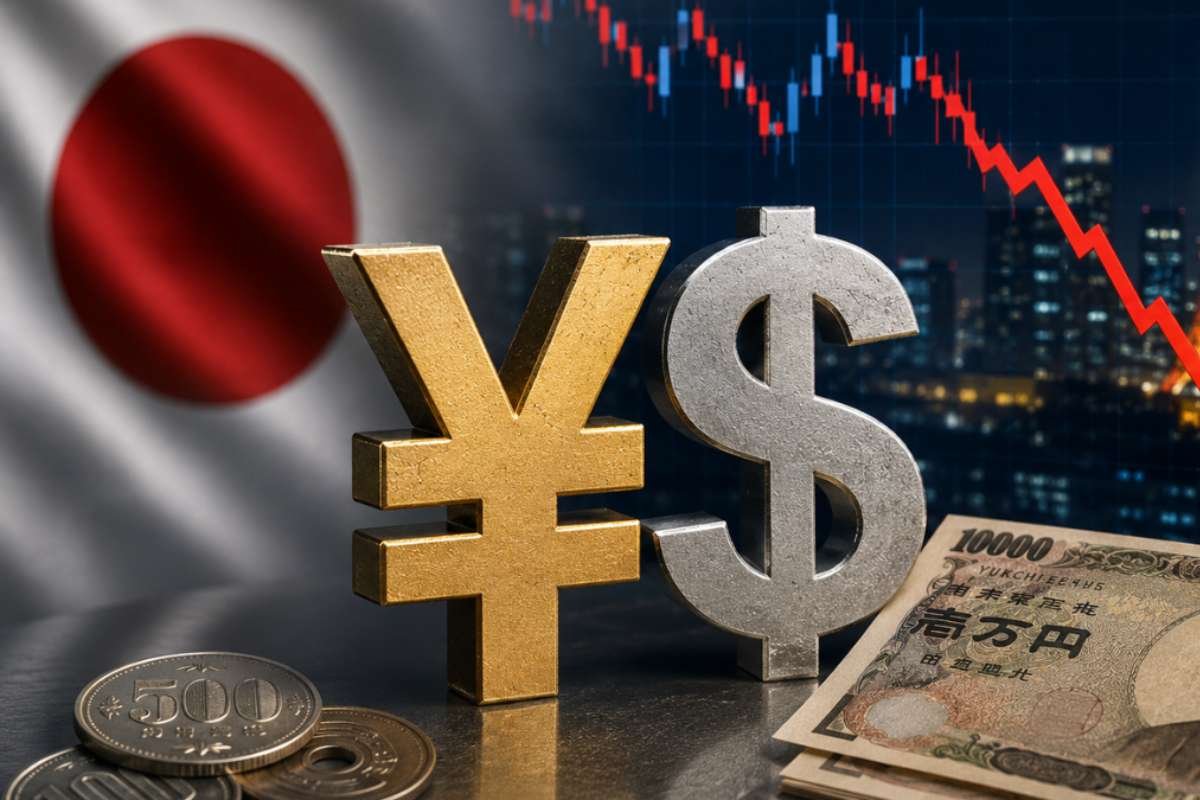
The Japanese yen falls to its weakest level against the U.S. dollar since 1986 as higher U.S. interest rate expectations and rising oil prices widen policy differences, fueling concerns over possible Japanese government intervention and broader market volatility.
The Japanese yen falls deeper into record lows, drawing global attention as investors watch for another attempt by Japanese authorities to stabilize the currency. Analysts say any intervention could affect foreign exchange markets, U.S. Treasury yields, and global stocks, particularly if it disrupts popular investment strategies.
The currency has continued to weaken despite Japan’s earlier intervention this year, which failed to reverse the downward trend.
Interest rate gap drives yen lower
The Japanese yen falls largely because investors expect the U.S. Federal Reserve to keep interest rates elevated or possibly raise them further, as inflation remains pressured by higher energy prices linked to the conflict involving Iran.
A stronger dollar has added to the pressure. The U.S. Dollar Index has gained about 3% this year after falling sharply in 2025.
“The energy price shock triggered by the U.S.-Iran war has been the last catalyst for a weaker yen,” said Lee Hardman, senior currency economist at MUFG. He added that recent hawkish signals from the Federal Reserve have reinforced the trend.
The Bank of Japan raised its benchmark interest rate to 1% in June, its highest level since the 1990s. However, the rate remains well below the Federal Reserve’s target range of 3.5% to 3.75%, encouraging investors to move money into higher-yielding U.S. assets.
Analysts also said a recent U.S. Supreme Court ruling protecting the Federal Reserve’s independence has strengthened confidence in the central bank, providing additional support for the dollar.
Japan faces rising economic pressure
As the Japanese yen falls, imported goods become more expensive, increasing costs for Japanese households and businesses. Japan relies heavily on imported food and energy, leaving the economy especially vulnerable to rising global oil prices.
Japan spent years maintaining near-zero interest rates to fight deflation and support economic growth. Although inflation has recently moved above the Bank of Japan’s 2% target, interest rates remain relatively low compared with other major economies.
“Japanese officials have made it clear that the weak yen poses a threat to import costs and Japan’s cost of living crisis,” said Chris Turner, global head of markets at ING.
Investors expect the Japanese government to intervene again by selling U.S. dollars or U.S. Treasury holdings and purchasing yen. Similar action earlier this year involved about $70 billion in asset sales but produced only temporary support for the currency.
Possible intervention could shake global markets
Market participants say another intervention is unlikely to significantly affect the massive U.S. Treasury market. However, it could trigger broader financial volatility if it causes investors to unwind so-called carry trades, where traders borrow low-cost yen to invest in higher-return assets such as U.S. stocks.
“Japanese currency intervention efforts are typically conducted at a scale far too small to have a material impact on U.S. yields,” said Karl Schamotta, chief market strategist at Corpay.
Schamotta warned that a larger, coordinated intervention could force investors to rapidly unwind carry trades, creating significant selling pressure in U.S. equity markets.
A similar unwinding in August 2024 contributed to a sharp sell-off in technology stocks after the Bank of Japan raised interest rates.
Analysts said the Japanese yen falls amid growing uncertainty across global financial markets, where shifts in interest rates, geopolitical tensions, and currency movements increasingly influence investment decisions and retirement savings worldwide.