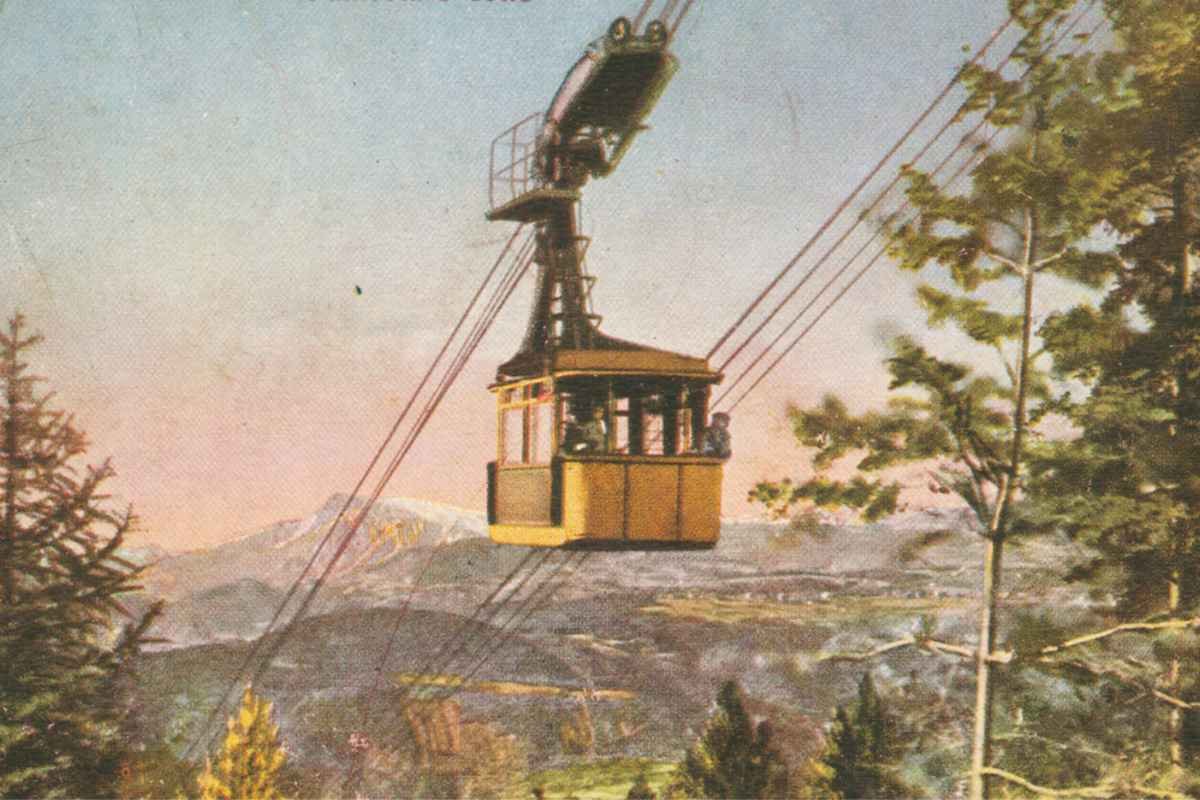
Reaching high mountain areas was once slow, dangerous, and physically demanding. Steep slopes and deep valleys limited movement and made traditional roads impractical. Engineers and explorers needed a solution that could move people and materials safely across difficult terrain.
Mountain cable cars emerged as that solution. Their development marked a turning point in how humans accessed and used mountainous regions. By lifting cabins above the ground, these systems reduced travel time and opened remote areas for industry, research, and tourism.
This article explores the history of cable cars with a focus on mountain cable cars, examining how early designs evolved into modern systems that transformed life in high-altitude landscapes.
The History of Cable Cars: How Scaling Mountains was made Possible
Mountains forced early builders to search for safer ways to move people and goods. Hence, the story of cable cars began with the challenge of steep terrain. Simple rope systems slowly evolved through testing and experience. These early ideas shaped modern mountain cable cars.
Ancient Times: Scaling Mountains Before Cable Cars
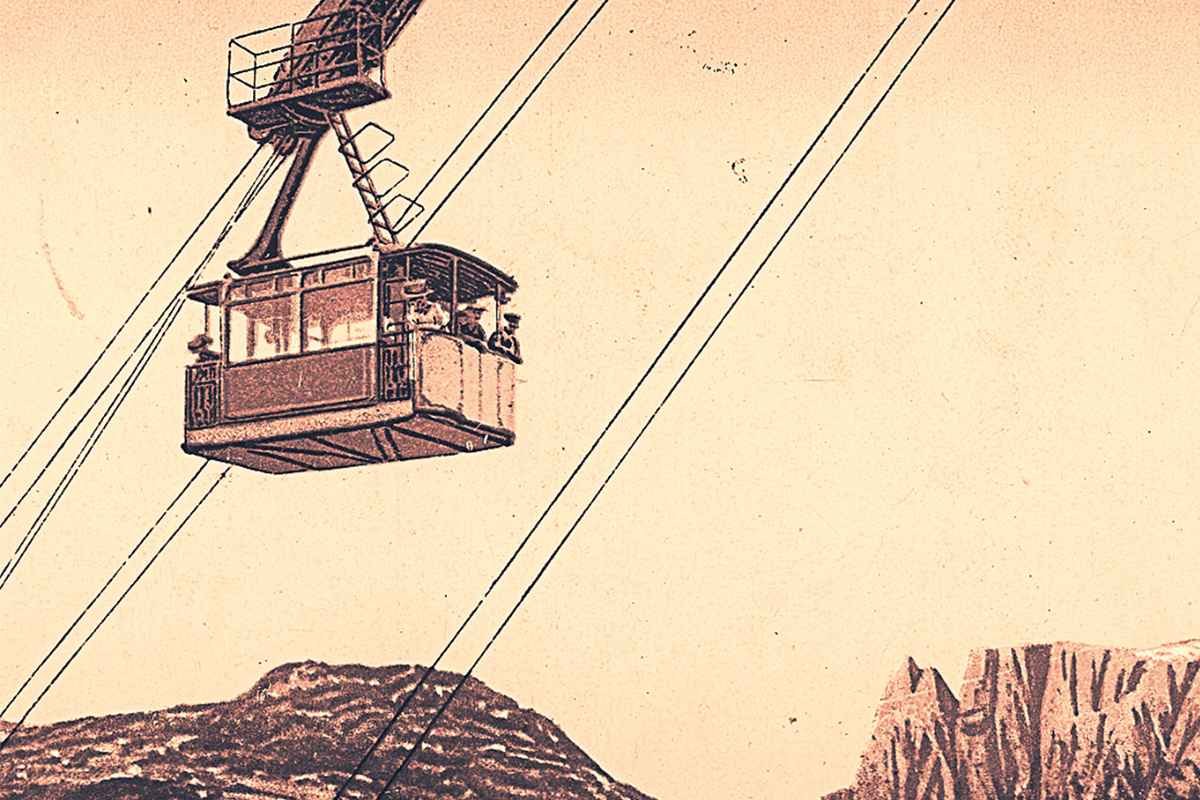
The cable cars begins in rugged landscapes where movement was difficult. Mountain communities needed ways to move goods across cliffs, valleys, and rivers. Simple tools made up the earliest transport systems. Ropes, gravity, and pulleys formed the core of these early designs.
Ancient engineers understood mechanical advantage. They used pulleys to reduce effort and improve control when lifting heavy loads. Civilizations used natural fibers like hemp, animal hide, and woven plants. These materials supported early ropeway systems across steep terrain.
China developed some of the earliest known ropeways. Workers stretched thick ropes across deep valleys. They created baskets and wooden platforms to move supplies and people. These systems served remote mountain settlements for centuries.
South American cultures built similar systems in the Andes. Rope bridges and cable lines crossed dangerous gorges. People relied on them for trade and daily travel. These systems proved reliable despite simple materials. European mountain regions also adopted rope-based transport. Alpine mining towns used gravity-driven ropeways. Miners lowered ore downhill using pulleys and counterweights. These designs influenced later mechanical systems.
Although basic, these ropeways shared one powerful idea. Suspended transport could defeat steep landscapes. That concept shaped the future history of cable cars in the mountains.
Key Developments:
- Use of pulleys to reduce lifting effort
- Ropeways built across valleys and cliffs
- Transport of goods and people in mountain regions
- Early mining rope systems in the Alps
- Foundations of suspended transport concepts
Modern Invention: Andrew Hallidie’s Iconic System
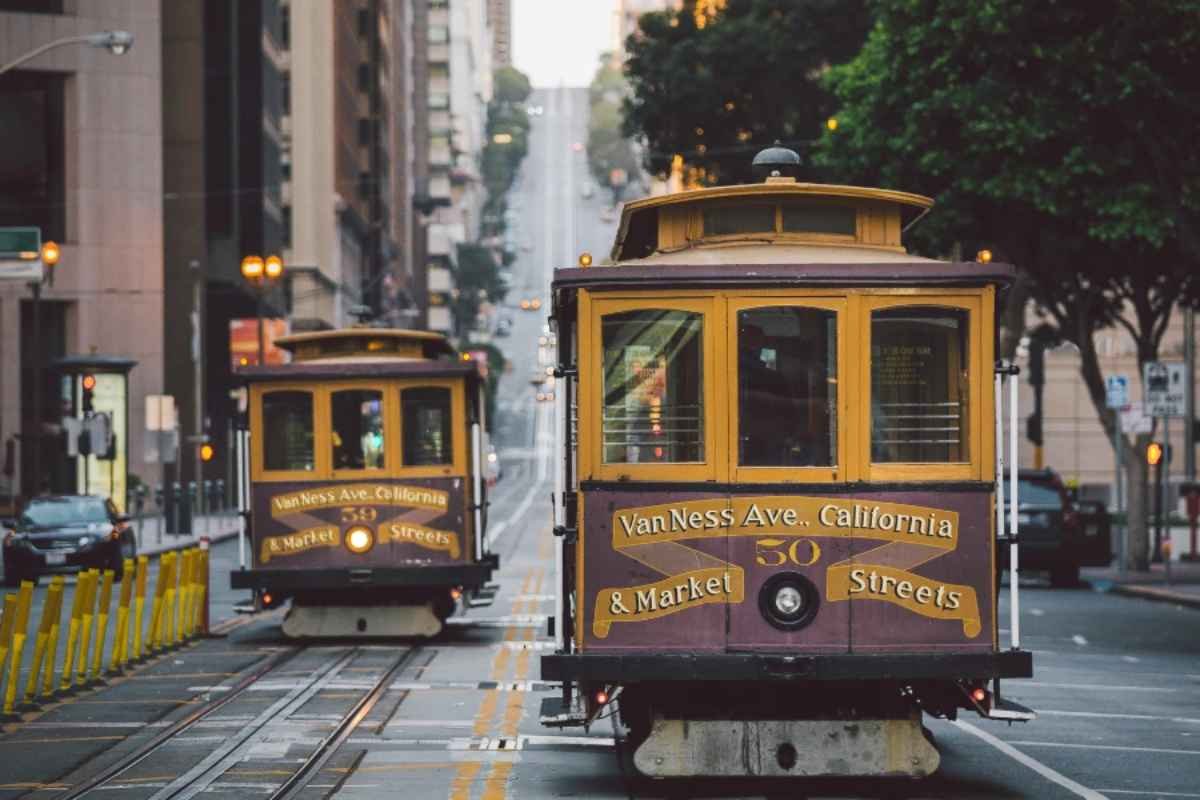
The modern cable car era began in the 19th century. Urban terrain exposed the limits of horse-drawn transport. San Francisco faced constant accidents on its hills. These challenges inspired mechanical innovation.
Andrew Hallidie observed horses slipping on icy slopes and suffering serious injuries. Hallidie wanted a safer and more humane solution. His answer came through motion that uses cables.
In 1873, Hallidie launched his cable car system in San Francisco. A method of transport that was fueled by a continuously rotating cable. The cable ran beneath the street in a narrow channel as operators gripped the cable to move and released it to stop.
A central powerhouse controlled the system. Steam engines pulled the cable at a constant speed. This design handled steep gradients with ease. Weather conditions no longer stopped transport.
Although designed for streets, the system changed mountain engineering. Engineers saw its climbing potential. Steel cables proved stronger and more reliable than ropes. This led to the improvement of safety systems on slopes.
Hallidie’s invention influenced alpine transport planning. Designers adapted the concept for higher elevations. The idea of continuous cable movement became the backbone of modern cable cars.
Key Developments:
- Introduction of steel cable transport
- Centralized power systems for movement
- Reliable climbing on steep gradients
- Improved braking and safety mechanisms
- Inspiration for mountain cable technologies
Reaching New Heights: The Ascension of Tramways
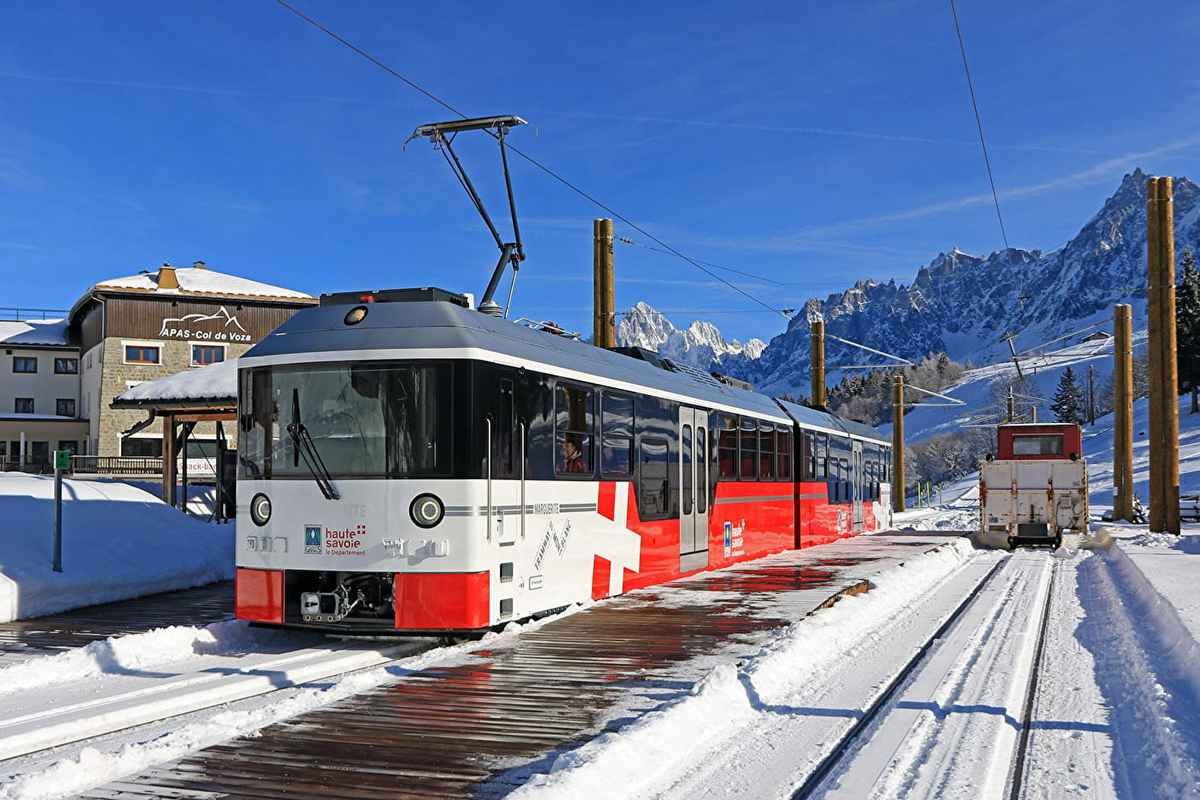
Mountain tourism grew rapidly in the late 19th century. Travelers wanted access to peaks and scenic viewpoints. Roads struggled with snow, slopes, and narrow paths. So, people turned to cable-based solutions. Early mountain tramways adapted mining lift systems. Engineers redesigned them for passengers.
Europe became the center of mountain cable innovation. Switzerland led early development due to its terrain. Villages were connected to peaks using aerial tramways. These systems tended to avoid forests and cliffs below.
Suspended cabins marked a major shift. Unlike street systems, these cars floated above the ground. This design reduced land disruption. It also allowed longer spans across difficult terrain. Electric motors replaced steam engines in the early 20th century. Motors offered better speed control and reliability. As maintenance needs dropped significantly, operations became safer.
Two major systems emerged for mountains. Funiculars and counterbalanced cars. Each system served different slope conditions.
Ski tourism accelerated innovation. Resorts needed fast uphill transport. Chairlifts and gondolas appeared soon after. These systems shaped modern mountain travel. Safety improvements followed rapid growth. Engineers added backup cables and emergency brakes. Wind monitoring became standard. Passenger capacity limits improved stability.
Mountain cable cars became symbols of access. They connected remote regions and boosted tourism. The history of cable cars reached new heights during this era.
Key developments in this era:
- Expansion from urban to mountain transport
- First passenger aerial tramways
- Introduction of electric motors
- Growth of ski lifts and gondolas
- Advanced safety and wind control systems
The Future of Cable Cars

Modern mountain cable cars reflect decades of refinement. Engineers now focus on efficiency, safety, and sustainability. Climate concerns drive smarter designs. Mountain regions benefit the most from these changes.
The global cable cars and ropeways market is projected to grow from about USD 5.1 billion in 2025 to nearly USD 9.7 billion by 2032, expanding at an 11.4 % compound annual growth rate (CAGR) during this period.
Advanced materials dominate construction today. Steel alloys and composites reduce weight. Lighter systems consume less energy. Strength and durability continue to improve. Automation plays a major role in operations. Sensors track cable tension and wind speed. Control systems adjust instantly. Human error has dropped significantly.
Energy efficiency has improved across systems. Electric drives replace older power sources. Many resorts use renewable energy. Regenerative braking recovers energy during descent.
Future mountain cable cars may use artificial intelligence. Predictive maintenance could prevent breakdowns. Autonomous control may optimize capacity. These changes will extend system life. Environmental protection shapes new projects. Cable cars reduce road building in fragile zones. They limit deforestation and erosion. This makes them ideal for protected mountain areas.
The history of cable cars continues to evolve. Innovation keeps pushing boundaries. Cables still offer the smartest way to reach high places.
History of Cable Cars: A Timeline
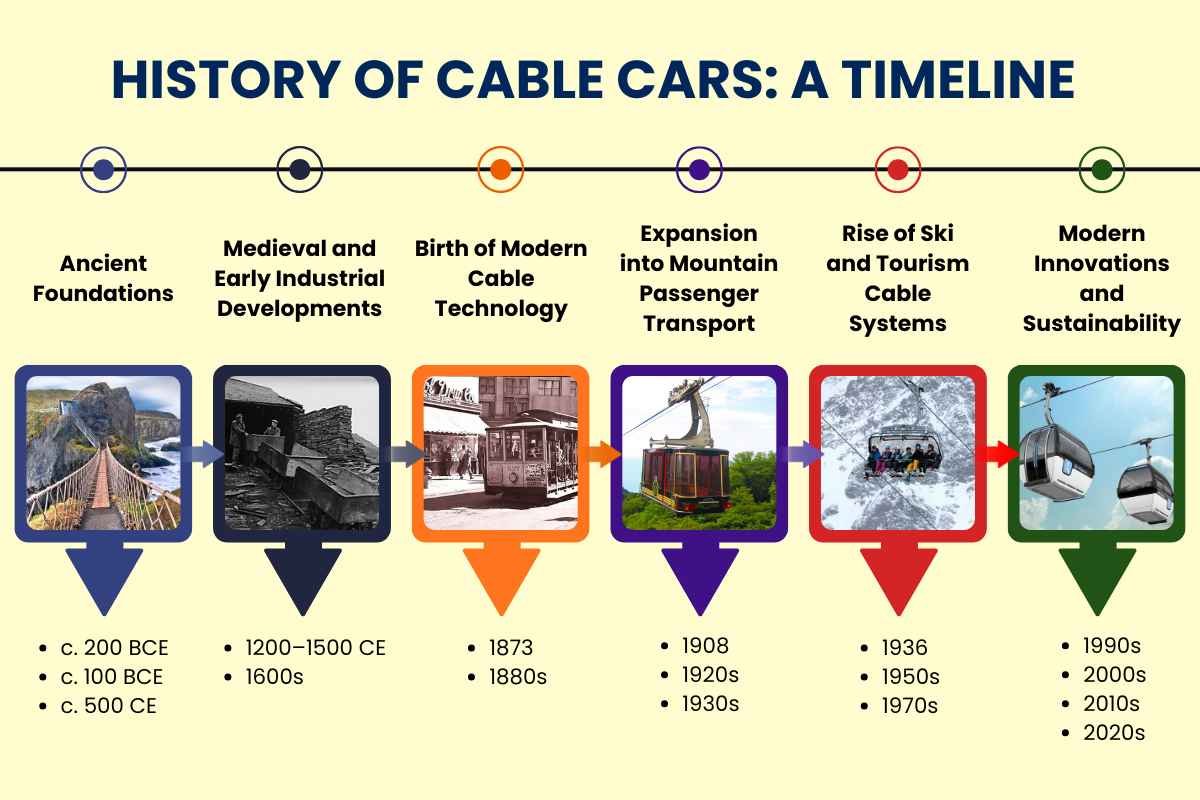
The history of cable cars developed through steady innovation across centuries. Each period introduced solutions shaped by terrain, safety needs, and growing travel demands. This timeline highlights key moments that defined mountain cable car transport.
Ancient Foundations
- c. 200 BCE – Early ropeway systems appear in China, used to move goods across valleys and rivers in mountainous regions.
- c. 100 BCE – Greek engineers document pulley principles that later influence rope-based lifting systems.
- c. 500 CE – Andean communities use woven-fiber cable lines to cross deep mountain gorges for trade and travel.
Medieval and Early Industrial Developments
- 1200–1500 CE – Alpine mining towns in Europe use gravity-driven ropeways to lower ore from steep mountain slopes.
- 1600s – Improved rope-weaving techniques increased load capacity in mountain haulage systems.
Birth of Modern Cable Technology
- 1873 – Andrew Hallidie launches the first successful cable car system in San Francisco, proving cables can handle steep gradients.
- 1880s – Engineers begin adapting steel cable technology for mountain transport and mining lifts.
Expansion into Mountain Passenger Transport
- 1908 – The first passenger aerial tramway opens at Wetterhorn in Switzerland, marking a major step in mountain cable travel.
- 1920s – Electric motors replace steam power in mountain tramways, improving safety and efficiency.
- 1930s – Funicular railways expand across Alpine regions, connecting villages to higher elevations.
Rise of Ski and Tourism Cable Systems
- 1936 – The first modern ski lift opens in Sun Valley, Idaho, transforming uphill mountain travel.
- 1950s – Gondola systems gain popularity in European ski resorts, carrying larger passenger volumes.
- 1970s – Advanced braking and wind monitoring systems become standard in mountain cable cars.
Modern Innovations and Sustainability
- 1990s – Detachable gondolas improve boarding speed and capacity in high-traffic mountain resorts.
- 2000s – Digital monitoring systems enhance safety and predictive maintenance.
- 2010s – Renewable energy integration and lightweight materials reduce environmental impact.
- 2020s – Automation and smart control systems shape the future of mountain cable cars.
Conclusion:
The history of cable cars reflects human ingenuity in overcoming difficult terrain and travel limitations. The early mountain systems built to move materials across valleys and the modern cable cars designed for tourism and transport have revolutionized access to high-altitude regions. Each stage of development introduced safer designs, stronger materials, and improved efficiency.
Today, cable cars stand as a symbol of engineering progress and sustainable transport in mountainous areas. Understanding the history of cable cars helps explain how innovation, necessity, and technology came together to transform travel in some of the world’s most challenging landscapes.
FAQs
1. What were cable cars originally used for?
Early cable cars were mainly used to transport goods, construction materials, and workers across steep or inaccessible mountain terrain.
2. How did cable cars influence mountain tourism?
Cable cars made high-altitude regions more accessible, allowing tourists to reach viewpoints and resorts that were previously difficult to access.
3. Why is the history of cable cars important today?
The history of cable cars shows how transportation innovation can adapt to challenging environments while supporting economic growth and sustainable travel.