Green lightning is a rare and striking atmospheric phenomenon that occurs when lightning appears green due to the way light interacts with dense storm clouds filled with moisture, hail, and particles. This article explores what green lightning is, why it happens, and how it compares to other types and colors of lightning, giving readers a deeper look into one of nature’s most fascinating displays.
Storm chasers and meteorologists spend years staring into dark tempests hoping to catch a rare display of atmospheric optics. Severe thunderstorms usually strike in shades of brilliant white or deep blue, but occasionally a tempest shifts into an eerie, glowing shade of emerald.
Although it appears unusual, green lightning is not actually a different type of lightning. Scientists believe the green color results from the interaction between lightning, dense storm clouds, hail, moisture, and the way light is scattered through the atmosphere.
But have you ever thought: why does it happen, how does it happen, and what does it happen?
Join us to uncover this secret. Get ready for an electrifying experience.
Green lightning: What causes this phenomenon?
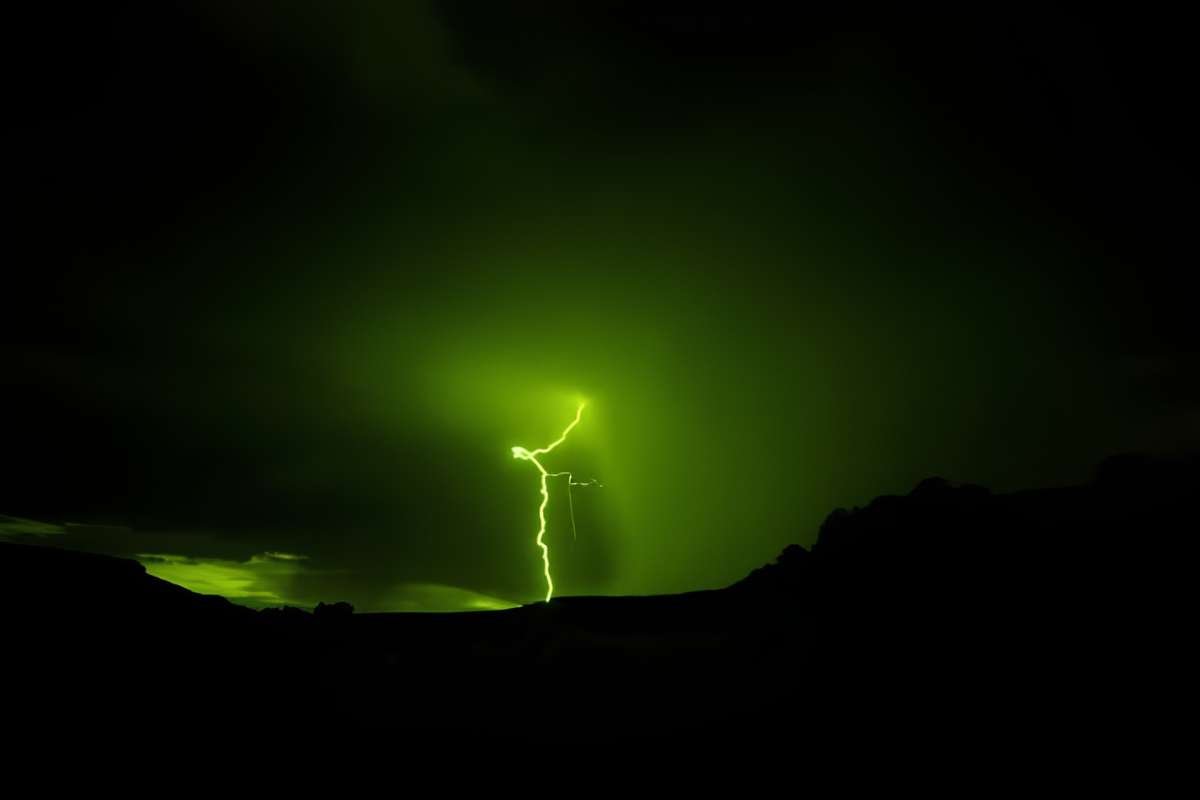
Green lightning is when lightning during a storm appears as a bright green color. In snowstorms, where it is somewhat rare, pink and green are often described as colors of lightning. The most casual and alarming light color is green. This type of lightning indicates that a tornado might be on its way.
Green clouds will only occur if the cloud is very deep, which generally occurs in thunderstorm clouds. Those storms produce hail and tornadoes.
The phenomenon of green lightning is still not fully understood, but scientists have some theories regarding it. They are:
“In the initial stages of development, air acts as an insulator between the positive and negative charges in the cloud and between the cloud and the ground; however, when the differences in charges become too great, this insulating capacity in the air breaks down, and there is a rapid discharge of electricity. ”
Usually, the color of lightning is white or blue. Haze, dust, moisture, raindrops, and other particles in the atmosphere affect the color by absorbing or diffracting a portion of the white light of lightning and making it green.
Why is it green in color?
Lightning itself produces white light, which contains all colors of the visible spectrum. However, when this light travels through a thick thunderstorm cloud, it doesn’t reach your eyes unchanged. The cloud is filled with water droplets, ice particles, and sometimes hail, which act like a natural filter.
These particles scatter and absorb shorter wavelengths like blue and violet more strongly. At the same time, parts of the red spectrum may also get reduced depending on the cloud’s density. What remains more visible to the human eye is the green portion of the spectrum, making the lightning appear green.
The effect becomes stronger in very deep and moisture-heavy storm clouds, which is why this colour of lightning is often linked to severe weather conditions.
What are the characteristics of green lightning?
Green lightning happens when lightning bolts appear green instead of white or blue. Observers often describe it as ethereal and otherworldly, evoking a sense of wonder and fascination.
It is characterized by brilliant light, which follows a narrow, irregular, jagged path through the sky. It is typically seen passing from a cloud to the ground.
Lightning cannot only be green in; but can turn into multiple other types of lightning as well. You will be surprised to know about them.
- Ball Lightning
- Sprites
- Elves
- Dark lightning
1. Ball lightning
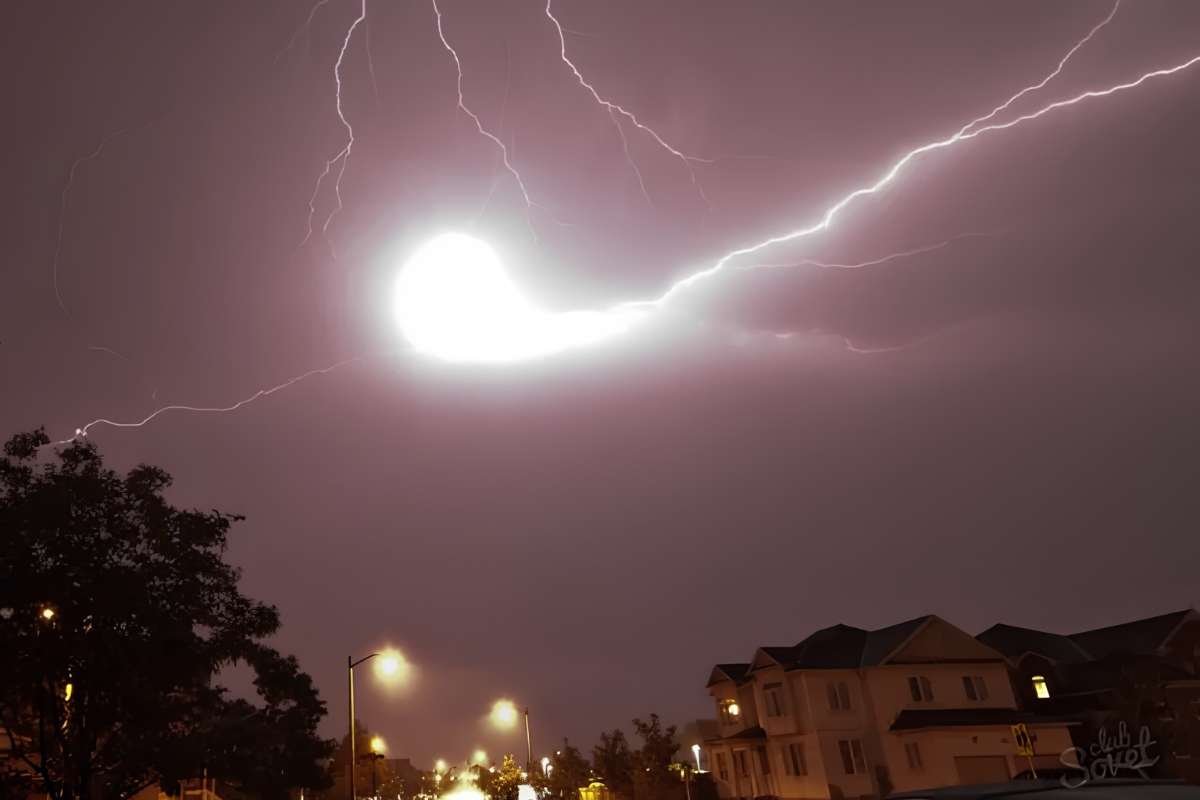
It is a mysterious and unexplained form of lightning that has confused weather watchers throughout history. It appears as a ball. The size of the ball varies from a golf ball to larger than a football, and it tends to hover over the ground.
2. Sprite lightning
A sprite is a faint, red electrical discharge that occurs high above a thunderstorm. They are incredibly large, stretching from the top of a thunderstorm to upwards of 60 miles above the ground. It begins as balls of light and then streams downward.
3. Elves lightning
Elves are red, huge halos that occur high in the atmosphere at around 100 km above active thunderstorms. They can be seen above the clouds in bright daylight.
4. Dark lightning
According to NASA, dark lightning is a mostly invisible burst of energy inside thunderstorms that fills the sky with gamma rays. It is widely considered the most energetic radiation produced naturally on Earth.
Scientists call this dark lightning, and it is invisible to the human eye. The radiation produced in dark lightning carries a million times as much energy as produced in the radiation of visible lightning. The energy dissipates quickly in all directions rather than remaining in the lightning bolt.
When is green lightning most likely to occur?
Green lightning is most likely to appear during intense thunderstorms with high moisture content, especially when the clouds are deep and dense. These conditions are common in storms that produce heavy rain, hail, or severe weather systems. The large amount of water droplets and ice particles inside such clouds helps filter light in a way that can give lightning a green appearance.
It is also more noticeable during late afternoon or early evening storms, when sunlight interacts with storm clouds at lower angles. In some cases, it has been reported during snowstorms or blizzards, although this is much rarer. Overall, green lightning tends to occur in powerful, well-developed storm systems rather than mild or short-lived ones.
What are the different colours of lightning?
The color of lightning can vary widely, and each shade is influenced by the surrounding atmospheric conditions. Factors like moisture, airborne particles, and cloud density all play a role in how lightning appears. The table below highlights the most common lightning colors and what they typically indicate about the environment in which they occur.
| Lightning Color | Common Conditions | What It Indicates |
| White | Clear air, low moisture | Most powerful; full spectrum of visible light |
| Blue | High moisture, heavy rain | Strong storms with significant water content |
| Yellow / Orange | Dusty or polluted air | Presence of particles like dust or smoke |
| Red / Purple | Higher atmosphere, thinner air | Lightning occurring at higher altitudes |
| Green | Dense, deep storm clouds | Light filtering through moisture and hail; often linked to severe storms |
As shown above, lightning colors offer useful clues about storm conditions and atmospheric composition. By understanding these differences, you can better interpret what’s happening within a storm simply by observing the color of a lightning strike.
Why is white the most powerful lightning color?
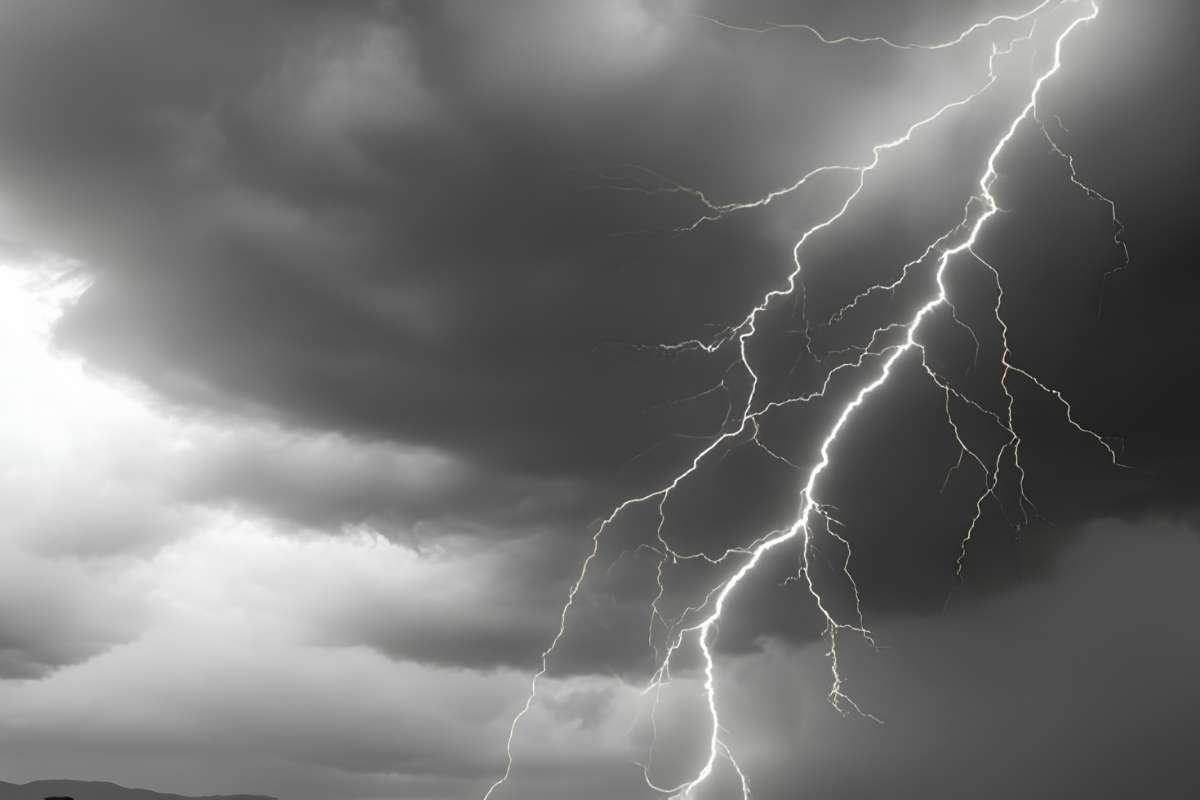
White is the most dangerous color of lightning. White lightning is a sign of low humidity or a small amount of moisture in the air. It contains all the wavelengths of the visible spectrum at equal intensity.
In simple terms, electromagnetic radiation of all the frequencies in the visible range of the spectrum, appearing white to the eye, is called white lightning. White light carries the phenomenon of “dispersion of light” (splitting of white light into its seven constituent colors: violet, indigo, blue, green, yellow, orange, and red).
Conclusion:
Severe convective storms continue to push atmospheric physics to its absolute limits, creating brilliant visual anomalies across the sky. Documenting green lightning helps meteorologists analyze cloud water density and severe hail formation in real time. Analyzing these optical events provides critical data for refining early warning systems ahead of dangerous weather fronts.
Advanced camera technology and satellite tracking continue to uncover how atmospheric particles bend electrical discharge during high-intensity storms. Linking optical refraction data with radar analysis strengthens emergency weather forecasting and protects vulnerable communities.
ALSO READ: Greenhouse Lighting: Optimizing Growth with the Right Illumination
FAQs
1. What causes lightning to appear green?
It occurs when a standard electrical bolt passes through thick cumulonimbus clouds packed with heavy rain and hail.
2. Does green lightning mean a tornado is forming?
No, a green hue indicates high atmospheric moisture and severe hail, but it does not guarantee a tornado. It simply signals an exceptionally dense, high-intensity thunderstorm.
3. Is green lightning hotter or more dangerous than regular lightning?
The electrical discharge carries the same voltage, temperature, and danger as standard lightning.