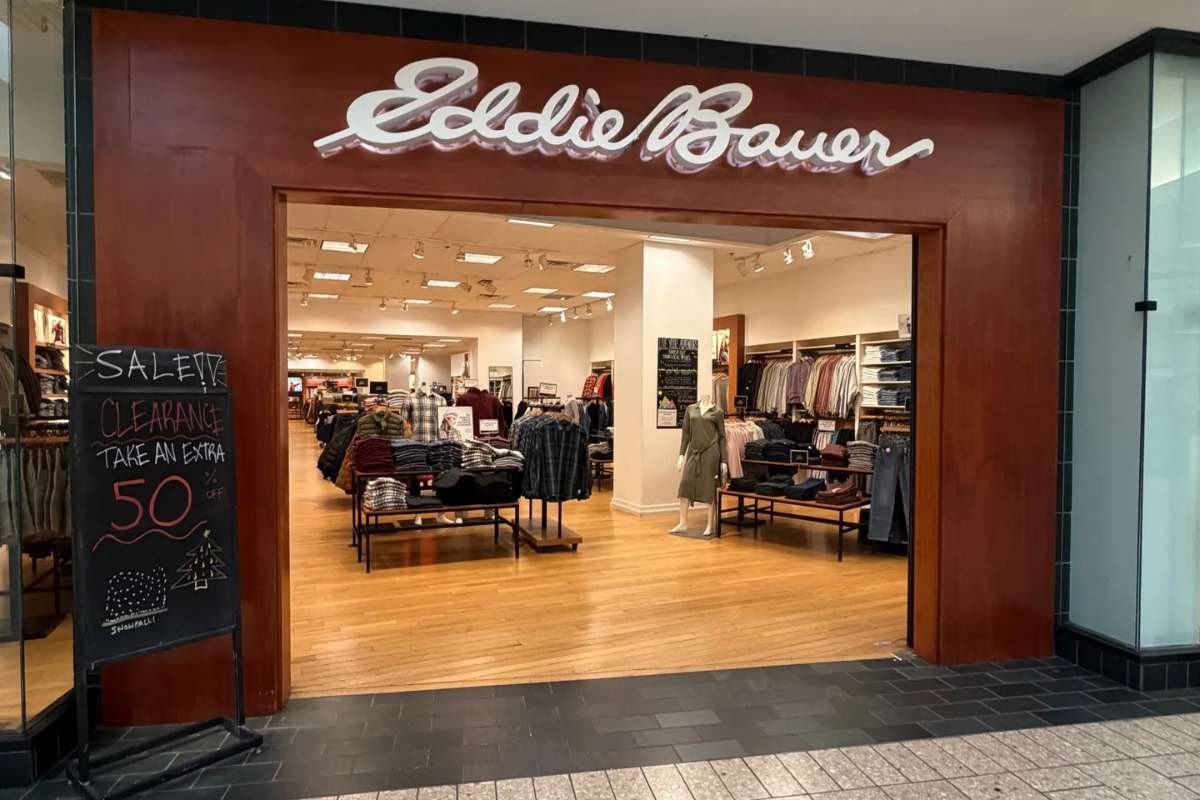
Eddie Bauer Chapter 11 LLC has filed for bankruptcy protection and plans to sell about 200 of its outdoor sportswear stores across the United States and Canada, citing declining sales and ongoing supply chain pressures.
Sales Pressure And Operational Strain Drive Filing
The company said its recent financial challenges stem from weaker consumer demand, higher operating costs, and disruptions in supply chains. It also pointed to inflation and uncertainty around tariff policies as factors that affected performance.
Most of the company’s retail locations in the United States and Canada will remain open during the bankruptcy process. Management intends to continue operations while seeking a buyer for the store portfolio. If a sale is not completed, stores operated by the LLC in these markets may close. A spokesperson said the company could not confirm when any individual store closures might take place.
Marc Rosen, chief executive of Catalyst Brands, which owns the Eddie Bauer brand, acknowledged the operational efforts made in recent years following the Eddie Bauer Chapter 11 filing. He stated that leadership implemented improvements in product development and marketing. However, those changes were not introduced quickly enough to offset challenges that had built up over several years.
For entrepreneurs and retail operators, the filing highlights the impact of sustained margin pressure in the apparel sector. Rising input costs, fluctuating consumer demand, and inventory management issues continue to test legacy brands with physical store networks.
Brand History And Business Restructuring Plans
Founded more than 100 years ago, Eddie Bauer Chapter 11 protection marks the company’s third restructuring effort, after previous filings in 2003 and six years later following the global financial crisis. The company clarified that stores outside the United States and Canada will not be affected.
Those international locations are operated by separate licensees and will continue normal operations. This distinction reflects the brand’s licensing model, which allows for regional flexibility in ownership and management structures.
The company clarified that stores outside the United States and Canada will not be affected. Those international locations are operated by separate licensees and will continue normal operations. This distinction reflects the brand’s licensing model, which allows for regional flexibility in ownership and management structures.
Eddie Bauer also announced changes to its digital and wholesale operations. Its online sales platform and wholesale business will transition to a separate entity called Outdoor 5 LLC. This move is intended to ensure continuity of ecommerce operations and preserve revenue streams tied to digital channels and partner distribution.
The bankruptcy filing comes during a period of volatility in the retail industry. Several established brands have faced restructuring due to high debt levels, shifting consumer preferences, and increased competition from digital first companies. For business owners, the situation underscores the importance of adaptive supply chains, disciplined cost control, and diversified sales channels.
Rosen described the decision as difficult and expressed appreciation for employees and customers. He said the company is working to reduce the impact on staff, vendors, and other stakeholders during the restructuring process.
As the sale process moves forward, potential buyers will likely evaluate store performance, lease obligations, brand equity, and digital growth potential. The outcome will determine whether the company continues under new ownership or proceeds with broader store closures in North America, following the Eddie Bauer Chapter 11 filing.
For entrepreneurs, the case offers a reminder that brand heritage alone does not shield a company from structural industry shifts. Long-term resilience depends on operational agility, financial discipline, and the ability to respond quickly to changing market conditions
Find more: https://enterprisewired.com/news/