Demand generation strategies help brands stay visible throughout a scattered and unpredictable buying journey. This article explores how different approaches work together to build familiarity, nurture trust, and position your brand early, so you are already in consideration when buyers are ready to act.
People do not wake up wanting your product. They notice problems, explore options, get distracted, and often move on before making a decision. Attention is scattered, trust is low, and most buying journeys start long before you even know the buyer exists.
That is why growth rarely comes from a single campaign or channel. It builds from repeated exposure, useful content, and consistent signals that make your brand feel familiar over time. Demand generation strategies focus on creating that pull, so when the moment to act arrives, you are already part of the consideration set instead of trying to force your way into it.
Here are 8 demand generation strategies to use in 2026
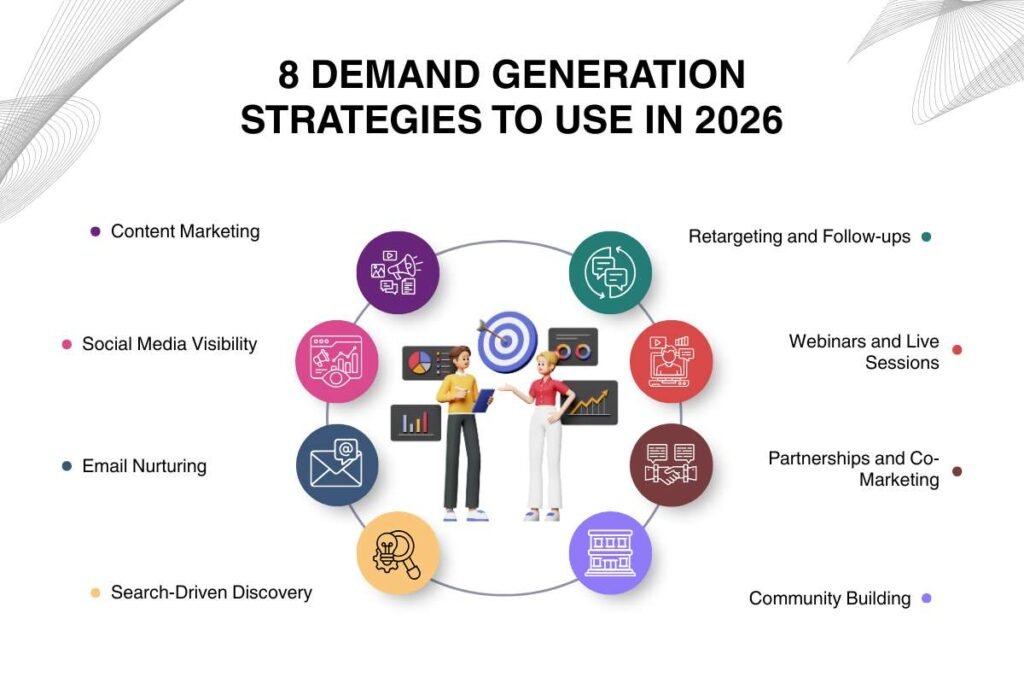
Before you choose the right mix, it helps to understand how different approaches shape demand at each stage. The key is to use them together, not in isolation. When each piece supports the next, the entire system feels smooth and consistent for the user.
Below are some strategies for demand generation:
1. Content marketing
According to HubSpot, 74% of marketers say content marketing helped generate demand. But why is it effective?
Most buyers start by trying to understand a problem, not by comparing products. Good content meets them at that stage. Clear blogs, practical guides, and short videos break down ideas without adding confusion. When people learn something useful, they come back. Over time, your brand becomes a trusted source, not just another option in the market.
Best For: Businesses with complex products or longer buying journeys.
2. Social media visibility
Attention is scattered, and users move quickly between platforms. Social media helps you stay present during those small moments. Short insights, quick observations, and simple visuals work better than long explanations. When people see your brand often, they begin to recognise it. That recognition lowers friction when they are ready to explore further.
Best For: Brands that want to build awareness and stay top of mind.
3. Email nurturing
Interest does not turn into action overnight. Many users need time to think, compare, and revisit their options. Which is why most successful demand generation strategies focus on email nurturing, as it gives you a way to stay in the loop. A steady flow of useful content keeps the conversation going without pressure. When messages feel relevant and timely, they guide users forward instead of pushing them.
Best For: Businesses that capture leads and need to build relationships over time.
4. Search-driven discovery
Some users already know what they are looking for. They search with a clear goal in mind. When your content answers those queries in a simple and direct way, it attracts the right audience at the right time. This kind of traffic is more likely to engage because the need already exists.
Best For: Businesses that rely on consistent inbound traffic.
5. Retargeting and follow-ups
A single visit rarely leads to a decision. Users leave, get distracted, or continue their research elsewhere. Thoughtful reminders bring them back. Ads or follow-ups that reflect what they viewed earlier feel more relevant and less intrusive. This keeps your brand in consideration without overwhelming the user.
Best For: Businesses with steady traffic but low conversion rates.
6. Webinars and live sessions
Next on this list of demand generation strategies are webinars and live sessions. Some decisions need deeper understanding. Live sessions give you the space to explain ideas in detail and answer real questions. This direct interaction builds confidence and clears doubts faster than static content. It also shows expertise in a way that feels practical and grounded.
Best For: B2B brands or high-value offerings that need explanation.
7. Partnerships and Co-marketing
Growing reach alone can take time. Working with another brand or creator helps you enter a new audience with some level of trust already in place. Shared campaigns or content feel more credible because they come from multiple sources. This reduces hesitation and speeds up engagement.
Best For: Brands looking to expand reach and credibility.
8. Community building
People trust people more than messaging. A space where users can interact, ask questions, and share experiences builds that trust naturally. Over time, this creates stronger connections and keeps users engaged beyond a single transaction. It also gives new users confidence when they see real conversations happening.
Best For: Brands focused on long-term engagement and loyalty.
Okay, you now know the different strategies to generate demand. But whenever you go about building a plan for demand generation, you need to think about your goals and needs. So, let us know see how you create the perfect plan best suited for your business.
How to build a good demand generation strategy?

Building a strong demand generation strategy takes more than posting content or running ads. It requires a clear understanding of your audience, a consistent message, and a system that connects each touchpoint. The goal is to guide users from curiosity to interest and then to action, without forcing the process. Here are the steps you need to build a good strategy
- Understand Your Audience: Start by identifying who you want to reach. Look at their problems, goals, and behavior. Focus on what they are trying to solve, not just who they are. This helps you create content and messaging that feel relevant from the start.
- Define Clear Messaging: Decide how you want to position your brand. Keep the message simple and consistent across all channels. Users should understand what you offer and why it matters within seconds.
- Create Valuable Content: Build content that answers real questions. Use blogs, videos, and simple guides to explain ideas clearly. Each piece should focus on one problem and provide a direct solution. This keeps users engaged and builds trust over time.
- Choose the Right Channels: Pick platforms where your audience already spends time. This can include search, social media, email, or video platforms. Do not try to be everywhere at once. Focus on a few channels and execute them well.
- Capture and Nurture Leads: Use forms, downloads, or sign-ups to capture interest. Once you have leads, stay connected through email or follow-ups. Share useful content that keeps them engaged without pushing a sale too early.
- Align Content with User Intent: Match your content to different stages of the user journey. Early-stage users need education, while later-stage users need clarity and proof. This alignment makes the journey feel natural.
- Use Data to Improve: Track how users interact with your content and campaigns. Look at engagement, clicks, and conversions. Identify what works and refine what does not. Small changes can improve results over time.
- Stay Consistent: Consistency builds trust and recognition by using different demand generation strategies. Publish content regularly and maintain a clear voice. Demand does not grow overnight, so steady effort is key.
A well-built demand generation strategy connects all these steps into one system. When each part supports the other, it creates a smooth path from awareness to conversion.
How a good demand generation strategy can help a business?

Good demand generation strategies create a steady and predictable growth. It brings in people who already understand their problem and are more open to a solution. This reduces the effort needed to convince them later. Instead of chasing cold leads, your team engages with users who already trust your brand and see its value.
It also improves how your marketing and sales teams work together. When demand is built early, the quality of leads gets better. Sales teams spend less time explaining basics and more time closing deals. This shortens the buying cycle and improves conversion rates without increasing pressure on the user.
Over time, it strengthens brand recall and reduces reliance on paid campaigns. Users begin to recognise your brand from content, social presence, and repeated exposure. This creates a compounding effect where each effort builds on the last, leading to lower acquisition costs and more consistent results.
Conclusion:
At the end of the day, building interest is about doing the right things consistently. It is about knowing what actually moves people closer to a decision. When your efforts start guiding how your audience thinks and not just how they react, you begin to see the difference.
Over time, demand generation strategies bring structure to that process. They help you create steady momentum, reduce dependence on one-off campaigns, and build a pipeline that grows with intention instead of urgency.
People also ask
1. What are demand generation strategies?
They are methods used to build awareness and interest in your product or service before a customer is ready to buy.
2. How is demand generation different from lead generation?
Demand generation focuses on creating interest and trust. Lead generation focuses on capturing contact details from interested users.
3. Which channels work best for demand generation?
Content marketing, social media, email, SEO, and webinars are commonly used to build awareness over time.