You walk into your favorite coffee shop, and before you even place your order, the barista says, “Your usual?” You smile. You have visited this shop enough times for them to know your order. You have been a faithful and loyal customer of this shop for a long time now.
But does the establishment know of your loyalty? Have they acknowledged it? Just then, a notification pops up on your phone: your loyalty points are close to earning a free drink. That small nudge makes you leave feeling rewarded for something as simple as enjoying your regular coffee.
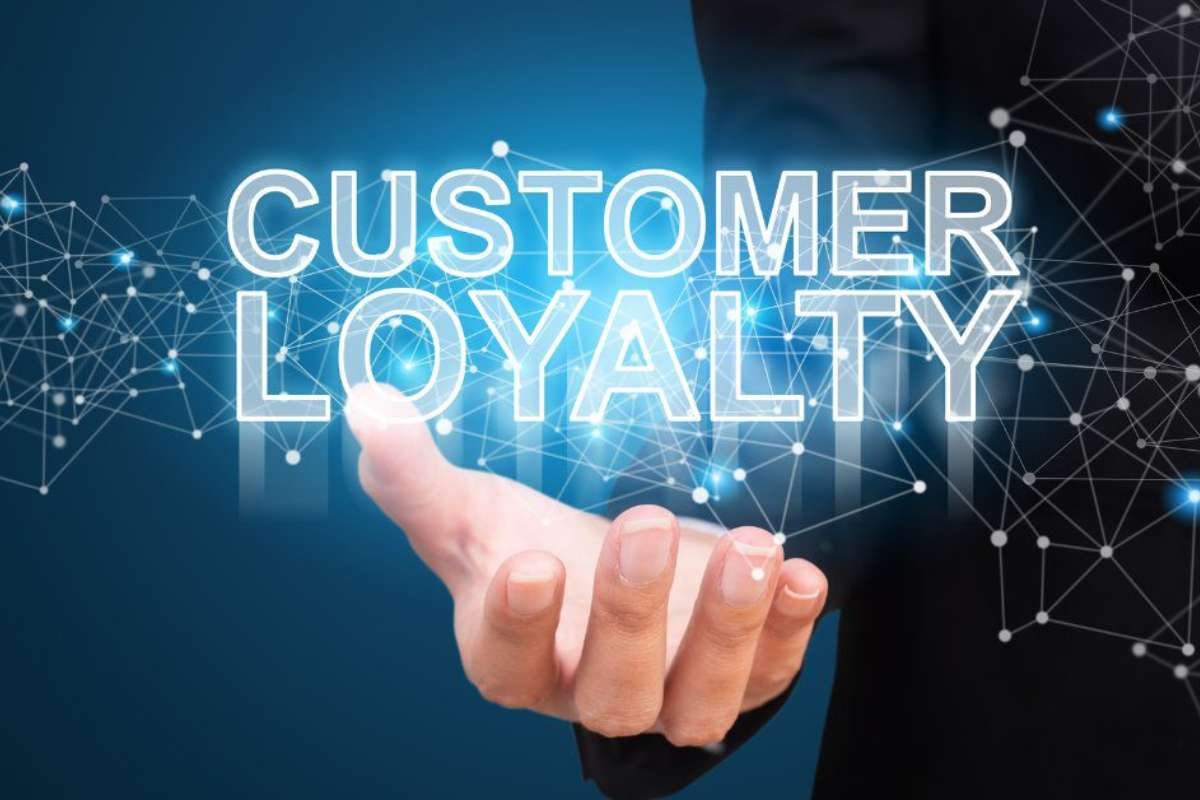
This is the essence of a customer loyalty program. By recognizing repeat customers and offering rewards for their continued engagement, businesses encourage consistent visits and build a stronger connection. Points, discounts, or exclusive perks turn everyday choices into meaningful interactions, fostering loyalty that benefits both the customer and the brand.
What Are Customer Loyalty Programs?
A loyalty program rewards customers for repeat purchases. Brands offer points, discounts, or small perks to encourage customers to return. The goal is to build trust and keep buyers engaged over time.
Customers earn rewards when they shop or interact with a brand. These rewards create a sense of value and progress. People often return when they feel appreciated. Businesses also learn from loyalty program data. They track buying habits and customer preferences. This helps brands improve offers and customer experience.
Types of Customer Loyalty Programs
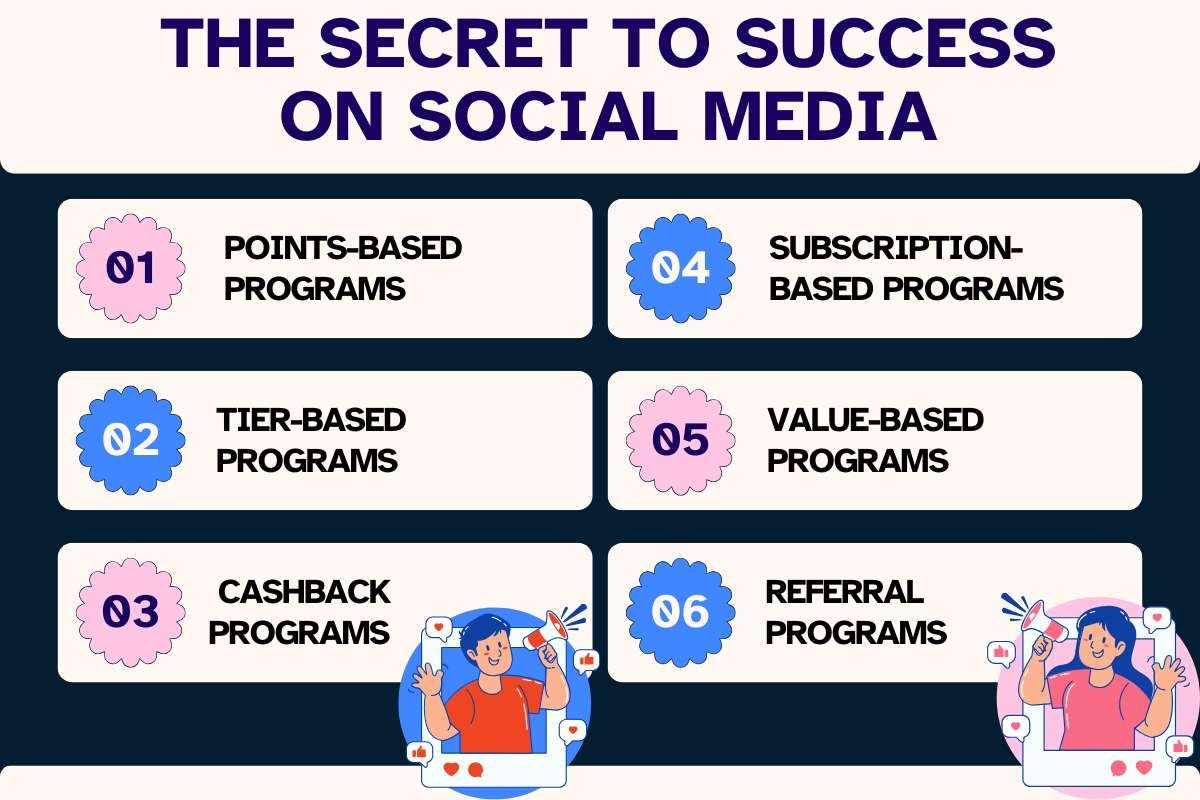
Businesses use different loyalty program models based on customer behavior and brand goals. Each type rewards loyalty in a different way. The right structure helps increase engagement and repeat purchases.
- Points-Based Programs: Customers earn points for every purchase or action. These points can be redeemed for discounts, gifts, or services later. This model works well for retail and e-commerce brands. Customers clearly see progress as points grow over time. Simple earning rules make participation easy for most buyers.
- Tier-Based Programs: Customers move to higher levels as they spend more. Each tier offers better rewards and exclusive benefits. Higher status often motivates customers to stay loyal. Members feel valued when they unlock premium perks. Brands also encourage higher spending through visible tier goals.
- Cashback Programs: Customers receive a small percentage of their spending back. The reward may come as store credit or direct cashback. This system feels simple and easy to understand. Customers instantly recognize the financial benefit. Clear savings often drive repeat purchases.
- Subscription-Based Programs: Customers pay a fee to access special benefits. These may include free delivery, faster service, or exclusive deals. Paid access often increases commitment. Subscribers tend to shop more to justify the fee. This creates steady revenue for businesses.
- Value-Based Programs: Brands reward customers while supporting social causes. A part of each purchase may support charity or sustainability efforts. Customers connect emotionally with such programs. Shared values help build deeper trust. Loyalty grows through purpose instead of discounts alone.
- Referral Programs: Customers earn rewards for bringing new buyers. Both the referrer and the new customer receive benefits. This model helps brands grow through trust. Recommendations feel more authentic than ads. Happy customers become active brand promoters.
Benefits of Customer Loyalty Programs
Loyalty programs encourage customers to return more often. When buyers receive rewards, they feel motivated to choose the same brand again. Repeat customers usually spend more than first-time buyers.
These programs also improve customer relationships. A positive experience builds emotional connection with the brand. Brands collect data on buying habits, preferences, and purchase frequency.
A well-designed program also boosts customer retention. Loyal customers are less likely to switch to competitors. Stable retention supports steady business growth. Loyal customers often promote brands through word of mouth. They recommend products to friends and family based on real experience.
How to Create a Customer Loyalty Program
Creating a loyalty program requires clear planning and simple execution. Businesses should focus on customer needs instead of complex reward systems. A structured approach helps build a program that customers actually use. Follow these steps to design an effective program.
- Step 1: Define your business goals. Start by deciding what you want to achieve. Some brands aim to increase repeat purchases, while others focus on retention or referrals. Clear goals help shape reward types and program rules. Measurable targets also help track success later.
- Step 2: Understand your customers. Study customer behavior before designing rewards. Look at purchase patterns, spending habits, and preferences. Different audiences respond to different incentives. Customer insights help create rewards that feel meaningful.
- Step 3: Choose the right program type. Select a structure that matches your business model. Points, tiers, cashback, or subscription models work in different situations. Keep the system simple and easy to understand. Customers should know how rewards are earned without confusion.
- Step 4: Design valuable rewards. Rewards should feel useful and achievable. Offer discounts, exclusive access, or special experiences that customers truly want. Avoid rewards that take too long to earn. Quick wins help maintain engagement.
- Step 5: Keep participation simple. Make joining the program fast and effortless. Customers should sign up through checkout, apps, or websites without difficulty. Complicated steps reduce participation. A smooth process increases adoption.
- Step 6: Use Technology to manage the program. Use digital tools to track points and customer activity. Automated systems reduce manual work and errors. Customers should easily check rewards and progress. Transparency builds trust.
- Step 7: Promote the Program clearly. Tell customers about the program across all channels. Use emails, social media, and in-store communication. Explain the benefits in simple language. Clear messaging increases enrollment.
- Step 8: Track Performance and Improve. Monitor participation, redemption rates, and repeat purchases. Identify what works and what needs improvement. Update rewards based on customer response. Continuous improvement keeps the program relevant.
Common Mistakes to Avoid While Creating a Loyalty Program
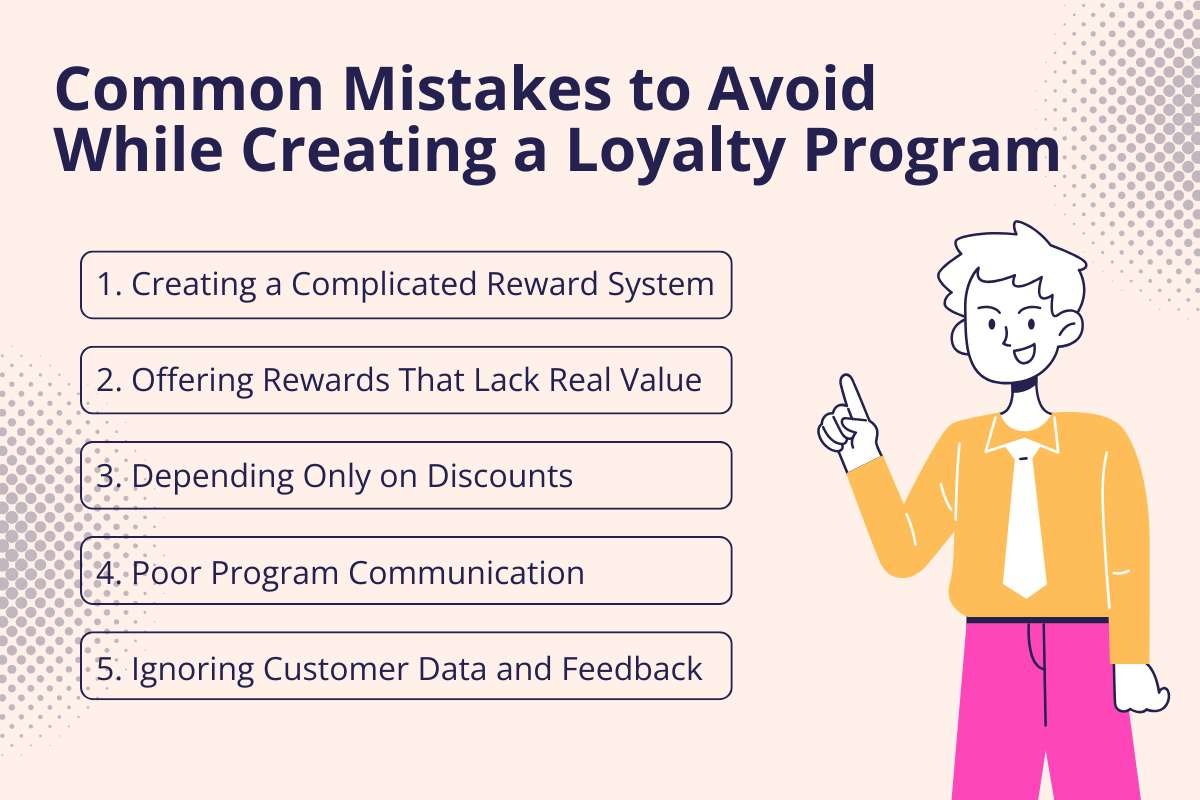
Many loyalty programs fail because they become too complex. Customers should understand how to earn and use rewards quickly. Confusing rules often reduce participation. Simplicity always improves engagement.
1. Creating a Complicated Reward System:
Many businesses design programs with too many rules and conditions. Customers struggle to understand how rewards work or how they can redeem them. Confusion reduces participation and interest. A simple structure always performs better.
2. Offering Rewards That Lack Real Value:
Customers quickly lose interest when rewards feel small or irrelevant. Long earning periods can also frustrate users. Rewards should match customer expectations and buying habits. Useful benefits encourage repeat engagement.
3. Depending Only on Discounts:
Heavy discount-based programs may harm brand perception. Customers begin to wait for offers instead of purchasing normally. This reduces profit margins over time. Mixing experiences, perks, and recognition creates stronger loyalty.
4. Poor Program Communication:
Some brands launch programs but fail to promote them properly. Customers may forget earned rewards without reminders. Regular updates through emails, apps, or messages keep customers engaged. Clear communication increases program usage.
5. Ignoring Customer Data and Feedback:
A loyalty program generates valuable customer insights. Businesses that ignore this data miss improvement opportunities. Feedback helps brands adjust rewards and engagement methods. Decisions driven by data improve success.
Customer Loyalty Program vs Customer Retention Strategy
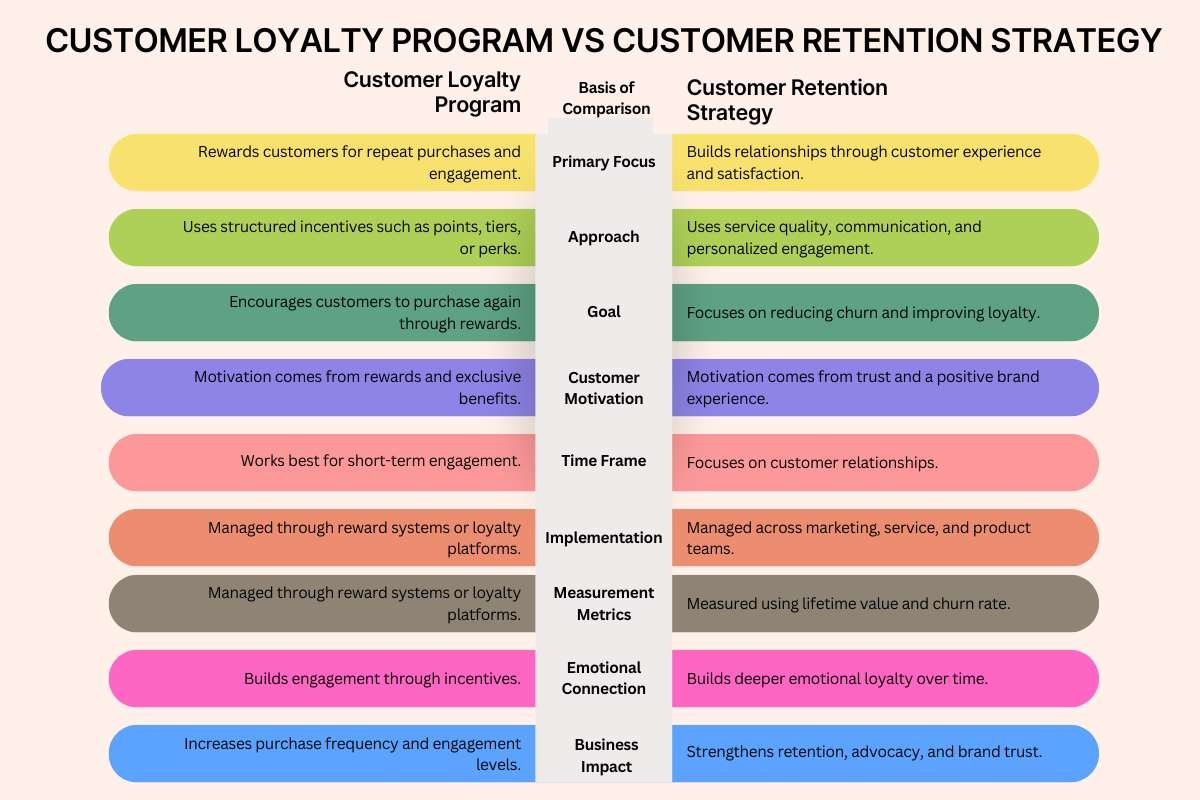
A customer retention program focuses on keeping existing customers satisfied. Businesses often use customer loyalty programs and retention strategies together to keep customers engaged. Understanding the difference helps businesses choose the right approach for future growth.
| Customer Loyalty Program | Basis of Comparison | Customer Retention Strategy |
| Rewards customers for repeat purchases and engagement. | Primary Focus | Builds relationships through customer experience and satisfaction. |
| Uses structured incentives such as points, tiers, or perks. | Approach | Uses service quality, communication, and personalized engagement. |
| Encourages customers to purchase again through rewards. | Goal | Focuses on reducing churn and improving loyalty. |
| Motivation comes from rewards and exclusive benefits. | Customer Motivation | Motivation comes from trust and a positive brand experience. |
| Works best for short-term engagement. | Time Frame | Focuses on customer relationships. |
| Managed through reward systems or loyalty platforms. | Implementation | Managed across marketing, service, and product teams. |
| Managed through reward systems or loyalty platforms. | Measurement Metrics | Measured using lifetime value and churn rate. |
| Builds engagement through incentives. | Emotional Connection | Builds deeper emotional loyalty over time. |
| Increases purchase frequency and engagement levels. | Business Impact | Strengthens retention, advocacy, and brand trust. |
Case Study: Starbucks Rewards Loyalty Program
One of the most successful loyalty programs comes from Starbucks. The company built a digital-first rewards system that combines points, personalization, and mobile technology. The program shows how loyalty initiatives can directly drive revenue and customer engagement.
The program runs through the Starbucks mobile app. Customers can order, pay, and track rewards in one place. This convenience encourages frequent usage and faster purchases. Personalized offers based on buying history further improve engagement.
The impact of the program has been significant. Starbucks reported over 34 million active Rewards members in the United States.
This case shows how a well-designed loyalty program can combine rewards, technology, and personalization to drive customer engagement.
Future Trends in Customer Loyalty Programs
Customer loyalty programs are becoming more digital and personalized. Brands now use customer data to create rewards that match individual preferences. Customers expect relevant offers instead of generic discounts. Personalization helps improve engagement and repeat purchases.
Many brands now focus on experiences instead of price-based rewards. Exclusive access, early product launches, and gamified challenges keep customers interested. These experiences build an emotional connection with the brand. Engagement often grows stronger than discount-driven loyalty.
The loyalty management market continues to expand as businesses invest in advanced systems. The global loyalty management market is expected to grow at a CAGR of 10.7% from 2026 to 2033, driven by digital adoption and customer experience strategies.
Conclusion:
A Customer Loyalty Program works best when customers feel valued every time they interact with a brand. Small rewards, personalized offers, and consistent recognition encourage customers to return and stay engaged. Over time, these repeated positive experiences build trust and strengthen the relationship between the business and its customers.
As a customer, you begin to notice the difference when a brand remembers your preferences or rewards your continued support. Those extra benefits make each purchase feel worthwhile and encourage you to return without hesitation. When customer loyalty programs create genuine value, they turn everyday buying decisions into lasting brand relationships.
FAQs
1. Why do businesses use loyalty programs?
Businesses use them to encourage repeat purchases, improve customer retention, and build stronger relationships with customers.
2. Do customer loyalty programs actually increase customer retention?
Yes. Customers are more likely to return when they receive consistent rewards and recognition for their purchases.
3. How do customers benefit from loyalty programs?
Customers earn rewards, access special deals, and receive personalized experiences based on their engagement with the brand.