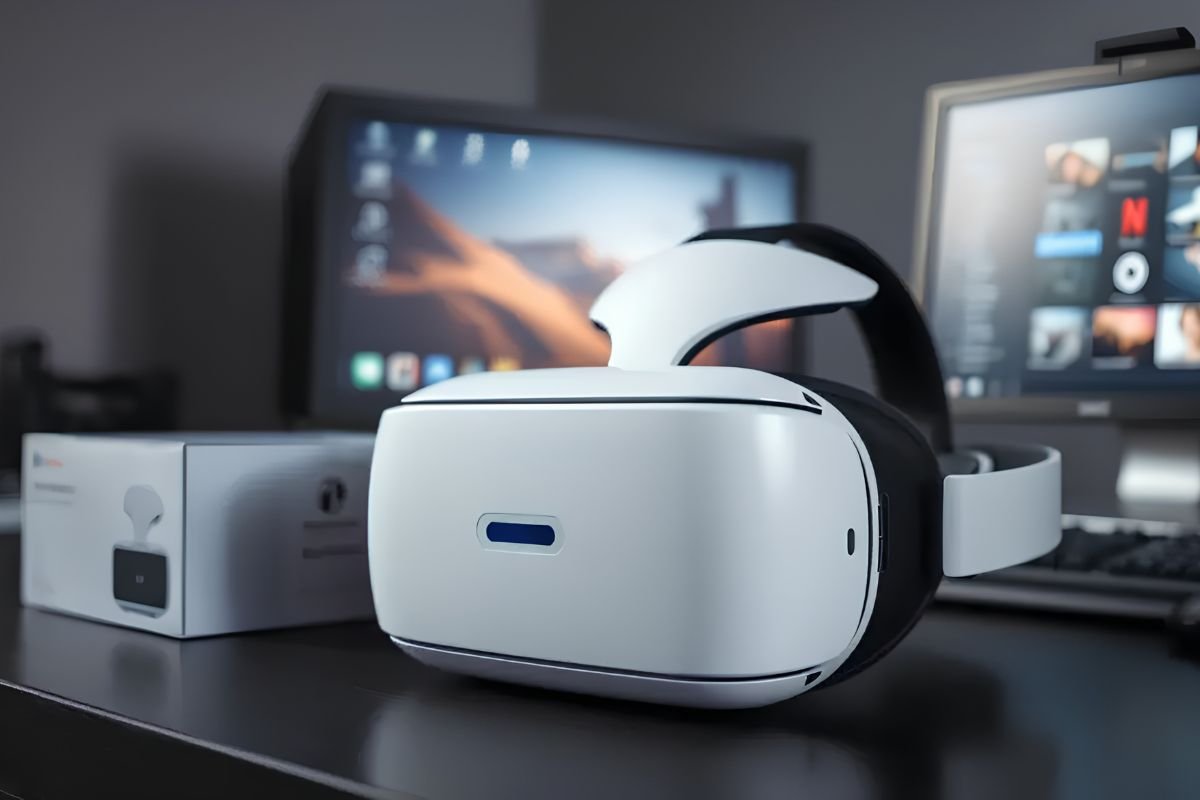
Key takeaways:
- Initial Linux support added: Linux 7.4 includes the Steam Frame’s basic hardware configuration.
- More operating system options possible: The update could help developers bring the headset to other Linux distributions.
- Further development needed: SteamOS remains the more complete option until alternative systems receive additional VR support.
1. Linux 7.4 adds support for Steam Frame
Valve’s Steam Frame virtual reality (VR) headset is set to receive initial support in the mainline Linux 7.4 kernel. This development could make it easier for developers to offer Steam Frame Linux support on distributions beyond SteamOS.
The headset, developed under the codename Deckard, uses Qualcomm’s Snapdragon 8 Gen 3 processor. Linaro engineer Neil Armstrong contributed the changes, which were merged into the Linux kernel’s system-on-chip updates on October 25, 2026.
The update introduces a Device Tree configuration that helps Linux identify the headset’s hardware and prepare its components for operation. Device Tree is commonly used in ARM-based systems to describe hardware and its configuration.
The addition marks an important step towards wider Steam Frame Linux support. However, it provides only initial hardware support and does not mean the headset is ready to run every Linux distribution without further development.
2. Update covers essential hardware components
The Linux 7.4 update includes support for several essential components of the Steam Frame. These include system memory, power management, GPIO keys, storage, USB functionality, and basic peripherals.
It also covers UFS storage, an SD card slot, and I2C-connected devices. Wireless connectivity receives attention through support for Qualcomm’s WCN7850 chip, which provides Wi-Fi 7 and Bluetooth capabilities.
The changes also address the headset’s boot process. Its bootloader starts Linux at Exception Level 2 (EL2), requiring adjustments to certain hardware descriptions and reserved-memory settings.
These additions help the operating system recognise and initialise the headset’s hardware. They also provide a foundation for future developers working on software compatibility.
However, a complete VR experience requires more than basic hardware support. Graphics, audio, motion tracking, controllers, and VR applications must also work correctly. These areas may require further development before alternative Linux distributions can offer a smooth user experience.
The official Linux kernel commit documents the initial Device Tree support for the headset.
3. SteamOS remains the main option for now
Mainline kernel support could eventually allow more Linux distributions to run on the Steam Frame. Developers can build on the existing hardware configuration instead of creating the same foundational support from scratch.
This could give users more operating system choices in the future. However, wider compatibility will depend on additional driver development, software integration and testing.
SteamOS is expected to remain the most complete option because Valve can optimise its software specifically for the headset. Alternative distributions may need additional configuration and development before they can deliver similar performance and functionality.
The development is still an early milestone rather than confirmation of full compatibility. The inclusion of Steam Frame support in Linux 7.4 creates a foundation for future progress, but it does not guarantee that all VR features will work immediately.
Overall, the update strengthens the possibility of broader Steam Frame Linux support. Its long-term impact will depend on how quickly developers build on the initial kernel integration and improve compatibility with essential VR features.